
Table of Contents
- Introduction
- Pre-K Teachers and In-Service Professional Learning
- Our Approach
- Strengthening STEM Instruction in Passaic, New Jersey
- Building a Cohort of Early Childhood Technology Leaders in Chicago, Illinois
- Partnering to Connect Research to Practice in Nashville, Tennessee
- Explicitly Teaching Social and Emotional Skills in San Jose, California
- Improving Language and Literacy Across Texas
- Five Lessons for Growing Strong Pre-K Teachers
Improving Language and Literacy Across Texas
In partnership with the Texas Education Agency, the Children’s Learning Institute (CLI) manages the Texas School Ready (TSR) project and the CLI Engage technology platform, both of which serve pre-K, Head Start, charter school, and child care teachers in all settings across the state. Teachers have varying qualifications based on their program requirements. In Texas, 24 percent1 of children under five years old are in poverty and 68 percent2 of children under four years old are non-white.
Across the Lone Star State, early childhood teachers participate in professional learning through a set of online modules designed to help them become better teachers. When a teacher first opens the CLI Engage platform, she selects a module, such as Emergent Literacy–Reading or Beginning Education: Early Child Care at Home (Español). She can progress through the module at her own pace and receives a certificate upon completion. The modules consist of pre- and post-tests, videos of how to engage children in various lessons, videos of expert and exemplar teachers in English and Spanish, 350 curricular materials, content for coaches’ development, and a progress monitoring tool. The platform is free and available to all districts, Head Starts, and child care programs across the state that partner with CLI or are a part of the state’s QRIS program called Texas Rising Star.3
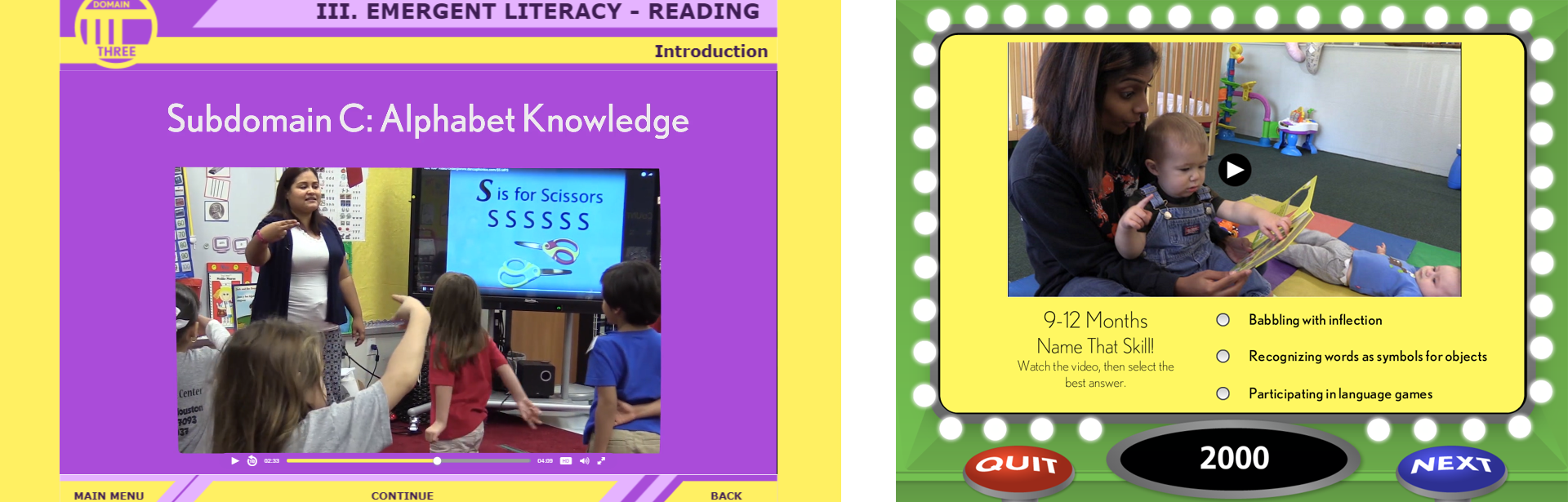
CLI Engage
How CLI Engage Evolved
In the mid-1990s, Texas First Lady Laura Bush wanted to implement a state-wide, evidence-based early literacy program for Texas students. At the time, Rod Paige, former U.S. Secretary of Education, was the superintendent of Houston Independent School District (HISD). As head of HISD, the largest school district in Texas, he was making reforms to teacher professional development in K–12 to improve literacy outcomes for children. Bush did not want early childhood to be left out of these reforms because many programs in the state were still trying to understand how best to teach young children early literacy skills. Bush asked researchers at the Children’s Learning Institute (CLI) at the University of Texas Health Science Center in Houston to take this on. One of those researchers was Susan Landry, the director of CLI. Landry and her team set out to develop a professional development training program.
With funding support from legislators, the program that Landry and her team developed was first delivered to Head Start teachers across the state. The goal of the training program was to develop a core of highly trained teachers who would teach Texas’s youngest learners in ways that aligned with the latest research. This training went through many iterations. Teachers and center directors were able to give feedback to the researchers to create a program that met their needs.
In 2003, the Texas state legislature requested that CLI develop another professional development program to promote early literacy and language skills that could continue to be used with Head Start teachers but would also reach public pre-K and child care teachers. With support from the state and a federal Education Innovation and Research grant, Landry’s team developed a program that could be used by teachers who had received diplomas or credentials at any education level, from high school to graduate school.
In the program’s early stages, Head Start teachers were given binders that addressed different components of high-quality early literacy and language skills. For example, teachers learned how to teach alphabetic knowledge and story comprehension skills to young children. Landry explains “this was the first time teachers had activities that built early literacy and language skills intentionally.” As Landry and her team discovered, high-quality content was only one piece of the puzzle. In the beginning, the research team had to build trust with teachers and Head Start’s leadership. Pushback was intense at first. Teachers thought that intentional literacy lessons could suck the joy out of their playful learning environment. Building on this feedback, Landry’s team ensured that the lessons and activities were “plan-ful and purposeful but also playful.” Eventually, teachers began to buy into the program. Landry recalls, “we were beginning to make progress.”
Using a study design that allows researchers to look at how multiple factors are affecting learning, Landry’s team tested the program in four places: Corpus Christi, Texas; Miami, Florida; Prince George’s County, Maryland; and Columbus, Ohio. At each site five groups of teachers were randomly assigned to receive different supports in addition to a control group.
This study, which was published in 2009 in the Journal of Educational Psychology, found that no matter the group, teachers and students in the supported groups performed better than the control.4 The best performing group had access to an online professional development platform, a job-embedded coach, and instructionally linked feedback through the use of a progress monitoring tool on a technology platform. Landry’s team determined the features of its professional development program based on the promising results from the study.
Overcoming Difficulties with Funding
From the mid-1990s through 2010, the CLI program received a biannual allocation of around $7.5 million from legislators through the Texas Education Agency. The CLI program also receives funding from the Texas Workforce Commission in Child Care Development Funds. However, in 2011, CLI experienced a loss to its public pre-K funding due to a statewide budget cut, forcing a change in the model for public schools.
Despite this setback, the program continued, with funding from the Texas Workforce Commission. In response to the decrease in state funds, CLI developed all of the integrated resources that were part of the Texas School Ready Program on an online, free, and accessible platform called Engage. However, now school districts had to pay for coaches. In the early 2000s, CLI secured funding from the state legislature to conduct a two-year study of Texas School Ready for pre-K teachers across 11 cities and communities.5 The comprehensive professional development program was evaluated in a new state program designed to bring child care, Head Start, and public school pre-K teachers together through partnerships. Throughout the study, Landry and her team worked to seamlessly embed the program into teachers’ jobs and made several adaptations to meet the needs of all of the teachers across settings.
After five months of using the program, researchers were able to document changes in teachers’ instruction, but not in child outcomes. By year two, the researchers found that teachers and children showed gains. Currently, in partnership with the Texas Education Agency and the Texas Workforce Commission, CLI’s programming is implemented in early learning programs across the entire state.
Professional Development Model for All
Landry and her colleagues created a program that would be effective for all teachers across the state, despite their educational attainment level. Throughout the school year, teachers and coaches use these tools to help them learn more about the specific instructional needs of their students. With these tools and curriculum, teachers develop engaging and playful learning activities to help their students develop early learning skills.
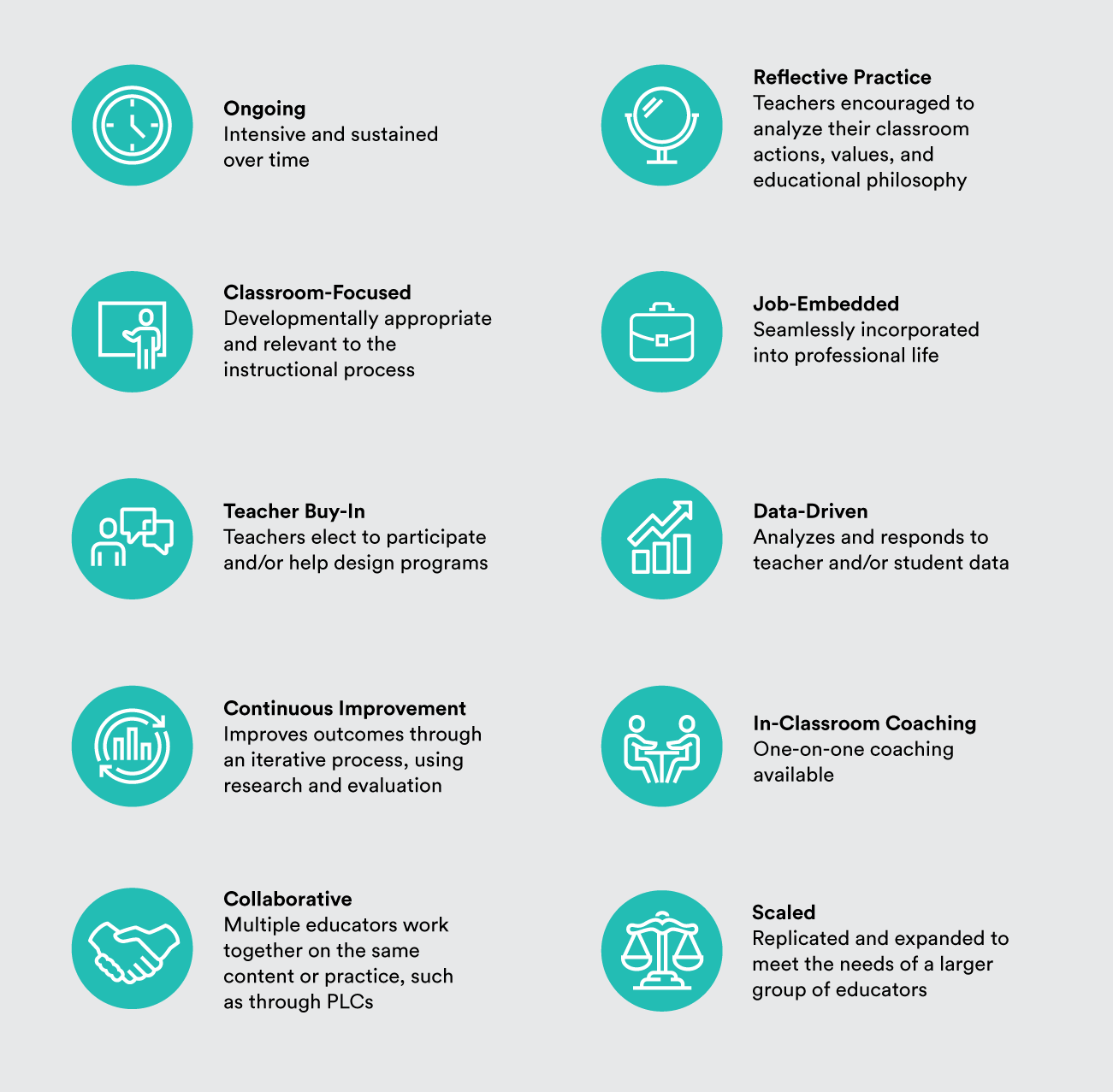
Depending on the program, teachers may receive their coaching remotely through CLI Engage, the online platform, or in person.6 On average, both in-person and remote coaches provide teachers with four hours of training per month.7
Coaches help improve the teachers’ lessons by using the Classroom Observation Tool (COT) to track the use of over 200 specific teacher behaviors that are known to advance children’s school readiness. Coaches also set goals for teacher improvement and use techniques such as modeling to align instruction with evidence-based practice.
Ensuring Sustainability
By 2015, CLI had a new and influential champion for the program. Governor Greg Abbott appointed Andres Alcantar as chair of the Texas Workforce Commission. Alcantar strongly supports raising the quality of early learning programs. In a Texas Education Agency (TEA) press release Alcantar spoke about the partnership between the Texas Workforce Commission and TEA saying, “this partnership with TEA reflects a strong commitment to increase the number of Texas children in high-quality early learning environments.”8 The CLI program is a component of this long-term goal of creating universal access to high-quality programs.
The CLI Engage online platform is constantly being improved upon. To date, the program, with funding from foundations such as the W. K. Kellogg Foundation, has added a birth-to-three extension that is publicly available and currently includes 15 hours of training and parent-linked activities, with the aim to expand. The pre-K Texas School Ready program has expanded to incorporate other content areas such as STEM and social-emotional learning.
Currently, the program serves over 800 school districts in Texas and over 2,500 child care and Head Start teachers. This online platform filled with resources for early educators is supported by the Texas Workforce Commission, which provides $11.7 million biannually for the program to maintain scale and continue to improve through an iterative process. When reflecting on the massive scale of the program, Landry says, “I’m proud of how the program has empowered teachers…Prior to the creation of this program, many did not have the tools to foster early learning development.”
Citations
- Kids Count Data Center, “Children in Poverty by Age Group,” (2017), source.
- Kids Count Data Center, “Child Population by Race and Age Group,” (2017), source.
- Texas Rising Star, “TRS Program Quality Improvement,” source.
- Susan H. Landry, Jason L. Anthony, Paul R. Swank, and Pauline Monseque-Bailey, “Effectiveness of Comprehensive Professional Development for Teachers of At-Risk Preschoolers,” Journal of Educational Psychology 101, no. 2 (May 2009):448–465, source.
- Susan H. Landry, Paul R. Swank, Jason L. Anthony, and Michael A. Assel, “An Experimental Study Evaluating Professional Development Activities within a State Funded Pre-Kindergarten Program,” Reading and Writing: An Interdisciplinary Journal 24, no. 8 (September 2011): 971–1010, source.
- Bonnie O’Keefe, Primetime for Coaching Improving Instructional Coaching in Early Childhood Education, (Washington, DC: Bellwether Education Partners, 2017), source.
- Susan Landry (Director of the Children’s Learning Institute), telephone interview with authors, March 22, 2018.
- KVUE, “TEA to Get Multimillion Dollar Grant to Expand Pre-K Programs,” September 21, 2016, source.