Evaluating the Effectiveness of Federal Programs: An In-depth Look at the Program Assessment Rating Tool and Education Programs

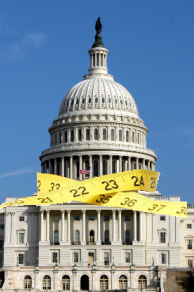 We all want to know if the government is spending our tax dollars wisely: Are funds being used on education programs that are actually achieving results? Or are they being spent on ineffective programs? Which programs are working? Which aren’t? Results matter.
Most people would agree that these are important questions. But actually evaluating the effectiveness of federal programs is an incredibly complex task.
In 2002, the Office of Management and Budget launched an initiative to help measure program effectiveness and provide guidance to the policymaking, budgeting and appropriations process. The resulting Program Assessment Rating Tool (PART) is designed to “assess and improve program performance so that the Federal government can achieve better results.”
Since the inception of PART, 1017 programs across 15 Departments have been reviewed, 93 at the Department of Education alone. Programs are assessed and assigned points in four categories: Program Purpose & Design, Strategic Planning, Program Management, and Program Results. At the end of the process, programs are rated “effective,” “moderately effective,” “adequate,” “ineffective,” or “results not demonstrated.” The President’s budget request to Congress often reflects the results of different PART assessments.
The Federal Education Budget Project aims to heighten the quality of the debate on education funding. Because PART stands as the only formal and systematic assessment rubric, we think an evaluation of the process itself is a worthwhile endeavor. Over the next few months, Ed Money Watch will feature a series of posts exploring, explaining, and at times critiquing, the Program Assessment Rating Tool.
We hope to educate readers about the PART process, consider the extent to which evaluations affect funding, program improvement and elimination, assess the strengths and weaknesses of the PART process, and provide suggestions and recommendations for PART improvement. We will also examine some of the more controversial evaluations to date.
Dedicating scarce federal funding to effective education programs is of vital importance to the economy and America’s education agenda. We hope that our series will ignite a conversation about lessons learned from the current PART process and how the incoming administration can improve not only PART, but education programming as a whole.
We look forward to hearing from you during the series and hope that you will take the time to share your thoughts, suggestions, and critiques in our reader comments section.
More About the Authors
Issues
Related

Funding the ADA’s Promise

English Learners Need More Federal Support to Succeed, Not Less