Enrique Pedráza-Botero
New America Fellow, 2027

New America 2027 Fellow Enrique Pedráza-Botero spoke about his new film, S.E.C.T.O.R. B, for “Three questions” in The Fifth Draft, the Fellows Program’s monthly newsletter. Pedráza-Botero is a filmmaker and visual artist who currently leads the Documentary Film in the Public Interest initiative at Harvard Kennedy School’s Shorenstein Center.
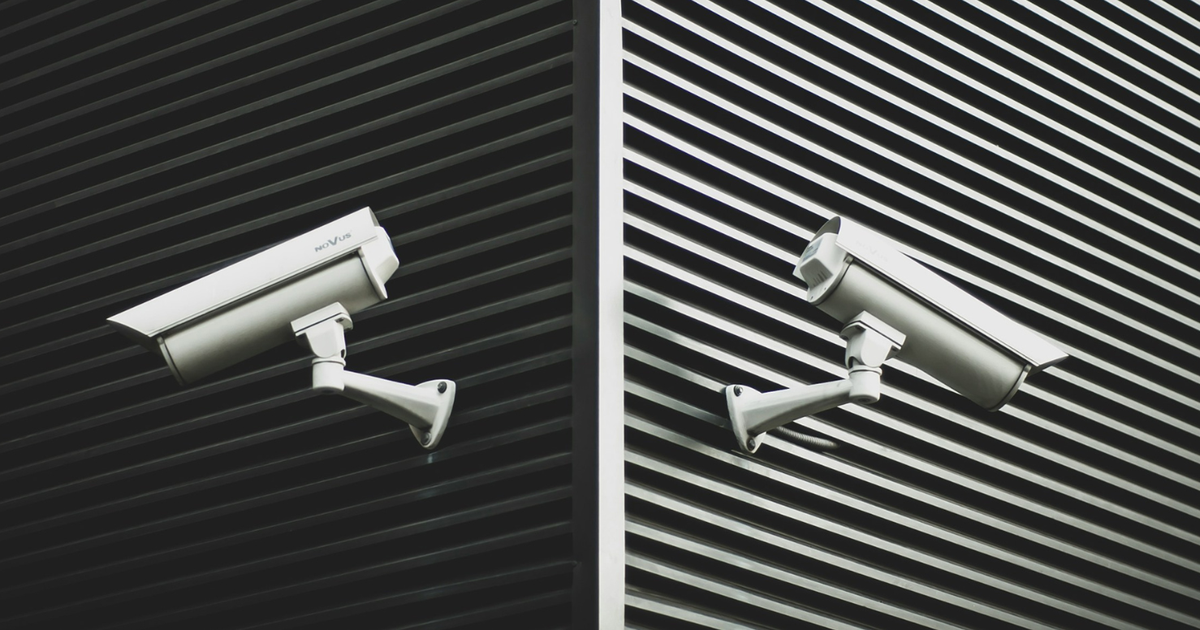
Your feature documentary film, S.E.C.T.O.R. B, observes how autonomous surveillance systems and the growing business of military futurism are transforming immigrant neighborhoods, including the ways residents move through them. What story are you telling in the film, and what is behind the title?
S.E.C.T.O.R. B moves between spaces where the future of security is sold and neighborhoods where people are learning to live under its expanding reach. Military and technology gatherings unfold alongside phone recordings made by residents watching their streets and looking out for one another. The film explores the different expectations these worlds attach to technology: what promises certainty in one setting produces uncertainty in another.
Through encounters between these perspectives, it traces how speculation, investment, and collective vigilance enter everyday life. The title evokes a territory designated from elsewhere, a place rendered administratively legible before we know anything about the people who inhabit it—the idea of our residential neighborhoods becoming a kind of testing ground.
S.E.C.T.O.R. B moves between spaces where the future of security is sold and neighborhoods where people are learning to live under its expanding reach.
Alongside what you capture on camera yourself, you’re building this film from archival material, social media posts, and spatial analysis. What does each source bring to the film, and what makes them hard to combine?
Access to military and technology gatherings allows the film to observe how speculative ideas acquire institutional authority through demonstrations, salesmanship, and the ordinary rituals of doing business. Corporate archives and earnings calls reveal how those ambitions become expectations of growth. Community recordings carry knowledge produced through participation: someone is documenting an encounter while trying to resist.
Combining them requires attention to what each image was made to accomplish, including to persuade, warn, or solicit action. The editorial task is to distinguish a shared institutional logic from a demonstrable connection between a particular technology and an encounter in the street. I’m interested in the ways these systems and ideas of organizing are more intertwined than ever.
When S.E.C.T.O.R. B is released, what do you want audiences to take away after watching it? Beyond festivals and theaters, what role do you hope the film will play in how surveillance and military technologies are governed?
The film asks what disappears from view when surveillance is counted as technological progress, including the labor communities undertake to navigate it. Its circulation should extend that inquiry. Alongside a distribution path for the completed film, the project explores short-form nonfiction as a space for formal and editorial experimentation. Self-contained works could travel through platforms and messaging networks such as WhatsApp and Telegram, where neighborhood watchers already exchange information.
Adapting the work means considering how an image is encountered, forwarded, and understood outside a screening. Developed in dialogue with community organizers, these forms could reach audiences through existing practices of exchange, while bringing their observations into broader debates about how surveillance technologies are governed and whose experiences shape those decisions.
New America Fellow, 2027