Engaged Dads and the Opportunities for and Barriers to Equal Parenting in the United States
Abstract
The Better Life Lab at New America engaged in a multi-method study of men and caregiving in the United States, which included questions directed at fathers and mothers. The study suggests that the past model of fatherhood as mainly about providing financially has been replaced by a new vision of fatherhood, one focused first and foremost on showing love and affection and teaching children about life. It also finds that fathers, like mothers, yearn for more quality time with their children and for more opportunities to be present and involved in their daily care. About one-third of fathers believe there are barriers preventing them from being the dads they want to be. They identify a lack of time, a lack of money, and the demands and expectations of their jobs as factors standing in the way of being the dads they want to be. While 44 percent of people in the United States still believe fathers should primarily focus on breadwinning while mothers focus on running the household, the vast majority of respondents also believe mothers and fathers should share care responsibilities equally. These contradictory findings may suggest that while some traditional notions of men’s and women’s role in child rearing persist, they do not preclude fathers from taking an active role in their children’s daily care or from expressing a desire for even more time and support in caregiving. The report concludes with actions that can be taken by policymakers, employers, and families to achieve the opportunity for equal parenting outcomes most people in the United States say they want.
Top Findings:
- Just under half of dads (45 percent) think moms and dads do an equally good job of caring for babies. Three-quarters (75 percent) of fathers say moms and dads should share the work of caring for babies equally, and 88 percent say men and women should share all caregiving responsibilities in the home.
- Mothers and fathers overlap in the activities they do to take care of their children. The biggest differences are not in what they say they do but in how frequently they do it, with mothers doing more care activities on a daily basis.
- Significantly more fathers rated “showing love and affection” and “teaching the child about life” as “very important” than the more traditional “providing financial support.”
- About one in five fathers (21 percent) say they sometimes feel like people don’t trust them to parent because of their gender.
- Mothers and fathers want the same changes. Almost a third of fathers (31 percent) say there are barriers stopping them from being the dads they want to be. When asked what those barriers are, the top responses were a lack of money, their paid jobs, and a general lack of time.
Acknowledgments
The author is grateful to all of the Better Life Lab partners who offered support in funding and carrying out the Men and Care research that produced this report. Special thanks to the team at NORC for their collaboration on the quantitative portion of this study, and to the Lab’s data consultant, Melissa Saphir, for assisting in the analysis of data featured in this report. Many thanks to Vicki Shabo and Richard Petts for providing review comments on an earlier draft of this report.
The author wishes to thank the Better Life Lab team—Brigid Schulte, Roselyn Miller, Jahdziah St. Julien, and Sade Bruce—for contributing their talents and energy, as collaborators, editors, and friends in this project. Special thanks also to former BLL team member Alieza Durana who helped design the Men and Care research project and survey instrument, and to Amanda Lenhart, who was instrumental to managing the Men and Care project from its inception and to carrying out early analysis of the data.
Many thanks to the communications team at New America who have been an unflagging source of energy and expertise.
The author is also grateful to the countless parents who responded to the survey and to the fathers who shared their stories in focus groups. The report would not exist without their willing participation and candor. Finally, the author thanks the many engaged fathers she has known over the years for their inspiration for this research, especially her own dad, Wes, who stocked the freezer with homemade meals before his business trips and is a constant source of love and support.
Introduction
This study shows that fathers feel positively about the care they provide and about their role as fathers. The vast majority of fathers believe care work is valuable and are proud to talk about their caregiving with others. They also consider being an involved father to be an important part of being a man. They also believe care work in the home is as valuable as the paid work that takes place outside of it. These findings suggest it is not a lack of interest in caregiving or a sense that it is not valuable work that keeps fathers from doing more of it on a more frequent basis.
Even before the COVID-19 pandemic, parents in the United States faced immense challenges in providing financially for their children while also providing the care, education, support, and attention children need and parents hope to give.1 As mothers and fathers struggle to find or hold onto decent paying jobs, they also face unprecedented demands on their time at home. With many schools and early care and learning facilities still closed, families increasingly need all parents on deck to provide care to children.2 The importance of both men and women engaging in child care and development has never been more urgent.
Fatherhood has changed immensely in just 50 years. Through the first half of the twentieth century, men’s role as parents consisted mostly of providing financially for their children. The hands-on work of child care—feeding, bathing, nurturing, and emotionally supporting children—was reserved for mothers.
Throughout modern American life, families have organized themselves in diverse ways, and showed flexibility of roles for particular family members.3 But the model of a nuclear family in which a mother and father took on separate but complementary roles has nonetheless existed as both the norm and the ideal.4 Under the idealized “separate spheres” model of family life, a mother’s domain was the household and her responsibility caring for all members of the family, and the father’s domain, the workplace, with his responsibility mainly lying outside the home, in managing the family’s economic life. For the most part, when dads did engage at home, it was in the mold of either a playmate or a disciplinarian.5
Conforming to this norm was never achievable or desirable for many in America, including those living in poverty who could not afford to have just one adult family member working. Low-income women have worked outside the home as well as inside of it throughout the history of the United States.6 This separate spheres ideal also did not capture the experiences of people of color, especially Black Americans, who were excluded from middle- and high-wage jobs, and who were expected to perform waged work regardless of gender and, at times, even age, until late in the twentieth century.7 Though U.S. welfare policy was initially designed to allow war widows to stay at home, care for their children, and avoid paid work, the “welfare queen” narrative of the 1980s and 1990s led to welfare reforms that instead required mothers to enter the paid workforce in order to receive benefits.8 Fathers of color and fathers in poor families have also been stigmatized as uninvolved, even as they are often encouraged to put engaging in paid work above being present in their families, no matter how low the wages they can earn.9 Public policy and the low-wage labor market have put many families in lose-lose situations, where they can neither engage in paid work nor in care work in ways that meet their families’ needs, leading to the perpetuation of poverty in the next generation.10 As wages have stagnated for the bottom quartile of Americans and public policy has nudged all parents into the workforce, despite the instability of U.S. jobs and lack of adequate child care, women have entered the labor market in staggering numbers in recent decades.11
The separate spheres model has all but disappeared for the majority of American families. There is no longer a “typical” American family.12 Women’s entrance into the labor force has coincided with men’s increased responsibility at home. In general, dads today are more hands-on, domestically oriented, and emotionally in tune with their children and their children’s needs than fathers of past generations. Prior research suggests that since the 1960s, fathers have tripled the amount of time they spend on childcare and housework.13 And for the most part, fathers have welcomed this evolution of their role.
As one focus group respondent in this study said, “I think I and my generation are far more involved actively as dads. We take our role seriously and try to do our best to share equally the parenting and domestic responsibilities. My father didn't change diapers. My father didn't do the school carpools. He didn't have any interest in child teacher conferences or the day to day on homework. He was a big picture guy. My dad was a great father and taught me a lot of really great life lessons before he passed away and I don't fault him for not being a more ACTIVE dad in our early childhood. He had a job and that was what was expected of him. It was always an exciting big deal when he could free himself up to come to a baseball game instead of my mother who was at every game. … I'd like to step up to be more present for my kids and more supportive and equal with my wife.”
Despite sentiments like this becoming more commonplace, inequalities between fathers and mothers persist. Mothers continue to do the bulk of unpaid labor around the home even as their engagement in paid work has increased significantly. According to the Bureau of Labor Statistics, in 1975 fewer than half of mothers with minor children engaged in paid work. In 2019, 72 percent of mothers with children under age 18 were active in the labor force.14
Women’s greater time spent in caregiving is associated with low wages, disruptions to their working lives, and greater stress.15 Men who engage in caregiving and domestic work demonstrate significant benefits to their health, their happiness, and even to their work lives.16 This report shows that a new model of fatherhood, based on affection and teaching, rather than providing, has already emerged, and that both men and women show a demonstrable yearning for greater equality in parenting. The report also points to the main barriers to achieving that equality today.
The Men and Care survey was designed to capture the experiences of caregiving of all fathers in the United States. Respondents included 1,158 men and 677 women who affirmed they were the parent or guardian of at least one child. In our sample, there were 828 fathers and 410 mothers with a child under the age of 18. Our sample included both residential and non-residential parents, that is, those who live full-time with their children and those who do not. The parents who responded to the survey were diverse across socioeconomic status, age, and race, and our findings among these demographic groups are representative of the overall population.
Parents of diverse sexual orientations and gender identities were included in the study. However, the number of these respondents was too small (87 fathers and 42 mothers identifying as gay, lesbian, bisexual, or transgender) to allow for analysis of these demographic groups.
Additionally, 35 percent of fathers and 41 percent of mothers in this study have provided care to a child who needs extra medical care, mental health, or educational services compared to a typical child of that age.
The survey findings were supplemented by online focus groups with 16 fathers with children under age eight from across the United States. Participants answered a series of questions about their experiences as fathers, designed to give the researchers greater understanding of the survey findings. Quotations and anecdotes from those focus groups appear throughout the report when relevant to survey findings, with pseudonyms to protect the privacy of respondents and their family members.
Citations
- U.S. Census Bureau, Income, Poverty and Health Insurance Coverage in the United States: 2018, (Washington, DC: U.S. Department of Commerce, 2019), source
- Meghan McCarty Catino, “Struggles of working parents on full display amid pandemic,” Marketplace, Mar 26, 2020, source
- Lisa D. Pearce, George M. Hayward, Laurie Chassin, Patrick J. Curran, The Increasing Diversity and Complexity of Family Structures for Adolescents, (Chapel Hill: University of North Carolina at Chapel Hill 2018), source
- Andrea Miller, The Separate Spheres Model of Gendered Inequality, (Geneva: University of Geneva, 2016), source
- Lyn Craig, Does Father Care Mean Fathers Share?: A Comparison of How Mothers and Fathers in Intact Families Spend Time with Children, (Sydney: University of New South Wales, 2006), source
- Lynn Weiner, From Working Girl to Working Mother, (Chapel Hill: University of North Carolina Chapel Hill Press, 2016).
- Joe William Trotter, Workers on Arrival: Black Labor in the Making of America, (Oakland: University of California Press, 2019).
- Dorothy E. Roberts, "Welfare and the Problem of Black Citizenship," (Philadelphia: University of Pennsylvania Carey School of Law, 1996), source
- Caroline Ratcliffe and Emma Kalish, “Escaping Poverty: Predictors of Persistently Poor Children’s Economic Success,” US Partnership on Mobility from Poverty, (The Urban Institute, 2017), source
- Dorothy Roberts, “The Absent Black Father,” Lost Fathers: The Politics of Fatherlessness in America, ed. Cynthia R. Daniels, (Palgrave McMillan, 1998).
- Claudia Goldin, The Quiet Revolution That Transformed Women’s Employment, Education, and Family, (Cambridge: National Bureau of Economic Research, 2006), source
- Council on Contemporary Families, “Family Diversity is the New Normal for America’s Children.” source
- Gretchen Livingston and Kim Parker, “8 facts about American dads,” Pew Research Center, June 12, 2019, source
- Bureau of Labor Statistics, Employment Characteristics of Families—2019, (Washington, DC: U.S. Department of Labor, 2020), source
- Oxfam, All work and no pay, (Boston: Oxfam America, 2020), source
- Scott Behson and Nathan Roberts, The Effects of Involved Fatherhood on Families, and How Fathers can be Supported both at the Workplace and in the Home, (New York City: United Nations Department of Economic and Social Affairs), source
How Do Dads Engage in Caregiving?
The Men and Care survey asked parents how often they do a variety of common caregiving activities for their children. More mothers than fathers report engaging in each of these activities on a daily basis. The differences between mothers and fathers are statistically significant for each activity, except for play with children, as shown in the following figure. Nonetheless, a majority of fathers report engaging in all of the listed activities on a daily basis.
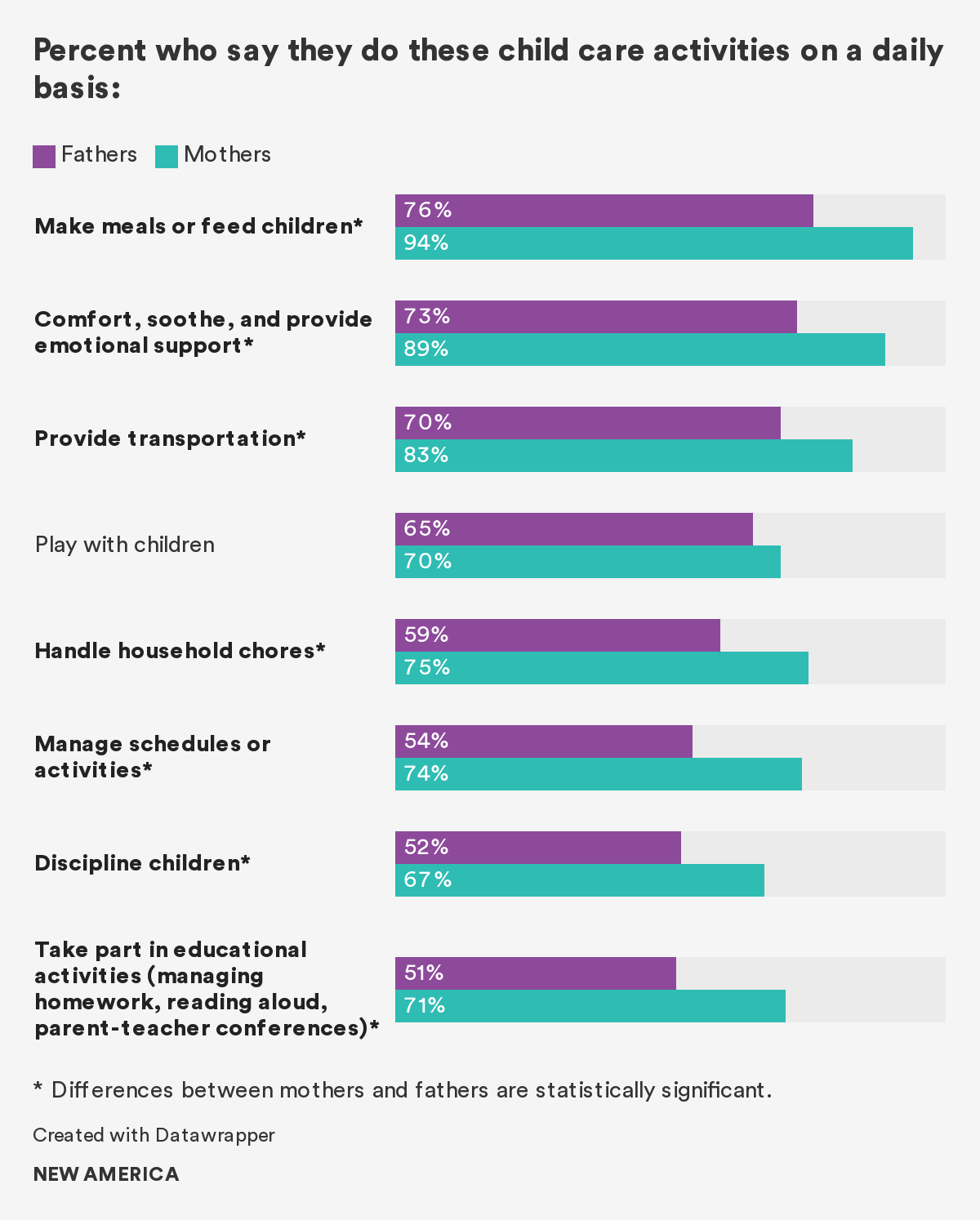
The widest gaps in daily activity between mothers and fathers are in taking part in educational activities (71 percent of mothers reported engaging in this activity daily, while just 51 percent of fathers did so) and managing children’s schedules and activities (74 percent for mothers and 54 percent for fathers). There is an average 15-point gap between mothers and fathers by daily activity, with the narrowest gender gap in playing with children.
As shown in the following figure, other fathers reported engaging in these activities on a weekly, monthly, or less frequent basis.
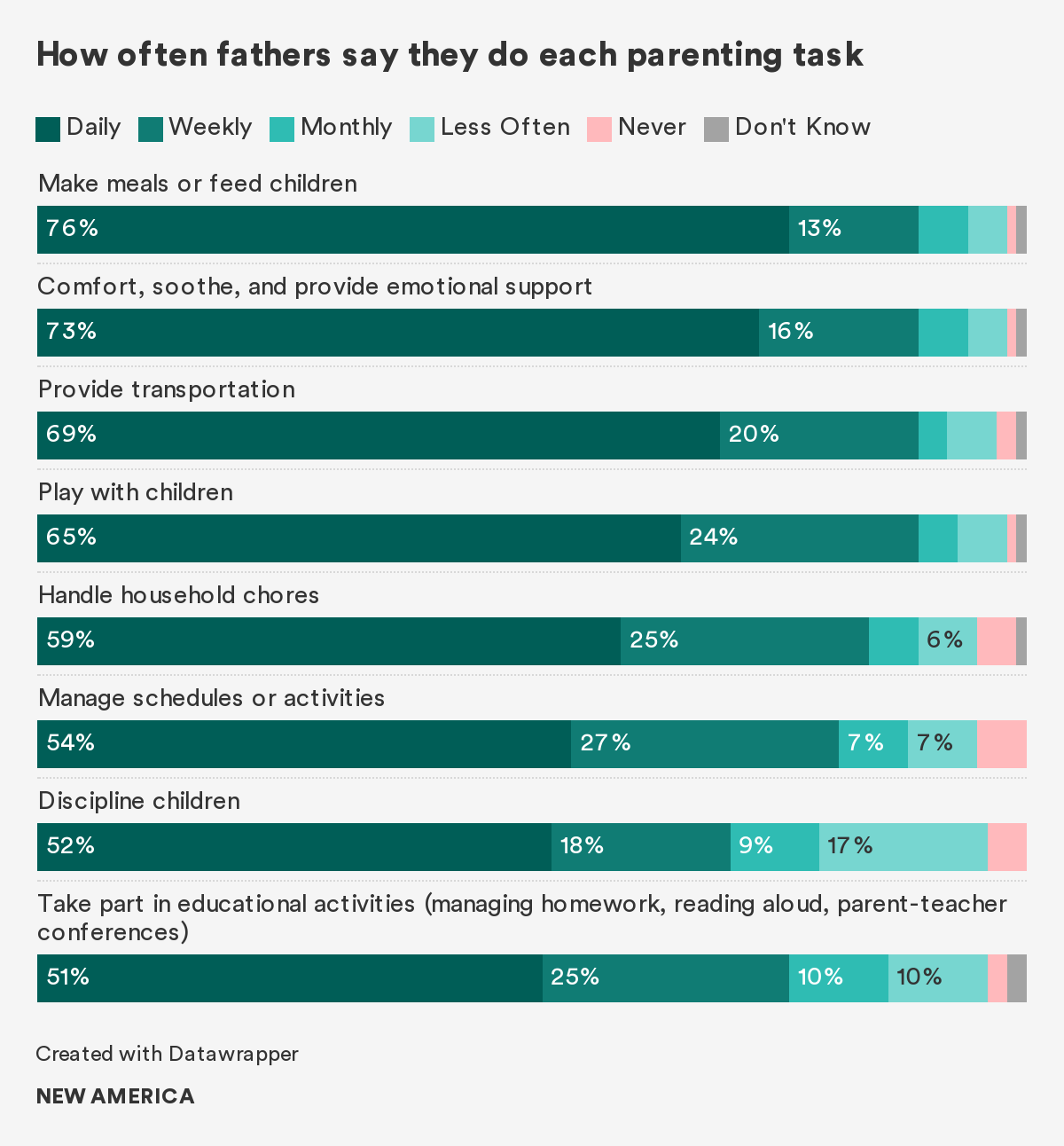
The survey data showing that fathers report more daily engagement in preparing food, cooking, and feeding children than in any other parenting task was echoed by the focus group participants. Several fathers in the focus group described meal planning and preparation as the most important thing they do to take care of their children in a given month. Meal preparation came up frequently when focus group respondents described the previous day with their children. For instance, one respondent, who works from home, provided snacks to his oldest children after they got out of school and then planned to cook dinner for them later that evening, while his fiancé worked outside the home. “Today I am working from home. In the morning, my fiancé got the three older kids ready for school, and the baby was still sleeping. So I only interacted with the baby for about half an hour in the morning before my fiancé took him to daycare. The three older kids came back from school at 2:45 p.m., so I took a 20-minute break from work to interact with them and check their school work, as well as to get them started on their homework. I also got snacks ready for them to eat. I stopped working at 5 p.m., so I checked their homework and sent them outside to ride their bikes. And now I will be taking all three kids and going to the daycare to pick up the baby. Once we come home, then I will spend some time playing with all the kids and getting dinner ready for them.”
Meal planning for some dads is not just about feeding their children three times a day, but is about their children’s overall health and development. One focus group participant said, “I don't let them eat fast food and cook from scratch most days, so they get healthy nutritional meals at home. I try to use a good amount of organic and overall natural products and eliminate as many processed products as possible. I also pack healthy snacks for them to take to school every day. I also give them organic kids vitamins every day.” Several focus group participants said meal planning and supporting their children’s nutrition were some of the most important activities they did for their children’s well being in a given month.
The next most frequent activity fathers reported engaging in is comforting and soothing their children, indicating emotional connection with their children, in addition to direct care. Only about half of fathers reported daily engagement in managing children’s schedules or activities, disciplining their children, or taking part in educational activities.
Just 5 percent of fathers said they never manage their children’s schedules or activities, and fewer fathers than that reported never engaging in the other activities. However, the survey findings and focus group responses indicate dads are less involved than mothers in this daily management of tasks. One focus group dad said he sees this inequality in managing activities: “I am often the only father chaperone on field trips. Right now, I'm at my younger child's swim class: 15 mothers, three fathers (and 95 percent of the class are boys.) When my wife goes away for even one night, I'm often asked if I can handle it (yes, of course I can).”
The survey found that unengaged fathers—that is, fathers who do not ever make meals for their children, comfort them, take part in their education, provide them transportation, or play with them, are a rare exception.
Though mothers continue to perform more daily child care than fathers, the majority of fathers reported engaging in the daily care of their children through several different tasks. Though fathers, on average, are less likely than mothers to engage in these tasks on a daily basis, they do report doing these activities on a weekly or monthly basis, and at rates that exceed the existing gaps in daily activity between mothers and fathers. It is not the case that mothers engage in a host of activities that fathers do not take part in at all.
The most profound difference between fathers and mothers is not what they do for their kids, but how often they do it.
Importance of Activities
The survey asked all parents how important six various parenting activities were to them, and to parents of the opposite gender (see Figure 3). The majority of fathers shared the belief that all six of these activities were very important. However, fathers were more likely to rate long-term, emotional engagement tasks as very important than concrete activities like financial providing and feeding and dressing their children. Over 90 percent of fathers said showing love and affection and teaching their children about life were very important to them. There were only two significant differences between fathers who still have children under age 18 and fathers whose children are all adults. Surprisingly, fathers whose children are all 18 and older were more likely than fathers who still have children between infancy and age 17 to regard showing love and affection and protecting their children from harm as very important.
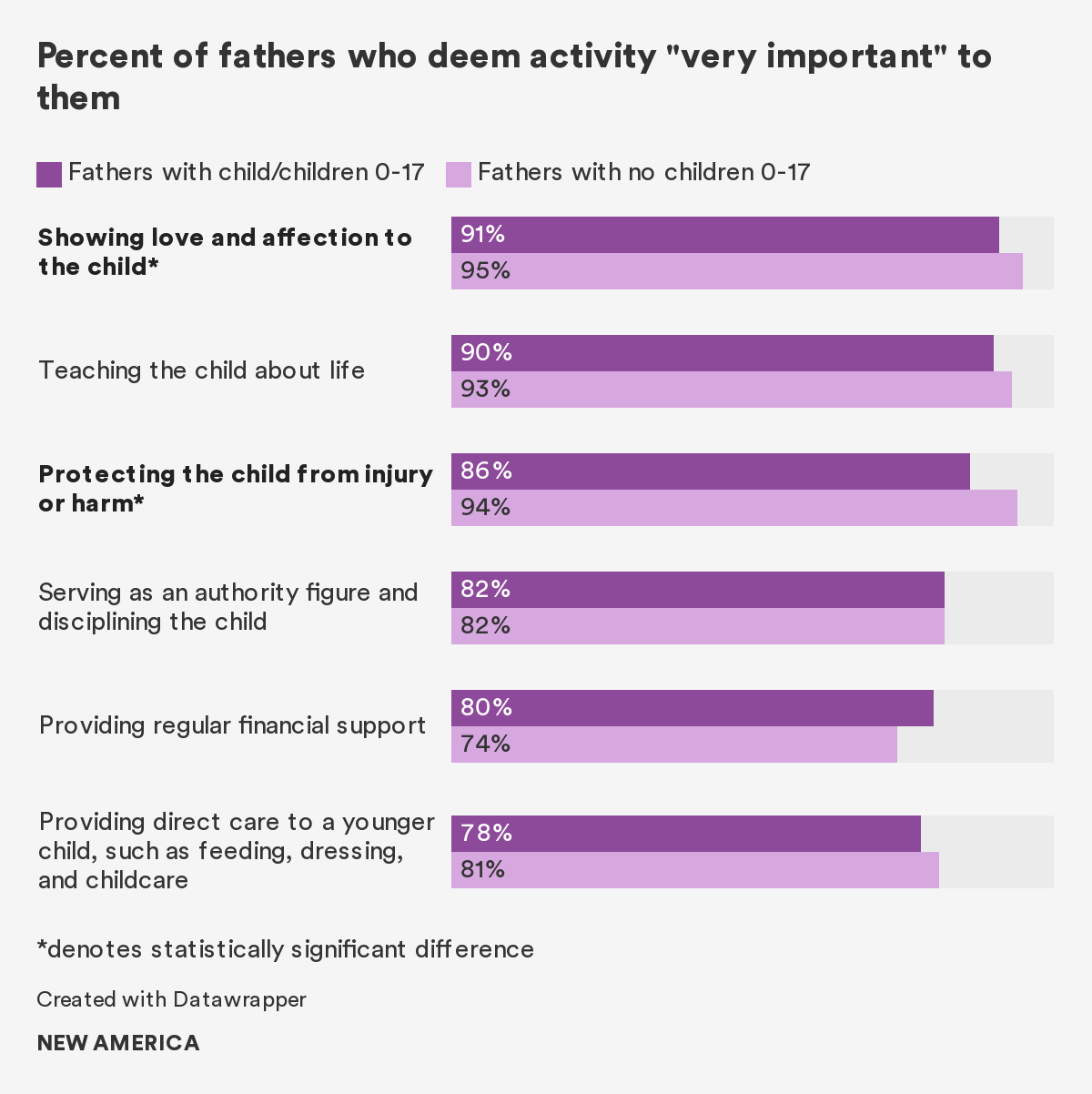
Majorities of all respondents across race and gender believed these tasks to be very important to both mothers and fathers.
How Do Fathers Feel About Being Fathers?
The survey also asked fathers the extent to which they agree with several statements about fatherhood. Overall, fathers feel good about the job that they are doing as dads and about the value of their fathering to their families and society as a whole.
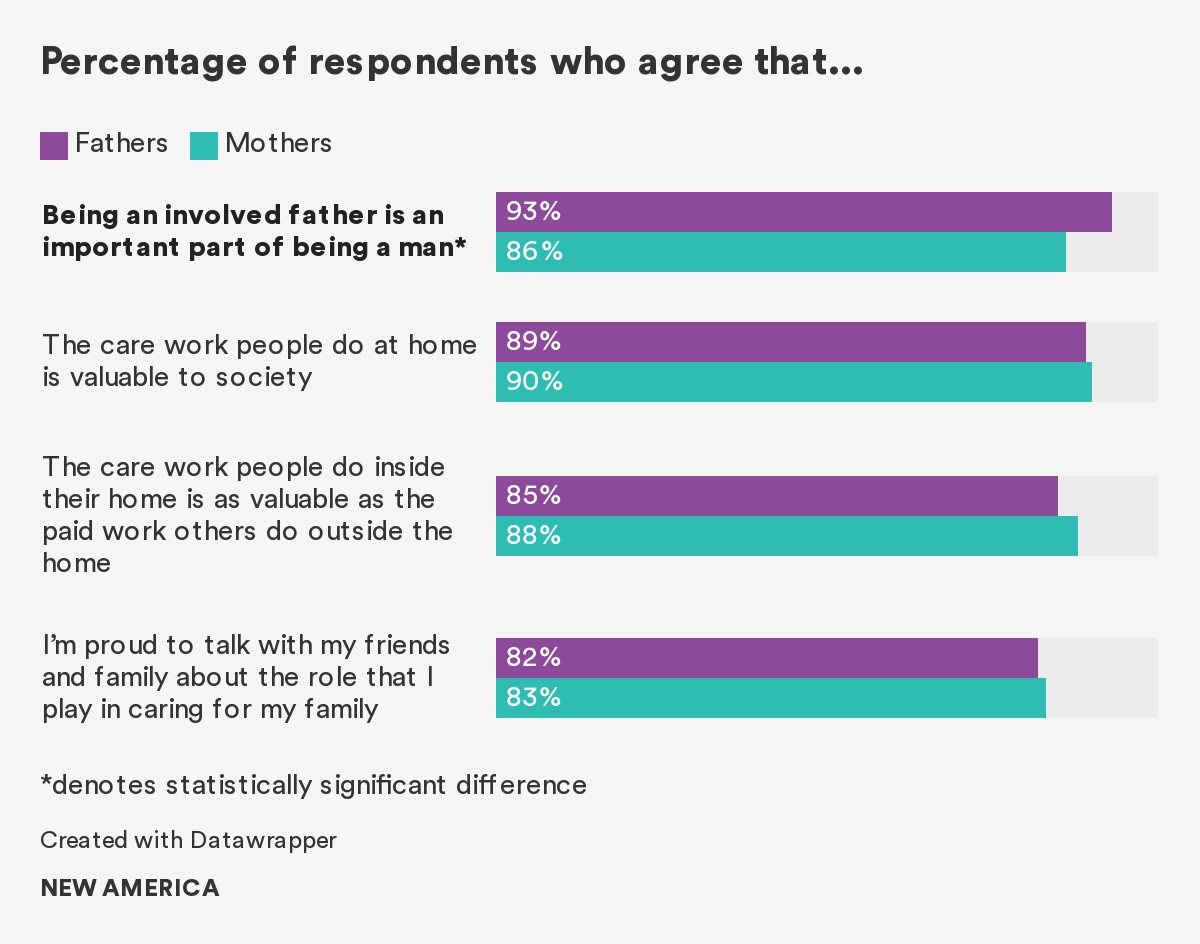
Fathers feel as positively about the care they provide and their role as fathers as mothers. The vast majority of fathers (82 percent) believe care work is valuable and are proud to talk about their caregiving with others. Even more fathers (93 percent) consider being an involved father to be an important part of being a man. They also believe care work in the home is as valuable as the paid work that takes place outside of it. These findings suggest it is not a lack of interest in caregiving or a sense that it is not valuable work that keeps fathers from doing more of it on a more frequent basis.
What are the Biggest Challenges Fathers Face?
The survey asked parents whether, in thinking about the parent they want to be, there are any barriers standing in their way. Almost one-third—32 percent of fathers and 29 percent of mothers—said yes. An open-ended question then asked those who said yes to describe the barriers they faced. The barriers most commonly mentioned by fathers were:
- A lack of resources, including money (22 percent)
- Their paid work (18 percent)
- A lack of time (11 percent)
A Majority of Fathers Feel Work-life Conflict
Other survey findings also pointed to paid work as a barrier to fathers achieving their desired outcomes in their families. When asked a series of questions about how often they feel a conflict between work and family, a majority of parents of both genders saw work as getting in the way of family time. However, fathers were more likely than mothers to say this occurs very often or sometimes.
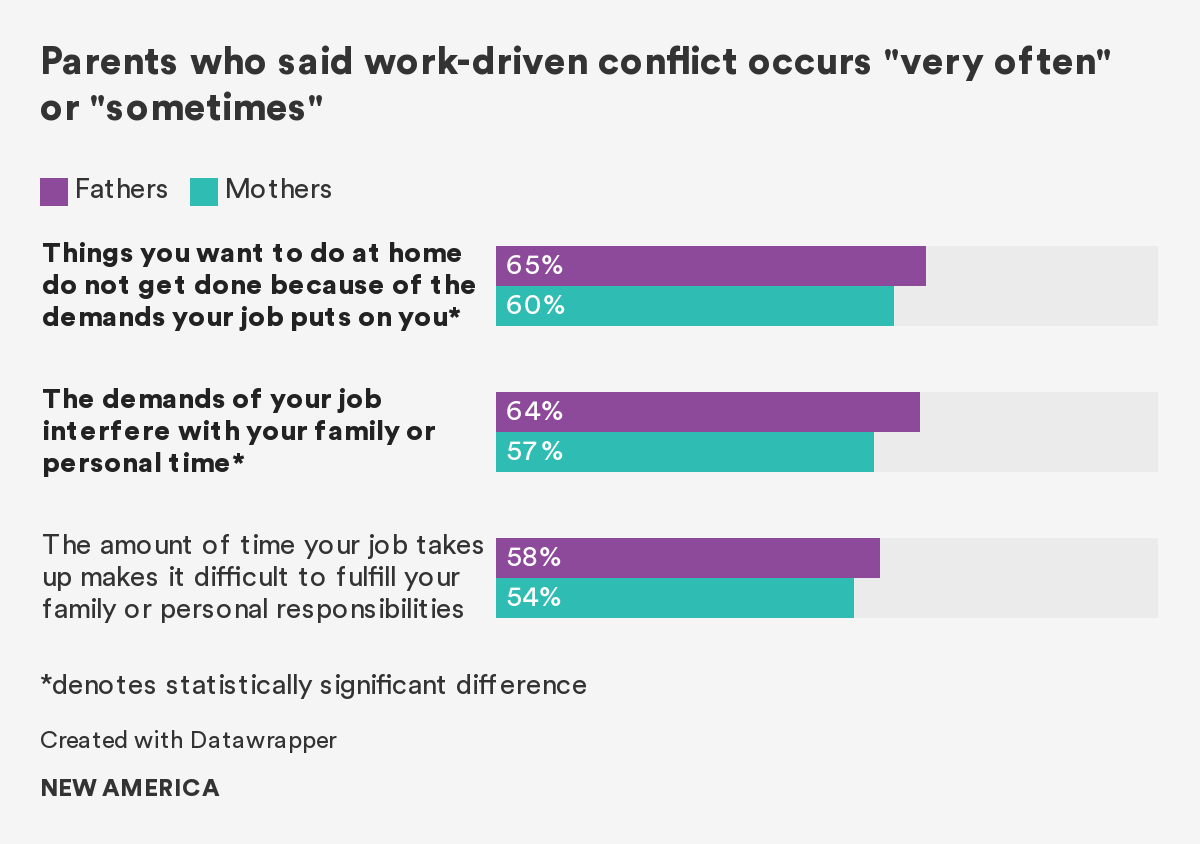
Fathers were significantly more likely than mothers to say things they want to do at home do not get done because of the demands of their job and that the demands of their job interferes with family or personal time.
Both fathers and mothers were more likely to say their job interferes with their family time, rather than the other way around. Two-thirds of fathers (64 percent) and over half of mothers (57 percent) said that the demands of their job interfere with their family or personal time, whereas fewer than half of fathers (41 percent) and a third of mothers (33 percent) the demands of family and personal relationships interfere with their work.
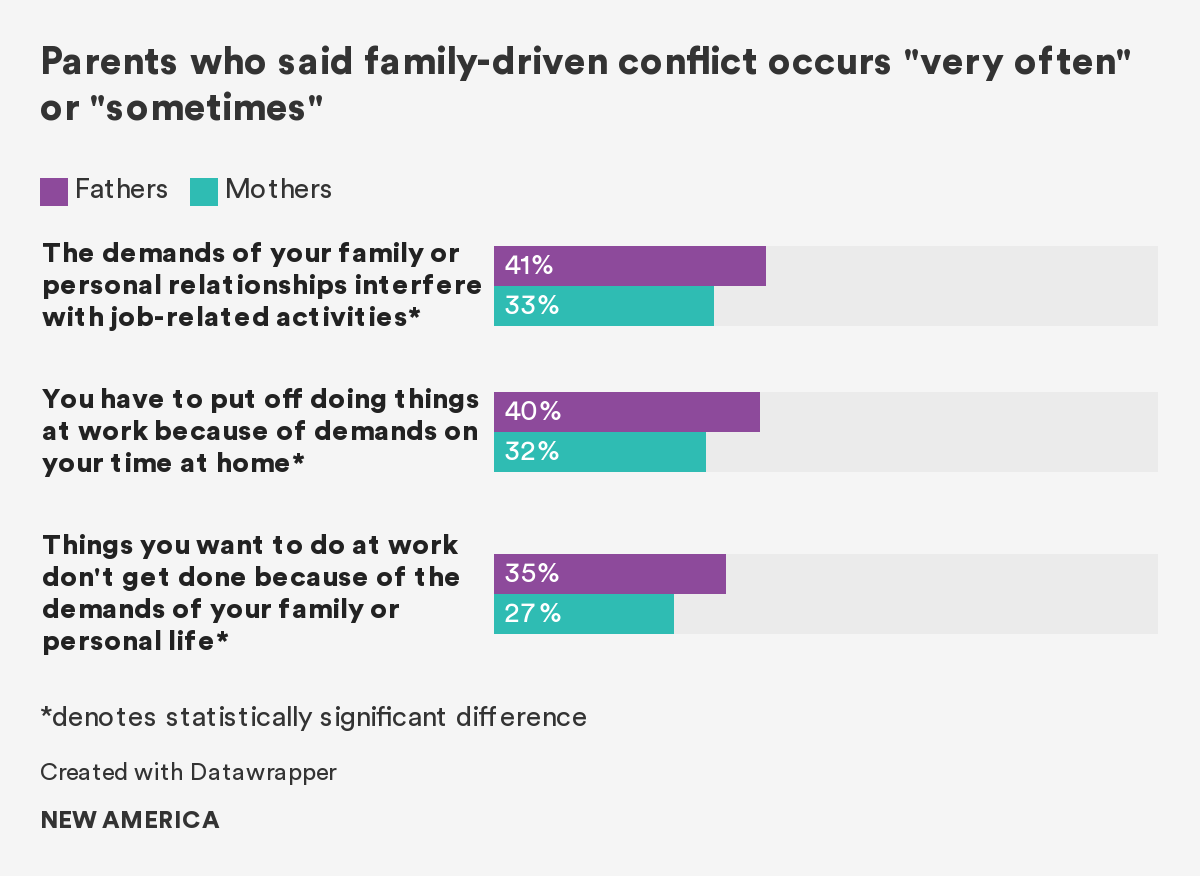
Fathers were more likely than mothers to say that the demands of their family or personal relationships interfered with job-related activities, that things they want to do at work don’t get done because of the demands of family or personal life, and that they have to put off doing things at work because of demands on their time at home.
Focus group respondents explained what this work-life conflict feels like in their daily decision making.
As one respondent said: “The thing I feel most limiting me from being the dad I want to be is time at home with my family. Because I travel so much for work I feel guilty that [my wife] needs to often play single parent when I’m off on a business trip. I try to make up for it by going above and beyond on the weekends when I am home and can be present with family, but I'm also hit with a wall of exhaustion from a long week of travel and often have a large list of chores and to-dos I need to tackle at the same time.”
"It seems like if a mom and dad both work, employers expect the dad to go to work and the mom to call in sick when a kid is home."
Focus group respondents felt that their employers could do more to support them: “I do think that it would be nice to have employers recognize the roles of fathers more. More paternity leave would be a good thing and helping to break down the stigma associated with fathers that need to take a sick day or work from home because there is a sick kid at home would be nice. It seems like if a mom and dad both work, employers expect the dad to go to work and the mom to call in sick when a kid is home.”
Another respondent left his paid work and started his own business precisely because of these difficulties in balancing work and home life. “I can never be a committed full time employee. It is the reason I decided to go into business for myself. There’s nothing wrong with being a full time employee or a committed employee overall, it’s just not the life I want for me. … You are told when to be at work, when you can go eat. You need to have permission to take days off to attend family gatherings, etc.”
About Half of Fathers of Children 0-8 Want More Time with Their Kids
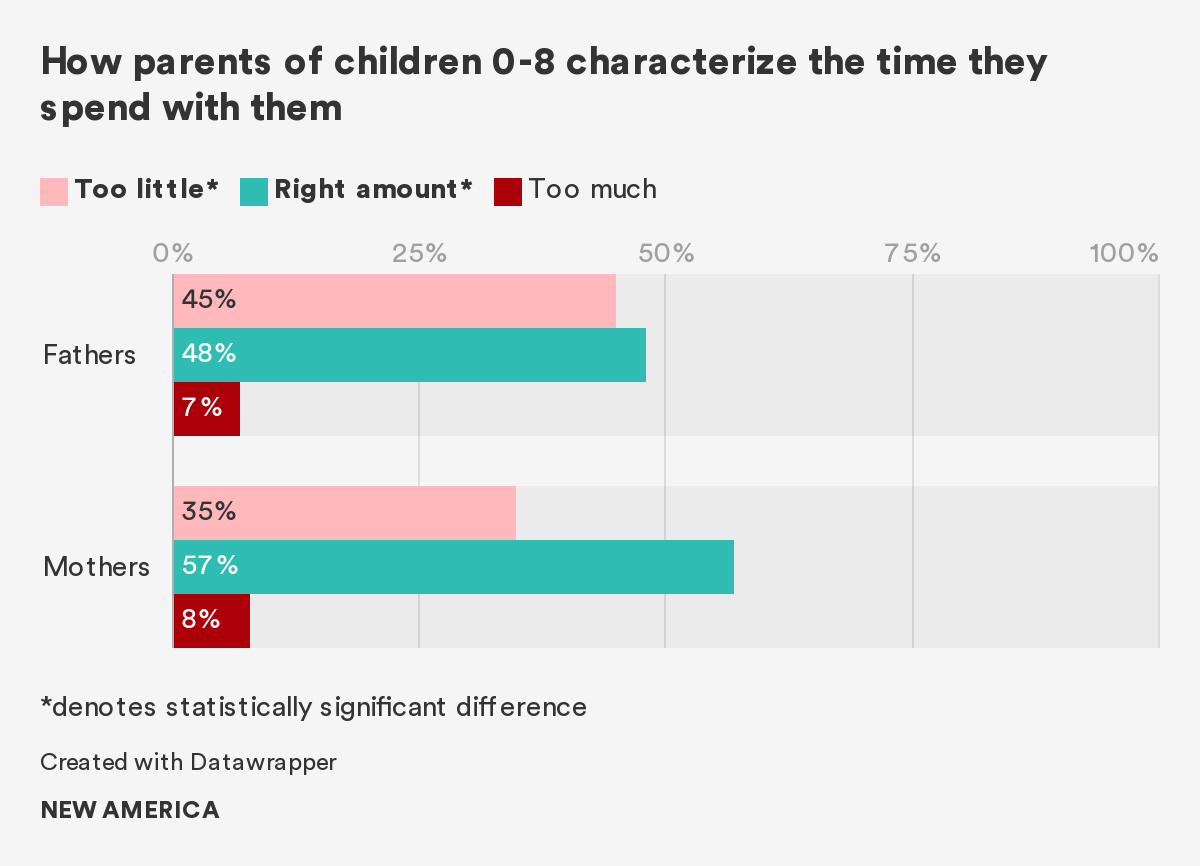
Fathers of children under age eight are significantly more likely than mothers of children under eight to say they spend too little time with their children. When it comes to parents of young children, just 7 percent of dads and 8 percent of moms say they are with their children too much. In contrast, many more parents feel they spend too little time with their children overall. Almost half of fathers (45 percent) say they spend too little time with their children, compared with just over a third of mothers (35 percent). While many fathers point to their jobs as the main reason they don’t have enough time with their children, they also express a general feeling that their families are too busy and juggling too many things to make the time they want. What would they do with that extra time?
Focus group respondents mostly wanted more quality time, an opportunity to spend time with their kids playing and talking. Others wanted to be more involved in their educational and recreational activities—working with them on homework, reading books, or teaching them skills. Others said the desire for time is just a desire to be more present at home.
As one father said: “I’d like to be a calm, teaching, knowledgeable presence to my boys. It’s very difficult since they are only 16 months apart and practically twins at this age. My wife takes care of their mornings and afternoons 99 percent of the time… breakfast, school bus, volunteering at school, afternoons off the bus, and keeping them busy until I get home usually around 5:30 p.m. I do wish that my days were more flexible so I could be home in the mornings more, or work closer to home more often (I do have the opportunity, but it feels like I’m missing the ‘important’ things if I’m not downtown with the rest of the team and department).”
Resources and Community Support
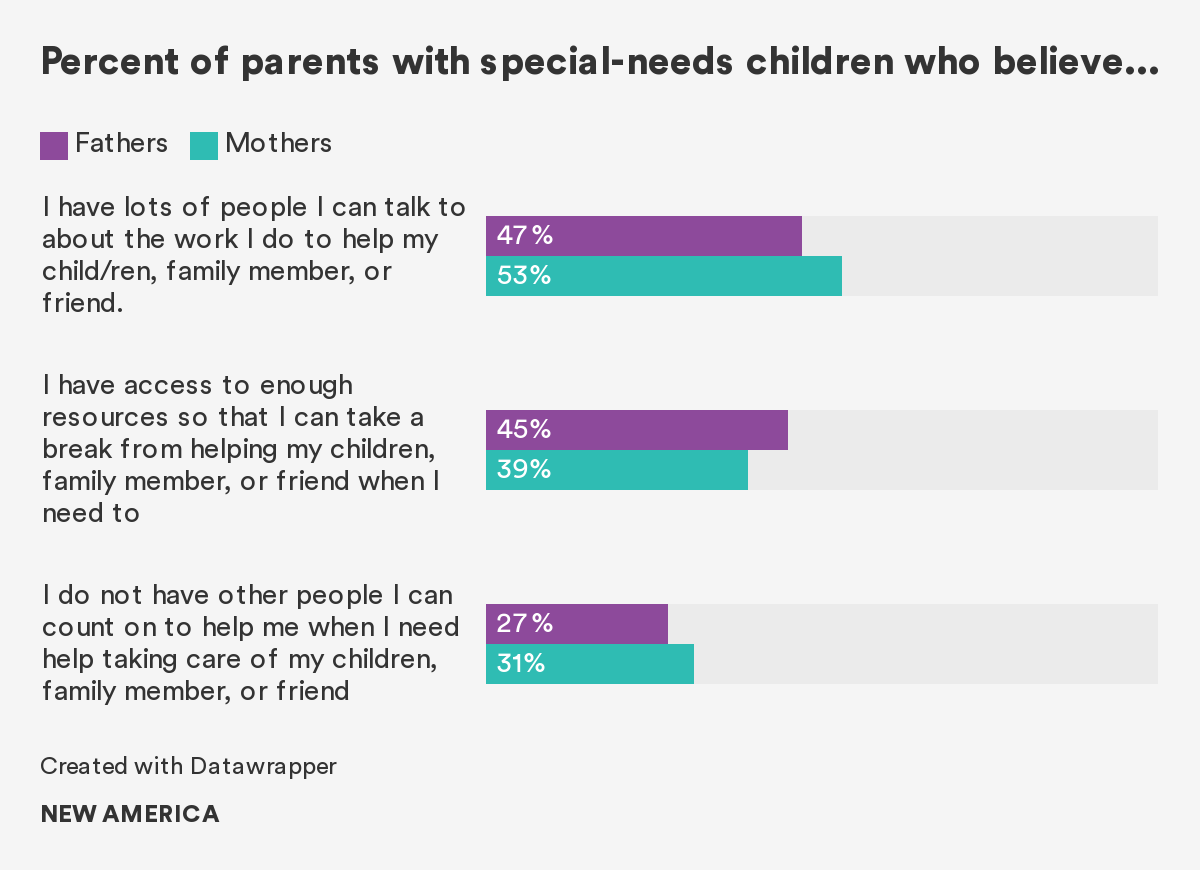
Parents who are also caregivers, that is, who take care of a sick adult or a child with special needs, are in need of additional resources and more support from people they can talk to. Only about half of fathers (47 percent) and mothers (53 percent) said they have “lots of people” to talk to about the caregiving they do. Less than half of fathers (45 percent) and mothers (39 percent) said they had enough resources to “take a break” from caregiving when they needed to.
Focus group participants listed a number of community resources that they believe would help, including more funding for schools and outside activities for kids, paid paternity and maternity leave, affordable child care, more educational and healthcare assistance especially for parents of children with disabilities, and fathers’ groups.
As one respondent said: “I think we could be proactive about how we support fathers. It’s common to see moms groups (MOPS, mother’s day out, etc.) but you don’t see those types of groups or opportunities for fathers. Society needs to understand that fathers have the same struggles that mothers do. We are just expected to deal with them on our own and getting support or community is the exception and not the rule.”
One further barrier to men being able to participate as fully in the lives of their children as they’d like may lie in stigma around and a lack of community support for men as caregivers. Over a quarter of surveyed fathers (26 percent) said they sometimes feel like people don’t trust them to parent because of their gender. Fathers in the focus group also expressed a belief that society did not adequately respect their role and competence as fathers.
Over a quarter of surveyed fathers said they sometimes feel like people don’t trust them to parent because of their gender.
In the focus group discussions, participants were asked what they believe the experience of a man working in a child care and learning center would be like. While most participants said they would have no problem with a man taking care of their children, they also felt that society in general may make it difficult for him. As one respondent said, “I have no problem with a male being a teacher, but I feel like a lot of parents would. Society tells us that young children should be taught by women and if there is a male teacher teaching young kids, he has impure motives.”
Another focus group participant felt that this lack of support for fathers was unfair when compared with the support for women who have entered the paid workforce: “As much as people have worked to accept women as equals in the workplace, I haven’t seen the same for dads who stay at home.”
However, in the absence of these community, policy, and workplace resources, parents did establish support networks for themselves to get by. Fewer than one-third of fathers, similar to the general population as a whole, said they did not have people they could count on for help with caregiving when they needed it.
Attitudes Toward Gender and Care
The survey findings tell a complicated story about U.S. parents’ beliefs about gender equality in parenting and caregiving. In general, fathers and mothers alike are on board with equal parenting. The vast majority of fathers (86 percent) and mothers (88 percent) agree that “mothers and fathers should divide caregiving responsibilities equally at home.” Three-fourths of parents (75 percent of fathers and 76 percent of mothers) say mothers and fathers should share the work of caring for a baby equally.
One focus group respondent said of greater gender equality in parenting: “I really think roles are starting to intertwine. No longer are there standard roles for men and women. There are a higher degree of dual-income homes without the mom at home doing caregiver stuff. These tasks are divided and conquered now.”
Yet other focus group participants saw less equality in parenting around them than they would like. “Many people are surprised or act like it's a big deal when they find out that a father is just doing his fatherly duties in taking care of his children. I understand the history of this subject matter, where the women who couldn't work had to stay home and tend to the kids, but times have changed, and so should perspectives.”
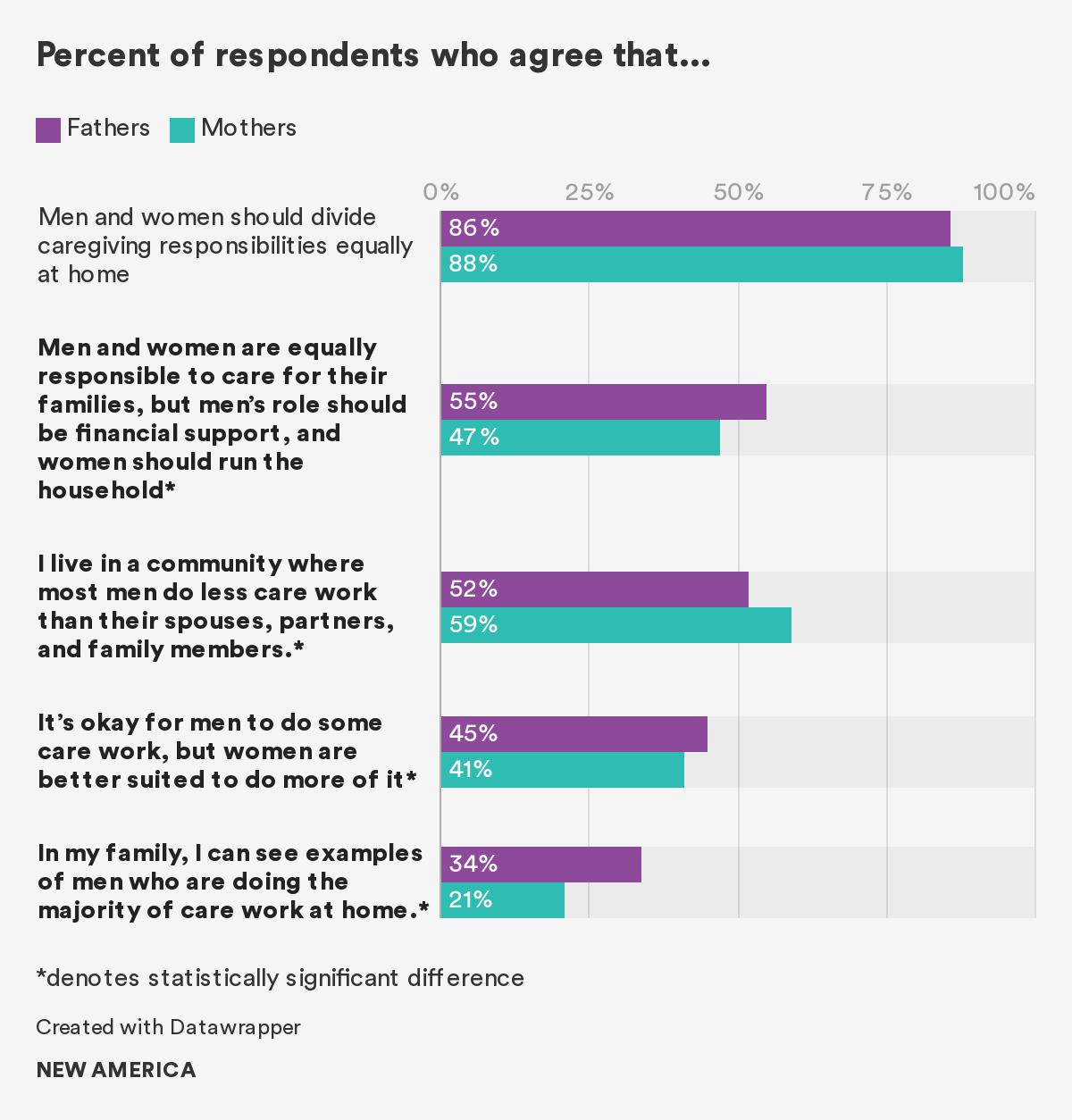
The survey data also reveal that many parents see unequal distribution of care work between men and women. Just over half of fathers (52 percent) said that they live in a community where they see most men do less care work than their spouses or other family members. Mothers (59 percent) were even more likely to say this. There is an even bigger gap between mothers’ and fathers’ perceptions when assessing the gender breakdown of care work at home in their own families, with only one-third (34 percent) of fathers saying they see examples of men doing the majority of care work, while just one-fifth of mothers (21 percent) say the same.
What’s behind this disconnect between a belief in equal responsibility and such unequal levels of engagement in care work between men and women?
The answer may lie in the survey finding that about half of parents agree with statements that support something like a separate spheres model of organizing families, even though these statements contradict other findings, namely with respondents’ agreement with the idea that the genders should share caregiving equally. Just over half of fathers (55 percent) and 47 percent of mothers say that though men and women should both be responsible for caring for their families, women should take on responsibility for the household while men take on responsibility for family finances. And 45 percent of fathers say that while it’s okay for men to engage in care work, mothers are “better suited to do more of it.” Mothers are only slightly less likely to agree with that statement.
How some respondents can believe both statements—that men and women should equally share the responsibilities of care and that women should take responsibility for the household, while men handle finances—requires further study. It may be that some respondents believe financial providing and financial management are part of the total equation of “caring for children.” Or perhaps they think shared responsibility for caregiving and household tasks does not mean shared participation. The belief that women are better suited to care might lead to situations in which women become de facto caregivers and men become de facto breadwinners, despite an overall belief in gender equality.
One focus group participant shared insight into these contradictory feelings. He expressed feelings of guilt about his lesser involvement in the direct care of his daughter, due to the work demands on him, and anger that he was regarded as “super dad” for doing everyday things like taking his daughter for a walk. Yet, he also expressed some support for the notion of separate spheres. Indeed, he defined his role as a father as supporting his wife in getting what she needed to take care of their daughter. “I’ve been told my job as the father is to protect and provide for my family. I don't think that precludes me from also being there to love and nurture and bond. Oftentimes I tend to think of my role as helping to eliminate barriers or obstacles or issues for my wife so she can be freed to have the time, patience, etc. to provide that direct child care that I sometimes am not able to be present for.”
"I’ve been told my job as the father is to protect and provide for my family. I don't think that precludes me from also being there to love and nurture and bond."
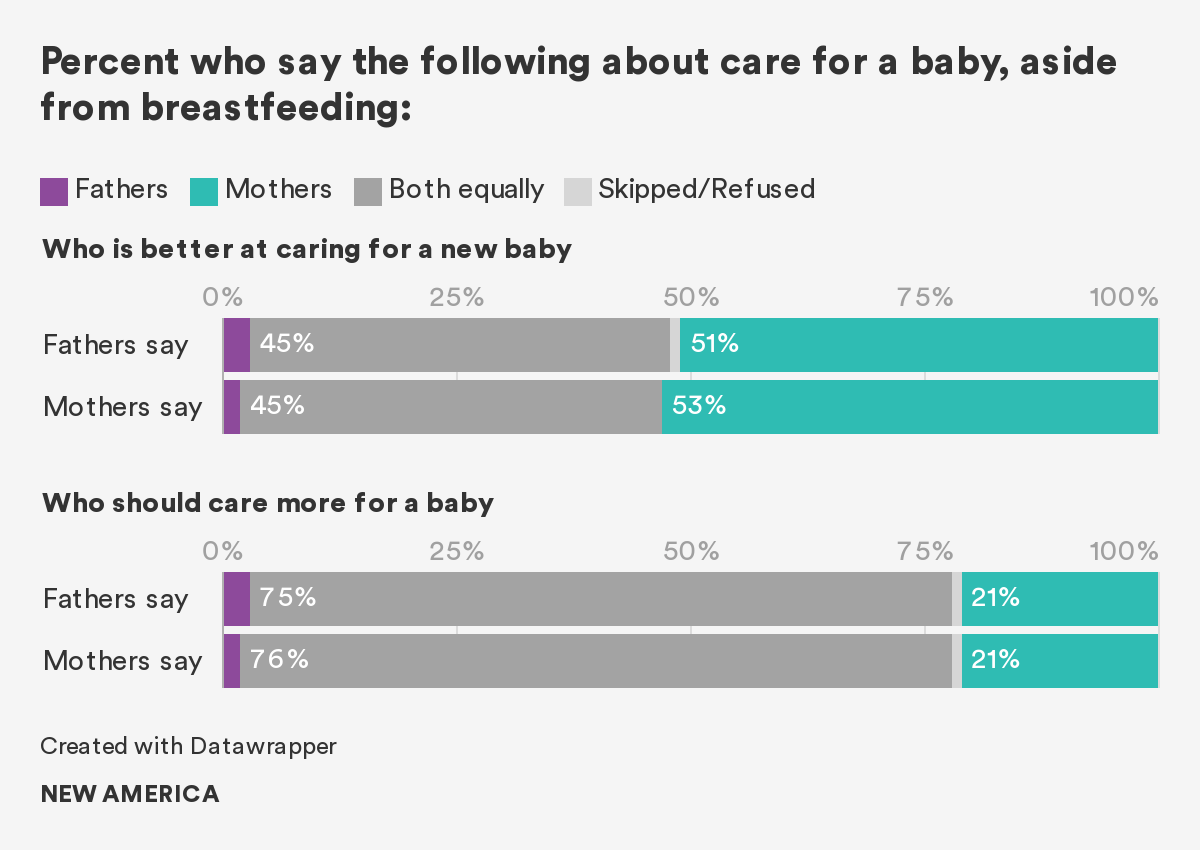
One reason for these beliefs that mothers should take on the primary caregiver role for their children might lie in respondents’ understanding of women’s suitedness to the role of caregiving as biological or natural. When asked whether, aside from breastfeeding, women or men did a better job caring for a baby, over half of mothers (53 percent) and fathers (51 percent) said that mothers were better caregivers to babies than fathers. Slightly fewer respondents (45 percent of fathers and 45 percent of mothers) said that mothers and fathers do an equally good job of caring for a baby.
One focus group respondent felt that it was clear that mothers were better suited to caring for babies, but also felt that left an important role for fathers to play in supporting their partners and stepping in when they need rest: “I think women are surely better suited to take care of babies, which is only natural. Though, women need all of the help that they can get from their male partners, especially in the weeks after the trauma of birth. Men need to be able to fully support their partners and step in when they need a break. Men can bottle feed in the night so that mom gets sufficient rest.”
Another respondent agreed that women were better suited to caring for babies due to what he called “mother’s intuition,” though he was unsure if that was due to nature or nurture. Yet he believed that didn’t preclude fathers from stepping up or that fathers could not become the primary caregiver and develop their own intuition. “I don't know if it’s nature or nurture, but I have definitely seen my wife's ‘mother's intuition’ kick in. It’s certainly a lot more fine tuned than mine is. When our daughter was an infant my wife was completely locked in and had an infinite amount of patience. Now as our daughter has gotten older my wife's patience is a little shorter than mine is. There are amazing mothers and fathers, and I know several colleagues who are stay-at-home dads and have developed that fathers instinct muscle. I think part of it is nature and that intimate connection that a mother will always have with her children, but it doesn't preclude the father from being able to step up and deliver that same level of care, attention, and love.”
The belief in the inherent superiority of women may become a cause for defaulting to women as caregivers and men as providers, whenever families are forced to decide who should do what.
Overall, these findings suggest a complicated and at times contradictory evolving understanding of what equal responsibility for parenting looks like. While respondents overwhelmingly support equality in parenting, the belief in the inherent superiority of women may become a cause for defaulting to women as caregivers and men as providers, whenever families are forced to decide who should do what.
That belief may also lead couples to feel that though mothers and fathers can both perform paid work and care for children, supporting fathers in their careers is non-negotiable, while supporting mothers is only vital insofar as their wages are essential to the household and/or it doesn’t interfere with their caregiving. Importantly, around half of respondents rejected these beliefs in a special mother’s advantage in childrearing and instead believe fathers and mothers to be equally suited to these tasks. Furthermore, findings from previous sections suggest beliefs in different roles for men and women do not stop men from taking an active daily role in childcare.
Conclusion
Dads today recognize that their role has shifted and expanded from the roles of men in past generations, including their own fathers. Dads are overwhelmingly happy about their new roles and take pride in the care work they are doing. The vast majority of dads (over 90 percent) also view love, affection, and the teaching of children about life to be “very important,” while only about three-quarters view providing for the child financially as “very important.”
Despite some contradictory findings on respondents’ ideal sense of roles parents should take on, there are countless indicators in this report that dads want to be more involved in the daily care of their children and in ways that exceed financial providing. These indicators of major transformations in notions of fatherhood from just a few decades ago should give families and supporters of gender justice hope that more equal parenting is possible.
The next steps for achieving equal parenting should focus less on changing the hearts and minds of individual men, that is, winning them to a more modern, involved notion of fatherhood, as views have already shifted, and should focus instead on policy and workplace changes: creating jobs that not only provide adequately for more families but also offer more schedule control and flexibility to combine work and care responsibilities, as well as social policies that support families in these struggles and prioritize time to care as much as time to work.
Fathers, like most of the population, agree that the work of caring for their children and families is valuable. But public policies and workplaces reward paid work over unpaid caregiving, creating situations in which many men and women feel they are strapped for time and cannot risk losing income by being more active caregivers.
Affordable child care, paid paternity leave for dads of newly born, adopted of foster babies and paid caregiving leave for both parents throughout their children’s lives, and adequate wages that enable families to have quality time with their children without fearing financial ruin, are all essential to allowing dads who already are actively engaged in their children’s daily care to take on an even greater role.
Here are three concrete measures families, employers, and policymakers must take to achieve gender-equal parenting and to meet the needs and desires of mothers and fathers across the United States.
Takeaways for Dads and Families
- Continue to speak out about how you value men’s involvement in daily caregiving and the benefits it brings to you and your family.
- Join fathers’ and mothers’ groups that support robust work-life policies, wherever possible.
Takeaways for Employers
- Provide gender-neutral family-supportive policies, including paid leave, to all employees, part-time and full-time, and create work cultures that support men using the policies. Support action for universal, portable benefits through the federal government.
- Discuss workplace policies around family life in gender neutral terms. Provide examples that include men using the policies and normalize the notion that male employees are also caregivers outside work.
- Give men as well as women the flexibility to determine their schedules and where they work from, where possible.
Takeaways for Policymakers
- Implement universal paid family leave for all working families, available not only after the birth of a child but throughout life.
- Improve workplace standards to help families feel more stable, increasing the federal minimum wage to a livable level, establishing portable, widely accessible and affordable healthcare and childcare that do not depend on employment, but stay with families through employment changes and breaks from employment.
This report confirms that a new kind of fatherhood—premised on love, teaching, and direct care for children—has already replaced the father-as-provider, separate spheres model of parenting in the United States. Dads, families, and supporters of gender equality should mark and celebrate this rapid, historic transformation in roles. They should also note that fathers and mothers are not yet satisfied: Though the majority of parents today see equally shared parenting as the standard they hope to achieve, they still see inequality around them.
And yet, through this survey and focus group, parents have also named what they believe to be the culprits—a lack of time, a lack of resources, overbearing jobs, and in some cases, stigma and a lack of support for men as caregivers. This report has shown the key elements of a path toward equal parenting. For progress toward engaged fatherhood and equal parenting to continue, policymakers and employers will have to act.
Methods
This research was underpinned by two separate data collections: an online survey and a series of five online discussions. Detailed methods for each data collection are outlined below.
Focus Group Methods
In order to understand the experiences and beliefs of a broad swath of American adult men and women from across the United States regarding men and caregiving, we conducted five three-day long online discussions using the 20|20 Research’s facilitation platform QualBoard. 20|20 recruited and screened focus group participants for each of the online discussions. The groups were conducted over four weeks in May 2019 and included a total of 68 participants. Participants were compensated for their time. The five groups were each with separate populations, with each group drawing the following populations from across the United States:
- A general population group of men 18 and older,
- A general population group of women 18 and older,
- A group of fathers of children ages zero to eight,
- A group of men who are currently caring for another adult, and
- A group of men who work in caregiving professions such as nursing or early childhood education. Physicians were excluded.
Better Life Lab at New America supplied 20|20 with six open-ended discussion prompt modules, with a first module of questions released early in the morning and a second in the early afternoon of each day of the three days that each board was active. All of the modules from the previous days remained available for respondents to engage with on the following days. The boards were live for five days, to allow participants extra time to finish answering questions. Participants could respond to moderators, moderators could ask participants follow-up questions to learn more about their experiences, and participants could ask questions of each other or comment on one another’s thoughts. Participants were asked about their experiences with leave, how they would feel about their employer offering a paid leave benefit, how they feel about coworkers using the benefit, and how they would feel about the government offering a universal paid leave policy. Researchers at the Better Life Lab used a grounded theory methodology to develop a coding scheme for the focus group transcripts and analyzed the data using these codes to identify common themes.
All moderators for the focus groups were women and interacted with participants using their actual first names and portraits as their avatars, which may have limited the disclosures some men made about their feelings around caregiving and paid leave. Other than those participants who explicitly gave us permission to report on their stories as journalists after the focus groups concluded, all focus group participant names have been changed to pseudonyms chosen by the authors of this report. The promise of anonymity in all public records may have encouraged participants to be open and honest.
The transcripts of these focus group discussions were coded using a grounded theory methodology. Coders began by reading the full transcripts of all five discussion boards. Coders then read through the transcripts a second time, noting themes. Themes were generated based on clear differences amongst participants on the questions, and common attitudes, beliefs, and behaviors, as well as participants’ stated desires, motivations, and barriers. The coders then compared their notes and established a common list of codes that was all-inclusive of the noted findings, collapsing overlapping categories together without losing differences or details, and including working definitions of each code and how it should be applied. Using the established list of approximately 60 codes across the categories of Behavior, Beliefs, and Attitudes, coders went back through the five transcripts coding utterances with relevant codes. Coders ran two tests for coding accuracy—comparing their application of codes on the answers to two distinct discussion questions in two groups’ transcripts. Coders agreed on the application of codes in over 90 percent of cases. The key trends and themes these codes revealed are detailed throughout the report, with select quotations from participants that best exemplify these findings.
Survey Methodology
This study included a nationally representative online and phone survey of 2,966 adults in the United States. The survey was fielded between April 25 and May 16, 2019, with an overall margin of error of +/- 2.75 percent. The survey was conducted in English and Spanish by NORC at the University of Chicago on its AmeriSpeak platform for New America. Funded and operated by NORC at the University of Chicago, AmeriSpeak® is a probability-based panel designed to be representative of the U.S. household population. Randomly selected U.S. households are sampled with a known, non-zero probability of selection from the NORC National Sample Frame, and then contacted by U.S. mail, email, telephone, and field interviewers (face to face).
This survey included an oversample of the men 18 and older, as well as two additional non-probability oversamples of fathers of children zero to eight and men who currently work in caregiving professions. NORC partnered with Dynata for the father of zero to eight year-olds and professional male caregiver samples. The oversamples of men and fathers are included in this analysis; the professional caregiver oversample is not included. This research was done to support a better understanding of the perceived caregiving responsibilities of men and women with a focus on the parenting and caregiving roles of men.
Panelists were offered the cash equivalent of $3-7. New America and NORC collaborated on the writing of the survey instrument. Respondents were removed from the dataset if they completed the survey in two minutes or less (10 cases) or if they gave suspicious responses to grid items (13 cases).
Additional details about the study sampling and weighting are available from New America.
More About the Authors

Haley Swenson
Senior Writer and Researcher, Better Life Lab