
Sydney Saubestre
Senior Policy Analyst, Open Technology Institute, New America
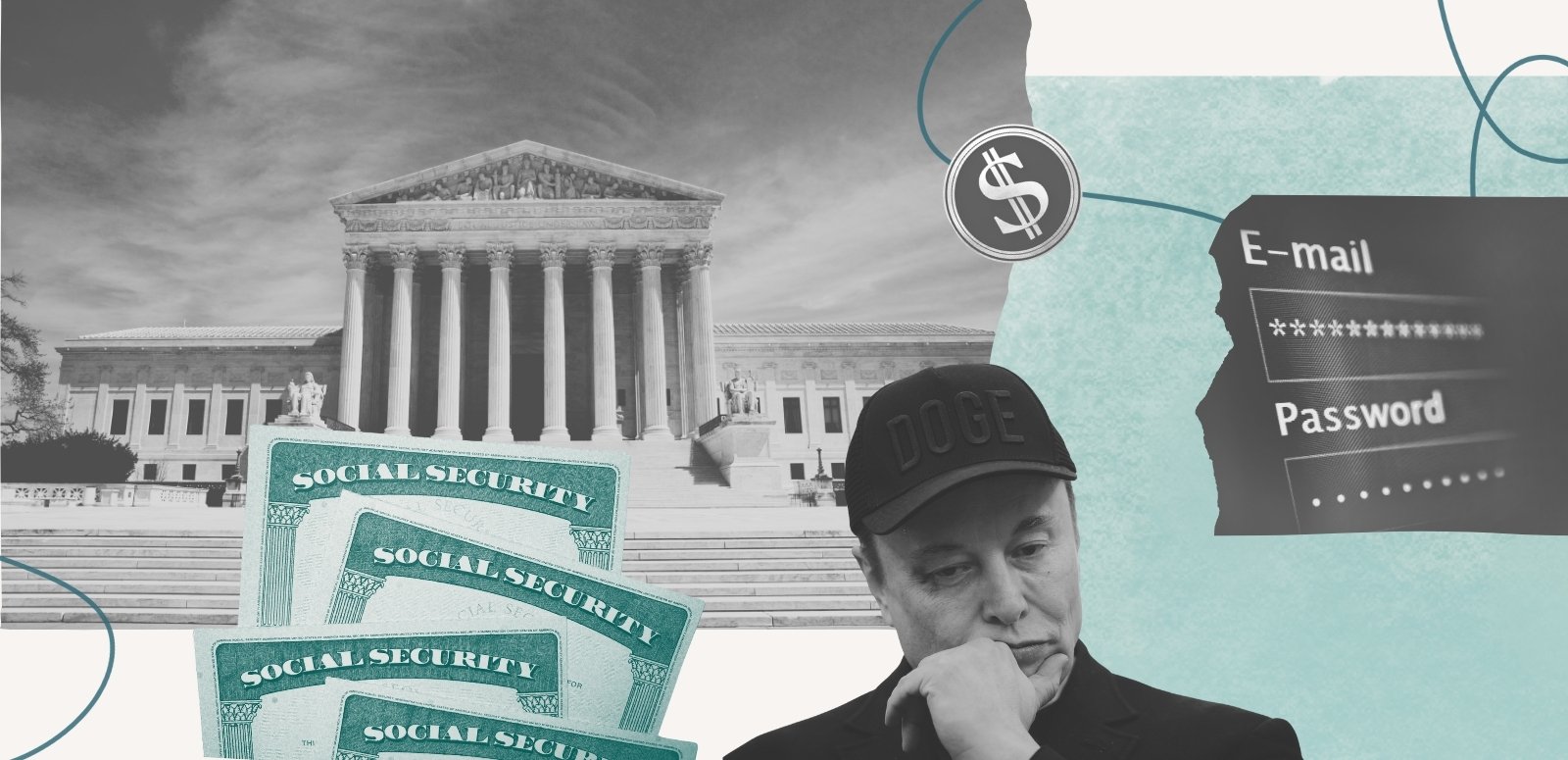
Last Friday, the U.S. Supreme Court issued an unsigned 6–3 decision in SSA v. AFSCME that cleared the way for the Department of Government Efficiency (DOGE) to have immediate access to troves of sensitive personal data held by the Social Security Administration. The decision, which temporarily suspends a lower court’s injunction, applies to non-anonymized records—data that is protected under the Privacy Act of 1974.
These data points—including Social Security numbers, detailed medical histories, and personal banking information—may be bureaucratic in origin, but they carry deeply personal implications. When data is framed as a neutral administrative tool rather than what it actually is—an intimate portrait of a person’s life—it becomes easier to prioritize harmful access to data over individual protections and longstanding privacy safeguards. And all this is under the purported aim of curbing “waste, fraud, and abuse,” which ignores the many long-standing efforts to use data to do just that without putting individual privacy at risk.
What we’re seeing is not just a legal shift, but a structural one. The court is signaling that longstanding protections can be brushed aside, and that legal safeguards around data use are no longer guaranteed. The Privacy Act sets rules for how federal agencies must handle records containing personally identifiable information—governing how they are stored, who can access them, and under what circumstances the government can use or share them. While the Privacy Act needs reform, we still need good-faith enforcement of the laws we already have. If DOGE can keep bypassing current protections, we risk setting devastating precedents that are hard to reverse.
Privacy is not static—it evolves with technology, policy, norms, and of course, power. We’ve moved far beyond one of the first legal definitions of privacy, which defined it as “the right to be left alone.” Privacy today must be reframed as the right to retain agency over one’s self, digital or otherwise. And that agency is rapidly diminishing, but we can and should expect more from our government.
As someone who has worked across privacy law, data governance, and emerging regulatory models, I see this moment as indicative of a broader pattern: federal entities asserting expansive data collection powers that are not aligned with their purpose, and without proportional transparency, oversight, or accountability. While efficiency is the stated goal, what is often gained is not operational effectiveness but narrative control. Information becomes leverage.
The public deserves clarity on what data is being collected, how it is being used, and what rights they retain. That’s why New America’s Open Technology Institute developed an interactive quiz to help individuals assess what personal data might already be exposed to DOGE.
Understanding your own risk is a critical first step. So is recognizing that privacy is no longer a purely individual concern—it’s a collective one.
Take the quiz to see what data of yours is at risk.
Senior Policy Analyst, Open Technology Institute, New America