
Table of Contents
Forsyth County, North Carolina
“I haven’t heard of anyone getting assistance in a long time.” – Housing advocate, discussing pandemic-related rental aid in Winston-Salem1
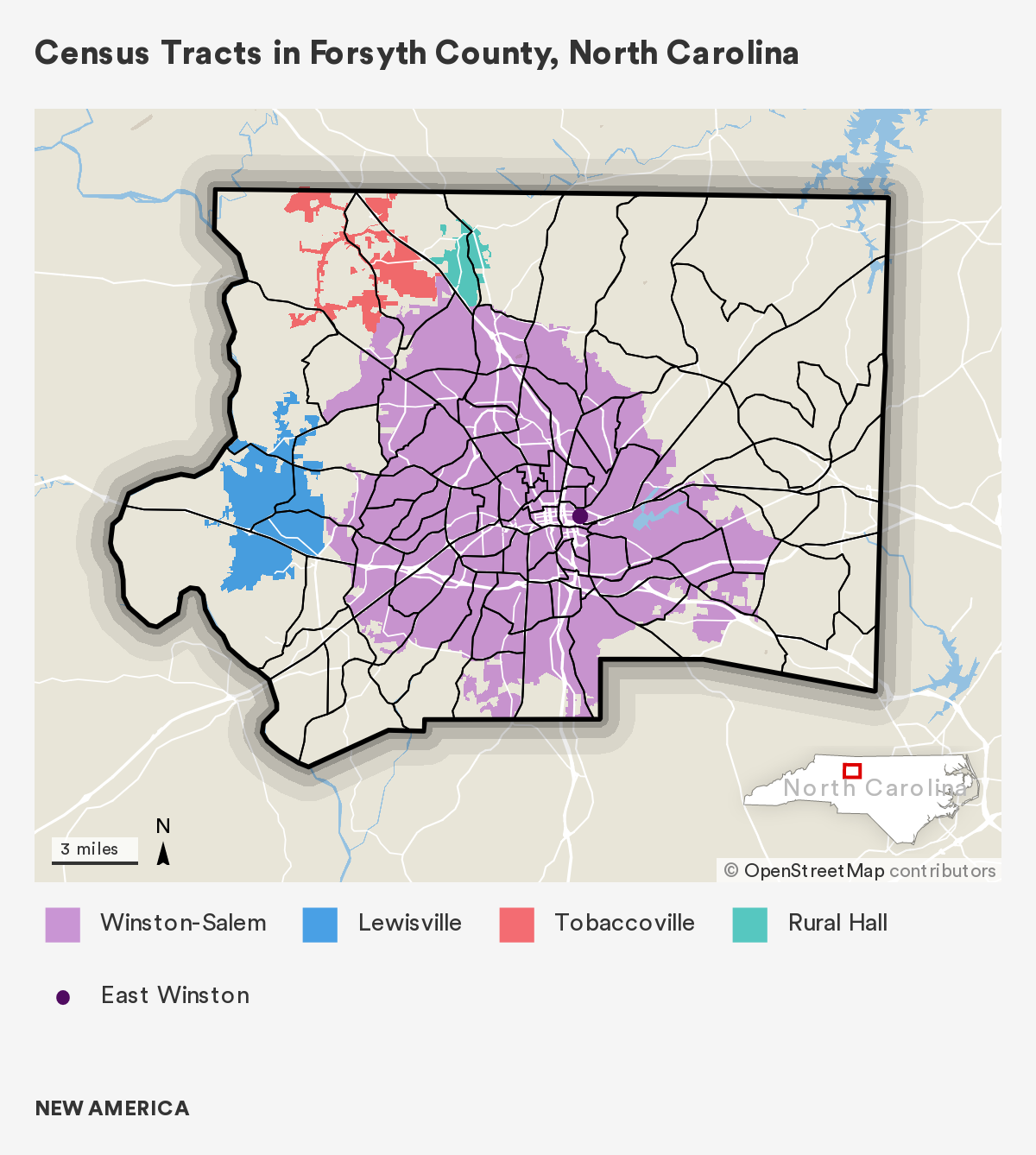
Forsyth County sits in the central Piedmont region of North Carolina, and is the fourth most populous county in the state, with approximately 380,000 residents. Winston-Salem, home to a quarter-million people, is both the county seat and largest city. Along with nearby Greensboro and High Point, Winston-Salem is part of the Triad, a significant regional metropolitan area.
Roughly 40 percent of the county population is Black or Latinx, and Winston-Salem has a long history of racial and socioeconomic inequality. The city is more or less divided racially by U.S. Route 52—Census tracts to the west of the highway are predominately white and wealthy, while the low-income tracts to the east are overwhelmingly Black and Latinx. Minority communities in East Winston continue to struggle with the transition to a post-industrial economy, contributing to high rates of housing loss in these neighborhoods.
A quarter of those surveyed in North Carolina by the U.S. Census Bureau reported that eviction or foreclosure is somewhat likely or very likely in the next two months.
The COVID-19 pandemic continues to significantly impact Forsyth County. December, 2020 had the highest number of recorded cases to date, at 6,245. The most recent numbers from the Bureau of Labor Statistics show that in November 2020, the county had an unemployment rate of 6.3 percent, nearly double the rate of the previous year. And housing insecurity is even worse: in the most recent Household Pulse Survey from the U.S. Census Bureau, a quarter of those surveyed in North Carolina reported that eviction or foreclosure is somewhat likely or very likely in the next two months.
When and Where Are People Losing Their Homes?
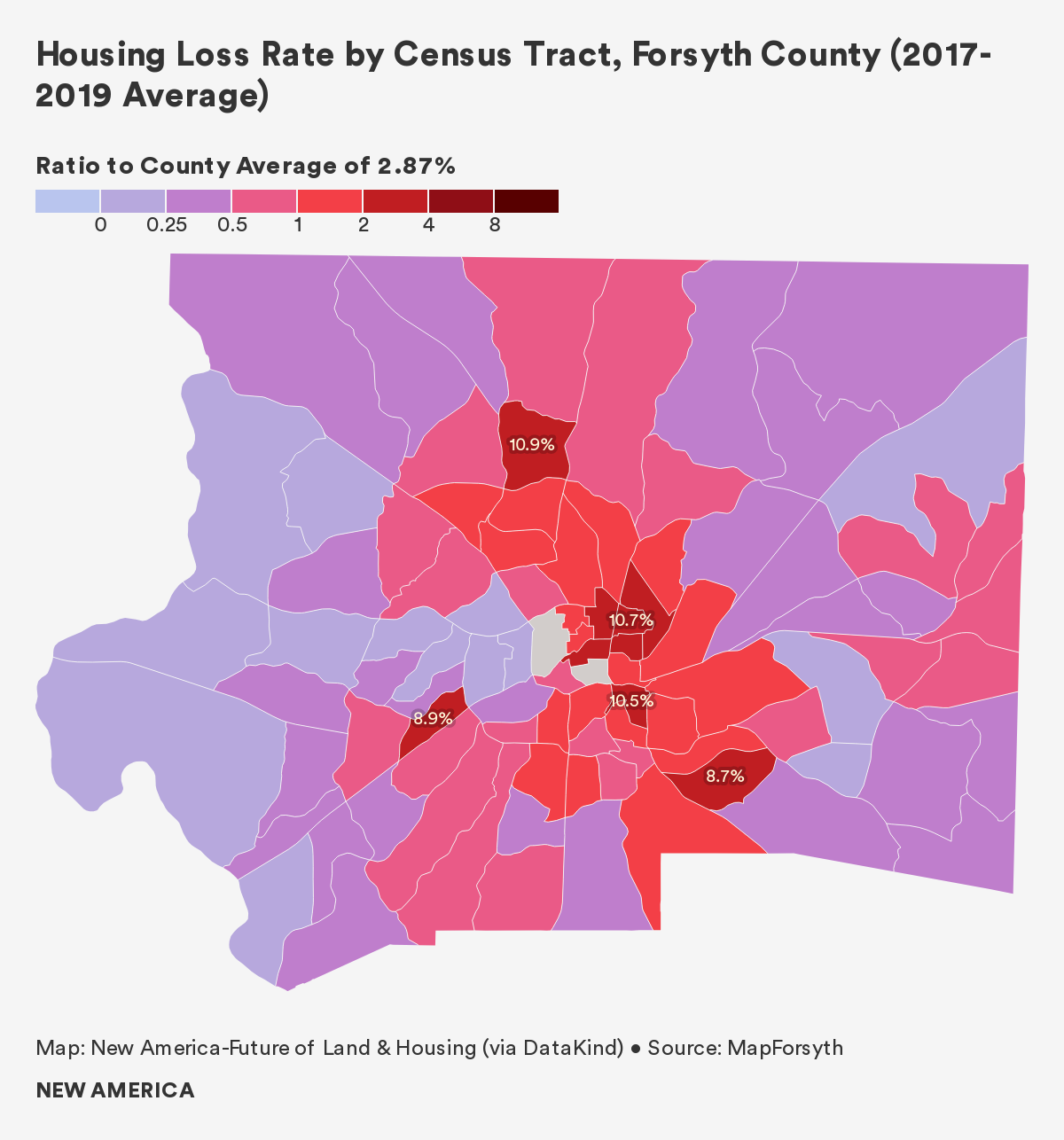
Overall Housing Loss: Forsyth County residents experienced a housing loss rate of 2.9 percent between 2017 and 2019, meaning that approximately one in 35 residents lost their homes each year through evictions or mortgage foreclosure. This rate increased slightly from the 2014-2016 rate of 2.4 percent, driven primarily by a rise in evictions.
Forsyth County Yearly Eviction and Mortgage Foreclosure Rates (2017-2019)
| 2017 | 2018 | 2019 | |
| Eviction Rate | 4.6% | 4.7% | 7% |
| Mortgage Foreclosure Rate | 0.7% | 0.5% | 0.4% |
A census tract to the north of Winston-Salem, in the unincorporated community of Stanleyville, displayed the highest housing loss rate in the county, at 10.9 percent. This rate is nearly 4 times the county average, and is driven primarily by a 16.1 percent eviction rate. According to the U.S. Census Bureau, the tract is half Black, has a median household income of $27,195, and 27 percent of people live below the poverty line.
Two other areas in the county are worth mentioning:
First, a large cluster of census tracts in East Winston expressed very high average rates of housing loss, between 6.2 and 10.7 percent. In some neighborhoods, therefore, more than 1 in 10 households was displaced every year.
Second, a census tract in southwest Winston-Salem, around the South Forks neighborhood, had an average loss rate of 8.9 percent. And while this tract carries many socioeconomic indicators that suggest housing insecurity, such as a median household income of $35,467, it is surrounded by tracts with rates at or below the county average. Further research is needed to determine the underlying factors that drive displacement in this tract.
Evictions: Roughly 39 percent of households in Forsyth County rent their homes, yet evictions accounted for nearly 90 percent of all housing loss in the county. Nearly nine thousand households were evicted during this three-year period, resulting in an eviction rate of 5.4 percent. By comparison, the 2014-2016 eviction rate was 3.7 percent, and this recent increase in evictions—driven by a surge to a 7 percent eviction rate in 2019—signifies growing renter vulnerability just before the onset of the pandemic.
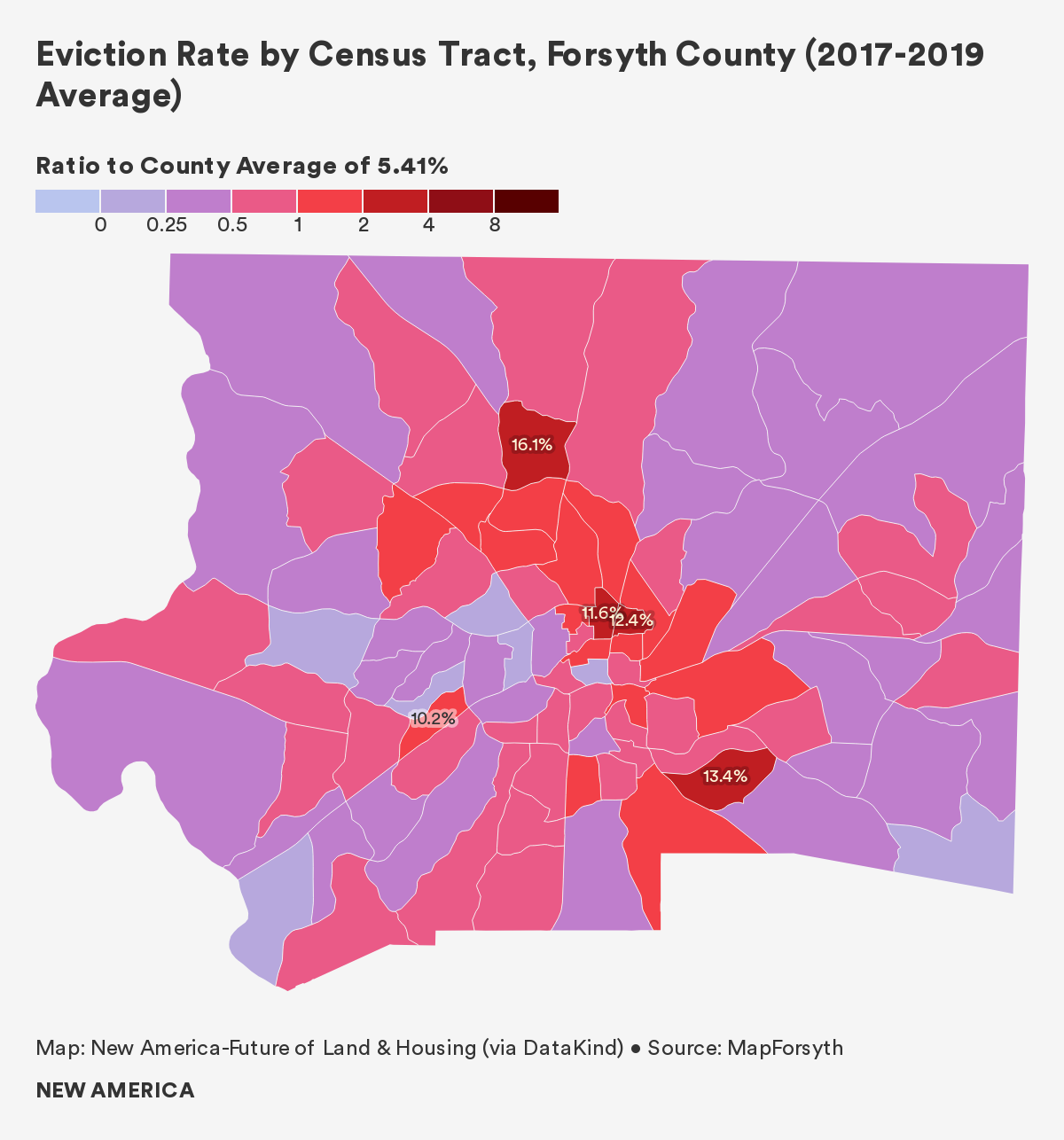
The highest eviction rates were generally clustered to the east and southeast of downtown Winston-Salem, in East Winston. In many of these census tracts, the eviction rate was between 5 and 10 percent, and one tract, 34.04, experienced a rate just over 13 percent. Many of these tracts are home to low-income, minority communities: Census tract 34.04, for example, is 31 percent Black and 50 percent Latinx.
Also notable, a tract well north of downtown Winston-Salem, in Stanleyville, expressed an eviction rate of 16.1 percent, while two tracts in the west of Forsyth County had rates higher than 9 percent.
A Spotlight on Summer Evictions
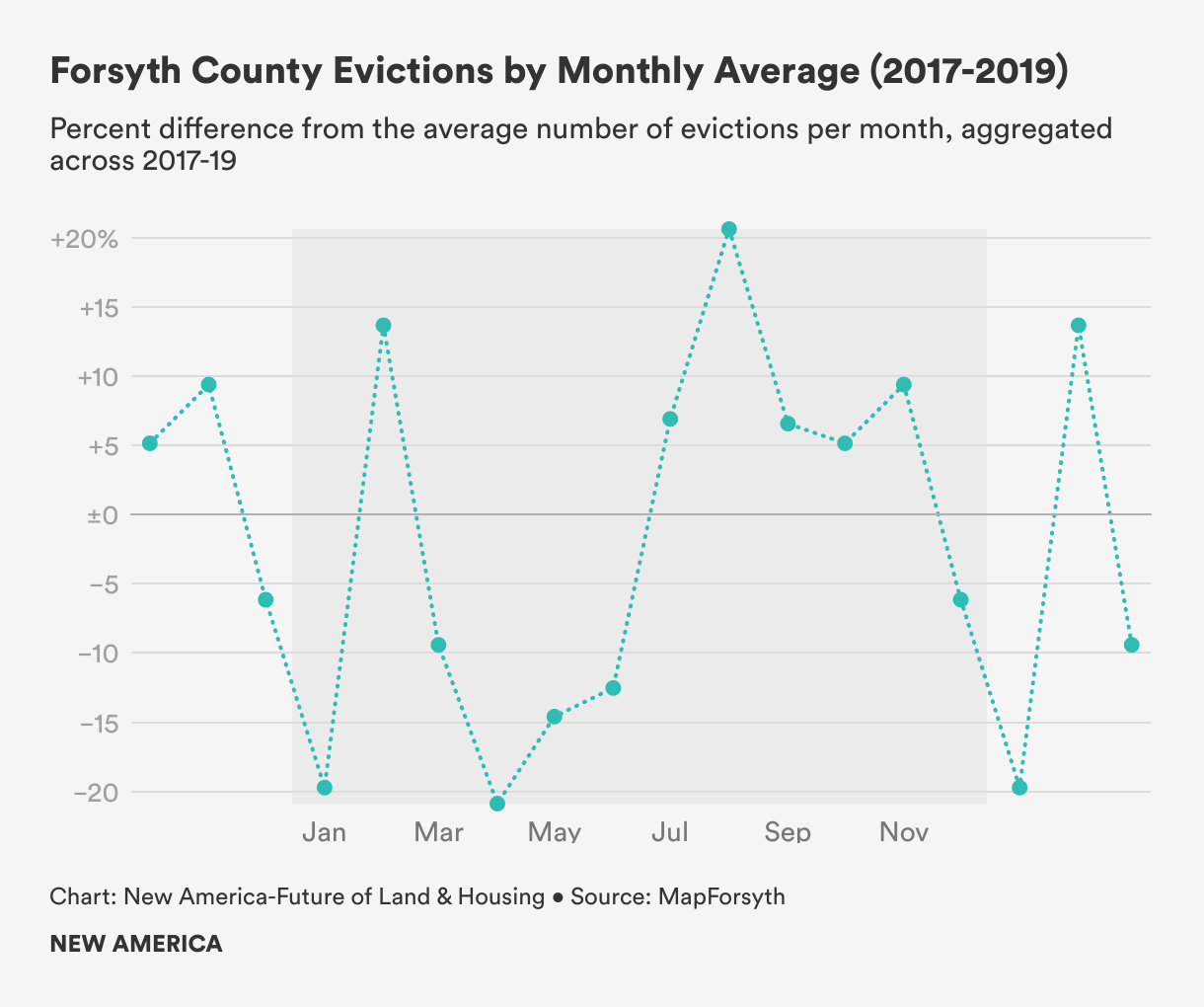
Evictions in Forsyth County rise steadily from April to August, when they peak. On average, August had the highest number of evictions with 315, a 52 percent increase over April, which had the lowest average number of evictions at 207.
We speculate that three factors could drive uptick during the warmer months: 1) the financial burden of high utility costs on renters; 2) the financial burden of childcare and groceries during summer vacation on renter families; and 3) high demand for rental housing during the summer, causing landlords to move forward with evictions.
Mortgage Foreclosure: The majority of Forsyth County households own their homes, yet mortgage foreclosures accounted for only 10 percent of all housing loss between 2017 and 2019. Just over 1,000 households were foreclosed upon during this three-year period, a rate of 0.6 percent. This rate is a significant decrease from the 2014-2016 rate of 1.2 percent.
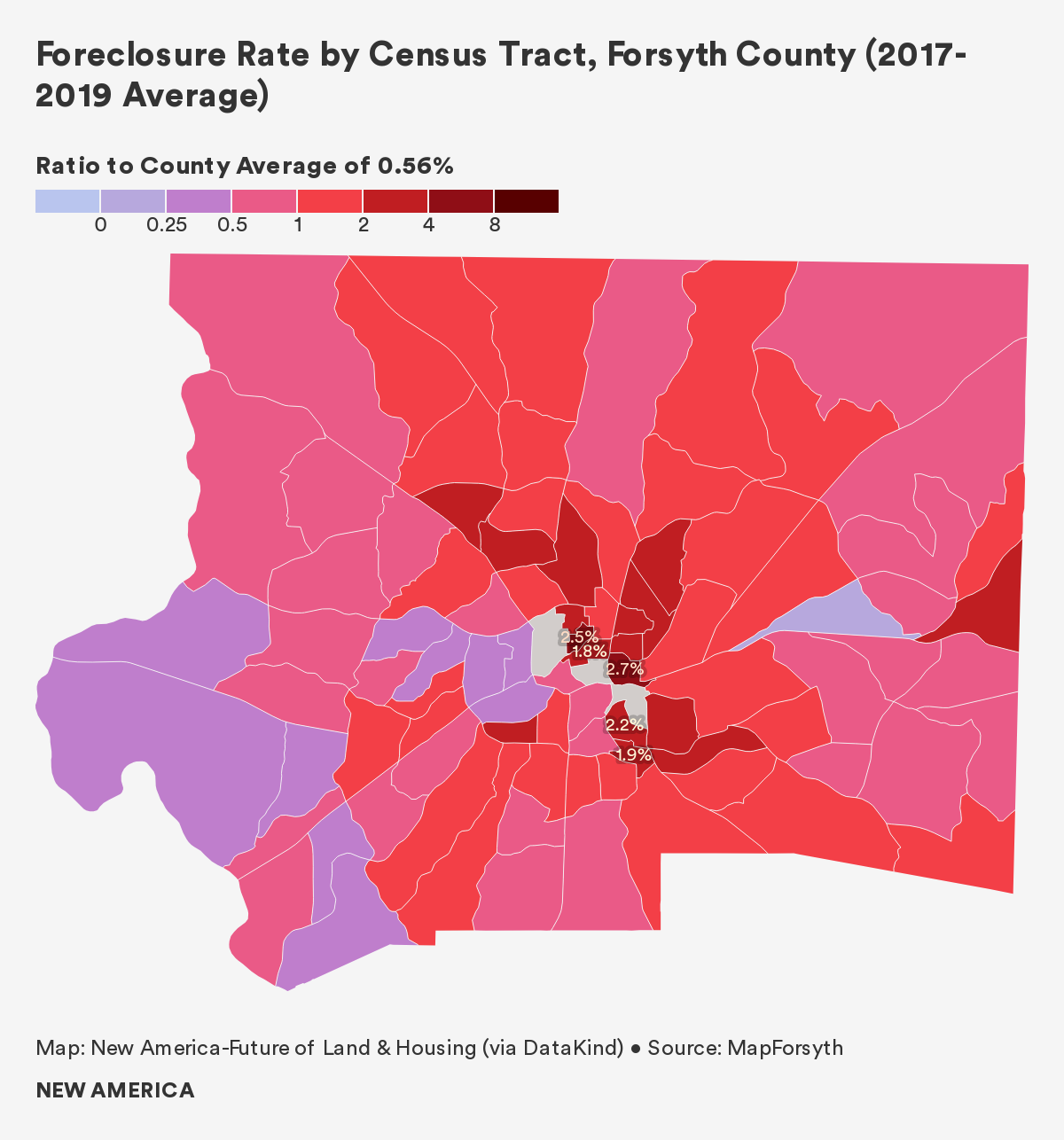
Many tracts in the county, especially to the west, express mortgage foreclosure rates well below half a percentage point. But a few census tracts in East Winston, and north of downtown Winston-Salem display rates above 2 percent. The most distressed tracts are over two-thirds Black, with median household incomes at $26,000 or less, far below the county average of $51,000. Property values in these tracts are also quite low at $86,000, or half the average value in Forsyth County.
Who is Losing Their Home?
Among all of the variables we examined, race was by far the strongest predictor of housing loss across the county. Census tracts with a higher percentage of Black households were substantially more likely to see both evictions and foreclosures; in fact, this relationship was more pronounced in Forsyth County than in any of the other counties we examined. By contrast, census tracts with more white households have a strong, inverse relationship with housing loss.
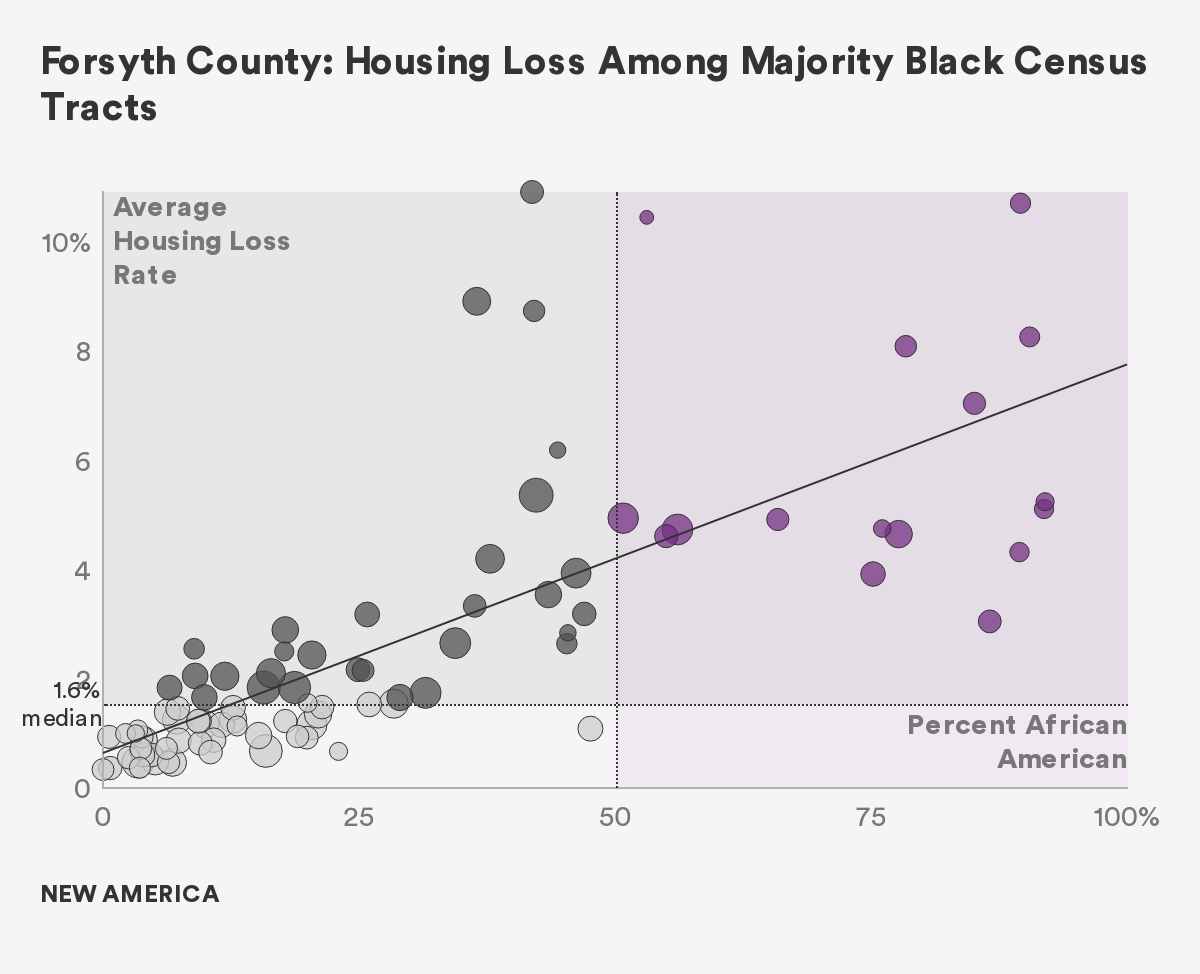
To better understand the relationship between housing loss and race, we categorized census tracts such that they fell into one of four categories: whether they were majority or minority Black (above or below 50 percent) and by the housing loss rate (above or below the county median of 1.6 percent). We see on the scatter plot that all census tracts that are majority Black have housing loss rates that are above the county median. Put differently, every single majority Black census tract has above average housing loss. We also see in the scatterplot that tracts that have large shares of Black households that do not quite reach 50 percent have housing loss rates well above the county median.
Every single majority Black census tract has above average housing loss.
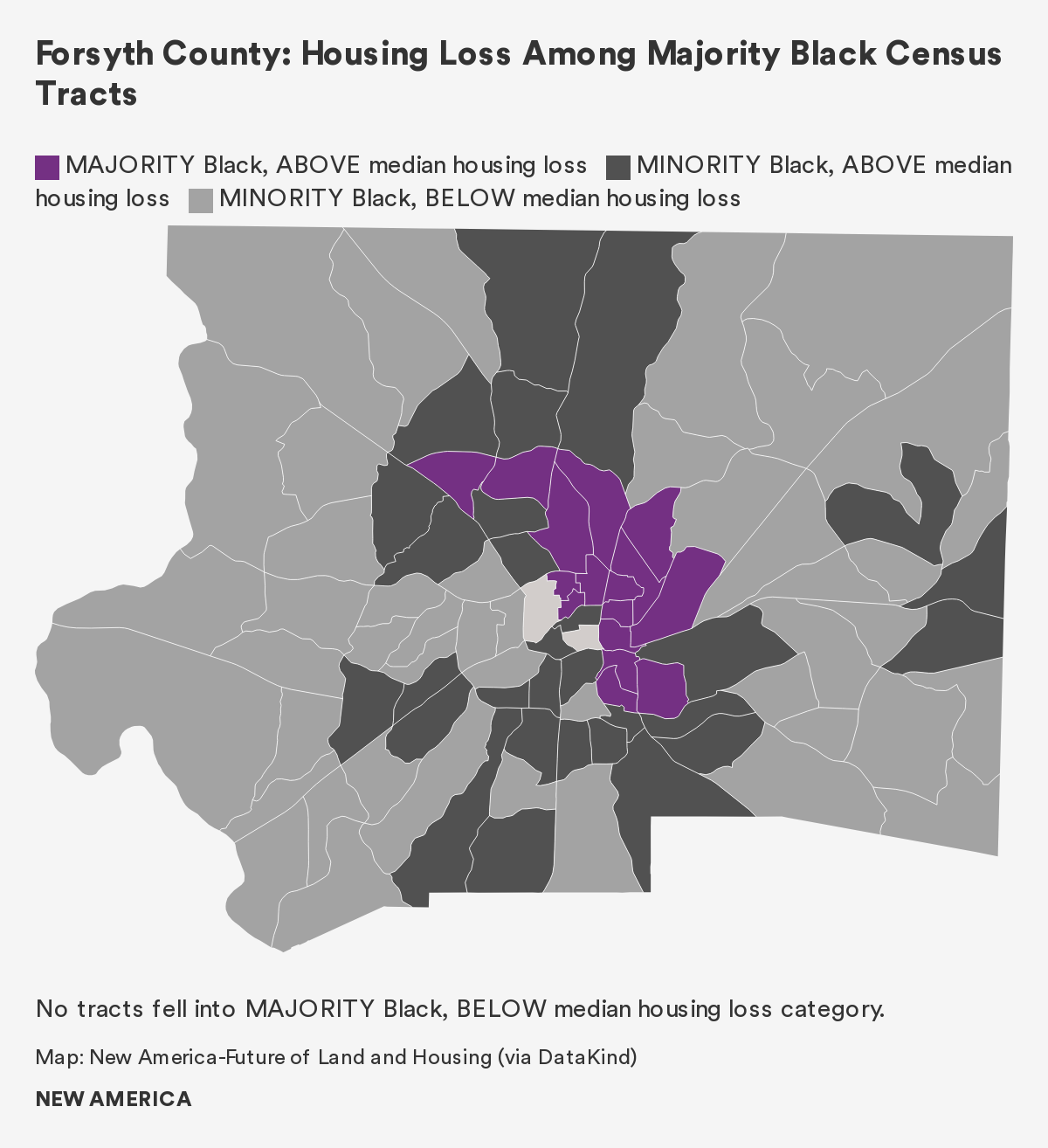
To see where in Forsyth County the relationship between race and housing loss is most prominent, we mapped this same information. Tracts that are majority Black and have above average housing loss (in dark purple) are clustered to the East of Route 52, and have lower median household incomes and property values as well.
We also found that, as the percentage of residents without health insurance in a census tract increases, so does the rate of housing loss. Many low-paying jobs do not provide health insurance, and this finding continues to suggest that at-risk households are housing-cost burdened on low income, or cannot pay for housing and an unexpected medical emergency.
Finally, tracts with a large share of households that rely on public transportation for work commutes had higher rates of housing loss. Based on research from the Center for the Study of Economic Mobility at Winston-Salem State University, it appears that dependence on unreliable public transportation in Forsyth County can lead to repeated tardiness or absence from work, job loss, and a subsequent inability to pay rent.
Housing Loss and COVID-19
Local stakeholders noted that many Forsyth County residents vulnerable to housing instability prior to the pandemic have lost income as a result of the pandemic-related shutdowns, and are now at greater risk of displacement. The economic downturn has also contributed to a “seller’s market” locally, leading some landlords to evict tenants in order to sell their properties.
The impact of COVID-19 is especially acute in East Winston, where minority communities generally cannot access public transportation, healthcare, affordable childcare, and economic opportunities. A disproportionate population of both frontline and service workers in East Winston makes households even more vulnerable to the spread of coronavirus, job loss, and housing loss.
Federal stipulations limited direct aid to U.S. counties with populations under 500,000, so Forsyth County received only $6.4 million CARES Act dollars.2 Alternative funding was therefore critical to the local pandemic response. The United Way of Forsyth County and the Winston-Salem Foundation responded by raising a COVID-19 Response Fund for Forsyth County, drawing from corporations, community groups, individuals, and local governments. The City of Winston-Salem pledged $1 million to this fund from unallocated development money from 2014 to 2018.
Despite this innovative funding model, housing advocates noted that the disbursement of housing aid throughout the county was highly ineffective. The nonprofit organizations responsible for allocating relief funding required extensive documentation and means testing, which considerably delayed the distribution of money. Some of these organizations also required in-person appointments, making funds inaccessible to medically vulnerable individuals, as well as to those without access to transportation or childcare. Distribution of rental aid also lacked transparency—one interviewee noted that applicants “perfectly suited for aid” were inexplicably denied.
Policy Solutions
Our policy recommendations to mitigate housing loss amid the pandemic can be found in the report section: “Housing Loss in the U.S. Sun Belt.”
Citations
- From an interview with contributing author Jack Portman.
- For reference, neighboring Guilford County, home to 537,000 residents, received $93.7 million CARES Act dollars, despite containing only 150,000 more people.