
Table of Contents
Clark County, Nevada
“Providing emergency assistance to the community is a daunting task. From a nonprofit standpoint, if you don’t have the capacity, it’s very challenging to do.” – Administrator, Las Vegas housing nonprofit1
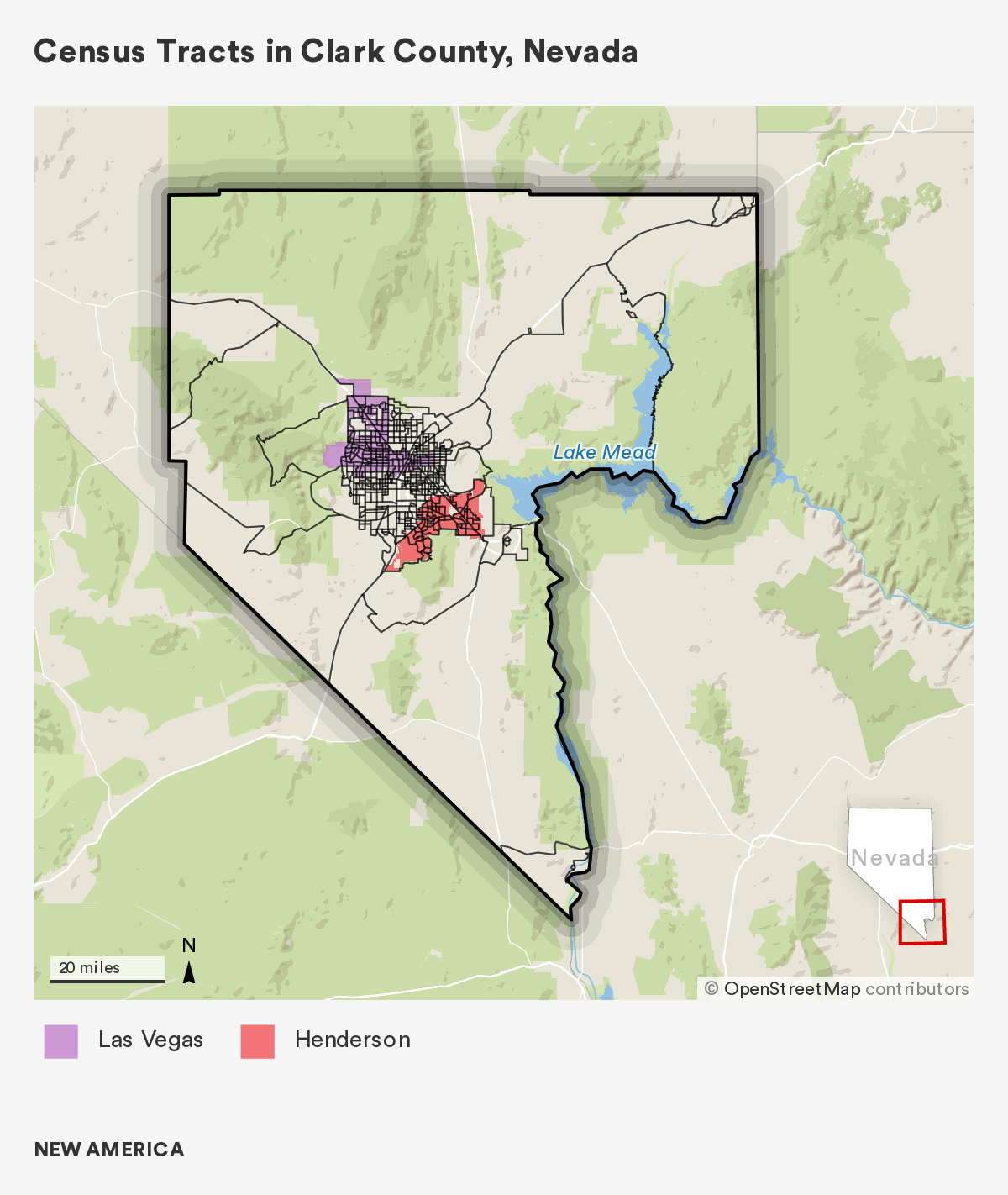
Clark County is located in the southernmost tip of Nevada, nestled between California and Arizona. By far the most populous county in the state, it is home to approximately 2.3 million residents. Most live in and around the state’s most populous city, Las Vegas. Las Vegas is the county seat, the largest city in the Mojave Desert, and an internationally renowned resort city, famous for its casinos and entertainment industries.
Forty-two percent of Clark County residents are non-Latinx white, 31 percent are Latinx, 12 percent are Black, and 10 percent are Asian. While racial segregation persists in the city, Las Vegas has one of the lowest levels of Black-white segregation relative to other major metropolitan areas. Majority white neighborhoods in Las Vegas are becoming more diverse, but this trend is mostly related to the in-migration and fast growth of Asian, Black, and Latinx communities.
With approximately 193,000 COVID-19 cases and 2,670 deaths since the beginning of the pandemic, Clark County accounted for approximately 75 percent of COVID-19 cases in Nevada. In addition to the health toll on its residents, the economic impacts in Clark County are severe. As of November 2020, unemployment in Clark County was 11.5 percent, up from 3.6 percent the previous year. And in the Census Bureau’s Household Pulse Survey, 35 percent of Nevada residents surveyed say that an eviction or foreclosure is somewhat or very likely in the next two months.
When and Where Are People Losing Their Homes?
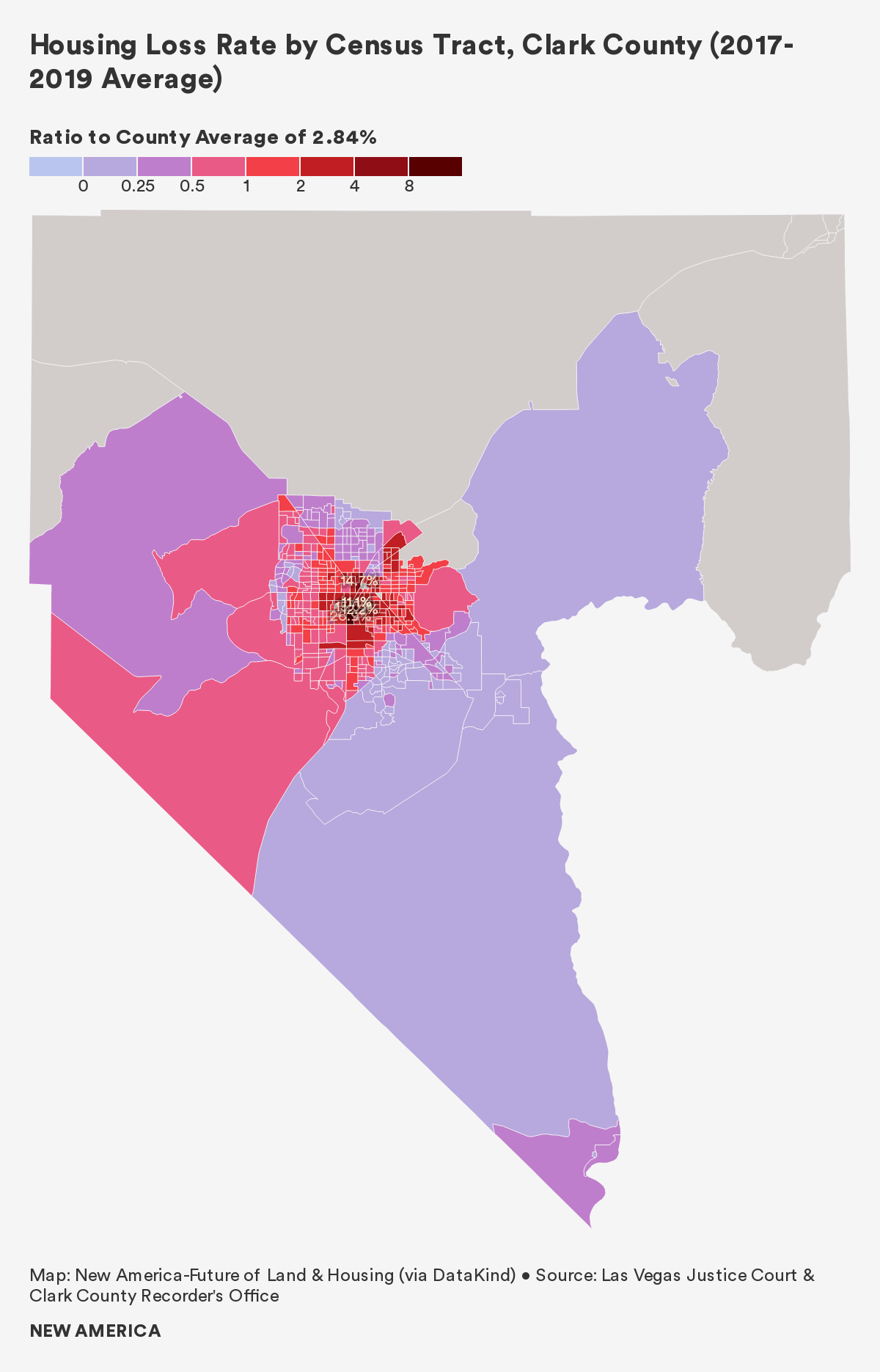
Overall Housing Loss: Clark County residents experienced housing loss at a rate of 2.8 percent between 2017 and 2019, meaning that approximately three out of every 100 renters and homeowners with a mortgage are losing their homes each year through eviction or foreclosure. The rate of housing loss is similar to that of other Sun Belt counties included in this report.
Housing loss is most acute in and around downtown Las Vegas, particularly in Winchester, Paradise, and Spring Valley, neighborhoods in the radius around the strip. Loss rates in these areas range from 4 percent to 9 percent, with tracts adjacent to the strip reaching rates as high as 15 percent.
Evictions: Only 46 percent of Clark County residents rent their homes, and yet evictions accounted for 79 percent of the housing loss from 2017 to 2019. More than 100,000 people were evicted in the three-year period from 2017 to 2019, an eviction rate of 4 percent. This is slightly lower than the eviction rate for the rest of the Sun Belt counties included in this report.
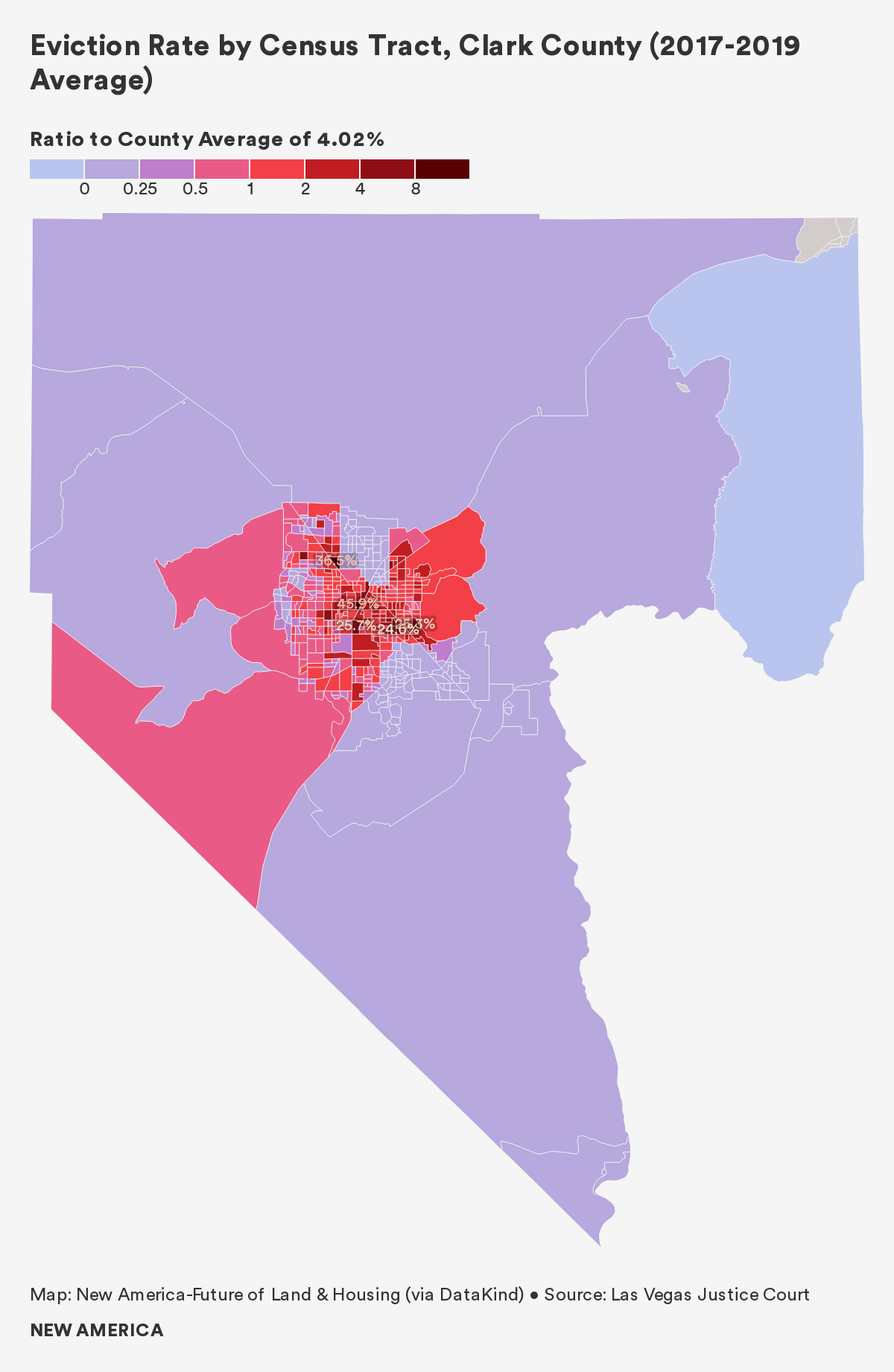
Not surprisingly, the highest eviction rates were clustered in and around Las Vegas. In some tracts in Las Vegas, one in five renters is being evicted each year. Two tracts had eviction rates that reached 35 percent and higher, however both of these tracts have few renters and may not be representative of overall dynamics in the county. Qualitative interviews suggest that housing instability was most acute in North Las Vegas and eastern parts of the county. Most of the larger census tracts surrounding Las Vegas have eviction rates significantly lower than average, with the exception of the tract where Goodsprings is located, which has an eviction rate of 3.3 percent.
A Spotlight on Summer Eviction
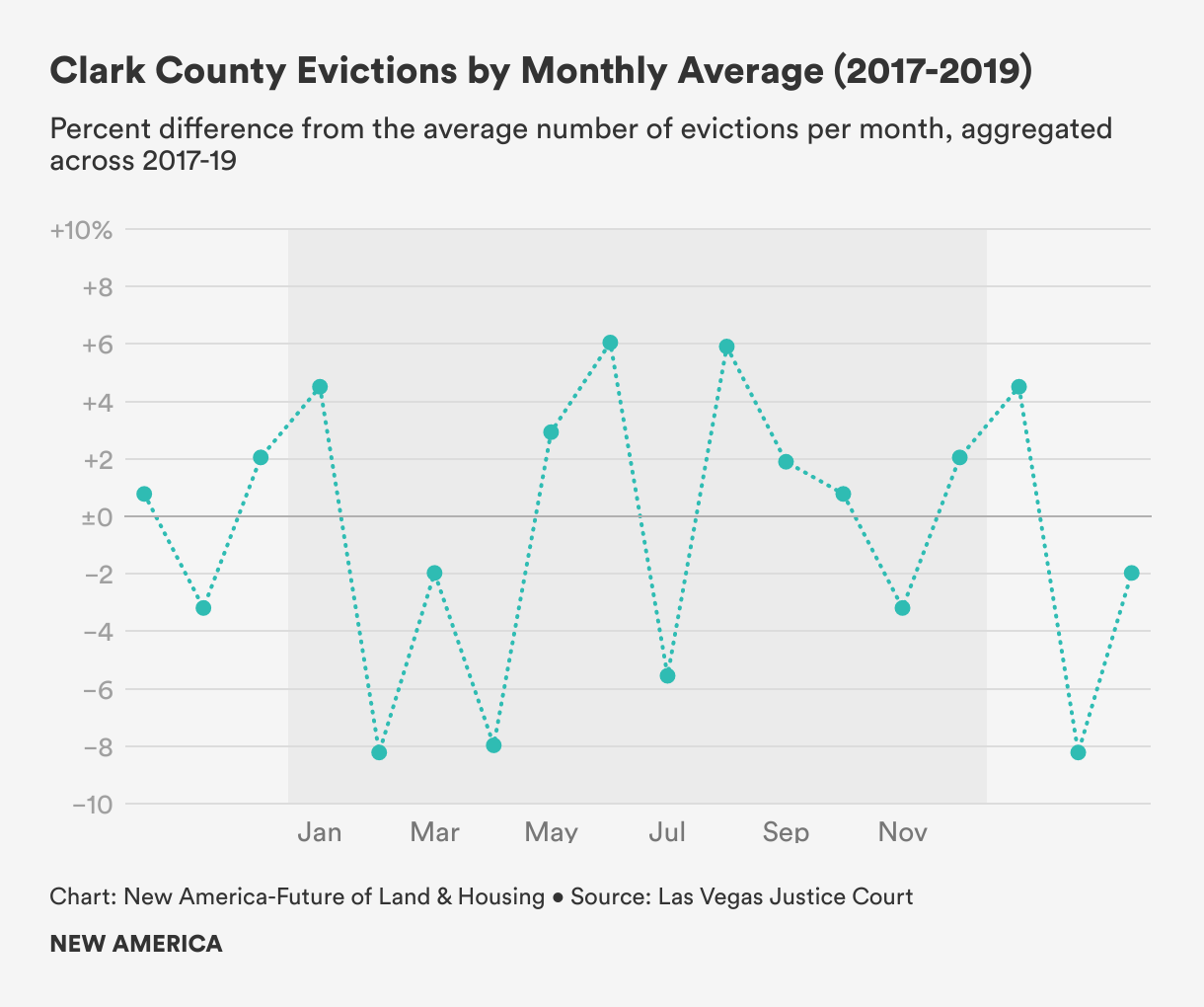
Similar to other Sun Belt counties, evictions in Clark County increased in summer months in 2017 and 2018. However, in July 2019, when we would typically expect evictions to spike, we saw a 35 percent drop in evictions. From June to July 2019, evictions fell from 1,211 to 792, an all-time low across the three years. By August 2019, evictions spiked back up to 1,106. We do not know the cause of this aberration in 2019.
Mortgage Foreclosures: Homeowners are less at risk of housing loss than renters. While 54 percent of residents own their homes, foreclosures only accounted for 21 percent of housing loss between 2017 and 2019. 11,136 households were foreclosed upon in this three-year period, resulting in a foreclosure rate of 1.3 percent, slightly lower than the average across the other Sun Belt counties.
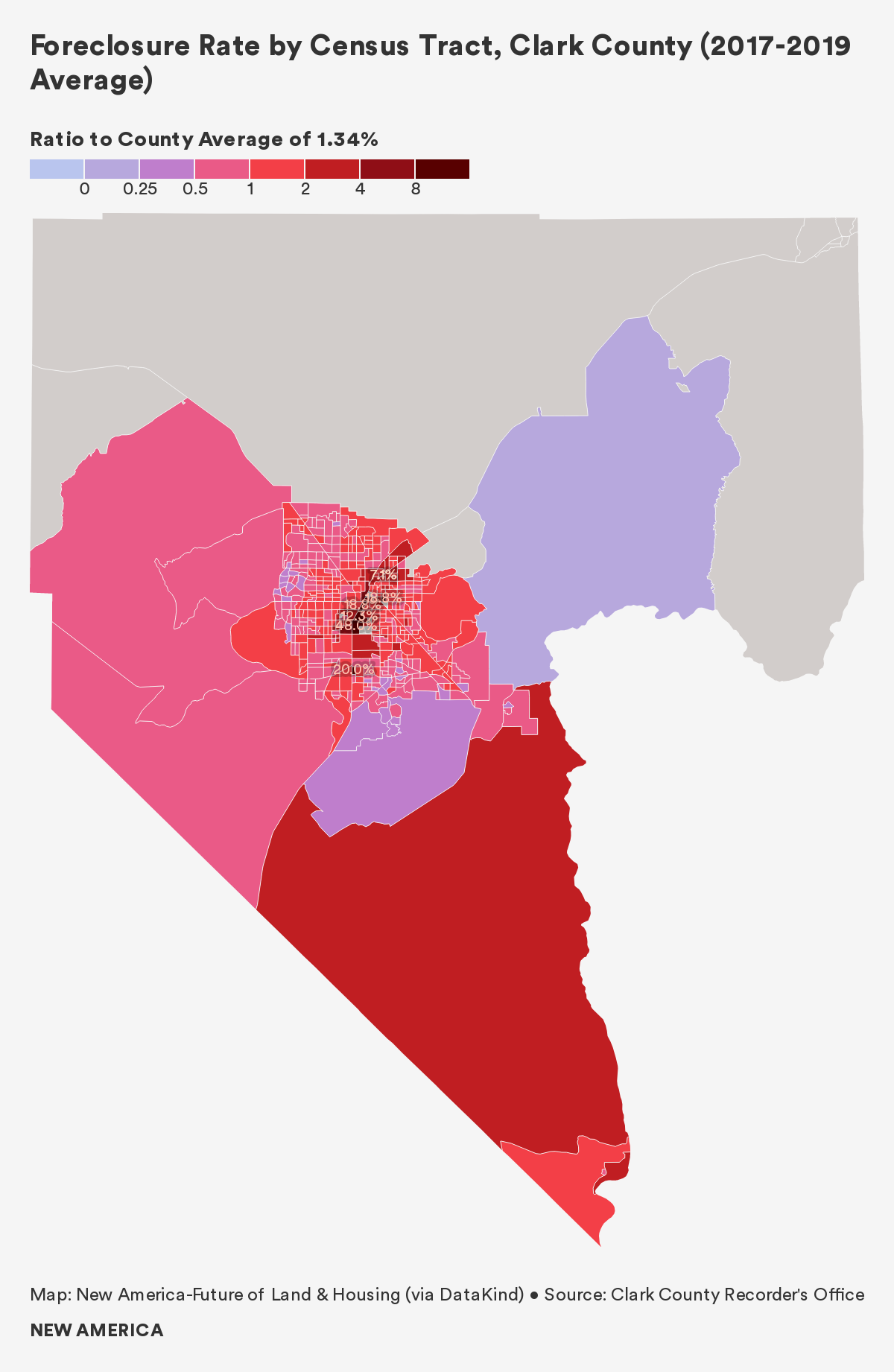
Most census tracts in Clark County experienced mortgage foreclosure rates between 1 and 2 percent. However, some tracts in downtown Las Vegas had foreclosure rates ranging from 6 percent to a staggering 18 percent (meaning that one in five homes are being foreclosed upon each year). One tract in downtown Las Vegas has a foreclosure rate of 48 percent, but it is located along the Vegas strip with a small number of homeowners with a mortgage and thus is not representative of county trends. The county's southernmost tracts, where Searchlight and Bullhead City are located, had higher than average foreclosure rates, around 3 percent.
Who Is Losing Their Home?
Of all the variables we examined to explain housing loss in Clark County, the relationship between housing loss and lack of health insurance was the strongest. As the percentage of residents without health insurance in a census tract increases, so does the rate of housing loss, and this correlation was stronger than any race or income-based correlations. Many low-paying jobs in the services and hospitality sectors do not provide health insurance, and this finding continues to suggest that at-risk households are housing-cost burdened, and cannot pay for housing and an unexpected medical emergency.
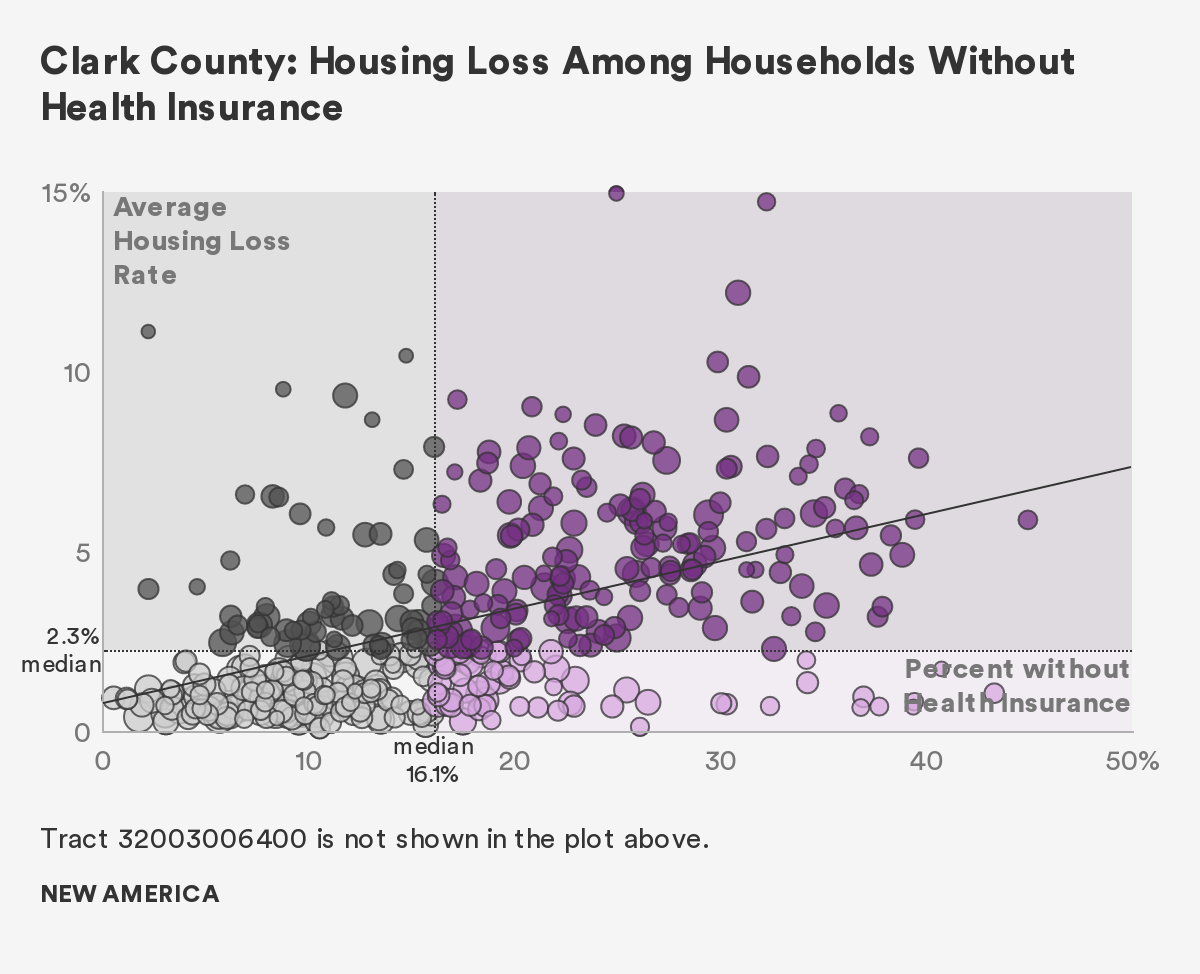
To better understand the relationship between lack of health insurance and housing loss, we categorized census tracts in Clark County as falling either above or below the median rate of uninsured households, which was 16.1 percent. We also categorized census tracts as above or below the median housing loss rate of 2.3 percent. We then combined these two measures, such that census tracts fell into one of four categories: either above or below the median percent uninsured and above or below the median housing loss rate.
These categories, displayed on a scatter plot, show that of the census tracts with high rates of uninsured residents, nearly three-fourths also had above median housing loss rates.
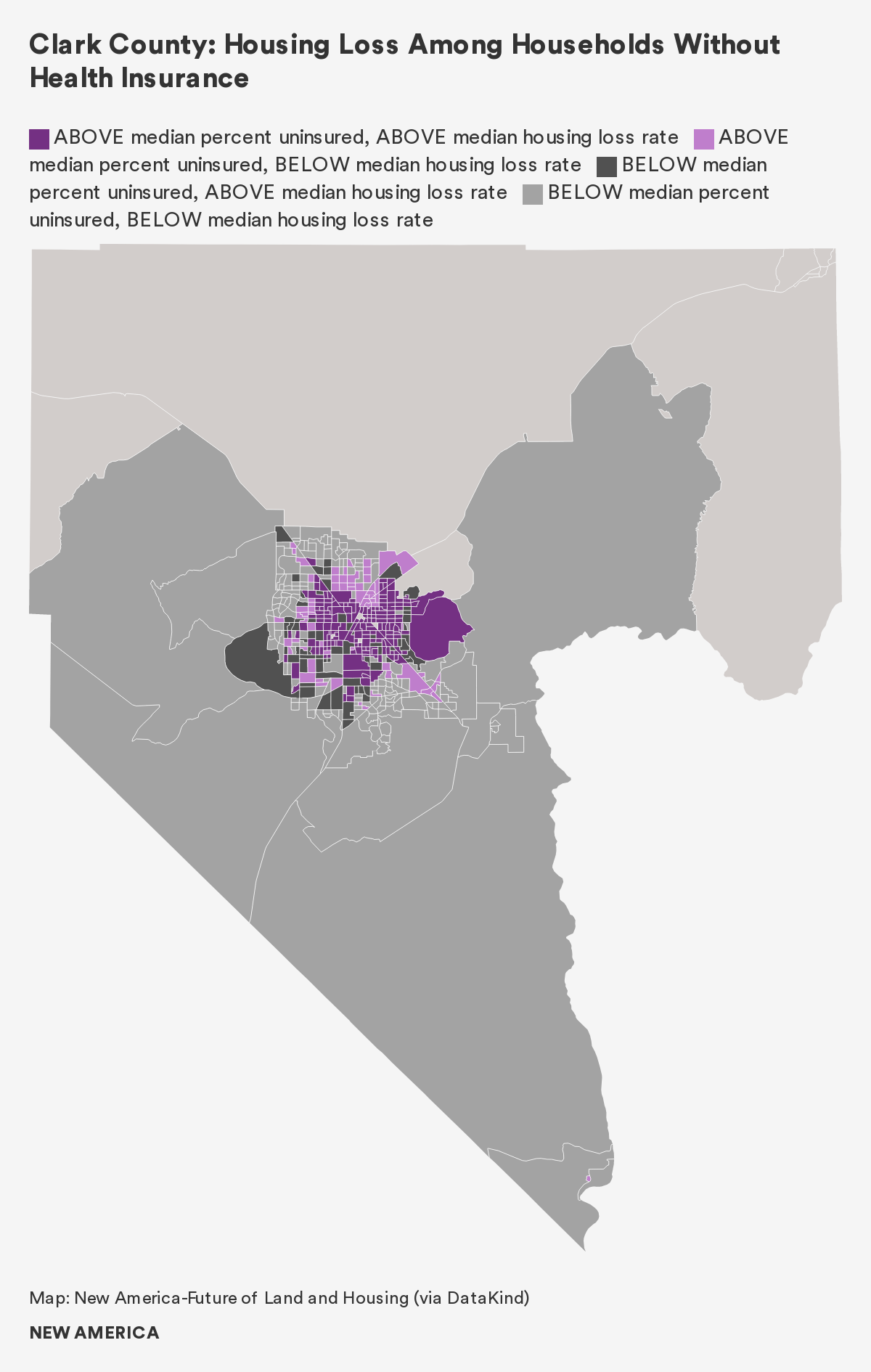
Displayed on a map, we see that census tracts with high rates of uninsured residents are clustered in Spring Valley, Paradise and downtown Las Vegas.
Additionally, we saw that census tracts with more vacant properties had higher rates of mortgage foreclosures. We know that vacancies and abandoned properties negatively impact home prices and can have reverberating impacts throughout a neighborhood, and these effects were more pronounced in Clark County than in any other county in our study.
Housing Loss and COVID-19
Local experts interviewed for this study reaffirmed how COVID-19 safety measures, including pandemic-related lockdowns and restrictions, have impacted Clark County’s tourist-based economy and its workers. Prior to the pandemic, local stakeholders identified the following groups as particularly at risk of housing loss: seniors on fixed incomes; single mothers with multiple children; communities of color (notably, the Hawaiian community); and undocumented immigrants. In the midst of the pandemic, this risk has increased among these groups and extended to a broader population.
In Clark County, nearly one-fourth of the workforce is in the service and hospitality industries, and many people have experienced job-related income losses since the start of the pandemic, exposing them to potential housing loss. One local stakeholder described Las Vegas as a “fast money in, fast money out” city. Another stakeholder characterized the prevalent gambling and other predatory industries as “debt treadmills that people can’t get off,” resulting in a lack of financial preparedness when emergencies arise.
Local stakeholders warned that a wave of foreclosures could begin as early as spring 2021 if banks do not sustain measures to keep homeowners in place.2 The threat of mortgage foreclosures in Clark County is especially concerning given the influx of institutional property investors that acquired and rehabbed properties after the 2008 financial crisis.
A wave of foreclosures could begin as early as spring 2021 if banks do not sustain measures to keep homeowners in place.
The potential wave of evictions after a moratorium ends is also concerning, especially given that most evictions in Nevada are summary evictions, a process that can easily be administered by landlords and can happen very fast. After receiving an eviction notice from their landlord, a tenant must file an affidavit about the eviction in court, followed by a hearing where both the tenant and landlord’s cases are presented before a judge. If the tenant does not file the affidavit, which is a common occurrence, the landlord can file a complaint and the tenant can be evicted by default with no hearing.
Local stakeholders emphasized that the distribution of emergency housing assistance has been a concern throughout the pandemic. As of fall 2020, the rollout of rental assistance was slow and aid had only reached a small portion of residents who needed it. Several interviewees noted that “there’s very little money out the door” and yet thousands of residents need rental assistance.
To distribute COVID-19 relief funds allocated to the county in the CARES Act, Clark County enlisted over a dozen non-profit organizations. An attorney at a local nonprofit legal services organization claimed they had “never seen more difficulty giving away money.” With no single application portal, process or criteria, residents ended up applying for funds through multiple channels, and the whole system became overloaded. Nonprofits and housing stakeholders feared that lack of uniformity in the process, different criteria, and lack of programmatic infrastructure would inhibit organizations’ ability to distribute all the funds allocated to the county by the end of year deadline.
On the other hand, one housing provider opined on a silver lining: Clark County has acted quickly to keep homeless residents safe during the pandemic, piloting programs that could become long-term solutions, including moving individuals out of congregate settings into hotels and assisted living facilities.
Policy Solutions
Our policy recommendations to mitigate housing loss amid COVID-19 can be found in the report section: “Housing Loss in the U.S. Sun Belt.”
Citations
- From an interview with contributing author Abbey Chambers.
- It is possible that President Joe Biden’s plan to extend foreclosure protections until the fall, which has not been passed as of the writing of this report, will hold off foreclosures further.