Introduction
In a Pew report released in September of 2023 only 4 percent of those surveyed responded that our political system is working well.1 Additionally, a growing share of Americans have an unfavorable view of not one, but both, political parties. More than 60 percent reported feeling exhausted when discussing politics. This data reflects the growing body of research and analysis that demonstrates how the current ways of American democracy—and particularly our two-party system—fail voters.
There are many proposals being presented as a solution to the “doom loop” of the two-party system.2 For many experts and activists, the solution seems simple: Adopt electoral reforms that create a path for additional parties to have a strong political voice, which would eventually lead to more viable candidacies. To the average voter these words, while impressive, mean almost nothing. With most electoral reform proposals, there is a chasm between the theory and the public sense of urgency to adopt and implement these changes. Of the many roadblocks to reform resulting in a multiparty American democracy, one of the most prominent is a general lack of understanding of our current system and how it leads to gridlock and polarization. Additionally, this lack of understanding means many voters aren’t aware or don’t believe that these systems can be changed.
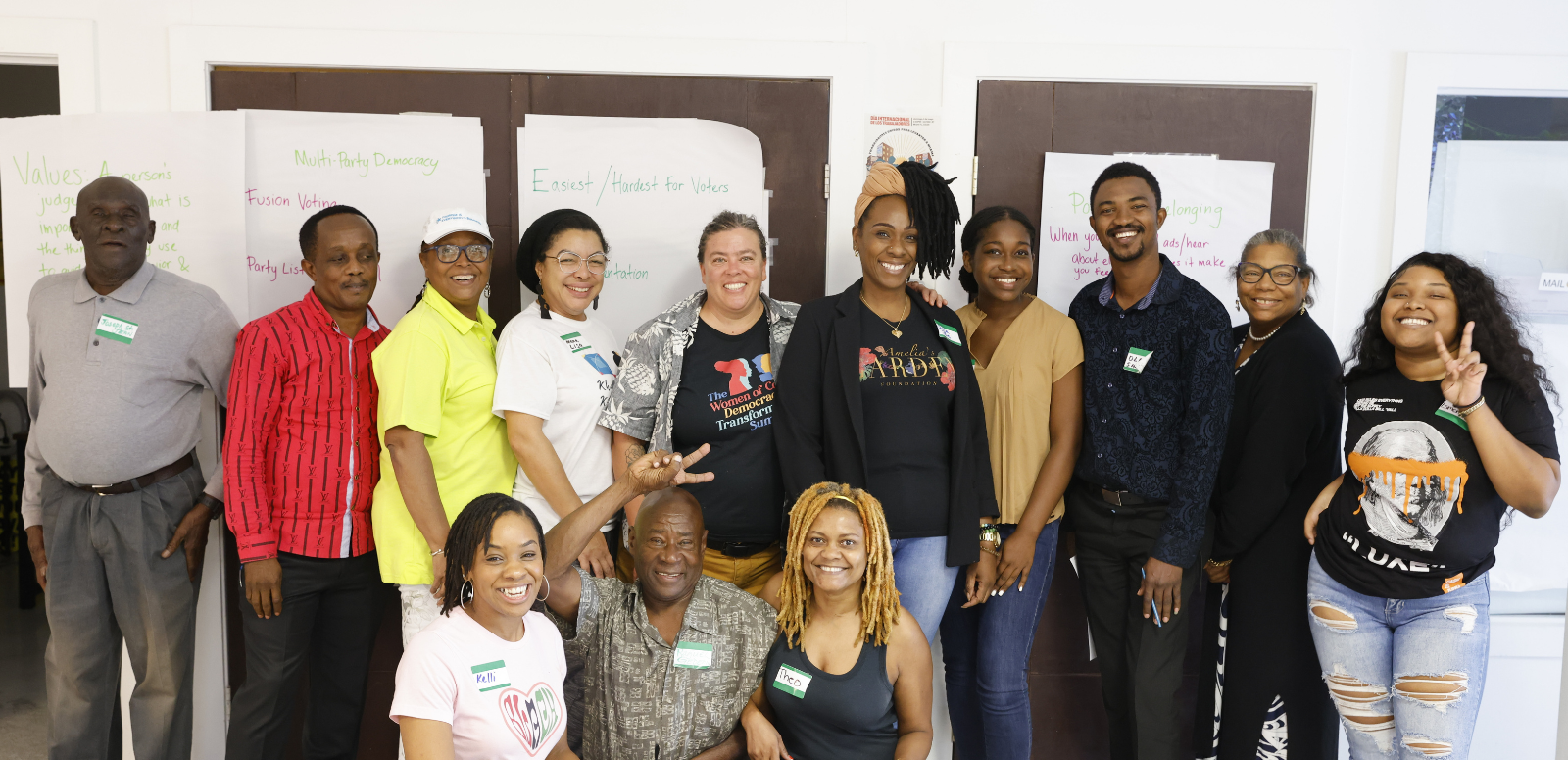
New America, through support from the Stronger Democracy Award, is building grassroots and grasstops strategies to pave the way for a thriving multiparty democracy in the United States. In laying the foundation for this effort, New America partnered with Democracy Rising to conduct qualitative research about how the American public feels about our democracy, existing political structures, opportunities for change, and potential alternatives. Democracy Rising determined that the most primed constituency for these conversations is immigrants and first-generation Americans, who possess an inherently adaptive and comparative lens. Coming from another country or cultural background provides keen insight into how these systems work outside of the U.S. and an understanding that there are different ways of doing democracy—both in the official sense of parties, voting, and elections, but also within communities. Immigrants and first-generation Americans are often overlooked in voter engagement work, movement building, and research but 40 million people living in the U.S. are either foreign-born or born here to parents born elsewhere.3 That is about one in four people; it is important to include their voices in conversations about politics and governance.
Citations
- Americans’ Dismal Views of the Nation’s Politics (Washington, DC: Pew Research Center, 2023), source.
- Lee Drutman, Breaking the Two-Party Doom Loop: The Case for Multiparty Democracy in America (New York: Oxford University Press, 2019).
- Mohamad Moslimani and Jeffrey S. Passel, “What the data says about immigrants in the U.S.,” Pew Research Center, July 22, 2024, source.