Decoding the Wagner Group: Analyzing the Role of Private Military Security Contractors in Russian Proxy Warfare
Table of Contents
- Executive Summary & Key Findings
- Introduction
- Defining Terms & Probing the Edges of Russia’s Proxy Strategies
- Russian Military Reorganization, Modernization & The Market for Private Force
- Tracing Wagner’s Roots
- Forward Operations: From Deir Ezzor to Donbas and Back Again
- Solving the Puzzle of Russian Proxy War Strategy
- The Risks of Russia’s Proxy Warfare Strategy
- Appendix: Glossary of Terms
Abstract
Russian private military security contractors (PMSCs) are pivotal players in ongoing proxy wars in the Greater Middle East and its periphery. Their covert operations—real and imagined—are also critical in shaping Russia’s strategy for escalation management as well as relations with adversaries and allies. This report, the product of a joint New America and ASU Center on the Future of War initiative to study proxy warfare examines what social media and other digital traces combined with interviews and other research can tell us about Russian PMSCs and their role in Russian proxy warfare strategy.
Acknowledgments
The author would like to thank Peter Bergen and Daniel Rothenberg, co-directors of the New America/Arizona State University Future of War project for their support throughout the production of this paper. A deep debt of gratitude is owed to David Sterman for applying his sharp editorial eye to the text and sharing his analytical intuition throughout the research for this report. I also benefited greatly Sergey Sukhankin’s research on Russian military affairs and the Wagner Group and his direct contributions to the historical sections of this report covering Moscow’s Cold War strategy in the Middle East elevated the analysis greatly. Navvar Saban’s research on private security contractors and pro-Assad militias likewise helped answer critical questions about Russia’s influence over local proxy forces in Syria. Christopher Miller, Mike Eckel, and many other long-time Russia hands who have spent time living and covering the Kremlin and the conflict in Ukraine were essential sounding boards and critical pillars of support throughout. Thanks also goes to Jack Margolin and Alina Polyakova for providing expert peer review and sharing their insights into the interplay between Russian political warfare, illicit networks and the business of irregular warfare in the twenty-first century.
A special thanks is also owed to the many ASU faculty and students who enthusiastically lent their support and energy to the hard task of collecting and analyzing massive of amounts of unstructured data from disparate sources and in multiple languages. Most important in this category is the talented group of technologists on the Frontline Forensics team at ASU whose zeal for innovation and love of hard puzzles is matchless. The research for this report would have been impossible without the steadfast support of the Melikian Center for Russian, Eurasian, and Central Asian Studies and the ASU Data Mining and Machine Learning Lab.
Joanne Zalatoris and Maria Elkin laid out the paper and website. Thanks to Emily Schneider for her deft copyedit. This paper was supported in part by a grant from the Carnegie Corporation of New York.
It is worth noting that some of the best research produced about the Wagner Group and Russian private military security contractors has been produced by anonymous open source intelligence researchers, human rights activists and investigative journalists in Ukraine, Russia, Syria, and elsewhere. This paper would not be what it is without their brave efforts to hold power to account and the extensive advice and help of so many people, many of whom could not be named here due to security concerns. All errors of fact or interpretation are, of course, the author’s alone.
Downloads
Executive Summary & Key Findings
Russian private military security contractors (PMSCs) are pivotal players in ongoing proxy wars in the Greater Middle East and its periphery. They provide targeting intelligence, training, logistical support, infrastructure protection, and backstop proxy militias and paramilitary groups in key hotspots around the world, including Ukraine, Syria, and Libya. Their covert operations—real and imagined—are also critical in shaping Russia’s strategy for escalation management as well as relations with adversaries and allies.
Moscow denies any links to Russian PMSCs like the Wagner Group, a paramilitary group linked to Kremlin insiders close to Vladimir Putin. Yet, mounting PMSC casualties in Ukraine, Syria, and more recently Libya have undermined the plausible deniability of their Kremlin connections. Still, questions remain about the degree of control the Kremlin exerts over PMSCs. Are they simply patriotic volunteers as the Kremlin claims? Are they on official assignment for Russia’s GRU intelligence service? Are they mercenaries, corporate warriors, or frontline soldiers? Social media data on hundreds of Russian PMSCs and other evidence collected for this report as well as field research in Ukraine and Syria suggest they are at times all the above.
Above all, Russian PMSCs are frontline agents of a Russian grand strategy that prizes a multipolar world order. The Kremlin stretches legal definitions and obscures its control over PMSCs to benefit its strategic ends. The active reservists and veteran volunteers who make up the ranks of Russian PMSCs operate under a patchwork of national and international law. PMSC detachments are often registered in offshore corporate havens, technically lying outside the constitutional order of the Russian Federation, but their Kremlin-connected sponsors oversee strategic state-run enterprises that are vital for the survival of President Vladimir Putin’s vertical of power.
PMSCs bridge barriers to sustained expeditionary campaigns. Their relationships with local proxies are a force multiplier that allows the Kremlin to extend its influence beyond Russian territory. PMSCs like the Wagner Group will consequently remain a critical part of Russia’s proxy war campaigns, which are likely to far outlast Putin’s tenure. Many conflate Russian PMSC operations with a new form of hybrid warfare, but in fact they represent more continuity than novelty with Soviet-era efforts to cloak military assistance to insurgent paramilitaries operating far beyond enemy lines. The Wagner Group and other Russian PMSCs are also products of disjointed phases of privatization, industrial reconsolidation, and military modernization over the last 30 years that has spurred the growth of state-backed corporate armies.
Neither fully within the state nor outside of it, PMSCs are, in theory, an attractive way of lowering the costs of intervention while extending Russia’s reach. In practice, the Kremlin’s reliance on PMSC operations in fragile states has gained Putin and his closest political allies many benefits. Yet, PMSCs also pose substantial risks for a regime determined to keep a lid on domestic outcry over its military adventurism and to manage blowback. The advent of the digital age means PMSC activities are often hidden in plain sight, and disinformation is no longer a failsafe remedy when the secrecy of covert operations is compromised.
The lack of a clear legal architecture for Russian PMSCs can encourage risk-taking, a dynamic that has already led to direct confrontations with the U.S. forces in Syria and degraded Russia’s efforts to manage escalation. Consequently, Russia places a high premium on narrative control. The Wagner Group narrative of “ghost warriors” on far flung battlefields obscures operational objectives, tactics, and the diversity of agents at work. Separating myth from fact about Russian PMSCs is critical for understanding Russia’s proxy strategies.
Key Findings
Russian PMSCs are designed for strategic deception. Legal loopholes permit Russian PMSCs to perform an end run around national and international prohibitions against mercenary activity.
- Individual citizens are barred under Russian law from mercenary activity, but laws passed under Putin-empowered state-run enterprises to form private armies with wide operational latitude.
- Several Russian PMSCs operate as joint teams with the Russian military under special contractual arrangements between government ministries and strategic state-run enterprises.
- International legal prohibitions against mercenaries and protocols on PMSC conduct fail to address legal gaps that permit Russia an overly wide interpretation of collective defense principles.
Russia’s PMSCs are products of post-Soviet privatization of Russia’s military-industrial complex and reconsolidation of the security state under Putin. Their structures reflect the culture and hierarchy of Russian security services but also have been shaped by the country’s disjointed phases of military modernization.
- State-run enterprises primarily recruited their private armies from a surplus supply of experienced special operations veterans made redundant by post-Soviet military downsizing.
- Many PMSC groups are reconstituted units formed from security services such as the FSB, GRU, and VDV. They have imported wholesale the organizational structures and operational culture of those institutions.
- Strategic state-run enterprises constitute a substantial part of Russian PMSCs’ client base, making them integral to informal networks that shape Putin’s domestic politics and foreign policy.
Russia uses PMSCs to pursue strategic ends in the Greater Middle East and its periphery that demonstrate continuity with earlier Kremlin strategic actions.
- The Primakov Doctrine’s tenets of multipolarity and power projection on Russia’s southern flank remain a key framework for Russian grand strategy. Proxy warfare is a means to those ends.
- Many of the same state-run enterprises that served as the Kremlin’s primary means of influencing proxies, partners, and allies in the Soviet era still serve today as the basis for Russian PMSC operations.
- PMSCs reinforce Russia’s national security interests in areas of the world where it can ill-afford political instability that adversely impacts energy, extractives, and arms exports.
The narrative of a grand chess master, whether Putin, a Kremlin insider, or mercenary group, singlehandedly orchestrating Russia’s proxy warfare strategy is a useful fiction for the Kremlin.
- Russian PMSCs did not begin with the Wagner Group or Wagner’s titular head, Yevgeny Prigozhin. The Wagner narrative conceals a larger more enduring system of intertwined state and private networks.
- Russian strategic aims have been shaped by the economic interests of Russian PMSCs as the privatized inheritors and overseers of much of Russia’s core exports of energy and arms.
- Russian proxy warfare strategy long predates Vladimir Putin, and though his skill should not be dismissed, he is shaped and enabled by the historical dynamics that gave rise to Russia’s PMSCs.
Russia deployed PMSCs as proxies to manage escalation risks in Ukraine and Syria, but the free flow of information about their activities imposes limits and risks to Russian proxy warfare strategy.
- Though opaque, the complex networks of Kremlin insiders and PMSCs are often hidden in plain sight and discoverable by the public, as well as by Russia’s strategic competitors.
- The diminished plausibility of Russian deniability with regards to PMSCs places a premium upon information warfare and deception in Russian strategy, as demonstrated in Syria and Ukraine.
- Growing global capacity to de-anonymize digital data poses risks for covert proxy networks, a fact that should prompt a strategic rethink for the United States and its allies.
Introduction
The Battle of Khasham: Under Cover of Night in Deir Ezzor
Late in the evening on February 7, 2018, the thunderous roar of a massive aerial bombardment lit up the night sky near the southwestern edge of the Syrian town of Khasham in the province of Deir Ezzor. A few clicks from the eastern bank of the Euphrates River, a contingent of Afghan, Syrian, and Iraqi tribal fighters ran for cover near the town of Marrat. It was the second time that night that fighters with the Russian-backed ISIS Hunters and Syrian 4th Armored Division had tried to cross the line of de-confliction agreed on by the United States and Russia, and this time it appeared they had pressed too far.1 A hail of missiles fired by the U.S. military ripped through the cool dessert night air, cutting down dozens of fighters loyal to Bashar al-Assad.2
At dawn, the battle damage was apparent. Among the fatalities were Russian fighters affiliated with the Wagner Group, a private-military security contractor (PMSC) contingent, tasked with training, equipping, and deploying with ISIS Hunters and several other pro-Assad militias along key lines of communication in northern Syria. It was a devastating blow for 5th Assault Corps, an amalgam of local pro-government paramilitaries that Wagner and affiliated Russian PMSC detachments began training soon after the start of the Syrian civil war in 2011.
Media and scholarly accounts of the battle initially suggested it marked the first time in decades that the U.S. military directly fired on Russian forces.3 After the American airstrike on the column of purported Wagner fighters, 5th Assault Corps fighters, and other pro-Assad forces, U.S. officials later said that it wasn’t the first Russian-American firefight in Syria and that casualties in Deir Ezzor may have reached as high as 200.4 Some news accounts placed the total number of Russians killed in action at more than 100 people. The Kremlin initially claimed none of its citizens were present but Russian-language social media told a different story.
Several user groups, or “clubs,” popular with Russian mercenaries, wannabes, and military veterans on the popular Russian-based social media platform Vkontakte began pinging their members for information about what they may have heard about the battle thousands of miles away in Syria.5 Vkontakte buzzed with rumors after Igor “Strelkov” (aka Igor Girkin), a former Russian special forces operator with Russia’s Federal Security Service, or FSB6, and pro-Russian separatist leader who fought in Ukraine, indicated the death toll might be as high as 600 fighters. Since by then it was widely known that Strelkov-Girkin had led advance reconnaissance teams for Russia in Crimea and served as chief of security for Russian oligarch Konstanin Malofeev, a key financier of Russian irregulars, the high-casualty claims stuck.7 Investigative journalists later confirmed the identities of several Russian citizens whose names appeared on a leaked casualties list, and the Kremlin reversed its denials.8
The pitched battle in Deir Ezzor on the line of de-confliction between American-backed Syrian Defense Forces (SDF) and Russian-backed paramilitaries is illustrative of the potential for miscalculation in proxy war and escalation risks. Narratives about who is fighting whom matter as much as definitions and norms in proxy war. On paper, Russian PMSCs appear to be private security providers, but they operate far outside the bounds of international law and widely accepted international industry protocols.
Russian legal prohibitions against private expeditionary forces bind organizations like Wagner closely to a quasi-state shadow network of oligarchs, state enterprises, and security agencies. In form, Russian PMSC operators, such as the Wagner Group, appear to be private actors, operating independent of the Russian military, and ostensibly providing protective security services. In function, Russian PMSCs are often full combat operators who coordinate closely with the Russian military on land and on sea.
If, as Sun Tzu has said, “all warfare is based on deception” and “subduing the enemy without fighting is the acme of skill,” then transmission, control, and perception of information about who is fighting whom and why is the sine qua non of proxy war. Achieving a degree of plausible deniability or, at minimum, ensuring that unacknowledged covert activity in support of paramilitaries does not trigger retaliation as Wagner did in Deir Ezzor or blowback as it did in Ukraine depends as much on sponsors’ behavior as it does on that of the proxies.
Whether sponsors use surrogate forces to communicate resolve to competitors, to lower costs, manage escalation risks, to delimit the bounds of conflict, or all of the above, the goal of employing proxies is often to influence an adversary’s behavior. Proxies signal reach and a determination to deter threats and deny access by asymmetric retaliation for perceived adversarial breaches. The success or failure of such a proxy strategy is bound up in the degree to which sponsors are willing to or are forced to acknowledge covert connections.9 Deception is a key component in shaping narratives around the logic of conflict and shaping an adversary’s threat perception. It can also be important in influencing alliances; when so-called “dirty tricks” and covert military operations are exposed, alliances can shift and with them, the strategic balance.10
For sponsors like Russia, then, controlling narratives around covert connections and command responsibility for operations is critical to containing costs and preventing escalation.11 Paradoxically, however, the need for secrecy—when provided via proxy warfare tactics of using surrogates—greatly complicates sponsors’ ability to insulate themselves from escalation risks. As seen, for instance, with Russia’s use of PMSCs in Syria and in Ukraine alongside pro-Russian separatist forces, the pressure to conceal can greatly complicate the command structures and impose limits on sponsors’ ability to exert control over proxies.12 Extensive reporting on the Deir Ezzor clash and the downing of MH17, a Malaysian Airlines commercial plane that was shot down by Russian-backed forces as it flew over Ukraine airspace in 2014, are examples of how proxy strategies can result in exposure that leads to blowback. The shootdown, which killed 298 people, was ultimately attributed to Russian-affiliated forces as a result of open source information found largely through online social networks, which in turn prompted stringent sanctions against Russia.13
Both incidents illustrate the high risks of deploying proxy forces as a signaling strategy. They also indicate how the digital age is transforming secrecy, and along with it proxy war. After the battle of Khasham in Deir Ezzor, the Kremlin was cagey, at first denying any of its citizens had been killed, then ultimately admitting that at least four Russian veterans had been killed and several others wounded along with a little more than two dozen pro-Assad Syrian fighters in the clash with American forces.
The pitched battle in Deir Ezzor on the line of de-confliction between American-backed SDF and Russian PMSCs has since emerged as a central thread in competing narratives spun by Moscow and Washington. To the extent that anything is concretely known about how PMSCs like the Wagner Group operate there are many more known unknowns.14 Officially, Putin denies any Kremlin link to PMSC operations.15 Unofficially, however, the Kremlin has done little to publicly contravene the now dominant media narrative portraying Putin’s favorite caterer, Yevgeny Prigozhin, as the puppet master behind the Wagner Group and efforts by the St. Petersburg based Internet Research Agency (IRA) to promote disinformation about Russian PMSC activities.16
In fact the only known public Kremlin response to allegations of Prigozhin’s links to the IRA and the Wagner Group beyond attempts to portray the group as purely private actors surfaced in October 2019 after the U.S. Treasury Department levied a raft of sanctions against jets and yachts Prigozhin allegedly used to ferry himself from one warzone deal to the next.17 But, even in that instance, it was not entirely clear whether it was the U.S. asset freeze against Prigozhin specifically that triggered threats of Kremlin retaliation since the sanctions also named IRA employees as well; it was the third time Prigozhin’s businesses had come under U.S. scrutiny in as many years.18
Debates rage over who controls Wagner and whether Wagner’s operations and the disinformation campaign surrounding their activities are indicative of a new form of hybrid warfare. Given reports of political meddling by the IRA in places where the Kremlin seeks to project power, there does seem to be a pattern that lends credence to that view. The Mueller report on Russian interference in the 2016 U.S. elections certainly backs up allegations that Prigozhin has largely acted with informed consent from the Kremlin.19
Much of what is known today about Prigozhin, the Wagner Group, and other PMSCs is a direct result of the work of intrepid journalists and researchers who have collected digital data on members of Russian-backed paramilitary groups and the oligarchies that support them. The most notable among these are Bellingcat, the Conflict Intelligence Team, C4ADS, the Dossier Center, and StopFake.org, a Ukraine-based citizen driven organization that promotes transparency and combats disinformation.20
It has been reported that the Russian PMSC fighters killed in Deir Ezzor were attempting to seize control of a Conoco gas plant near the banks of the Euphrates River on behalf of a Prigozhin linked company called Evro Polis.21 So far, however, no direct line has been traced between Prigozhin and the events that took place that fateful day in February 2018 in northeastern Syria. Whether the Russian men cut down by the U.S. airstrike there were acting entirely of their own private volition, working for Kremlin insiders, or were servicing the Russian state remains debatable. But that may be by design. Focused attention on one part of the sprawling networks that facilitate PMSC operations diverts attention away from other parts of the network, providing strategic value to Russia, Russian PMSCs, and their clients.
The ambiguity surrounding the battle of Khasham in Deir Ezor raises puzzling questions about the strategic value of allowing narratives about the Wagner Group and Prigozhin to go unchallenged and uncorrected. What objectives are served by obfuscation in the Wagner case? Why has the Kremlin seemingly endorsed the spread of disinformation about other “fake” PMSCs?22 What does Moscow gain from the "ghost army fights hybrid warfare" narrative surrounding the Wagner Group?
To the extent possible, this report seeks to answer those questions. It combines open source investigative techniques with an interrogation of the historical record to elucidate the broader framework under which Russian PMSCs operate and explain the underlying strategic aims that guide their activity. We have attempted to decode what is known and unknown about the role of Russian-backed irregulars in current conflicts and separate myth from fact about how Russian-backed contract paramilitary proxies fit into twenty-first century Russian grand strategy.
Our analysis traces the evolution of Russian PMSCs from small scale domestic providers to the tip of the spear of Russian military intervention and influence. We focus primarily on the Greater Middle East and its periphery because it has long been central to how successive generations of Russian leaders have formulated military doctrine and diplomatic approaches to power projection. However, it is important to note that Russia has also begun to use PMSCs to extend its influence in Africa and Latin America, in addition to Ukraine and Syria.23
In this study, we examine the factors that precipitated the growth of Russia’s private security industry, and that shaped Russian PMSC operations more specifically in Syria. 24 In doing so, we have drawn on a review of primary and secondary sources in Russian and English, two field research trips to Ukraine, and more than 70 expert interviews.25 In addition to a review of primary and secondary sources and expert interviews, we excavated online sources to gain deeper insights into Russia’s private security industry.26
Much of that work corroborated insights inferred from fine-grained analysis of a database of the online social media accounts of more than 300 individuals killed in Syria who reportedly previously fought in Ukraine. Additional findings were culled from a database of roughly 80 individuals who identified themselves as “soldiers of fortune” in an online forum dedicated to the Wagner Group PMSC and indicated that they had served officially at one time with Russian military units. Data culled from those sources will be the subject of further, forthcoming analysis as part of New America and Arizona State University’s Future of Proxy Warfare project.
The Kremlin has not surprisingly suppressed or classified a considerable amount of information about Russian military activities in these locations, raising barriers to verification. Detailed public records on the contracting practices of Russian PMSCs and specific arrangements with their client base are scant. These limitations naturally constrained our ability to make claims about the full scope of PMSC operations. Where possible, however, we have attempted to connect the dots between the informal and formal state networks that have fueled the growing prominence of PMSCs, like the Wagner Group, in Russia’s proxy war strategies, with a special emphasis on Syria.
This study is divided into seven parts, including this introduction. Section two explains the challenges posed by how Russia defines PMSCs and differentiates between state-commanded military expeditions and state-backed military enterprises. The third section evaluates the Cold War foundations of Russia’s use of PMSCs and the impact of successive phases of military modernization on the outgrowth of the market for private force in Russia that gave rise to both Russia’s PMSC industry and the strategic interests it helps Russia pursue. Section four traces the genealogy of the Russian PMSC industry and the Wagner Group and its affiliates in light of that history. Section five examines the evidence that Russian PMSCs have taken on offensive military roles in support of longstanding Russian strategic interests. The sixth section analyzes what the data on Russian PMSC activity indicates about their role and takes a critical look at current debates over hybrid warfare and the role of PMSCs in Russian military doctrine under the watch of Gen. Valery Gerasimov, Russia’s Chief of Army Staff. Finally, section seven concludes with an assessment of the implications of Russian PMSC operations for current and future proxy wars and the risks of escalation in the digital age.
The publication of this report coincides closely with the five-year anniversary of the downing of MH17 over the Donbas region of eastern Ukraine in 2014. Since then, stories about Russian PMSCs have given birth to a cottage industry of speculative reporting. Wagner Group fighters have even been reportedly sighted as far away as Venezuela. In Libya, its mercenaries have reportedly provided key support to the forces of Gen. Khalifa Haftar.27 In the Central African Republic, mysteries still abound about the July 2018 murder of three Russian investigative journalists who were fatally ambushed while trying to track the Wagner story down.28
The degree to which the Kremlin controls PMSCs such as the Wagner Group is a matter of dispute. But, asking and answering questions about who is involved in the Wagner Group and what they are doing only tells part of the story. When evaluating the nested networks of Russian PMSCs and their sponsors, it’s not the “what” that matters most—it’s the “why” and “how.” Denials aside, the 2018 Deir Ezzor battle and MH17 shootdown put the lie to Moscow’s plausible deniability. Both incidents illustrate the criticality of narrative control in proxy warfare and are classic case studies of what happens when principals sponsor proxies who violate the laws of war and operate covertly outside of accepted norms.
Citations
- Christoph Reuter, “American Fury: The Truth about the Russian Deaths in Syria,” Der Spiegel, March 1, 2018, source; and Sebastien Robin, “Did Russia and America Almost Go to War in Syria?” The National Interest, June 18, 2018, source
- Thomas Gibbons-Neff, “How a 4-Hour Battle between Russian Mercenaries and U.S. Commandos Unfolded in Syria,” The New York Times, May 24, 2018, source
- The February 2018 clash in Deir Ezzor has been analyzed by a wide array of investigative journalists, military and Russia scholars. In addition to Christoph Reuter’s reporting, see also: Kimberly Marten, “Russia’s Use of Semi-State Security Forces: The Case of the Wagner Group,” Journal of Post-Soviet Affairs 35, no. 2 (March 26, 2019): 1-24; Christopher R. Spearin, “Russia’s Military and Security Privatization,” Parameters, U.S. Army War College Quarterly (Summer 2018): 39-49; Sergey Sukhanin, “Continuing War by Other Means: The Case of Wagner, Russia’s Premier Private Military Company in the Middle East,” Jamestown Foundation, July 13, 2018, source
- Kyle Rempfer, “Americans and Russians Have Exchanged Fire More than Once,” The Military Times, Nov. 26, 2018, source ; See also: U.S. Department of State, “Ambassador James F. Jeffrey, Special Representative for Syria Engagement, Interview with RIA Novosti and Kommersant” Nov.21, 2018. source
- A number of media and human rights organizations have collected data on the social media accounts of members of Russian-backed paramilitary groups and PMSCs; the most notable among these are Bellingcat, the Conflict Intelligence Team, the Dossier Center, StopFake.org, and Myrotvorets, a Ukraine-based citizen driven human rights and transparency organization. The principal investigator for this study began research by interviewing leaders at several of these organizations to gain a better understanding of the online use and behaviors of Russian paramilitary groups. Acting on a tip from an open source intelligence (OSINT) expert with deep experience in tracking the activities of Russian citizens who fought on the side of Russian separatists in the Donetsk People’s Republic and Luhansk People’s Republic in eastern Ukraine, we began collecting data on Russian PMSC online social networks (OSNs) in January 2019. The researcher, a Ukrainian citizen who contributed to investigations on the downing of the MH-17 commercial airliner, passed on links to the Twitter page of a well-known OSINT activist. This activist had established a following in the OSINT community for successful investigations on paramilitaries in Ukraine and Syria by posting information about the identities of individuals who fought on behalf of Russian-backed proxy forces in both conflicts. Throughout both conflicts, the OSINT investigator collected and archived the social media accounts and other open source data on more than 500 individuals reportedly affiliated with Russian mercenary groups who were killed in action (KIA) while fighting on behalf of Russia proxy forces in Ukraine and Syria.
- Known colloquially as the FSB, the Federal Security Service of the Russian Federation (Федеральная служба безопасности Российской Федерации, ФСБ, is a successor agency of the Soviet era Committee for State Security, or KGB (Комите́т Госуда́рственной Безопа́сности (КГБ).
- Oleg Kashin, “Iz Krima v Donbas: Prikluchina Igora Strelkova I Aleksandra Borodaya,” (“From Crimea to Donbas: The Adventures of Igor Stelkov and Alexander Borodai”) Republic, March 19, 2014, “Из Крыма в Донбасс: приключения Игоря Стрелкова и Александра Бородая,” source
- Mark Bennetts, “Families Ask Russia to Admit Mercenaries Killed in Syria,” The Guardian, Feb. 16, 2018, source
- Rory Cormac and Richard J. Aldrich, “Grey Is the New Black: Covert Action and Implausible Deniability,” International Affairs 94, no. 3 (2018): 487-488.
- Thomas Waldman, “Strategic Narratives and U.S. Surrogate Warfare,” Survival 61, no. 1 (Feb.-March 2019): 163.
- On the connection between limited war, escalation control, secrecy, plausible deniability, and proxy warfare, see, among other sources: Yaacov Bar-Siman-Tov, “The Strategy of War by Proxy,” Cooperation and Conflict 19, no. 4 (Nov. 1984): 263-73, source ; Daniel Byman, “Why Engage in Proxy War? A State’s Perspective” Lawfare, May 22, 2018, source ; Daniel Byman and Sarah E. Kreps, “Agents of Destruction?” International Studies Perspectives 11, no.1 (Feb. 2010): 1-18; Austin Carson, Secret Wars: Covert Conflict in International Politics, Princeton Studies in International History and Politics (Princeton, NJ: Princeton Univ. Press, 2018); Ben Connable, Jason H. Campbell, and Dan Madden, Stretching and Exploiting Thresholds for High-Order War: How Russia, China, and Iran Are Eroding American Influence Using Time-Tested Measures Short of War, research report, RR-1003-A (Santa Monica, CA: RAND Corporation, 2016); Andrew Mumford, Proxy Warfare, (Cambridge: Polity, 2013); and Geraint Hughes, My Enemy’s Enemy: Proxy Warfare in International Politics, (Sussex: Sussex Academic Press, 2012).
- Lawrence Freedman, “Ukraine and the Art of Limited War,” Survival 56, no. 6 (Nov. 25, 2014): 15-17.
- Julian Borger, Alec Luhn, and Richard Norton-Taylor, “EU Announces Further Sanctions on Russia after Downing of MH17,” The Guardian, July 22, 2014, source
- Adam Taylor, “The Shadowy Russian Mercenary Firm behind an Attack on U.S. Troops in Syria,” The Washington Post, Feb. 23, 2018, source
- Office of the President of the Russian Federation, “Following Direct Line with Vladimir Putin, the President answered a number of questions from media representatives,” July 20, 2019, source
- Luke Harding, “Yevgeny Prigozhin: Who Is the Man Leading Russia's Push into Africa?” The Guardian, June 11, 2019, source
- U.S. Department of Treasury, press release, “Treasury Targets Assets of Russian Financier who Attempted to Influence 2018 U.S. Elections,” Sept. 30, 2019, source
- Agence-France Presse (AFP) for the Times of Israel, “Moscow Vows to Retaliate over New ‘Anti-Russian’ Sanctions,” Oct.1, 2019, source
- See: Indictment in U.S. v. Internet Research Agency et al., February 16, 2018 in Special Counsel Robert S. Mueller, III, “Report on the Investigation into Russian Interference in the 2016 Presidential Election,” March 2019.
- Analysis of Russian PMSCs by journalists and OSINT researchers is voluminous, but the Russian publications Fontanka and Novaya Gazeta, Bellingcat, Conflict Intelligence Team, and C4ADS have produced the most rigorous. See, for instance: Fontanka, Они сражались за Пальмиру, “Oni Srazhalis za Palmire” (“They Fought for Palmyra”), March 29, 2016. source ; Belingcat Investigations Team, A Birdie is Flying Towards You: Identifying the Separatists Linked to the Downing of MH17, June 2019. source; Conflict Intelligence Team, “Families of Russian Mercenaries Killed in Syria Left in the Dark about Their Loved Ones’ Fate,” Dec. 18, 2017. source ; Jack Margolin, Paper Trails: How a Russia-based logistics network ties together Russian mining companies and military contractors in Africa, C4ADS, June 13, 2019. source
- Kimberly Marten, “Into Africa: Prigozhin Wagner and the Russian Military,” PONARS Memo, no. 561 (Jan. 2019): 2, source
- See, for instance: Conflict Intelligence Team, “Turan-A New Private Military Company Fighting in Syria or an Elaborate Hoax?” Jan. 6, 2018, source
- Maria Tsetkova and Anton Zverev, “Kremlin-linked contractors help guard Venezuela's Maduro – sources,” Reuters, Jan. 25, 2001, source
- The author and affiliated researchers conducted interviews with more than 70 experts based in Russia, Ukraine, Syria, the United Kingdom, and the United States and eyewitnesses impacted by the conflicts in Syria and Ukraine. Due to diplomatic sensitivities and security concerns, the majority of those interviewed only agreed to be interviewed on background on condition that their names would not be released. Where possible, sources are named and/or the source of their expertise and insights are noted.
- This study began with trips to Ukraine in October 2018 and February 2019 and the bulk of the data analyzed in this study was collected from January to June 2019 by the author and a small team of researchers based at New America’s institutional partners, Arizona State University and Omran Center for Strategic Studies.
- Where possible we have indicated the source of interviewees’ expertise, e.g., “Senior Western diplomat,” or “local Syrian contractor,” or “Ukraine human rights expert,” the mode of interviews (in person, phone, Skype, etc.), and indicated the date and place where the interviews took place. In some cases, where sources agreed to attribution, we have so indicated with name, title, date, and place.
- Michael Weiss, “Russia’s Wagner Mercenaries Have Moved into Libya,” The Daily Beast, Sept.13, 2019, source ; Libya Observer, “Foreign Mercenaries Fighting alongside Haftar Killed in Airstrikes in Tripoli,” Sept. 9, 2019, source
- Irina Gordienko, “My Son's Father Was Killed While Reporting on a Private Russian Militia. I'm Still Waiting for Justice,” Time, July 30, 2019, source
Defining Terms & Probing the Edges of Russia’s Proxy Strategies
In order to understand the role of Russian PMSCs in Russian proxy warfare strategies it is necessary to define what is meant by a PMSC and proxy warfare. Given the deliberate and extensive use of deception, definitions can be slippery. This study focuses only on groups that provide operational or logistical support to Russian military expeditionary campaigns, military-technical advisory missions outside of Russia, or a blend of the two, as appears more often to be the case.1
The literature on the privatization of security is voluminous, and so too is the array of terms used to refer to private security organizations.2 The general consensus view defines organizations that primarily provide semi-passive protective services, such as unarmed site security, police advice and training, and intelligence as private security contractors (PSCs). Organizations that provide armed operational support in armed conflict settings, such as logistical and training support for operational campaigns and military advisory missions, are private military security contractors or PMSCs.3
The groups this paper addresses as Russian PMSCs fall into the latter category. Our frame of analysis is primarily based on precepts contained in the International Code of Conduct for Private Security Service Providers (ICoC) and the Montreux Document, a set of international protocols designed to guide best practices for private security organizations.4 Published in 2008 by the International Committee of the Red Cross and government of Switzerland, the Montreux Document reaffirms state obligations under applicable international law and sets forth non-binding standards and practices for business entities that provide military or security services.
Known as the “Swiss Initiative,” the Montreux Document reinforces customary norms under international humanitarian law (IHL) that ascribe responsibility for PMSC actions to contracting states. ICoC was developed in a follow-on process supported by the Swiss government and driven in large part by representatives of the PMSC industry, notably the U.S. International Stability Operations Association (ISOA) and the British Association of Private Security Companies. Driven in part by the controversies that erupted over U.S. contractor practices in Afghanistan and Iraq, such as the killing of civilians by Blackwater employees in Iraq in 2007 and later legal battles lodged in 2009 in connection to that incident in Nisour Square in Baghdad, PMSC industry leaders pushed the code of conduct initiative with a view to building bridges with the aid community in the field as well as getting ahead of the regulatory curve.5
Central to the Montreux Document’s normative framework is an emphasis on the specific roles PMSCs take on and the legal structures under which PMSCs operate. Additional guidance on the Montreux protocols expressly states that whether PMSCs can be treated as civilians is dependent on their employment status and how they perform their functions.6 In most cases, individual PMSC operators are treated as civilians where bilateral status of forces or military-technical agreements or other local laws on security actors apply. In the rare cases, where PMSC employees are “incorporated into the armed forces of a state or form groups or units under a command responsible to a party to an armed conflict” they do not enjoy protection of civilian status.7 Fifty-six states are signatories to the Montreux Document, including the United States and Ukraine, but neither Russia nor Syria are signatories.8
A related definitional question is: What distinguishes PMSCs from mercenaries? This study draws heavily on works about private security widely cited in the English language as authoritative, including Deborah Avant, Sean McFate and our colleague, Peter Singer, to address these questions.9 Although each variously uses the terms PSCs, PMSCs, and private military companies (PMCs), all three point out the differences between those types of privatized security organizations and mercenaries, which are defined under Additional Protocol I to the Geneva Conventions as any individual or group recruited abroad to fight in armed hostilities by a third party that is not a direct party to the conflict and is “motivated to take part in the hostilities essentially by the desire for private gain.”10
When it comes to Russian PMSCs, many of the contractors could arguably be categorized as mercenaries. The broad array of fighters from a variety of countries, who have joined conflicts in Ukraine and elsewhere under the banner of PMSCs, suggests financial interest almost certainly plays a role for some. However, our analysis forms no broad conclusions as to whether Russian PMSC operators can be strictly categorized as mercenaries.
This is because the mercenary tagline fails to capture the bigger picture of the role Russian PMSCs play as a strategic tool in conflicts that Russia is effectively a party to. It also fails to describe how Putin’s promotion of the “Russian World” ideal has influenced the interests of many who join Russian PMSCs.11 They are neither volunteer private civilians nor entirely or even primarily financially motivated mercenaries. They are motivated as much by the revival of Russian nationalism and romanticism about Russia’s special forces as they are by their own economic and social displacement in wider Russian society.
Above all, however, they are tools of state enterprises looking to capture new markets for the Russian state. As detailed below, substantial evidence suggests that the organizational structure of PMSCs should be categorized as state-backed combatants. In addition to contracting with Russian state enterprises, Russian PMSCs often draw from an active reserve of veteran recruits from special forces, or spetsnaz, units whose core mission sets include influence campaigns, conducting reconnaissance and sabotage, and undertaking lethal targeting operations. They typically operate under cover in tandem with other surrogate forces deep behind enemy lines on special assignments designated by Russia’s military intelligence, counterterrorism, and national emergency services.
It is clear those functions, which sit outside the realm of PSCs, can be ascribed to the Wagner Group and several other Russian PMSCs with overlapping ties to the same clients, contracting entities, managers, brokers, and financiers as Wagner. Such forces have been ideal for pushing the limits of norms around non-intervention, long a central pillar of Russian foreign policy dating back to when Putin’s predecessor at the KGB, Yevgeny Primakov, was still pulling the levers of Russia’s state security architecture.
If PSCs are not entirely categorizable as mercenaries, what framework best captures the role of Russian PMSCs? They may at times fulfill traditional PSC roles based on circumstances, but they have also fought in offensive operations alongside the local forces that they have trained. Russian PMSCs, in this respect, are at once force multipliers and agents of deception. This report argues that they are best understood as agents of Russia’s proxy warfare strategy, a strategy that relies on the sponsorship of conventional or irregular forces that lie outside the constitutional order of the state.12 While the Russian legal system regarding the activity of PMSCs is often deliberately opaque, Russian PMSCs do not fit wholly under the Russian constitutional structure.
Technically, Article 359 of Russia’s 1996 Criminal Code prohibits Russian citizen civilians from participating in armed conflicts abroad for material reward.13 Parliamentary representatives in Russia’s state Duma have in recent years tried but failed to update national laws to permit PMSCs to operate in an expeditionary capacity. Some Russia scholars suggest parliamentary resistance to legalization of PMSCs reflects the fear of some political leaders that privatization of military force could see a return to the “bad old days” of the 1990s, when the prospect of a successful military coup loomed large.14 Others, such as Columbia University scholar Kimberly Marten, posit that the quasi-legal status of PMSCs is a tool that allows Putin and relevant security agencies such as the FSB and GRU to manage foreign policy objectives outside formal institutional channels, like parliament.15 Both these reasons seem plausible.
Whatever the explanation, the unique status of Russian PMSCs in this legal gray zone suggests that Wagner and other related affiliates do not fall under the standard chain of command overseen by the military or other constitutionally mandated security organs. Absent any legislative oversight or concrete means of enforcing rules about PMSCs, the Kremlin can exert pressure on oligarchs, like Prigozhin, when something surreptitious needs to be done expediently in Russia’s zones of interest abroad. Since most decrees pertaining to the status of Russian forces operating abroad are classified, it would seem then that PMSCs are proxies at least in name.
The classification of Russian PMSCs as proxies does not absolve the Russian state of responsibility for PMSC actions under international law. If anything, the historical roots of PMSCs in the Kremlin’s official state security apparatus, their organizational structures, their contractual missions, their contractual arrangements with Russian state enterprises, and the centrality of Russian PMSCs in the combat training and equipment of local proxies in conflict zones, such as Ukraine and Syria, grants Russia an extraordinary ability to extend its military reach inside sovereign nations, and may generate corresponding legal responsibilities.
Citations
- Domestic private security activity within Russia is excluded both as it is outside of the region examined in this paper and because it raises distinct questions that are beyond the scope and ability of this report to address.
- A few standout studies on this question include: Deborah D. Avant, The Market for Force: The Consequences of Privatizing Security (Cambridge: Cambridge Univ. Press, 2005); Sean McFate, The Modern Mercenary: Private Armies and What They Mean for World Order (Oxford: Oxford Univ. Press, 2014); P.W. Singer, Corporate Warriors: The Rise of the Privatized Military Industry (Ithaca: Cornell Univ. Press, 2003).
- Avant, 17.
- “The International Code of Conduct for Private Security Service Providers,” International Code of Conduct Association, accessed Sept. 17, 2019, source ; ICRC, The Montreux Document: On Pertinent International Legal Obligations and Good Practices for States Related to Operations of Private Military and Security Companies During Armed Conflict, September 17, 2008, source
- Interview with ISOA official, Washington, D.C., June 2018.
- ICRC, op. cit., September 2008, 14.
- ICRC, op. cit., September 2008, 39.
- “Participating States and International Organisations,” Montreux Document Forum, accessed Sept. 27, 2019, source
- Supra, note 28.
- ICRC, Protocol Additional to the Geneva Conventions of 12 August 1949, and Relating to the Protection of Victims of International Armed Conflicts (Protocol I), 8 June 1977, source
- Julie Fedor, “Spinning Russia’s 21st Century Wars Zakhar Prilepin and his ‘Literary Spetsnaz,’” The RUSI Journal, 163, no. 6 (January 2019): 18-27, source
- For a longer discussion of this definition and its relation to other definitions of proxy warfare see the first paper in New America and Arizona State University’s series on the topic of proxy warfare: Candace Rondeaux and David Sterman, “21st Century Proxy Warfare: Confronting Strategic Innovation in a Multipolar World,” New America, February 20, 2019, source
- Criminal Code of the Russian Federation, No.63-FZ, June 13, 1996; The law states that “a mercenary shall be deemed to mean a person who acts for the purpose of getting a material reward, and who is not a citizen of the state in whose armed conflict or hostilities he participates, who does not reside on a permanent basis on its territory, and also who is not a person fulfilling official duties.” Criminal Code of the Russian Federation, No.63-FZ, June 13, 1996, source
- Åse Gilje Østensen and Tor Bukkvoll, Russian Use of Private Military and Security Companies – the Implications for European and Norwegian Security, Chr. Michelsen Institute (Sept. 11, 2018), 3, source
- Kimberly Marten, “Russia’s Use of Semi-State Security Forces: The Case of the Wagner Group,” Journal of Post-Soviet Affairs 35, no. 2 (March 26, 2019): 6-8.
Russian Military Reorganization, Modernization & The Market for Private Force
Cold War Foundations
The activity of Russian PMSCs in the Greater Middle East and its periphery shows great continuity with prior Russian and Soviet strategies and tactics. Much as the Kremlin did during the Cold War, when Russia deployed hundreds of “Comrade Tourists,” essentially covert military operators, to its near abroad under military-technical agreements. Covert operators who today operate as PMSCs reinforce Russia’s national security interests in areas of the world where it can ill-afford political instability that adversely affects Russia’s leading exports—energy and arms.
In contemporary terms, as Stephen Blank aptly notes, a direct line can be drawn between twenty-first century Russian grand strategy during the Putin era and policies long promoted by Yevgeny Primakov during the twentieth century.1 An Arabist and former Middle East correspondent for the Soviet party daily newspaper Pravda, Primakov later became Russia’s foreign minister and one of the most influential architects of Moscow’s foreign policy; he would later, during the 1990s, also serve as the head of Russian Foreign Intelligence and as Prime Minister. Over the 50 years that he covered the region as a journalist, spymaster, and diplomat, Primakov came to know the leading Arab politicians who would transition the Middle East from British and French rule. From the 1950s forward, Primakov insisted that exerting influence was the key to maintaining Russia’s Great Power status. The Middle East, Primakov once said, “is nothing short of Russia`s ‘soft underbelly.’”2
For Primakov, influencing the region meant being on the most intimate of terms with Arab nationalists and, perhaps more importantly, with the armies that supported them. Egypt’s Gamal Abdel Nasser, Iraq’s Saddam Hussein, Algeria’s Houari Boumediene, and Syria’s Hafez Assad, in Primakov’s view, were the Kremlin’s path to influence. Col. Muammar Qaddafi in Libya, too, later became important in this respect but Moscow’s relationship with him was often prickly. All military men, they were the real catalysts behind the pan-Arab movement in the Cold War era.3 The military forces they led provided not only the muscle, but also the political leadership in the absence of a substantive political party structure.4
During the early half of the Cold War, from the late 1940s through the 1970s, the Soviet Union concentrated much of its focus on Egypt and Syria. The Kremlin viewed the fate of efforts to penetrate the Middle East as bound up in Nasser and Assad’s political fortunes. Nasser`s pan-Arabism was construed in Moscow as an Arab version of proletarian internationalism and a convenient political entry point for the region writ large.5 The 1956 Suez Canal crisis further spurred the growth of a close Soviet-Egyptian relationship, and Soviet military support to Cairo was critical in this regard.6
All the above factors ultimately led to the establishment of the Soviet-Egyptian military alliance, a relationship that for a time served as a cornerstone for expanding Soviet influence in the region.7 The overall number of the Soviet advisors, that streamed into Egypt is still unknown, but it might have been between 20,000-50,000 during the 1967–1973 timeframe8 before Nasser’s successor, Anwar Sadat, ended the arrangement not long after Egypt’s defeat in the Six Day War.9 Sadat expelled the Russian advisors after the Soviets refused to provide offensive weapons in an effort to tamp down the risk of an escalation spiral with Israel, and as a result, the United States.10
Doubling Down on Syria for the Long-Term
Spurred by their bitter experience with Sadat in Egypt, Soviet officials were much more deliberate and careful in their handling of the placement of military advisors from 1967 forward. Soviet military advisors were clandestinely transported to Syria from the Soviet Black Sea ports—mainly via the Ukrainian port city of Nikolayev—and would be dressed in Syrian military uniforms upon the arrival.11 The exact number of so-called Comrade Tourists is unknown but the memoirs of veterans and Soviet diplomats suggest that the number of Soviet anti-aircraft forces alone who specialized in servicing S-200 surface-to-air missile systems in Syria may have reached into the thousands in the 1980s.12 Russian veterans of such missions to Syria claim it was not uncommon for secrecy to surround casualties from such missions, much as it appears to do today.13
Whatever the actual total number, it was likely significant judging from the accounts of some of the 800 survivors of the Syrian “tourist” covert military advisory program who appealed in 2015 to the Kremlin for compensation for their service.14 Present day Russian foreign policy in Syria, and other countries where Russian PMSCs are active, draws on these antecedent lines laid during peak periods of Russian investment in Arab client states.
Among these key antecedent lines is the development of a substantial Russian interest in arms sales to its Arab clients. Initiated in 1970, Soviet-Libyan military cooperation bloomed around 1975, reaching almost $20 billion in weapons procurement deals.15 An estimated 11,000 Soviet military advisors played a role like that of contemporary Russian PMSCs. The Comrade Tourists, in Libya were extensively involved in a series of border skirmishes with Chad, Sudan, Egypt, Niger, and Tanzania.16 According to some estimates, upwards of 4,000 to 5,000 former Soviet citizens opted to stay in Libya and serve Qaddafi’s regime even after Soviet aid began to taper in the 1980s.17
Yevgeny Primakov’s Middle East Legacy
It was ultimately Syria, however, that emerged as the real prize of Primakov’s doctrine. Primakov, who for 14 years reported as a journalist for Pravda on Syria’s convulsive evolution from French colonial outpost to autocratic Ba’ath Party socialist redoubt, also doubled as an intelligence agent. Like many Soviet journalists of the era, he traveled frequently across the Middle East gathering critical information for Soviet higher ups, and reported back under a KGB code name.18 During Primakov’s heyday in Syria, the Soviets put special emphasis on providing the local forces with weaponry as well the equipment and know-how needed to help the Assad family regime suppress perceived domestic political threats.
From 1956 to 1990, the Soviet Union provided Syria with an estimated $26 billion in military-technical assistance.19 From the 1960s forward, priority was given to supplying battle tanks, aviation, radio-electronic intelligence and electronic warfare capabilities.20 Beyond the extensive train and equip mission, the Soviets also played an essential role in planning Syrian intelligence and military operations. In 1965, for instance, Soviet advisors helped their Syrian intelligence counterparts capture one of the Israeli Mossad’s most accomplished agents, Eli Cohen, with signals detection equipment.21 Nearly 20 years after Cohen was charged and executed on espionage charges, Colonel General Grigori Yashkin, the head of the Soviet military contingent in Syria, personally took charge of the preparation of Syrian military maneuvers during the 1982 Israeli invasion of Lebanon dubbed Operation Peace for Galilee.22
Despite the failure of this investment to transform the Syrian military into an effective independent force, the Soviets gained other advantages, particularly in the form of basing rights at Tartus and Latakia. Throughout, major Russian state energy and military-industrial companies supplied the men, money, and materiel needed to cement a strong foothold in the region. The consequences of this Cold War foreign policy in shaping Russia’s strategic goals and use of PMSCs today have been long-lasting. With millions of Russians employed domestically in these two key sectors of arms and energy, the role of Syria and other Middle Eastern client states in propping up the Soviet and post-Soviet economy would be hard to overstate. At the same time, lessons from the failure of military advisors during the Soviet era to convert Kremlin largess into Syrian military prowess would also ultimately be applied later after the Arab Spring began, as noted by Russian defense expert Vladislav Shurygin.23
Moscow’s deployment of military advisors with weaponry deliveries was a hallmark of Primakov’s influence on Soviet policy that lasted right up to the end of the Cold War. In the immediate years after the collapse, during the bridge from Mikhail Gorbachev’s and Boris Yeltsin’s tenure to Putin’s, there was a marked downshift in Russian involvement in the Middle East, as the Kremlin sought to reorient itself on a friendlier footing with Israel, the United States, and Europe. Primakov as prime minister continued to push the line that Russia’s Great Power status was bound to Moscow’s relations in the Middle East. The bitter end to the Soviet incursion in Afghanistan and the post-Soviet bloody wars against Islamist separatists in Chechnya, however, greatly undercut the Kremlin’s credibility in the region.
However, despite the downshift in the 1990s, Russian strategy in the Greater Middle East during the Cold War established patterns that would continue in the post-Soviet era. First, it established arms sales and military aid as a core part of Russia’s economy—that legacy continues even with the fall of the Soviet Union. Soviet military aid in Egypt, at the time the main beachhead for Soviet influence in the region, by some accounts reached roughly $9 billion over the 1955 to 1972 period. 24 In today’s dollar value, that puts it on par with Russia’s contemporary investments in Syria.
Second, Soviet fears that exposure of the details of that investment could escalate tensions with the United States led Moscow to build a clandestine arms pipeline with secret transfer points in Warsaw Pact countries, such as Czechoslovakia, and to forge surreptitious maritime routes from the Black Sea into the Mediterranean and onto the Red Sea for the transit of key military personnel and goods.25 Many of these routes remain sites of competition and key hubs of Russian military influence today, linking Russia’s involvement in proxy wars in Syria and the Middle East to the proxy war in Ukraine.
Third, much like their contemporary compatriots who ran Soviet efforts to cultivate influence with Hafez Assad’s regime in Syria, the obsession with secrecy and discretion led Moscow to send military advisors as “tourists,” a tactic that would replay itself in Czechoslovakia, Afghanistan, Tajikistan, Chechnya, Georgia, and Ukraine.26 In each of these Kremlin-led interventions, political warfare, espionage, and influence campaigns supported covert reconnaissance and sabotage missions that paved the way for direct military incursions, much as they have more recently in Ukraine and Syria. The playbook of deploying deceptive maskirovka tactics to mask mobilization and hide true objectives is the same, but in the post-Cold War era, globalized supply chains and finance has substantially shifted the configuration of players who deploy the means to reaching Russia’s strategic ends.
Early Origins: The Gorbachev-Yeltsin Years, 1989–1999
Most Russian PMSCs trace their origins back to the late 1980s and early 1990s when the chaotic dissolution of the Soviet Union saw the privatization of state-run industries and a massive reorganization of the Russian military. The transition precipitated a nearly wholesale retooling of the Russian military-industrial complex as it cast off large numbers of soldiers and workers dependent on the country’s defense industrial base. The loss of these jobs generated substantial social upheaval.
During Soviet Premier Mikhail Gorbachev’s tenure in the 1980s, one U.S. assessment placed the number of active duty forces at 4.9 million with an additional 1 million soldiers active in Warsaw Pact countries.27 Overextension in Afghanistan progressively saw that number downsized considerably, though estimates vary as to how many forces were standing on the eve of the Soviet withdrawal in 1989. After the Soviet collapse, the Kremlin reportedly slashed its nearly 3 million force by roughly half—leaving a little over 1 million soldiers active.28 The massive downsizing of the Russian military that began as Yeltsin consolidated power in 1990–1991 created a pool of thousands of experienced veteran soldiers available for hire.
Coinciding as it did with the end of Russian intervention in Afghanistan in 1989, the wave of military cuts and mass demobilization of so-called Afghantsy veterans spurred the growth of dual-hatted veterans clubs-cum-protection rackets. Isolated, psychologically battered and marginalized amid a public backlash against the war in Afghanistan, many veterans clung together on Russia’s politically nationalist fringes. They consolidated cliques that conformed to their prior mission sets in Afghan provinces. St. Petersburg scholar Vladimir Volkov estimates that at least one such group—the Herat Association—boasted an 8,000 person strong membership when it was initially set up as a military sports club in 1991.29 Afghanvet, another equally famous veterans club protection racket, hailed from St. Petersburg, which was a key feeder city for many of the military’s most elite units and later became a central node in the PMSC industry.
Many veterans’ association leaders had served during an upsurge in the deployment of spetsnaz groups sent to Afghanistan as a bulwark against agile mujahideen guerillas. These groups included Russia’s Airborne Forces (VDV) paratrooper divisions and spetsnaz forces affiliated with the former KGB and its successor organs.30 Among the most prominent of the KGB spetsnaz units in this category were Alpha Group and its sister unit Vympel, counter-terror and counter-espionage units whose lineage traces back to WWII partisan warfare units and the creation of specialized irregular reconnaissance task forces in the 1950s.31
Alpha and Vympel (also known as Vega Group) were formed under the auspices of the KGB Development Courses for Officer Personnel training regime, known by its acronym KUOS32—later known as the KGB Higher Red Banner Training Academy or Higher School, the KGB and later FSB equivalent of an officers training corps. Most of the higher-ranking veterans of these elite higher-academy trained groups were skilled in foreign languages and trained as advance reconnaissance strike forces.
Officers trained under the KUOS regime typically wore plainclothes, operated clandestinely and served as either stay behind forces behind enemy lines or as core members of guerilla partisan forces in the event of invasion. Alpha was expressly designed to protect Soviet leaders from blackmail and assassination while Vympel, in addition to its sabotage brief, was tasked with assassinating heads of state and other political targets. In the 1990’s, these specially trained units were additionally tasked with safeguarding transports from terrorist acts and protecting military-industrial infrastructure.33
Like many elites of the KGB Higher School, the men who served in these special units were tasked by the KGB’s First Main Directorate with supporting and training Soviet-backed guerillas in partisan warfare tactics, including most famously Yasser Arafat, chairman of the Palestine Liberation Organization.34 The specialized training cemented long lasting relationships between elite Russian officers and counterparts in proxy war hotspots across the Middle East as well as outside it in places like Angola and Cuba, links that would come in handy again as much of the Soviet military began to be absorbed into the private sector in the post-Soviet era.
The end of the Cold War saw the doctrinal focus of these elite troops switch from preparation for war with NATO to containing instability in breakaway republics of the Soviet Union. Spetsnaz units once controlled by the Kremlin were effectively transferred to the control of newly independent states, such as Ukraine, while others that remained in the Soviet sphere were shuffled and reshuffled.
When Soviet leaders began scrambling the organizational structure of its elite forces on the heels of the 1991 coup by Communist hardliners against Gorbachev, Yeltsin era reforms placed Vympel for a time under the command of the Ministry of Internal Affairs, or MVD. Alpha remained under the control of the KGB. Later, both were placed under the FSB after the KGB was reorganized again.35
Throughout the 1990s, as noted by Yuri Felshintsky and Vladimir Pribylovsky, Russia’s premier state security apparatus generally retained its primary mission and organizational character even as the intelligence agency underwent a massive reshuffling through at least a half dozen different executive orders issued by Gorbachev and former president Boris Yeltsin.36 It bears noting, however, that under Putin the KGB’s successor organ, the FSB, and related security agencies, such as the Foreign Intelligence Service, or SVR, have become much more pervasive in their powers, as observed by Russian investigative journalists Yuri Soldatov and Irina Borogan.37
In the Yeltsin era, mounting financial pressures resulted in late pay, poor housing conditions, and a general downgrade in status for many in Russia’s elite security forces.38 Vadim Volkov estimates that more than 20,000 KGB officers resigned or were discharged within a year of the failed military putsch.39 As with their spetsnaz counterparts in the airborne VDV, the constant churn decimated morale in Vympel and Alpha, leading many of its members to term out their service. Small, elite, and extremely close-knit after years of service in the shadow of Kremlin powerbrokers, several MVD and FSB Vympel and Alpha unit leaders opted to start their own security companies in the heady 1990s, when mafia groups ruled the streets of major cities like Moscow and St. Petersburg.
After the passage of Russia’s first law on domestic private security companies in 1992, the Alpha and Vympel brand proved enduring, propelling the private industry careers of dozens of leading KGB/FSB officers, who would go on to head up security for major banks and financial service companies.40 A significant number of such PMSC companies even took the name of their parent organs. While one Alpha-linked PMSC offshoot was apparently purchased by the U.S.-based Armour Group at the peak of the privatization fervor in the 1990s,41 another, named Alpha-B, proudly touts the elite lineage of its Moscow based owner-operators on its website and states that many of its members served in Alpha before the company was formed in 1992.42 Yet, another, Alfa Unit 1, which advertises its services in Crimea, appears to have be headed by Alpha members that were at one point affiliated with the MVD.43
There is no known complete list of various companies that come from the Alpha and Vympel line of private security companies, but by 1998 an official Russian government estimate placed the total number of private security companies operating in Russia at around 5,000.44 Given the number of firms that were unregistered and often incubated in sports clubs across the country, the total was likely higher.45 These antecedent clubs would continue to figure prominently in the evolution of Russia’s private security industry, serving as important nodes for recruitment, training and other organizational management tasks.
The Rise of the Corporate Army Elites
The transition of elite security cadres from government service to private security overlapped with several phases of privatization and reorganization of state enterprises of strategic importance for Russia’s export base. State-backed energy firms soon emerged as a key incubator for the PMSC industry.46 A few years after the Soviet collapse, Yeltsin issued an executive decree that allowed Gazprom and Transneft to set up their own militarized armies to protect newly built infrastructure.47 Transneft and Gazprom subsequently joined a wave of state-run firms in the finance and energy sectors that staffed their specialized security divisions with former top KGB officers at the time. A few years later, in 1997, Yeltsin issued a series of decrees that essentially reconsolidated Kremlin control over Rosboronexport, the country's main arms exporter.48
In 1993, Gazprom’s late and legendary longtime director, Rem Vyakhirev, hired two separate teams led by former KGB Alpha officers to head up Gazprom’s security. Out of power and out of work, KGB Reserve General Major Vladimir Medvedev tasked a group of former Alpha team members to run Vyakhirev’s personal protection detail.49 That same year, the staff of former KGB General Major Viktor Ivanenko at the KGB’s Higher Red Banner Training Academy—most notably Col. Vladmir Marushchenko—took the lead on securing Gazprom company infrastructure and interests.50
Marushchenko, who reportedly as recently as 2018 served as deputy head of the Department of Economic and Information Security of United Instrument-Making Corporation,51 a Rostec subsidiary, was born in Ukraine. He also served for a time as vice-chair of a national council on security entrepreneurship and founder of the Council of the Association of State Security Veterans,52 and is credited with recruiting the first wave of Gazprom’s official army by leveraging his personal connections as head of a veterans’ association. A key target of these recruitment efforts were spetsnaz graduates of the KGB Higher School, which sloughed off officers from and reorganized as the FSB in successive waves of reshuffling during the 1995 to 2000 period that marked the transition from the Yeltsin to Putin presidency.
Volkov estimated in 2002 that Gazprom’s security division had some 13,000 employees with 41 distinct subdivisions.53 With roughly 300,000 employees total on the books by 2006, Gazprom stood as one of Russia’s single largest employers while tax revenues generated by the gas giant accounted for approximately 25 percent of the entire Russian state budget, according to a 2010 study by American military analyst Cindy Hurst.54
By 2007, Gazprom employed 20,000 or more in its security service.55 When Russia’s parliament, the Duma, began considering that same year whether to prohibit private security companies from arming their staff, Gazprom and other state majors, such as Transneft, put up stiff resistance. The successful lobbying effort led the Duma to ultimately include in the Federal Law on Armaments a work-around for strategic enterprises and corporations like Gazprom and other majority state-owned energy firms.56
It was around this same time—2005 to 2007—that Putin led an effort to quietly privatize still more portions of the Russian economy by handing the reigns of major exporting industries to longtime KGB/FSB associates and a handful of politicians with ties to state security organs. As documented by Vadim Volkov, shortly before stepping down after his first term as president, Putin signed into law the creation of a raft of “nonprofit nongovernmental organizations dubbed goskorporatsii, or ‘state corporations.’”57
It was under this scheme that Putin appointed his two close colleagues Sergei Ivanov and Igor Sechin to head the first of these special strategic state corporations, the United Aircraftbuilding Corporation and United Shipbuilding Corporation, respectively.58 This approach facilitated the reconsolidation of state properties as joint-stock firms in which the Russian state is the majority shareholder. The 1999 Law on Non-Commercial Organizations, as Volkov has noted, established a second type of state cooperation in which state funds or property were donated to create and secure public goods.59
The assets of Rosboronexport, the defense industry giant headed by Putin’s other close colleague Sergei Chemezov, were first consolidated in a 1999 statute and would later form the majority state-owned enterprise known as Rostec.60 Part of a package of 1990s legislation that seeded a massive reorganization of Russia’s military-industrial complex, and put the GRU effectively in charge of managing military-technical cooperation agreements for foreign arms trade deals, the moves to transform parts of strategic industries continued through the early years of Putin’s first presidential term.
Putin’s Revival and Revision of Primakov Doctrine in the Middle East
Consolidation of Russia’s military-industrial complex would prove a boon for Rosboronexport, Gazprom, and other Russian strategic enterprises, as would subsequent efforts to restructure the massive debts incurred by Syria and other major Middle East arms and energy clients. In 2005, Russia agreed to wipe out $9.78 billion of a total of $13 billion debt owed by Syria to the Russian state for Soviet era energy and arms deals.61 Both moves—the militarization of state strategic enterprises and debt consolidation among major energy and arms trading partners in the Middle East—were critical for Russia’s progressive push to recalibrate its role in the Middle East and in Africa. They also represented a new, more robust extension of Primakov’s doctrine of leveraging the Kremlin’s tight hold on the Russian military-industrial complex to gain influence in the region and project power.
Putin, who inherited Primakov’s one-time role as head of the KGB/SVR successor agency FSB, has subsequently revived the Primakov Doctrine, even surpassing his predecessor’s legacy by building on old patterns of cooperation with Moscow’s longtime Middle East client base and at the same time tapping what Kimberly Marten has called Putin’s “informal political networks” to manage relations with Middle Eastern elites.62 In addition to powerful ministries, such as energy and internal security and defense, leaders of Russia’s defense, energy, and maritime industries form part of Putin’s powerbase. Where state enterprises, such as Gazprom, Rostec/Rosboronexport, and Sovcomflot, turn their attention, so too does Russian foreign and domestic policy. Rich in energy and geopolitically pivotal, the Middle East and Africa, therefore, are just as important for power projection as it is a conduit for Putin’s ability to corral rent-seeking Kremlin insiders.
Russia’s dependency on oil and gas exports as its central economic pillar is well known and Putin’s singular focus on positioning the country as an energy superpower has been well documented.63 With $93 billion in annual revenues, the Russian energy giant Gazprom constituted more than 7 percent of Russia’s GDP in 2007, and remains a substantial generator of Russian national wealth.64 It is also a key source of Putin’s personal wealth, according to several well-known Russian and Western experts.65 Gazprom, Tatneft, StroyTransGaz, Zarubezhneft, Rosneft, and Surgutneftgaz, not coincidentally, are helmed by longtime close associates of Putin, and lay claim to the bulk of the export and transit network infrastructure for energy production networks that span the Middle East and parts of Africa.
Like most energy majors, the fortunes of state-run firms, such as StroyTransGaz, or STG, have fluctuated overtime with structural changes to globalized markets, such as the shale gas boom. Rosboronexport is another such example. Geopolitical shifts in Asia during the first 20 years after the Soviet collapse saw a reorientation of many of Russia’s traditional markets for arms toward greater integration with the West. Demand for Russian arms in Russia’s largest arms market fluctuated as a result, making expansion in one of its largest markets, the Middle East and Africa, even more critical for economic and political stability.66
Building on its Cold War importance, Syria holds a key strategic place for these economies. In addition to providing support to the Russian naval base in Tartus, Kremlin-backed energy, transportation, and construction companies have operated in mineral rich areas across the country for decades. Moscow’s foreign investment expanded and contracted in three distinct waves over the last 60 years, hitting record peaks in the mid-1980s before the Soviet collapse and increasing again from the mid-2000s up to the Arab Spring.67 From 1957 to the early 2000s, the Soviet Union initiated some 85 major infrastructure projects in the country, completing construction on a little more than 60 of them by 2005.68 Some of the largest included a string of hydropower electric stations along the Euphrates, oil fields in the northeast, and the Homs-Aleppo oil pipeline. Russia had also helped lay thousands of miles of railway and power lines across the country.
Although the Soviet collapse and First Gulf War in 1991 saw a brief Kremlin downturn of investment in Syria, Kremlin relations with Bashar al-Assad’s regime grew stronger in tandem with Putin’s rise and growing tensions between Washington and both Moscow and Damascus.69 Syria’s progressive isolation as a result of its occupation of Lebanon had a paradoxical effect. On the one hand, Assad’s erratic relations with its neighbor were cause for concern, but it also made Assad more dependent on external stakeholders like Russia. U.S. sanctions against Assad in response to the 2005 assassination of Lebanese Prime Minister Rafik Hariri provided fresh entry points for Russia to gain more leverage in Syria’s faltering economy—primarily via energy and arms deals.
From 2003 to 2010, Russia and Syria inked several cooperation agreements, including several weapons procurement deals with Rosboronexport worth hundreds of millions.70 Most importantly for the burgeoning post-Soviet Russian private security industry, the rekindling of Kremlin relations with the Assad regime during this period also led to the establishment of the Syrian-Russian Business Council in 2008.71 In addition to Russia’s ministries of defense, energy, and economic development, the council includes representatives from Russia’s largest state energy producers.
This expansion of Russian strategic trade in arms and energy in the Middle East and Africa sparked the outgrowth of Russia’s PMSC industry in the 2000s.72 Russia’s dependence on energy and arms trade for hard currency and the creaking state of its industrial infrastructure is well-known and has long been its Achilles’ heel.73 The global proliferation of Russian PMSC contingents coincided closely with the tail end of the global financial crisis, a steep drop in oil prices, and the final stage of a years-long effort to modernize the Russian military in the wake of hard lessons learned from its 2008 incursion in Georgia.
As during the Cold War, access to the Black Sea, Sea of Azov, and the Caspian Sea—and consequently to major maritime routes to the Global South—closely linked Russian involvement in the Middle East with Russia’s core interests. Such access has long been a central concern of the Russian state since the time of Catherine the Great. The first Crimean War is a testament to that fact. Post-Cold War, Russian incursions in Chechnya, South Ossetia, and Abkhazia on the Black Sea coast also reflect those concerns.
The 2011 Arab Spring and the 2013–2014 Euromaidan uprisings in Ukraine represented a triple threat for the Kremlin with regard to its sea access to major arms and energy markets. Putin saw echoes of the Color Revolutions and an “invisible American hand” in both instances. The uprising against Viktor Yanukovych’s regime in Ukraine threatened to upend Russia’s longstanding access to important maritime and land routes for energy trade and arms transit.
Regime change came first in Egypt then Libya and Ukraine, and the threat of it in Syria imperiled Moscow’s longstanding share of markets critical to the stability of the Russian economy. Social upheaval in each of these counties roiled energy markets at a time when Russia was still recovering from a precipitous drop in oil price from $145 to $60 and below a barrel almost overnight in 2008.74 At the same time, instability rocked Russia’s arms trade. The collapse of Qaddafi’s regime alone vaporized an estimated $7 billion in Russian arms contracts.75 For the Kremlin, the arms trade was to prove an important means for ensuring stability for imperiled authoritarian partner regimes in the region and reinsuring Russian influence in this time of upheaval in the region’s energy markets.
As noted by Richard Connolly and Cecilie Senstad, Putin’s closest advisors have openly referred to Russia’s Federal Service for Military-Technical Cooperation as “the country’s second foreign policy agency.”76 The $15 billion-a-year Russian defense industry is especially central to the Kremlin’s tried and true strategy of using military-technical cooperation agreements as a means of wielding influence abroad.77 By way of example, Syria frequently ranked among the top recipients of Soviet arms exports from 1980 to 1996.78 During much of the Putin era, Russia has supplied close to half of Syria’s arms imports; a trend that was an important consideration before Moscow’s 2015 decision to aid Assad’s regime, and that will presumably continue to influence Moscow’s close relations with Damascus.79
Increased Kremlin reliance on PMSCs in Syria during the first two years of the civil war also coincided with the maturation of Russian Ministry of Defense efforts from 2008 to 2012 to implement sweeping military reforms under the direction of former Defense Minister Anatoly Serdyukov. While a full analysis is far beyond the scope of this paper, it would be difficult to understate the importance of changes in response to the embarrassing breakdown of command, control, and communications links during the 2008 Russian intervention in Georgia.
The introduction of the so-called “New Look” reforms for Russia’s private security industry on the one hand led to a massive top to bottom shake up of spetsnaz forces, prompting a wave of departures and eventually the resignation of the head of the GRU. On the other, the changes created new force management approaches that led to the establishment of a unified command structure for special forces under the auspices of the Special Operations Forces Command, or SSO.80 Contracted officers, or kontraktniki, under this coordinated command structure officially came online in 2013, while joint training centers, including one in Molkino, Russia that would serve as an entry point for PMSC contingents like Wagner, were set up a few years earlier.81
Citations
- Stephen Blank, “The Foundations of Russian Policy in the Middle East,” Jamestown Foundation, Oct. 5, 2017, source
- Yevgeny Primakov, “Blizhnevostochny kurs Rossii: istoricheskie etapy.” Voyennoe ObozrenieJan. 16, 2013, source
- Evgeny Primakov, Russia and the Arabs: Behind the Scenes in the Middle East from the Cold War to the Present (New York: Basic Books, 2009), 5.
- Primakov, op. cit., 2009, 5.
- Aleksandr Bratersskiy, “Vzlet i padenie glavnogo arabskogo natsyonalista,” Gazeta.ru, Feb. 5, 2018, source
- Oleg Shama, “Eto uzhe bylo. 60 let nazad posle taynykh peregovorov SSSR nachal postavlyat milliardnye potoki oruzhyya v Siriyu,” Novoe vremya, Oct. 20, 2015, source
- Rami Ginat, The Soviet Union and Egypt, 1945–1955 (London: Frank Cass and Company Ltd., 1993).
- Svetlana Kalmykova. “Yegipet: sovetskaya pomoshch ‘strane peramid,’” Ria Novosti, Dec. 9, 2014, source
- Vladimir Agafonov, “Sudnyj den v mesyac Ramadan,” Vremya Novostej, Oct. 20, 2008, source
- Edward R.F. Sheehan, “Why Sadat Packed Off the Russians,” The New York Times, Aug. 6 1972, source
- Aleksandr Boyko, “‘Ruso turisto’ voyevali v Sirii i 30 let nazad,” Komsomolskaya Pravda, Oct. 23, 2015, source
- Andrey Mozzhukhin, “Na vsekh Naser,” Lenta.ru, Oct. 18, 2018, source
- Gordonuna.com, “Военкоматы в России отказываются считать погибших в Сирии ветеранами боевых действий – СМИ Больше читайте тут,” source ; REGNUM, “Сирийские ПВО сбили две израильские ракеты класса «земля-земля» Подробности,” source
- Andrew Kramer, “Russia May Aid ‘Comrade Tourists’ Who Were Really Soldiers,” The New York Times, Dec. 20, 2015, source
- V. Voronov and A. Artemyev, “Sovetskaya shkola Kaddafi,” Gazeta.ru, March 31, 2011, source
- Ibid.
- Ibid.
- Jack Anderson and Michael Binstein, “Code Name ‘Maxim,’” The Washington Post, April 4, 1994, source Original reference to Primakov’s covert KGB identity can be found in: Christopher Andrew and Vasili Mitrokhin, The Mitrokhin Archive: The KGB in Europe and the West (Gardners Books, 2000), 13.
- Tass, “Voennoye-technicheskoye Sotrudnichestvo Rossiyi i Siriyi, Dosiye” (Russia-Syria Military-Technical Cooperation Dossier), Sept. 30, 2015, source
- Aron Lund, From Cold War to Civil War: 75 Years of Syrian Relations, Swedish Institute of International Affairs, 2019, 4-8, source
- Tamar Fox, “Eli Cohen: Israel’s Most Famous and Successful Spy,” myjewishlearning.com, source; Yossi Melman, “Israel’s Legendary Spy,” The Jerusalem Post, Sept. 25, 2019, source.
- For background on Yashkin’s role, see: Vladimir Voronov, The Syrian Nemesis, The Henry Jackson Society, Jan. 2017, source.
- Viktor Sokirko, “Nezamenimye sovetniki: kak davno rossiyskie voyennye prisutstvuyut v Sirii,” TV Zvezda, May 3, 2016, source.
- D. Krelenko “Kachestvennyj rost arabskikh vooruzhennykh sil I ikh tekhnicheskogo osnashcheniya,” in Srazheniya, izmenivshye hod istorii: 1945-2004, ed. N. Devyatkina, A. Baranov, A. German, D. Krelenko, Y. Stepanov, A. Uchaev, (Saratov: Litsey, 2005), source.
- Clifford Jonthan Secia, “The Sickle and the Serpent: Soviet Military Penetration into Egypt and Syria,” Thesis Presented to the University of Southern California Graduate School, 1979.
- See Ladislav Bittman, The KGB and Soviet Disinformation: An Insider’s View (Oxford: Pergamon, 1985),1-30; Sergey Sukhankin, “Unleashing the PMCs and Irregulars in Ukraine: Crimea and Donbas,” Jamestown Foundation, Sept. 3, 2019, 5. source ; D. Sergey Kolomnin, “Soldaty chetyrekh kontinentov i trekh okeanov,” Nezavisimoe Voyennoe Obozrenie, Feb. 24, 2002, source
- John Nichol, “Russian Military and Defense Policy,” Congressional Research Service, Aug. 24, 2011, 1.
- Pavel Baev, Russian Energy Policy and Military Power: Putin’s Quest for Greatness (Routledge, New York: 2009), 369.
- Vladimir Volkov, Violent Entrepreneurs: The Use of Force in the Making of Russian Capitalism (Ithaca and London: Cornell Univ. Press, 2002), 12.
- Carey Schofeld, “The Russian Army Reborn,” in The Russian Elite: Inside Spetsnaz and the Airborne Forces, (London: Greenhill Pr., Oct. 1993), 231-254.
- “КУОС-Вымпел” – Фонд содействия ветеранам спецназа госбезопасности имени Героя Советского Союза Г.И. Бояринова: source
- Known in Russian as “Kursi usovershenstovovaniya ofitserstskogo sostava” (Курсы усовершенствования офицерского состава) or КУОС, the Latinized abbreviation is KUOS. KUOS
- Andrew Sharov, “Alfa i Vympel, bez maskii,” ("Альфа" и "Вымпел" без маски,” “Alpha and Vympel: Masks Off” Rossiskaya Gazeta, January 15, 2004. source
- Graham H. Turbiville, Jr., “Logistic Support and Insurgency: Guerrilla Sustainment and AppliedLessons of Soviet Insurgent Warfare: Why it Should Still be Studied,” Joint Special Operations University, Oct. 2005, 11, source
- Alexander Tikhonov, “FSB Special Forces: 1998-2010,” source
- Yuri Felshtinsky and Vladimir Pribylovsky, The Corporation New York: Encounter Books, 2008, xxiii-xv.
- Yuri Soldatov and Irina Borogan, The New Nobility: The Restoration of Russia's Security State and the Enduring Legacy of the KGB (New York: Public Affairs, 2011), 5-6.
- Schofeld, op.cit., 1993.
- Volkov, op.cit., 2002, 131.
- Volkov, op.cit., 2002, 136.
- Alan Axelrod, Mercenaries: A Guide to Private Armies and Private Military Companies (Washington DC: CQ Press, 2014).
- See Alpha-B PSC website: source; source
- See Alpha-Unit Granit-A Security Organization website: source
- Volkov, op.cit., 2002, 137-139.Was
- Volkov, op.cit., 2002, 137.
- Interview with senior Western military analyst, by phone, October 2018.
- Viktor Morozov, “Gazprom na proslushkye,” (“Gazprom on Being Tapped,”), Trudovaya Rossiya, no. 298, March 1994, source ; archived version: source
- Decree of the President of the Russian Federation, “On measures to strengthen state control of foreign trade in the field of military-technical cooperation of the Russian Federation with foreign states,” first issued August 20, 1997. source
- Ibid.
- Morozov, Trudovaya Rossiya, 1994.
- In an April 10, 2018 blogpost by Evgeny Lysenko for the International Technology Security Forum, Marushchenko is mentioned as a leading participant in a working group conference event sponsored by the forum titled "Ensuring Integrated Safety and Security of Industrial, Oil and Gas and Energy Facilities." An archived version of the forum blogpost can be found here: source Rostec established the United Instrument Making Corporation in 2014; for more details see: ITAR-TASS, "Ростех" создает радиоэлектронный приборостроительный холдинг” (“Rostec establishes radio-electronic instrument making holding company,” April 28, 2014; Archived version: source
- According to online accounts, Marushchenko was born in Kherson, Ukraine. A highly decorated KGB officer, Marushchenko became head of security for Gazprom in 1993 and later served as director of a Russian marketing firm called Special Information Services. For more background on Marushchenko see: Kommersant Vlast, “КГБ во власти и бизнесе,” (“The KGB in Power and Business”) No.50, Dec.23, 2002. source ; Archived version of the site: source ; and “Марущенко Владимир Владимирович – биография” (“Biography of Vladimir Maruschenko”) VIPERSON, Nov. 11, 2018 source ; Archived version: source
- Volkov, op.cit., 2002, 135.
- Cindy Hurst, “The Militarization of Gazprom,” Military Review, (September-October 2010): 61.
- Ibid.; Vadim Volkov, “Russia’s New ‘State Corporations’: Locomotives of Modernization or Covert Privatization Schemes?” PONARS Eurasia Policy Memo, no. 25, August 2008, source
- Vadim Volkov, “Russia’s New ‘State Corporations’: Locomotives of Modernization or Covert Privatization Schemes?” PONARS Eurasia Policy Memo, No. 25, August 2008, 1-2. source
- Ibid.
- Ibid.
- Ibid.
- Pavel Luzin, “The Inner Workings of Rostec, Russia’s Military-Industrial Behemoth,” The Russia File, Kennan Institute, Wilson Center, April 1, 2019, source; for official Rostec company history see also: source.
- Evgeny Asyukhin and Vladimir Bogdanov, “Rossiya proctila Sirii 10 milliyardov,” (“Russia forgives $10 billion of Syria’s debt”), Rossiskaya Gazeta, January 26, 2005, source
- Kimberly Marten, “Informal Political Networks and Putin’s Foreign Policy: The Examples of Iran and Syria,” Problems of Post-Communism 62, (2015): 71-87.
- See, for instance: Pavel K. Baev, “Russia Aspires to the Status of Energy Superpower,” Journal of Strategic Analysis 31, no. 3 (Sept. 18, 2007): 447-465; Clifford Gaddy and Barry Ickes, “Resource Rents and the Russian Economy,” Journal of Eurasian Geography and Economics 46, no. 8 (May 15, 2013): 559-583.
- Boris Nemtsov and Vladimir Milov, (Translated by Dave Essel) Putin and Gazprom: An Independent Expert Report (Moscow: 2008), 4.
- Anders Aslund, “Money Laundering Involving Russian Individuals and Their Effect on the EU,” Testimony to the European Parliament, January 29, 2019, source
- Sergei Denisentsev, Russia in the Global Arms Market: Stagnation in a Changing Market Landscape, CSIS, Aug. 28, 2017, 20-22, source
- Ibid., 18-21.
- Evgeny Asyukhin and Vladimir Bogdanov, “Rossiya proctila Sirii 10 milliyardov,” (“Russia forgives $10 billion of Syria’s debt”), Rossiskaya Gazeta, January 26, 2005, source
- Aron Lund, From Cold War to Civil War: 75 Years of Syrian Relations, Swedish Institute of International Affairs, 2019, 12-14, source
- See: “Cooperation with Syria,” Rosoboronexport, Accessed 10/22/2019, source ; The most consistent source for analysis on Russian arms transfers is the Stockholm International Peace Research Institute (SIPRI) Arms Transfer Database: source For post Arab Spring analysis of transfer data see for instance, Pieter Wezeman, et. al., “Trends in International Arms Transfers-2018,” SIPRI March 2019, source For historical analysis on Russia arms trade pipelines and patterns see also: Ian Anthony, Russia and the Arms Trade, Stockholm International Peace Research Institute (SIPRI) (Oxford: Oxford Univ. Press, 1998), 29.
- The Syrian-Russian Business Council website can be found at source
- Sergey Sukhankin, “War, Business and Ideology: How Russian Private Military Contractors Pursue Moscow’s Interests,” Jamestown Foundation, March 20, 2019. source
- Commentary and analysis on Russia’s hydrocarbon industry is voluminous. Anders Aslund, Clifford Gaddy, Fiona Hill, and Barry Ickes have produced some of the most incisive analysis on this count. See, for instance: Anders Aslund, Russia’s Crony Capitalism: The Path from Market Economy to Kleptocracy (New Haven: Yale University Press, 2019); Clifford G. Gaddy and Barry W. Ickes, “Resource Rents and the Russian Economy,” Journal of Eurasian Geography and Economics 46, no. 8 (May 15, 2013): 559-583; Fiona Hill, Energy Empire: Oil, Gas and Russia’s Revival, Foreign Policy Centre, September 2004.
- Jad Mouawad, “Oil Prices Drop to 20-month Low,” The New York Times, Nov. 11 2008.
- Sergei Denisentsev, Russia in the Global Arms Market: Stagnation in a Changing Market Landscape, CSIS, Aug. 28, 2017, 17, source
- Richard Connolly and Cecilie Senstad, Russia’s Role as an Arms Exporter: The Strategic and Economic Importance of Arms Exports for Russia, Chatham House, March 2017, 3.
- Sergey Kortunov, “The Influence of External Factors on Russia’s Arms Export Policy,” Russia and the Arms Trade (Stockholm: SIPRI, 2019), 92-9; “Russia Sold $15 Billion Worth of Weapons in 2017,” AFP, July 2, 2018. source
- Kortunov, op.cit., 2019, 29.
- Marten, “Informal Political Networks,” 2015, 81.
- Sarah Fainberg, Russian Spetsnaz, Contractors and Volunteers in the Syrian Conflict, Russia/NIS Center, December 2017, source
- Gudrun Persson, Russian Military Capability in a Ten-Year Perspective – 2016, Swedish Defense Research Agency (FOI), December 2016, 58, source ; German Petlin and Vladimir Vaschenko, “Iz Molkino v Palmyra: Kak treniruyut rossiskikh naemnikov,” (Из Молькино в Пальмиру: как тренируют российских наемников, “From Molkino to Palmyra: How Russian Mercenaries Are Trained,”) Gazeta.ru, March 31, 2016, source
Tracing Wagner’s Roots
The story of the Wagner Group has largely been told as the story of one critical Russian oligarch, Yvgeney Prigozhin, and his role in connecting private, financially motivated PMSCs to Putin’s agenda through their personal friendship. Online references to Prigozhin and his links to the Wagner Group run into the tens of thousands, and the Wagner-Prigozhin mythos has garnered its own Wikipedia page.1 Wagner’s alleged links to Prigozhin prompted the U.S. Treasury in 2017 to sanction Wagner and its titular commander Dmitry Utkin for lending material support to Russian separatists in Ukraine.2
This narrative of Prigozhin as the trusted Kremlin insider behind the Wagner Group may add up in some respects, but it also tends to obscure the deeper web of relationships and networks that extends far beyond Prighozin. The preceding history suggests that the there are several puzzle pieces that don’t fit. The story of a former hot dog vendor turned restaurant mogul surreptitiously orchestrating the movement of thousands of armed men into first Ukraine and then Syria begs several questions. In Putin’s Russia, what does it take contractually to organize the recruitment, training, deployment, and payment scheme for hundreds or possibly thousands of presumably seasoned military veterans across thousands of miles of land and ocean territory?
Since Russian law technically prohibits its citizens from fighting for financial gain outside the country’s borders, what are the legal, bureaucratic, and organizational frameworks that permit PMSCs like the Wagner Group to operate—apparently unimpeded—in Ukraine, Syria, Libya, and elsewhere in the world? Who are the primary clients of the Wagner Group and other Russian PMSCs? To what degree does the PMSC client base overlap with other Kremlin insiders beyond Prigozhin? What exactly is the Russian government seeking to plausibly deny by letting questions about mass PMSC casualties in places like Syria go unanswered?
Prighozin plays a role in the story of the Wagner Group and Russian PMSCs more broadly, but he is not the only powerbroker profiting from Russian PMSC operations. Instead he is ensconced within the larger set of networks that define and gave rise to the PMSCs as well as the Russian national interests they often pursue via proxy warfare. This section examines this dynamic and the above questions by providing a genealogy of the rise and activity of the Wagner Group.
Genealogy of a Privateering Network
The genealogy of the Wagner Group and affiliated PMSC contingents can be traced directly through the networks of strategic state-enterprises and siloviki3 security agency connected powerbrokers that have grown in influence under Putin. The Anti-Terror Orel group was among Wagner’s progenitors. It was in essence, a confederation of small cadres of military intelligence veterans and retired and reserve spetsnaz special operators. Antiterror-Orel’s central link was to five men listed in Russian company registries as stakeholders in the Orel Airborne Forces and All Union Special Forces Association of Paratroopers: founders Igor Iliyin, Oleg Maslov, Alexander Filipinkov, Pavel Ovsyannikov, and Director Sergey Epishkin.4 As appears to be typical for many Russian PMSCs in the 1990s, the veterans organization linked to Antiterror Orel served as a nexus for several siloviki private security enterprises, several of which were, at one time or another, registered under Epishkin’s name and appear to reference a connection to FSB Alpha and other spetsnaz units, according to Russian company registry information.5
An archived version of the group’s website indicates that about half of the individuals affiliated with Antiterror Orel confederation of PMSCs at one time served in the Airborne Troops (VDV), special operations forces of the 7th Squad of Special Forces (“ROSICH”) and the 1st Special Purpose Unit of the Internal Forces or MVD (“Vityaz”).6 Another smaller slice of the group consisted of GRU veterans, Vympel, Alpha and Russian navy marines. The now defunct website also indicates that the Antiterror Orel constellation of affiliated detachments included the Patriot Group and R.O.S.A., some members of which may have shifted to join Rusich,7 a group of Russian neo-Nazi spetsnaz veterans that would later play a significant role in the battles at Debaltseve and Ilovaisk in Donbas, according to human rights experts and military veterans groups based in Ukraine.8
Headed by Sergey Isakov and Epishkin, a Vympel veteran who once led a sapper team in the Balkans, the Antiterror Orel team got its start in the 1990s with mine clearing operations and energy infrastructure protection in Iraq.9 Russian company registries list Epishkin as the director for five companies that explicitly reference spetnaz branches.10 He is also listed as a shareholder in a dozen other security companies, including one called Vityaz-Patriot and another called Soldier of Fortune, that was initially registered in December 2001 and apparently liquidated in November 2016.11
According to company lore shared by Isakov with the Russian version of Forbes magazine in 2010, Antiterror Orel started with a chance encounter with Russian nationalist Vladimir Zhironovsky in 1997. At the time, Zhironovsky, a virulent populist, was leading a delegation of Russian diplomats on a trip to Iraq, but Zhironovsky was having difficulty getting permission for the delegation to flyover Iran en route because of U.N. sanctions that were then pending against Saddam Hussein’s regime.12 Isakov, who had already traveled to Iraq a few times for work, said he could help solve Zhironovsky’s problem and not long after, Isakov ferried Zhirinovsky and his gaggle of parliamentarians and journalists on board Vnukovo Airlines, a now defunct airline run by Isakov’s one-time business partner Suleiman Karimov.13
Iraq was also where two other Antiterror Orel Group affiliated detachments—Antiterror-Redut and TigrTop Rent—serviced Russian state-run energy enterprises. Both groups drew from a pool of spetsnaz paratroopers affiliated with a training club called the Redoubt Center for Operational-Tactical Tasks, an organization registered as a Moscow-based regional public organization known as the Association of Veterans of Peacekeeping and Local Conflict Missions.14
The association’s registered director and president, Viktorovich Makhotkin, served in Russia’s Pacific fleet and later volunteered to fight in Chechnya with the 106th Guards Airborne Division and fought as a volunteer in Abkhazia.15 According to an online journal dedicated to memorializing TigrTop Rent’s operations, members of Antiterror-Redut and TigrTop also did stints in Afghanistan during the 2004–2006 timeframe and served later in Ukraine and Syria under the banner of Slavonic Corps and the Wagner Group.16
Figure 1. TigrTop Rent Detachment Afghanistan 2006
Perhaps the most notable in this group was Vadim Gusev who was later arrested in Russia on charges of violating laws prohibiting mercenary activity after a disastrous encounter near Palmyra, Syria in the fall of 2013 that exposed his links to the Wagner Group.17 Pictured in desert camouflage and sporting a tan t-shirt with a RusCorp logo on the sleeve, photos of Gusev on a detail in Iraq dated around 2005 provide the first hint of the elaborate corporate architecture that would eventually form the backbone of one of the world’s largest state-sanctioned paramilitary cartels.
Figure 2. Vadim Gusev on Duty for TigrTop-RusCorp Baghdad 2005 18

In 2008, Isakov’s Antiterror Orel Group was leading a team of former Vympel sappers charged with a massive cleanup of unexploded ordnance in preparation for the construction of the South Stream pipeline, a joint oil streaming venture between Gazprom and Italian energy major Eni that was halted after the annexation of Crimea.19 It was this deal that cemented the Antiterror Orel Group’s prominent place in the pantheon of Russian PMSCs and was likely partly responsible for the re-incorporation of the group under the aegis of RusCorp, a company registered in Moscow in 2007, that repeatedly surfaces in the digital paper trail of Russian PMSCs.20
Originally slated to run from the Black Sea across southeastern Europe, the South Stream pipeline would ultimately be managed by a conglomerate of Russian-European energy companies that established a joint corporation in Zug, Switzerland.21 Perhaps not coincidentally, Putin signed a joint pipeline agreement with then Italian Prime Minister Silvio Berlusconi in the Black Sea town of Sochi in 2009, only a few months after a Kremlin-connected firm called Emercom Demining won a major contract to demine a substantial portion of the South Stream pipeline pathway in eastern Europe.22
As part of a humanitarian assistance package with Russia, Serbia’s Mine Action Center awarded Emercom Demining company the contract.23 This contract supported a joint Russian-Serbian team of sappers, which Isakov noted,24 in successfully clearing the Nis airport nearly a decade after NATO dropped tons of cluster munitions on the site. The connections the Antiterror Orel Group made in Serbia proved enduring, later emerging as node in a Balkans-based network of recruitment and training centers that deployed dozens of Serbians who joined pro-Russian separatist units in eastern Ukraine.25 Many who joined battalion tactical groups (BTGs) in this network, such as Batman, 1st Slavyansk, Prizrak and the International Brigade, would later engage in some of the most intense fighting in Donbas.
As reported by Novaya Gazeta reporter Roman Anin for the Organized Crime and Corruption Reporting Project (OCCRP), Emercom Demining, the Russian state-owned company that oversaw the team of Russian sappers affiliated with the Antiterror Orel Group, had already had several lucky breaks in winning major Russian government contracts by then.26 With operations spanning from Sri Lanka to Iraq, the confederation of former Vympel, Alpha, Vityaz, and VDV special operators attached to Emercom Demining became one of the biggest beneficiaries of Russian state largess. Emercom won bids on major mine clearing and infrastructure protection campaigns that appeared to track closely with Gazprom and Transneft’s efforts to branch into new markets for offshore extraction and pipeline construction ventures.
Antiterror Orel Group’s early success was due in large part to Emercom Demining’s chief, Oleg Belaventsev. A former KGB officer and Russian navy vice-admiral who went to school in the Crimean town of Sevastopol, Balaventsev served several tours on a nuclear submarine in 11th fleet and tours with the Black Sea 5th Fleet before a stint at the Soviet embassy in the United Kingdom that ended ignominiously when he was expelled—along with two dozen other alleged spies—after the KGB’s chief of station in London defected in 1985.27
Interestingly, after his expulsion from the UK, Belaventsev went on to work for a time in East Germany— around the same time Vladimir Putin was stationed there with the KGB—and later went on to serve from 1995 to 1999 as deputy director of Rosvooruzhenie, an arms export division that was later absorbed into Rostec.28 It was not long after that, according to the OCCRP, Belaventsev hitched his star to Sergei Shoigu, a civil engineer who, with Belaventsev at his side, led an early iteration of Russia’s emergency response corps and later became the first to head the Ministry of Extraordinary Situations, also known as the Ministry of Emergency Situations or EMERCOM for short.29 In addition to disaster response, EMERCOM would play a key role early on in peacekeeping missions in the disputed Georgian regions of Abkhazia and South Ossetia and the Balkans as well as supporting counterterrorism response in Chechnya and Dagestan.
After Shoigu became a leader in Putin’s pro-government Unity party, Belaventsev was appointed as head of the Emercom Demining company in 2001—remaining in the role until 2012—a semi-private firm that won millions of dollars in contracts that Belaventsev snagged for the firm using his contacts at the EMERCOM agency. A few years after departing for another Russian government post in the Moscow District, Belaventsev was appointed by Putin as special envoy to Crimea shortly after Russia annexed the embattled territory in 2014. It was around that same time when Belaventsev was appointed that several companies affiliated with him and his family began cropping up in Crimea, according to the OCCRP.30
Much like their Western counterparts at Executive Outcomes and Blackwater, Antiterror Orel Group leaders appear to have emulated the practice of rebranding and registering as different entities whenever controversies would arise over their business model or whenever fresh market opportunities were presented. The approach sprouted several other PMSC offshoots, including Redut Antiterror and Tigr-Top Rent, which interestingly traced its lineage back to Alpha and Vympel subunits that famously led the Storm-333 special operations assault on the Taj-Bek Palace in Kabul that resulted in the assassination of Hafizullah Amin in Afghanistan, later forming the core intelligence and counterintelligence units active in the Soviet-Afghan war.31
It was during this period that Antiterror Orel Group likely reconsolidated under the auspices of RusCorp, an ostensibly private Russian firm registered initially in Moscow in 2007,32 which like Antiterror Orel, serviced state-run enterprises, such as Gazprom.33 In fact, according to an archived version of RusCorp’s defunct website, the PMSC firm was effectively set up as a holding company for the small confederation of PMSC contingents affiliated with the Antiterror Orel Training Center.34
Figure 3. Archived Snapshot of RusCorp Website35
According to archived versions of RusCorp’s website and a Facebook account listed for RusCorp, the company specializes in business intelligence, risk analysis and VIP and general protection services. RusCorp’s leadership at one point included Alexey Eduardovich Danilyants.36 A one-time Moscow resident, Danilyants for a time, at least, was the most visible face of RusCorp’s operations.37 According to interviews Daniliyants gave to several Russian media outlets at the time, Danilyants38 served as RusCorp’s vice-chairman. Public records indicate RusCorp affiliates also appear in corporate registries in Cyprus, Singapore, and the United Kingdom. According to U.K. and Cyprus registries, Danilyants was also registered as a director with companies with names similar to RusCorp.39
The U.K. corporate registries listed Danilyants in forms filed in 2008 as a principal for a UK registered company called RusCorp International Ltd.40 Beyond the coincidental listing of Danilyants as a director for the RusCorp International Ltd., it is not entirely clear how the U.K.-based firm relates to the Russian registered firm, but the British firm registered originally under Danilyants’s name not only appears to have shared a similar ownership structure, but the same U.K. address as that listed for RusCorp’s British offices on an older version of RusCorp’s website.41
In fact, an online search turns up a number of companies around the world bearing the RusCorps International name. One based in Brazil and registered to the same owners in Florida appears to have links to a Rostec subsidiary that provide engineering services and products and services for extractive and energy industry projects.42 According to OpenCorporates listings, Antonio Carlos Rosset Filho registered as an agent of RusCorp International LLC in December 2015. OpenCorporates lists the status of the Orlando, Florida based company as inactive. According to Russia’s Integrated Economic Information Portal (IEIP), a company listed as RusCorp Russian International based in Brazil is also linked to Rosset. A website listed in the IEIP for that same company indicates that Rosset serves as a member of the Russia-Brazil Chamber of Commerce.43 A slideshow presentation posted on the website of VSMPO-AVISMA, a Rostec subsidiary, depicts Rosset posing with Vladimir Putin and indicates that RusCorp International at one time was the primary purveyor of goods produced by other Rostec linked subsidiaries.44 One slide in the presentation for instance lists Yotaphone, NPO Saturn Turbines, and Minsk Tractors as products distributed by Rosset’s RusCorp International.45
Figure 4. Photo of Carlos Rosset and Vladimir Putin from RusCorp International Slideshow46
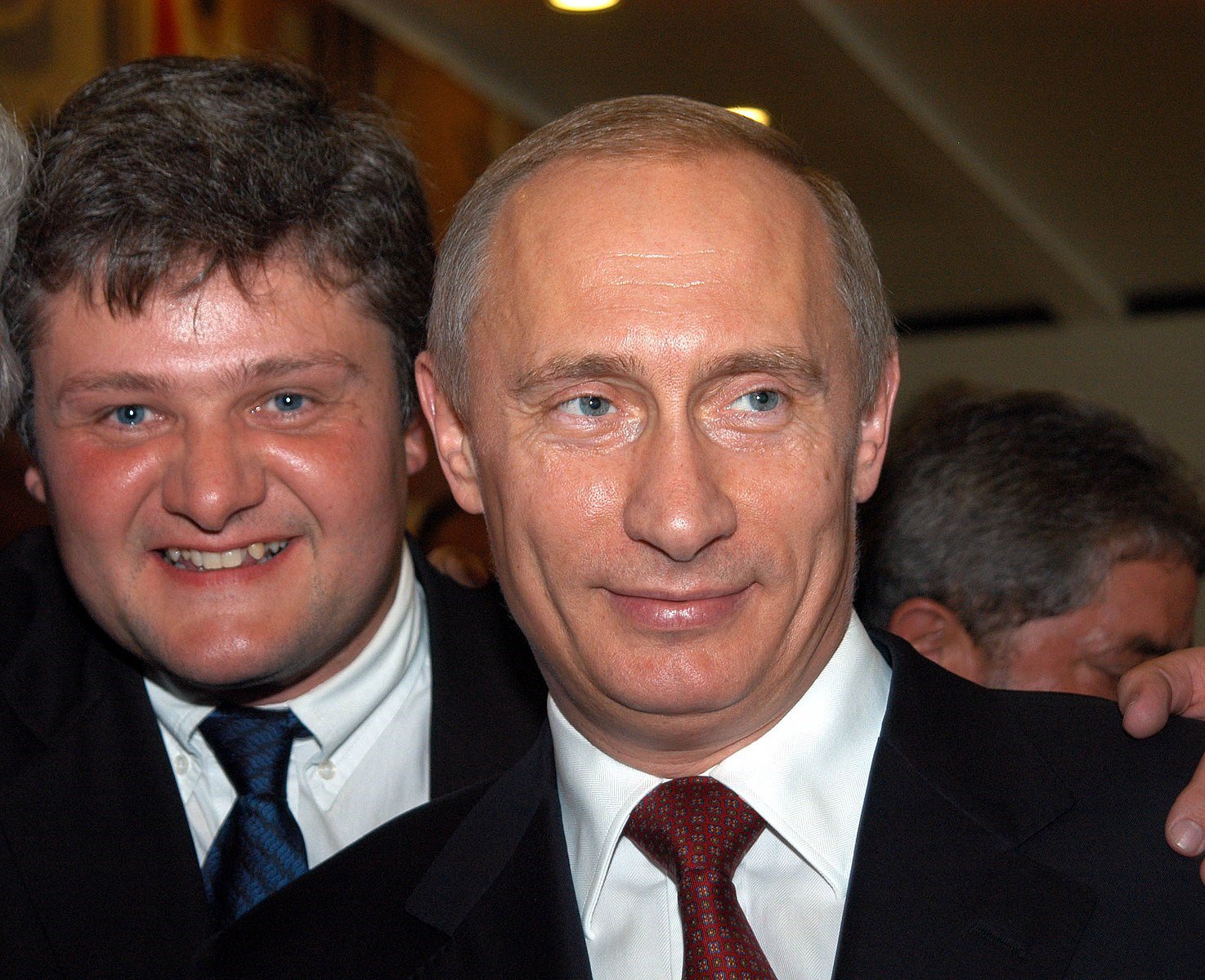
Figure 5. RusCorp International UK Registry Record-Open Corporates47
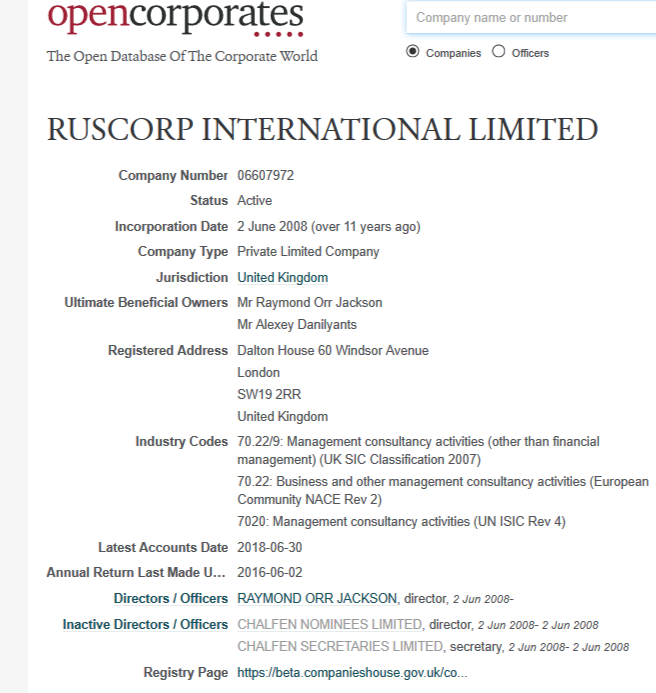
Archived versions of RusCorp’s website and a Facebook account under the RusCorp name indicate that, in addition to security services, the firm also provided security risk intelligence services under the rubric of its related Independent Research Task Force (IRTF).48 Another site advertising RusCorp’s services along with several other PMSCs indicates that along with its U.K. offices RusCorp at some point also had offices in the United States.49 Interestingly, IRTF-RusCorp at one point also adopted the name “Special Projects Task Force,” a common spetsnaz moniker.50 Many of the photos posted on RusCorp-IRTF’s Facebook page track closely with several of the locations where companies servicing Emercom Demining and/or Antiterror Orel or all both also worked, including locations in Sri Lanka, Afghanistan, Syria, and Iraq.
Figure 6. RusCorp Facebook Account Photo Stadium in Colombo, Sri Lanka, posted 2012
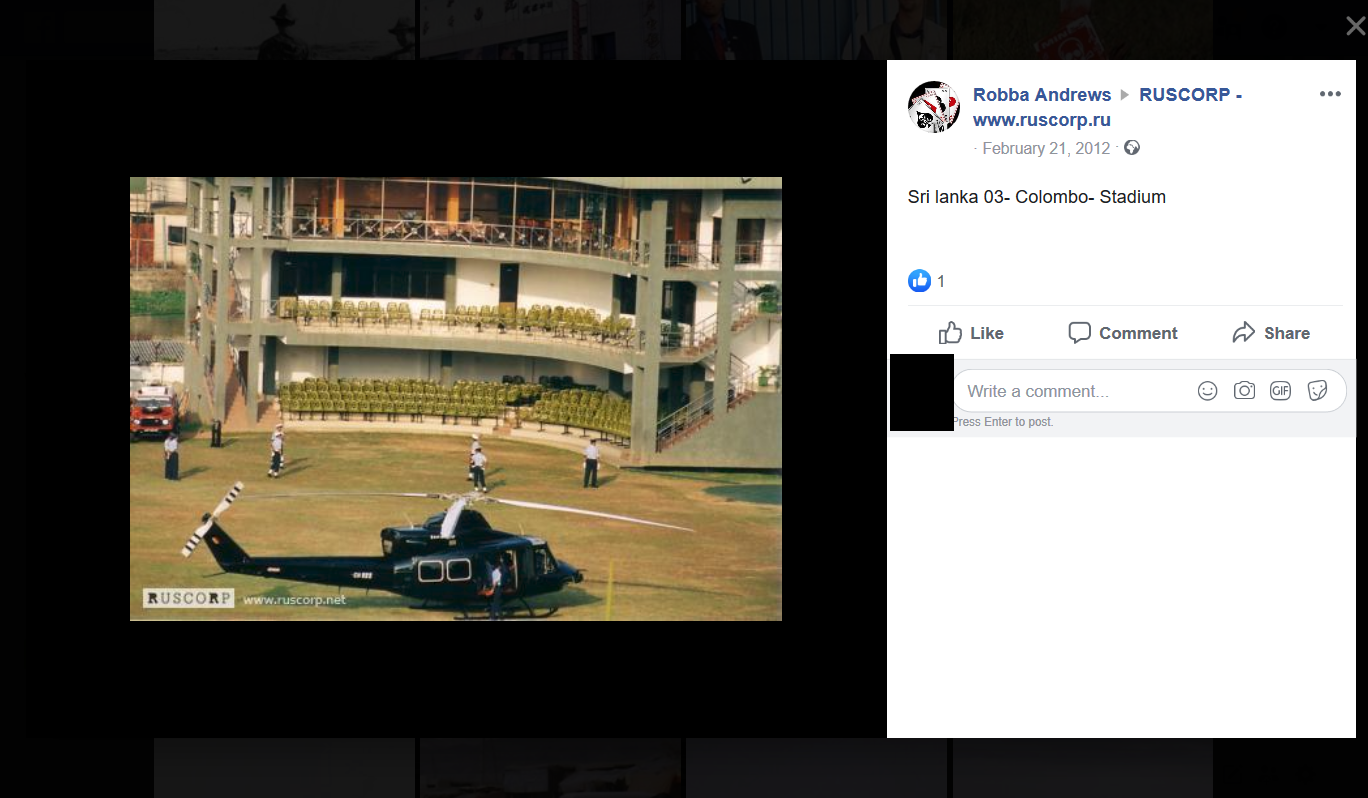
According to a July 2009 Reuters report,51 it was on Danilyants’s watch as vice-chairman, in fact, that RusCorp-IRTF would win one of its first big contracts for the provision of pipeline security in Nigeria on a multi-million dollar Gazprom joint enterprise with the Nigerian National Petroleum Corporation. It is also in Nigeria where outlines of the overlapping networks of Russian contractors variously affiliated with RusCorp, the Antiterror Orel Group, and the consortium of Russian veterans’ associations appear to intersect most clearly with another important player in Russia’s PMSC industry: the Moran Security Group.
Exploring the Moran Security Group-Wagner Connection
Headed by Vyacheslav Kalashnikov, a former KGB officer who served as an assistant to Kremlin insider Alexander Torshin,52 Moran was one of the first PMSCs to jump into the counter-piracy market in the 1990s and quickly locked in millions in annual revenue guarding ships for Sovcomflot, FEMCO, Murmansk Shipping, and United Marine, Russia’s largest shipping concerns.53 Although Boris Chikin, one of Moran’s founders dates the founding of the group to 2010, Moran’s website indicates that it was officially registered in Belize in 2011.54 A timeline on Moran’s website, however, attributes its origins to the late 1990s when concerns peaked within the Russian government about the risk posed by increased piracy along major maritime routes from the Gulf of Aden to the Indian Ocean.55 Moran specifically cites the PMSCs’ involvement in the rescue of an oil tanker nabbed by Sudanese pirates in 1999 and in company presentations refer to its close cooperation with the Russian Navy on numerous anti-piracy missions for energy transports.
Since few if any Russian PMSC companies in 1999 operated outside Russian territory that were not affiliated with the security divisions of major state enterprises, Moran’s organizational origins likely draw on the same legal architecture as many of the privatized militaries attached to state-run companies that began to crop up in the late 1990s. Indeed, Chikin and Alexey Badikov, another leading Moran manager, have said as much publicly.56 Both indicated that PMSCs operate under contract to state-run enterprises under of the auspices of joint military operational teams overseen by Russia’s Ministry of Defense.57 In many cases, it is much more accurate then to characterize the PMSC contingents that work with organizations like Moran as auxiliary privateer detachments that serve a network of militarized state-owned Russian corporations.
Officially registered as a corporate entity in Moscow in 2011, the Moran Security Group bills itself as a group of companies specializing in maritime security, risk assessment, VIP security, and infrastructure protection.58 Old versions of the company’s website dating back to January 2010 indicate Moran operated in Iraq near the Syrian border, Somalia, and Afghanistan and also advertise details about its land-based operations, which include mine clearance, reconnaissance and surveillance, and pipeline protection.59 Registered at various times as the Moran Security Group and/or the Moran Maritime Group, the PMSC appears in offshore company registries around the world.60 Moran is partially owned by Neova Holdings Ltd., an offshore holding company registered at one time in Belize, according to the OpenCorporates registry.61
According to research conducted by Vladimir Neelov, a St. Petersburg-based expert on Russian military affairs, Neova Holdings Ltd. counts as one of its affiliates the public joint stock company Novaem Group, a Russian energy industry, pipe-making, and machine-building conglomerate formed from a merger of Sibenergomash, TM Engineering, Trubmash, and other Russian companies in 2009.62 Public records and company websites for several Novaem subsidiaries indicate the holding company conglomerate has links to multiple Russian-owned companies, including Technopromexport, a joint-stock engineering firm partially owned by Russia’s top arms purveyor, Rostec.63 Older versions of the Moran Security Group company website also list offices in Bedford, New York and Bremen, Germany64 at addresses that match those for the South Asia and Africa Regional Port Stability Cooperative, a maritime safety and anti-piracy organization, also known as SAARPSCO, with offices also listed in Seychelles and KEAMSCO, a Kenyan based affiliate.65
Sovcomflot and its affiliate the SCF Group constitute Moran’s biggest clients. Headed by former Russian Transportation Minister Sergei Frank, Sovcomflot operates one of the world’s largest merchant fleets, specializes in the transport of oil and gas and related production equipment and supplies the energy giant Gazprom.66 In addition to Sovcomflot, Moran counts among its partners and clients Sogaz, which until recently was majority owned by Gazprom and more recently majority owner of Transneft insurance. New York based Marsh, part of the Marsh & McLennan Companies insurance conglomerate, is also listed as a key partner on Moran’s website and like Sogaz is primarily engaged in the financially lucrative reinsurance sector.67
Moran’s business dealings with Sovcomflot in Nigeria resulted in the first major public scandal involving the PMSC in the fall of 2012. According to press reports and UK court documents filed by a Nigerian businessman in connection with the case, Nigerian navy officers raided the Myre Seadiver and arrested 15 members of the Moran Security Group on charges of weapons smuggling. A search of the ship reportedly uncovered a cache of weapons that included more than a dozen AK-47 assault rifles, 20-plus Benelli MR1 rifles, and 8,000 rounds of ammunition.68 The weapons cache was enough to outfit a platoon, or maybe even two, but not quite enough to constitute a charge of smuggling. Nigerian officials nonetheless charged the ship’s crew with arms smuggling when the ship arrived in the Gulf of Guinea after sailing from Baltyisk, a busy port in the heavily secured northern Russian region of Kaliningrad.
The arrests of the Myre Seadiver crew prompted vigorous protests both from Moran’s Managing Director Alexey Badikov and deputy director Vadim Gusev, the very same veteran of the Antiterror Orel Group who had apparently also served with RusCorp in Iraq.69 The ship’s crew remained in custody for several months before Sovcomflot’s Senior Executive Vice President Evgeny Abramasov pressed Sovcomflot’s partner Glencore International to reach out to local contacts in Nigeria in April 2013 to intercede on their behalf. The New York- and Germany-based head of SAARPSCO, Hans Niebergall, also rejected the charges of weapons smuggling and said he too pressed for the Moran crew’s release.70 Nigerian authorities ultimately dropped the charges against the Moran crew in October 2013, almost a year to the day after their arrest.
However, Moran’s run-in with Nigerian authorities would later surface as a key point of contention in a 2015 lawsuit filed against Glencore in U.K. courts in which the head of Glencore’s local Nigerian partner alleged that Glencore had failed to pay him millions owed for work he did to secure the Moran crew’s release.71 Sir Og Amazu, the head of Amazoil, a Nigerian oil company that facilitated Glencore’s local liaisons, claimed in the suit, press accounts, and a subsequent interview in the spring of 2018 that Glencore said it would pay him $5 million for his help in the Moran crew case in Lagos through an offshore company called Glimer Ltd.
Although the suit was later dismissed, Amazu in an interview said he believed Glimer Ltd was registered in Cyprus.72 Amazu further contended in that interview that the remainder of the payment he was due never came through despite multiple calls with Glencore’s Moscow representatives.73 Amazu claimed he was unable to find out more about Glimer Ltd., and there is very little listed about the company online, beyond references to companies with the exact same name that appear to have links to energy firms in Russia and Slovakia.74 Glencore officials, in interviews given to the press shortly after Amazu filed suit in 2015, denied any wrongdoing and called the claims “baseless.”75 By then, however, years had passed, the peaceful protests of the Arab Spring had turned violent and the events in Syria had already overcome the 2012-2013 drama over Moran Security Group affair in Nigeria.
Citations
- “Wagner Group,” Wikipedia, accessed 9/30/2019, source.
- U.S. Treasury, Press Release, “Treasury Designates Individuals and Entities Involved in the Ongoing Conflict in Ukraine,” June 20, 2017, source
- The term siloviki is typically translated "strongmen" (from Russian сила, "force") and originated with the phrase "institutions of force" (Russian: силовые структуры). The colloquialism typically refers to political and business powerbrokers who once served in or have strong ties to successor organs of the KGB and other security services.
- The registry for the veterans group can be found at: source ; An archived version is available at: source
- Registries for further companies registered under Epishkin’s name can be found at: source ; An archived version is available at: source
- See archived version of the Anti-Terror Orel website here: source ; See also: Sergey Sukhanin, “From ‘Volunteers’ to Quasi-PMCs: Retracing the Footprint of Russian Irregulars in the Yugoslav Wars and Post-Soviet Conflicts,” Jamestown Foundation, June 25, 2019. source
- For more background on Rusich see: Belsat, “Russian neo-Nazi who killed Ukrainians, trained Belarus teens now fighting in Syria,” Oct.20, 2017. source
- Author interviews, Kyiv, Ukraine, February-March 2019.
- Igor Popov, “Soldat Na Prokat” (“Soldiers for Rent”), Forbes.ru, Sept. 3, 2010, source .
- Several business linked to Epishkin explicity make reference to “Alpha” units and “Soldiers of Fortune”; see registry for full listing of each: source
- The registry for “Soldier of Fortune” can be seen at: source ; An archived version is available at: source
- Popov, op.cit., 2010.
- Bloomberg Billionaires Index-2019, “#409-Suleiman Karimov,” source
- An archived version of the registry for the Association of Veterans of Peacekeeping and Local Conflict Missions can be found at: source
- Makhotkin’s bio can be seen at: source; source
- An archived version of the journal can be found at: source
- Fontanka, “Poslednii Boii Slavyanskovo Kora,” (“Последний бой «Славянского корпуса»,” “Slavonic Corp’s Last Battle,” Nov. 13, 2014, source
- An archived version of the site hosting the photo of Vadim Gusev on duty in Baghdad can be found at: source
- Enerpub, “Eni and Gazprom sign gas pipeline accord for EU,” June 23, 2007. source
- According to Russian corporate registry records, a woman named Tatyana A. Belayeva is listed as the company director for a company called “RusCorp Group Limited,” which was registered in Moscow in 2006. Those same records indicate Vyacheslav S. Yurichnik and Alexander N. Muravyev, two men who also once owned their own PSCs, as additional stakeholders in RusCorp: source.
- Jacob Gronholt-Pedersen and Alessandro Torello, “Companies Sign South Stream Deal,” The Wall Street Journal, Sept. 16, 2011, source.
- Politinka, “Ruski Demineri Ciste Trasu Juznog-toka,” (“Russian Deminers Clean the South Stream”), April 24, 2009, source
- Nick Cumming-Bruce, Katherine Harrison, et. al., “Clearing Cluster Munition Remants,” Mine Action Monitor, Norwegian People’s Aid, 92, source
- Popov, op.cit., 2010.
- Interview with senior Western diplomat, Kyiv, Ukraine, November 2018. See also: Maya Zinavovic, “Donbass Brothers: How Serbian Fighters Were Deployed in Ukraine,” Balkan Insight, Dec. 13, 2018. source
- Author interview with senior Western diplomat, Kyiv, Ukraine, Nov. 2018. For more background on Serbian contingents linked to Wagner and other pro-Russian Donbas separatists, see also: Roman Anin, Oleysa Shmagun, Jelena Vasic, Organized Crime and Corruption Reporting Project (OCCRP), “Ex-Spy Turned Humanitarian Helps Himself,” Nov. 4, 2015. source
- Michael Dennigan, “Three More Soviet Diplomats Expelled,” UPI, April 23, 1985, source ; See also: source
- According to an official biography Belaventsev posted on St. Petersburg Maritime Assembly website, Belaventsev also worked for a time for Promexport, another military-industrial firm that was consolidated under Rosboronexport and later, Rostec. source; source
- Roman Anin, Oleysa Shmagun, Jelena Vasic, Organized Crime and Corruption Reporting Project (OCCRP), “Ex-Spy Turned Humanitarian Helps Himself,” Nov. 4, 2015. source
- Roman Anin, Oleysa Shmagun, Jelena Vasic, Organized Crime and Corruption Reporting Project (OCCRP), “Ex-Spy Turned Humanitarian Helps Himself,” November 4, 2015. source
- The Zenit and Grom subunits are widely credited for leading the 1979 raid on the seat of Afghan political power in Kabul. Soon after Storm-333 the Soviets also introduced the Kaskad and Omega intelligence task forces in 1980. These specific units are considered part of the Vympel lineage. For a detailed historical account of the Storm-333 operation see: Aleksandr Antonovich Lyakhovskiy, Inside the Soviet Invasion of Afghanistan and the Seizure of Kabul, December 1979, Cold War International History Project, Working Paper No.51, Woodrow Wilson Center for International Scholars, January 2007. source ; and Mark Galeotti, Spetsnaz: Russia’s Special Forces, Oxford: Osprey Publishing, 2015, 27.
- Information on RusCorp can be found at: source; UK Companies House Registry Number 0066079272, Annual Filing 363a, June 30, 2009
- Fedor Butsko, “Rossiya sozdayet bizness-armyu,” (“Россия создает бизнес-армию,”, “Russia Creates a Business Army”) Vzglyad, March 21, 2008, source
- The June 4, 2008 archived version of the RusCorp site can be found here: source
- An archived version of the RusCorp website can be seen at: source
- Felix Onuah, “Nigeria signs oil pipes deal with Russia's Ruscorp,” Reuters, July 30, 2009, source
- Fedor Butsko, “Rossiya sozdayet bizness-armyu,” (“Россия создает бизнес-армию,”, “Russia Creates a Business Army”) Vzglyad, March 21, 2008, source
- Spelled “данилянц” in Cyrillic, public records indicate “Daniliants” as an alternate translation of the name. English language press accounts transliterate the name as Danilyants; that spelling is therefore used throughout.
- For details on RusCorp corporate registry information see for instance: source
- The registry for RusCorp International Limited can be seen at: source
- An archived version of the RusCorp website can be found here: source and references to British offices can be found here: source and elsewhere on other archived versions of the site.A full corporate filings history of RusCorp International Ltd. can be found on the UK Companies House registry site here: source
- According to Open Corporates listings, Antonio Carlos Rosset Filho registered as an agent of RusCorp International LLC in December 2015. OpenCorporates lists the status of the Orlando, Florida based company as in active. See: source
- See Russia-Brazil Chamber of Commerce website: source ; source
- The slides can be found at: source
- Ibid.
- Additional photos of Carlos Rosset were located on this Flickr site: source
- A full accounting of RusCorp’s UK Companies House registry filings can be found here: source
- RusCorp’s Facebook page can be found at: source ; A version is archived at: source
- The site advertising RusCorp services and showing offices in the United States can be found at source ; A version is archived at source
- A logo bearing the name can be found at: source
- Felix Onuah, “Nigeria Signs Oil Pipes Deal with Russia’s RusCorp,” Reuters, July 30, 2009, source
- Kalashnikov’s bio including his link to Alexander Torshin can be found on the Moran Group’s website archived here: source
- Igor Popov, “What Were the Russian Sailors Accused of Smuggling Arms Up to and How Much Did They Earn?” Forbes. Ru, April 2, 2013, source
- Igor Popov, “What Were the Russian Sailors Accused of Smuggling Arms Up to and How Much Did They Earn?” Forbes. Ru, April 2, 2013; source ; source
- An archived version of the website is available at: source ; also archived at source
- Boris Chikin, “Bizness-Razvedka,” (“Business Warrior,”) Mir Bezopastnosti, Feb. 2015, source; Alexey M. Badikov, “O Perspektivakh Pravova Regulirovaniya Deyaltnosti Chasnikh Voennikh (Okrhanikh) Kompaniy v Rossiski Federatsiy: Vglad iz Industrii” Expert Opinion: Perspectives on the Regulatory Regime
- Alexey M. Badikov, “O Perspektivakh Pravova Regulirovaniya Deyaltnosti Chasnikh Voennikh (Okrhanikh) Kompaniy v Rossiski Federatsiy: Vglad iz Industrii” “Expert Opinion: On the Prospects of Legal Regulation of the Activities of Private Military (Security) Companies in the Russian Federation, A View from the Industry,” Voennoe Pravo Rossii, Oct. 24, 2017. source
- Kimberly Marten in her March 26, 2019 article for Post-Soviet Affairs references two separate filings for Moran in Russian corporate registries. Records under links in rusprofile.ru that Marten included as references appear to have been expunged since. Kimberly Marten, “Russia’s Use of Semi-State Security Forces: The Case of the Wagner Group.”
- An archived version of the Moran website can be found at: source ; also at source
- Information about Moran’s registration can be found here. source; source
- The registry for Novaem Group can be found at: source
- Vladimir Neelov, Chastnoe Voenoye Kompanie v Rossi: Opit i Perspektivie Ispolzovaniya (“Private Military Companies in Russia: Practices and Perspectives on Their Use,” 2013, 26. source For details on Novaem see company page: source ; the Novaem site is archived at source Additional information about Novaem and its holdings can be found through a search of Russian company registries: source Russian company registries list Vitaly L. Chernomor as the director of Novaem. Chernomor in a February 16, 2012 guest contributor column in Forbes.ru, details the history of the formation of the Novaem holding company and its links to various machine building and boilermaking plants. See: Vitaly Chernomor, “Has the Era of Factory Acquisitions Ended?” (“Vremya skupat zavodi ne zakonchilos,” “Время скупать заводы не кончилось?”), Forbes.ru, February 16, 2012. source For further details about Novaem’s various holdings and company affiliations see: source
- According to Tekhnopromexport’s website, Rostec owns a 35 percent share of the company, source
- A version of the Moran website showing those listings can be seen at: source
- Websites for SAARPSCO and KEAMSCO list Hans J. Niebergall as President and CEO. On a company website for another company Niebergall has links to, Niebergall International lists KEAMSCO as an affiliated company and lists the same phone number and address in Bremen, Germany and Beford, New York as for those listed for SAARPSCO, KEAMSCO and that indicated for Moran Security Group on older versions of its website. The Moran Security Group site has also consistently listed SAARPSCO on its webpage. In a January 2013 Niebergall was quoted in an online blog calling for the release of Moran Security Group crew members on board the Myre Seadiver. See: The Nation, “International group calls for release of Russian sailors, ship,” January 13, 2013. dohaforum.org See also. Niebergall International Website: source See archived version of Moran Security site: source; See also SAARPSCO website contact information: source; source
- James Lewis, Rob Evans, and David Leigh, “Russia Seeks Extradition of Shipping Magnate in UK,” The Guardian, Feb. 1, 2008, source
- The Moran website is archived at: source
- BBC “Nigerian navy detains Russian crew over arms,” Oct. 23, 2012, source.
- Maritime Security Review, “Russian Crew Arrested in Nigeria,” Oct. 24, 2012, source.
- The Maritime Executive, “SAARPSCO Responds to Suspicions Surrounding Member Vessel, MYRE SEADIVER,” Oct. 24, 2012, source. In the article cited above Hans Niebergall is listed as a SAARPSCO representative and Niebergall is also listed as president of KEAMSCO on the organization’s website: source
- Marcus Leroux, Richard Fletcher, “Nigerian Trader Sues Glencore for $10 million,” Reuters, June 23, 2015, source.
- Information about Glimer Ltd. is limited but a search of open records published online unearthed references to Glimer Ltd. in a company audit performed by Deloitte & Touche for Neftisa, a Russian oil firm that is part of the Safmar Group of energy companies. The Neftisa audit does not indicate specifics about the relationship between Glimer Ltd. The audit document only lists debits and credits on Neftisa’s balance sheets and there is no explanation about Neftisa’ $2.4 million loan to Glimer in 2012. Emailed requests for information about Nefitsa’s business dealings with Glimer had not received a response by the time this report was ready for publication.
- Interview with Sir Og Amazu, Facebook Messenger, February 4, 2019.
- In addition to the references to Glimer Ltd. found in the 2012 Deloitte & Touche audit for Neftisa, a search of public records unearthed another company named Glimer Ltd. registered in Bratislava, Slovakia as “Glimer s.r.o.” According to online corporate registry records, the Glimer firm listed in Bratislava was initially first registered by a person named Michal Borgula on April 17, 2012. The Bratislava firm named Glimer appeared in the registry again on May 18, 2012 and also listed Slovunit, a Slovakia-based energy company headed by Borgula as an associated business entity. On Dec. 31, 2014, Glimer’s name changed to “PL Plant Sagu,” and it later appears as PV Plant Sagu in the same registry. Michal Borgula is listed as a stakeholder in several companies besides it is unclear what, if any, link there is between the Glimer once registered in Bratislava, the Glimer Ltd. listed in the Deloitte & Touche audit for Neftisa or whether there is any connection with between those firms and the Glimer Ltd. Amazu names in his 2015 UK lawsuit against Glencore. It is notable, however, that like several other firms based in Slovakia in which Borgula is listed as a stakeholder, Glimer shows a precipitous decline in revenues over its short time in existence. Registry information for Glimer Ltd. Can be seen at: source
- Javier Blass and Jesse Riseborough, “Nigerian Trader Sues Glencore Over Failed Payments for Sailors’ Release,” Bloomberg, June 24, 2001, source
Forward Operations: From Deir Ezzor to Donbas and Back Again
Incident in Palmyra: Slavonic Corps and the Birth of the Wagner Group Narrative
Within days of the October 2013 Nigerian judgment in the Myre Seadiver smuggling case, Moran Security Group surfaced in international news headlines again when one-time RusCorps employee Vadim Gusev found himself in hot water again. This time, it was after dozens of fighters affiliated with another Moran Security Group contingent called the Slavonic Corps got into a firefight near the city of Homs while serving in an area of operations that spanned to Syria’s Deir Ezzor province.1 Ostensibly owned by Gusev and managed by Chikin and the firm’s director Sergei Kramskoi, Slavonic Corps was reportedly registered in Hong Kong.2 In spring 2013, recruitment ads for Slavonic Corps began appearing on Moscow-based online bulletin boards and Gusev, Kramskoi, and Chikin successfully recruited 267 men to secure oil facilities near Palmyra on behalf of Syria’s ministry of energy.3
The group’s exploits in Syria went virtually unnoticed until ISIS claimed in October 2013 that it had killed more than 100 people in a battle near Homs—among them Russian contractors, including a Moran employee. When the Slavonic Corps contingent returned home to Russia the FSB interrogated the men and ultimately charged Gusev and Yevgeny Sidorov (another Moran veteran and partner in the Slavonic Corps venture) with violating prohibitions in Russia’s criminal code against mercenary activity.4
The 2013 Palmyra incident involving Moran triggered a wave of press coverage and appeared to be the first known instance in which Russian PMSC operators were reportedly engaged in offensive operations in Syria. Yet, as more details surfaced about Slavonic Corps and Moran after the October 2013 dust up, it soon became clear that Russian PMSC operators linked to Moran had been operating in Syria for at least a year by then. A 2010 version of Moran’s website indicates the PMSC had been operating near the At-Tanf border station in Syria near the Iraq border at least three years before the St. Petersburg based Fontanka news site unearthed the ties between Moran employees Vadim Gusev, Chikin, Sidorov, and the Wagner Group’s titular head, Dmitry Utkin.5
Several of the Russian state-run enterprises that form less well-advertised parts of Moran’s client base had joined the Russia-Syria Business Council years before the start of the Arab Spring. A key conduit for many of the contracts that support Russian PMSC operations, the 100-plus member business council includes high-level Kremlin insiders, including Sergey Chemezov, head of Rostec, Russia’s chief arms purveyor. Representatives from Rostec subsidiary Technopromexport, StroyTransGaz (STG), and Tatneft, three of the most important Russian state-backed entities, are also on the council.6 All three Russian corporations backed major energy and infrastructure projects in Syria before the civil war and, as a rule, generally insisted on housing their own privatized military contingents separately in the country.7
Figure 7. Moran Security Group Home Page-Archived 2010
At the start of the Syrian war in late 2011, early 2012 leading Syrian partners on the council began to leverage preexisting relations with Russian energy majors to increase their share of Syria’s burgeoning war economy. Among the most notable of these was George Hawswani, head of HESCO Co., a Syrian engineering firm that has partnered closely with STG on projects in Syria and counts the African energy companies Petrodar and Sonartarch as clients in Algeria and Sudan respectively.8 Hawswani’s business relationship with STG’s head Gennady Timchenko, a close associate of Putin, dates back well before the war.9 With HESCO Co.’s help, STG has built oil and gas infrastructure in dozens of places across Syria over the years, which have reportedly brought in millions for Timchenko, Hawswani, and their Syrian and Russian business associates on the Russia-Syria Business Council.10
At the same time, the STG-HESCO partnership has also raised red flags.11 In 2015, the U.S. Treasury sanctioned HESCO Co. and Hawswani12 for his alleged role as a middleman in oil deals made with ISIS on behalf of the Assad regime.13 HESCO Co. subsidiary International Pipeline Company also fell afoul of sanctions for allegedly facilitating payment transfers to ISIS from its offices in the United Arab Emirates.14 Hawswani’s business dealings with STG and Timchenko, sanctioned for his alleged role in connection with Russia’s intervention in Ukraine, was also another factor cited by Treasury officials for scrutiny of his business. One of the most significant pre-war deals cut while Timchenko still was a majority stakeholder of STG was a 2007 agreement for the completion of the Kirkuk-Baniyas pipeline across northeastern Iraq and Syria and the Tuweinan gas facility, just 60 miles south of Raqqa.15 In addition to reactivating contracts for projects that were halted shortly after the 2011 uprising erupted, STG more recently also inked a 49-year $500 million deal with the Syrian government for reconstruction, expansion, and maintenance of the Tartus port.16
The surge of unrest in Syria clearly was good for business for Rostec subsidiaries, STG, HESCO Co., and others on the Russia-Syrian Business Council who dealt in commodities that could easily be sold on the black market for hard currency, such as oil and phosphates. Yet, insecurity and the heavy international sanctions against the Assad regime set up a logistical challenge of gargantuan proportions for anyone looking to still do business in Syria. The political upheaval in the Middle East gave a fresh jolt to Russia’s private security industry. Once again, Moran Security was among the first to capitalize on the situation, becoming one of the first to hop on board an illicit, sanctions-busting high seas pipeline run by a consortium of Russian state enterprises known as the Syrian Express.17
The Syrian Express and the Mobilization on the Black Sea Routes
The toppling during the Arab Spring of key Arab leaders the Kremlin had spent years cultivating threatened to reverse progress Russia had made in expanding its share of the Middle East energy and arms market during Putin’s first few years in office.18 Violent unrest in Libya in early 2011 fueled deep fears in the Kremlin about the risk posed to major players like STG, Tatneft, and Rostec, which had billions invested in the country and the wider region. Those fears became more real when Russia was forced to suddenly evacuate more than 300 Tatneft employees amid violent attacks across Libya in early 2011.19
Russian PMSCs surged into the region to secure Russian assets, provide personal protection to VIPs and ensure the secure transfer of weapons. Instability in the region also presented an opportunity for Russian state firms, especially Rosboronexport, the export arm of Rostec that services the lion’s share of Russia’s foreign military-technical agreements. The United States moved to freeze Syria and Libya out of global markets and temporarily turned off the tap on military aid to Egypt, creating space for Russia to increase its influence. Pressure to quell instability in all three countries drove up demand for weapons and nudged them closer to the Kremlin’s sphere of influence.
Rostec CEO and Putin’s former KGB colleague, Sergey Chemezov, once again played a central role. After consolidating the bulk of Russia’s military-industrial complex under Rostec in 2007, Chemezov, who served alongside Putin during his KGB stint in the German town of Dresden, openly pursued a strategy of nurturing new markets for Russian arms in U.S. sanctioned states. This revitalized the 700 nearly moribund state-enterprises that were folded into the conglomerate by executive decree and built up a network of trusted brokers who could ensure secure shipments of arms and weapons platforms. In the decade since Chemezov launched Rostec’s transformation, the total volume of exports through Rosboronexport more than doubled from $6 billion in 2007 to $13.4 billion in 2017.20
Dollar for dollar, the volume of Rostec arms exports to Syria ranks it amongst the biggest recipients in the Middle East region; a majority of Syria’s arms, in fact, can be sourced to Rosboronexport.21 For Rostec, establishing covert supply chains from 2012 forward ensured safe and most importantly, discrete delivery to one of its most valuable markets. At the outset of the uprisings in Syria in March 2011, established Black Sea transit lines proved crucial in this regard, serving initially as the primary route for weapons delivery and a key source of contract work for Russian PMSCs. Later, as sanctions against the Assad regime brought more public scrutiny to bear on Russian arms transfers to Syrian Baltic sea routes also became essential, precipitating substantial shifts in the way Russian PMSCs operated.
As first documented by C4ADS, most arms exported out of Russia have for decades been shipped out of the southeastern Ukrainian ports of Oktyabrsk and Nikolaev and almost exclusively managed by a network of interlinked firms with offices in Kyiv and Odessa, just a short distance from the Crimean Peninsula.22 A few supply chain managers for Rosboronexport also operate out of the Baltic seaports of St. Petersburg, Russia and Riga, and Latvia; including several Russian state-backed shipping and chartering companies, brokerage houses, and reinsurance firms that handle war risk management and logistics for Moran Security Group clients and partners.23
The most significant among these are FEMCO, Balchart, Northwest-Shipping Company, and Westberg Ltd., the same maritime charterer implicated in the 2012 Myre Seadiver incident involving Moran crewmembers in Nigeria.24 Interestingly, a separate search of the ICIJ database indicates that an organization whose name appeared in the Panama Papers leak called Finaswiss SA and Finaswiss Foundation are listed as an intermediary for Westberg.25 At various points after the Arab Spring, Balchart, FEMCO, Northwest-Shipping, and Westberg were implicated in sanctions busting shipments of Russian arms to the Assad regime on the so-called Syrian Express.26 One of the first such shipments to come to light occurred in January 2012 after the Westberg-chartered MV Chariot stopped in Cyprus as it traveled en route from St. Petersburg to Tartous with dangerous cargo.27 Not long after the MV Chariot reached its destination, press reports documented at least three other Westberg chartered ships were caught carrying weapons to Syria, including the MV Alaed.28 When British authorities caught the MV Alaed carrying refurbished assault helicopters off the coast of Scotland in June 2012, the vessel’s British insurer, the Standard Club, canceled the shipment’s insurance, citing concerns that the arms shipment from St. Petersburg, Russia to Syria violated EU sanctions.29 The incident marked one of several instances in which U.K. or EU authorities interdicted Russian cargo ships carrying weapons to Syria early in the civil war. The loss of a key insurer for such shipments mid-2012 presented a serious challenge for Russian companies looking to do business under the radar with Syria, but also opened up new possibilities for those looking to capitalize on the growth of black market trade of embargoed commodities, including Wagner.
On the Ground in Syria and Ukraine
When ISIS began to take control of large swaths of territory in Syria in late 2012, Russian PMSC contingents evolved their mission to provide the logistical link for Russian special operators in Syria on the ground and train up local militias. The shift from more traditional protection to offensive operations mirrored developments in Russia’s efforts to mitigate risks posed by Assad regime reversals on the ground.
Local sources in Syria and data culled from Russian and Syrian traditional and social media indicate that Moran, Slavonic Corps, and Wagner were the first to take on a more offensive role. Later, two other related PMSC contingents known as Patriot and Vega stepped in to provide infrastructure protection and oversight of at least six major projects backed by Russian and Syrian members of the joint business council, including pipeline and infrastructure construction projects managed by HESCO Co. for STG in Deir Ezzor, Homs and Tartus, and power generation projects managed by Technopromexport.30
Security details for all the projects are additionally manned by local pro-Assad militias trained almost exclusively by Russian PMSCs. Most of the local Syrian forces attached to the deals have at various stages fought as contingents in the Fourth Corps and Fifth Corps. In fact, many of the more well-known sub-units in these local contingents, including the so-called ISIS Hunters and Liwa al-Quds, progressively came online as many of energy project deals were cut with HESCO Co. at the beginning of the Arab Spring. Most of the major Russian PMSC contingents working with Russian-backed businesses in Syria, which either STG or Rostec subsidiaries have trained, equipped, and fought alongside contingents of local Syrian government forces, such as Liwa al-Quds.
Following a series of running battles near Palmyra that started in 2013, STG, with a strong assist from Russian PMSCs and affiliated local pro-Syrian militias, such as the al-Nimr or “Tiger” Forces, also acquired a substantial stake in Syria’s phosphate industry.31 Led by Russian-backed favorite, Brig. Gen. Suhail al-Hassan, and culled from a pro-Assad faction of the Air Force Intelligence Directorate, the Tiger Forces trained with and fought side-by-side with Russian PMSC fighters—most of which claim STG as a key client for security services in Syria according to local sources.32 Yet, Syrian forces loyal to Assad still struggled to reverse rebel and ISIS advances.
It was around this time, not long after the Slavonic Corps debacle, that the Wagner Group reportedly appeared on the scene in Syria and plans were made by Russian advisors and the top tier of Assad’s military to launch the Fourth Assault Corps, or 4th Legion. Near the end of 2014 after the Syrian military experienced several battlefield reversals most notably in Palmyra, Russian advisors began to lobby Syrian military leaders to organize an assortment of pro-Assad militias into a singular division. In October 2015, General Ali Ayoub, Syria’s chief of army staff, announced the formation of the 4th Assault Corps.33 It was at about this same time that Dmitry Utkin’s Wagner Group reportedly replaced Slavonic Corps and took over the train and equip mission of local Syrian militias.
Headquartered in Latakia, the 4th Assault Corps area of operations spanned parts of Hama, including for a time a base at Mesyaf and Aleppo. Initially, the 4th Corps included several military units in the Syrian government army, including the 87th Brigade tank regiment.34 Under the joint command of Russia and Iran, it also included al-Nimr (Tiger) Forces, National Defense Force (NDF) militias, and regiments of special forces.35 These 4th Corps units would figure heavily in battles for control of the cities of Aleppo and Hama after Russia’s military officially began operating in the country in September 2015.36
Despite reported support from the Wagner Group and other Russian contingents, the 4th Corps struggled. Major General Hassan Merhej replaced former Corps commander Major General Shawki Yusuf after 4th Corps units marked significant battlefield losses against opposition forces. Turmoil at the top and infighting at the lower levels between competing militias backed by Iran and Russia apparently blunted the 4th Corps effectiveness even further, prompting Russian advisors to Assad only a few months later to propose a fresh alternative: the formation of a new division composed of a combination of Syrian regulars and pro-Assad militias wholly subsidized, trained, and advised by Russian regulars and PMSCs.37
Repeated failed attempts to seize strategic territory, particularly in the oil, gas, and mineral-rich areas of Palmyra, led Russian commanders on the ground to pursue new avenues for training and equipping local forces independent of Iran. In late 2016, the Syrian army announced the formation of the 5th Assault Corps or "Storming Corps." 38 Composed of local volunteers, the 5th Assault Corps, was almost exclusively trained and equipped by a mix of Russian PMSC contingents. Claims about Wagner’s direct involvement in the 5th Corps train and equip mission are difficult to verify, but a scan of Russian soldier of fortune social media blogs and online bulletin boards, as well as the accounts of dozens of individuals who were killed in action and reportedly affiliated with Wagner, indicate that at least some Russian PMSCs were involved in delivering and training local militias in the 5th Assault Corps area of operations on heavy weapons, such as T72 tanks and SU-300 air defense batteries.39
The Donbas Follies
It is not entirely clear how much Russia’s experience in the early years of the Syrian civil war from 2011 to 2014 informed the use of PMSCs in Ukraine, but there appears to be a feedback loop of lessons learned from Deir Ezzor to the Donbas. In the fall of 2013, as pro-European protests percolated and calls for the ouster of the Russian-backed regime of Ukraine’s President Viktor Yanukovych began to heat up, contingents of Russian-speaking tourists reportedly began cropping up in southern Ukraine.40
When Yanukovych tried but failed to suppress protests on Kiev’s main Independence Square even after more than 100 Ukrainian citizens were killed, the imminent collapse of Yanukovych appeared to trigger a panic in Moscow. Days before Yanukovych fled from his stately mansion in an outer suburb of Kiev in late February 2014, the Kremlin decided to seize control of Crimea. With an estimated 22,000 troops and personnel with Russia’s Black Sea Fleet located on the peninsula Moscow could ill-afford to cede control to a government it did not back and that it saw as ramshackle at best. On February 27, 2014, thousands of Russian military men stripped of their insignia and began to stream across Crimea after they had been covertly deployed to Black Sea bases Anapa and Novorossisk.41
The action in Crimea was soon followed by pro-Russian separatist uprisings in nearby Donbas where sleeper cells of Russian “tourists” began seizing control in towns and villages. Across Ukraine’s embattled southeast, the GRU was the decisive force that made the difference. They activated their proxy networks—the Knightwolves, the Cossacks, and battalions of sympathetic Serbians, Romanians, Belorussians, and other foreign fighters. Igor Girkin, the same Russian fighter who had tweeted about Wagner casualties in Deir Ezzor in the winter of 2018, was among the first to join their ranks. A self-avowed spetsnaz intelligence veteran who fought in Transnistria and the Balkans, Girkin was known by the call sign Strelkov and his small company of men seized government buildings in the town of Slovyansk in the Donetsk district of Donbas early in the conflict.42 With Wagner and other quasi-paramilitaries, the GRU tried to sew a common thread between the motley array of militias, veterans groups, and criminal gangs that seized on the moment.43
Reports have variously estimated Wagner’s strength at somewhere between 2,500 to 5,000, but no full or accurate accounting has been made. What is known is that surreptitious movements of Russian regulars, irregulars, and equipment began moving across the border sometime in May or June 2014.44 Scores of Wagner Group fighters and an unknown number affiliated with Moran and a few other well-known Russian PMSC contingents were highly concentrated in Russian separatist battalions active in the contested areas of what is now known as the Donetsk People’s Republic and Luhansk People’s Republic. Interviews with Ukrainian veterans who claimed they were detained by Wagner operatives in Debaltseve and Ilovaisk in 2014 and 2015 reinforce reporting by local and international human rights organizations.45 Local human rights workers and Ukrainian officials also insist that Moran veterans also fought in Donbas.46 Many of the fighters would come to play key roles in other critical events, including the downing of MH17.47
The above details about Russian PMSC operations in Syria and Ukraine fill in many blanks in the puzzle of Russia’s proxy war strategy. But, there still are a few pieces missing from the Wagner narrative. How do the historical origins, tactics, and broader strategic interests combine into a state proxy warfare strategy and what are the strengths and weaknesses of that strategy?
Citations
- War is Boring, “There Are Russian Mercenaries Fighting in Syria,” Nov. 18, 2013. source
- Denis Korotkov, “Posledni’I boi Slavyanskovo Korpusa” (“Slavonic Corp’s Last Battle”, Последний бой «Славянского корпуса»), Fontanka, Nov. 14, 2013, source
- Denis Korotkov, “Kukhnya Chastnoi Armii,” (Private Army Kitchen Intrigues) Fontanka.ru, June 9, 2016.
- Weiss, “The Case of the Keystone Cossacks,” Foreign Policy, Nov. 21, 2013, source
- An archived version of the Moran Group’s 2010 website can be found at: source
- The Syrian-Russian Business Council website can be seen at: “مجلس الأعمال السوري الروسي” Accessed Oct. 22, 2019, source
- Interviews with Syrian infrastructure engineers, via Skype, May-June 2019.
- Archived versions of the HESCO website can be found at: source ; source
- Ceren Kenar and Ragip Soylu, “Why Are Russian Engineers Working at an Islamic State-Controlled Gas Plant in Syria?” Foreign Policy, February 9, 2016. source
- Sputnik News, “Hawswani to Sputnik: Turkey Wants to Exonerate Itself for Its Support of ISIS,” Dec. 6, 2015. source
- U.S. Treasury, Press Release, “Treasury Sanctions Networks Providing Support to the Government of Syria,” July 21, 2016, source
- U.S. Treasury, Press Release, “Treasury Sanctions Networks Providing Support to the Government of Syria, Including For Facilitating Syrian Government Oil Purchases from ISIL,” Nov. 15, 2015.
- Sameer Aboud, The Economics of War and Peace in Syria, The Century Foundation, Jan. 31, 2017, source; See also: source
- Claude Assaf, “Sanctions US : le spectre d’un « nouveau Gaza » se profile au Liban,” Le Orient Le Jour, Sept.17, 2019, source ; See also: U.S. Department of Treasury, Press Release, “U.S. Treasury Imposes Sanctions on Assad Regime’s Key ISIS Intermediary and a Petroleum Procurement Network,” September 6, 2018. source
- Ceren Kenar and Ragip Soylu, “Why Are Russian Engineers Working at an Islamic State-Controlled Gas Plant in Syria?” Foreign Policy, Feb. 9, 2016, source
- PortS-Europe, “Syria signs 49-year contract for operation, overhaul of Tartus port with Russia’s Stroytransgaz,” April 25, 2019, source
- Jonathan Saul and Maria Tsetkova, “Russia Supplies Syria Mission with Old Cargo Ships Bought from Turkey,” Reuters, Dec. 15, 2015, source
- Connolly and Senstad, op.cit., 2017, 11-12.
- Viktor Feshchenko, “Vivozii Zdelani,” (“Pickups Complete,”), Rossikaya Gazeta, Feb. 28, 2011, source
- Rostec, Annual Report, 2017, 4, source
- See: Anthony, Russia and the Arms Trade, and Denitsiev, Russia in the Global Arms Market: Stagnation in a Changing World.
- Tom Wallace and Farley Mesko, The Odessa Network: Mapping Facilitators of Russian and Ukrainian Arms Transfers, C4ADS, Sept. 2013, 4, source
- Ibid.
- According to international maritime registry records, Myre Seadiver operated under a Cook Island flag of convenience and the Westberg managed vessel was previously named “Ratibor.” source FEMCO is one of several companies listed on Moran’s website as a client along with Sovcomflot. For details about Moran’s listed clients, see: source For a detailed analysis on the links between Balchart, Northwest-Shipping Company, and Westberg see: C4ADS, The Odessa Network, Sept. 2013; and Sergio Fernandi and Peter Danssaert, Fatal Freight: Ships, Guns and Human Rights Abuses, International Peace Information Service, 2017, source
- The ICIJ listing can be found at: source
- For more details on Russia’s involvement in illicit transfer of weapons to Syria see: C4ADS, The Odessa Network, Sept. 2013; and Sergio Fernandi and Peter Danssaert, Fatal Freight: Ships, Guns and Human Rights Abuses, International Peace Information Service, 2017, source
- Thomas Grove, “Russian Operated ‘Arms’ Ship Reaches Syria,” Reuters, Jan.13, 2012, source
- C4ADS, Odessa Network, 2013; Thomas Grove, Erika Solomon, “Russia Boosts Arms Sales to Syria Despite World Pressure,” Reuters, Feb. 21, 2012, source
- BBC, “Ship 'carrying attack helicopters to Syria' halted off Scotland heads for Russia,” June 19, 2012, source
- From May 2019 to June 2019, Syrian researchers affiliated with New America conducted multiple Skype interviews with three local Syrian contractors engaged in construction and energy infrastructure work in the country who provided eye-witness accounts of Russian PMSC presence at ongoing projects backed by Russian state-run enterprises.
- The Syrian Observer, “Russian Ambitions for Syrian Phosphates,” Nov. 7, 2017, source
- Interviews with local Syrian contractors, via Skype, May 2019-June 2019; An email from the author sent on Oct. 23 requesting information about StroyTransGaz projects in Syria was sent to the press contact for STG did not receive a response in time for the publication of this report.
- Murad al-Qwatly, “NDF militia is under threat due to Russian plans to replace it with the Fourth Corps,” al-Souria Net, Jan. 12, 2015, source
- Omran Center for Strategic Studies, The Syrian Military Establishment in 2019: Sectarianism, Militias, and Foreign Investment, May 2019, 92-95.
- Abdullah al-Jabbassini, From Insurgents to Soldiers: The Fifth Assault Corps in Daraa, Southern Syria, European University Institute, May 14, 2019, source
- Omran Center for Strategic Studies, The Syrian Military Establishment in 2019: Sectarianism, Militias, and Foreign Investment, May 2019, 50-52. See also: Gregory Waters, The Lion and The Eagle: The Syrian Arab Army’s Destruction and Rebirth, Middle East Institute, July 18, 2019, source
- Omran Center for Strategic Studies, The Syrian Military Establishment in 2019: Sectarianism, Militias, and Foreign Investment, May 2019, 92-95.
- Gregory Waters, “Rebuilding,” in The Lion and The Eagle: The Syrian Arab Army’s Destruction and Rebirth, Middle East Institute, July 18, 2019, source.
- Tom O’Connor, “Syria’s ISIS Hunters Offer $1 Million for Russian Hostages,” Newsweek, Oct. 5, 2017, source
- Interviews with Ukrainian municipal officials, Dnipro, Ukraine, March 2018.
- Mark Galeotti, Armies of Russia’s War in Ukraine (Oxford: Osprey Publishing, 2019), 7-8.
- Anna Matveeva, Through Times of Trouble: Conflict in Southeastern Ukraine from Within (Lanham, Maryland: Lexington Books, 2018), 95-98. (Location 2794, Electronic Version)
- Interview with former senior U.S. intelligence advisor, February 2019.
- Interview with senior Western diplomats, Kyiv, October 2018; February 2019.
- Interviews with senior Western diplomats, Kyiv, Ukraine October 2018; Interviews with Ukrainian human rights experts, Kyiv, February-March 2019.
- Interview with senior officials in Ministry for the Temporarily Occupied Territory, Kiev, March 2019; Interview with Ukrainian human rights activists, Kiev, March 2019.
- Bellingcat Investigation Team, “MH17 – Russian GRU Commander ‘Orion’ Identified as Oleg Ivannikov,” May 25, 2018. source
Solving the Puzzle of Russian Proxy War Strategy
Viewing the activities of Russian PMSCs across the Greater Middle East and its periphery reveals much about their conduct. However, understanding the role of Russian PMSCs requires a framework of analysis. The best framework is one that understands Russian PMSCs as agents of a Russian proxy warfare strategy pursuing ends that, as we have seen, share substantial continuities with prior Russian and Soviet strategic ends. However, this is not a framework of proxy warfare as powerful states moving their agents like chess pieces or a framework of Russian PMSCs as simply being disguised state actors.
Instead, as is visible in the contours of other twenty-first century proxy conflicts across the Greater Middle East, proxy warfare must increasingly be understood in terms of relationships embedded within complex networks of influence and power.1 These relationships and networks are essential to understanding both Russian PMSCs and the very Russian state that is using them as proxies. This is a framework that resists both the chessmaster vision prominent among many treatments of this subject in terms of “hybrid war” or the Gerasimov Doctrine, as well as the Russian disinformation of mere financially motivated PMSCs. A thorough understanding of Russian PMSCs and the proxy warfare strategy they are part of requires an understanding of today’s legal framework for privatized forces and an examination of Russia’s history.
Tangled Webs and Complex Networks
Much like RusCorp and Antiterror Orel, many in Moran and Wagner’s reported web of partners, brokers, and employees appear to be connected. For example, Westberg’s registered owner at one time, Oleg Smolian, like several other major players in Moran’s business networks, has cycled through maritime shipping companies that specialize in servicing Russia’s arms exports and Russian partners in the offshore energy production industry. This seems to be typical of many who appear to be part of the same network or, at minimum, appear to have affiliations with Moran, Wagner, or another entity linked to their networks.
Data collected for this report suggest that besides Smolian, Gusev, Sidorov, and Wagner’s titular head, Utkin, there seems to be considerable crossover between the two ostensibly distinct PMSC detachments. A review of Facebook accounts for more than a dozen Moran employees, for instance, indicate the PMSC has operatives spanning from Turkey, Nigeria, Sri Lanka, Romania, to Serbia and beyond, some of whom openly list their affiliation with Wagner. For instance, a search for Moran Security Group employees on Facebook turned up an account for Miroslav Dusan Petrovic, the lead LinkedIn recruitment contact for the Moran Security website. A 2018 public version of Dusan’s Facebook account shows that he worked for Wagner—in addition to his stated role with Moran.
Figure 8. Facebook Account Page-Dusan Petrovic, Moran-Wagner Employee

Petrovic indicated in a Facebook post while he was in Moscow, dated September 2017, that he recently joined the Wagner Group as an employee. His account has since been made private but a video posted on his page at one time showed him rapping in front of a Russian flag with a small group of other men brandishing weapons typically used by spetsnaz operatives. A related search turned up Dusan’s personal LinkedIn page around the same time in 2018 showed Petrovic listed Moran and Wagner as his employers. As seen from a more recent screenshot of a LinkedIn profile for Miroslav Dusan, he later listed his work affiliation as Armata la Moran Security (The Moran Security Armata).
Figure 8. "Miroslav Dusan" LinkedIn Profile
Spetsnaz veterans from Russia and Ukraine also appear, at least on paper and in social media accounts, to have set up their own PMSC detachments, including several whose social media accounts indicate links to the Wagner-Moran network. The involvement of these specific individuals in the PMSC industry are not an indication of nefariousness or wrongdoing. Nor does the data indicate that the clients they may work for are involved in illicit activities. As stated earlier, many PMSC firms operate well within internationally accepted legal bounds. Beyond public records indicating the affiliation of these particular individuals with different corporate entities with links to the PMSC industry, it is difficult to ascertain their employment status or what contractual functions the PMSCs they have been affiliated with fulfill.2 It is also not entirely clear which contracting parties these particular individuals have worked with or whether the PMSCs they work for hold contracts with Russian state entities.
Digital data again, however, provides a few clues as to the business dealings of some of the Russian PMSC contingents in question, including Vega, another detachment believed to have links to Moran and Wagner. Vega has reportedly been active in Syria since 2013, protecting energy and extractive industry projects and training local forces.3 In January 2019, former pro-Kremlin ANNA News reporter Oleg Blokhin started posting photos of military instructors wearing St. George ribbons (a pro-Kremlin nationalist symbol) and Russian flag patches. Later, Blokhin posted photos and videos of the same instructors with patches of a private military company, Vegacy Strategic Services Ltd., engaged in training al-Quds fighters.4
It wasn’t until March 2019 that photos and videos of Vega training pro-regime Liwa al-Quds forces near Aleppo were reported on by the Conflict Intelligence Team, but clues as to Vega’s client base are readily evident. One photo in the photo gallery of Vega’s website clearly shows a Lukoil barrel in the background.5
Figure 10. Vegacy Strategies Website Gallery Photo
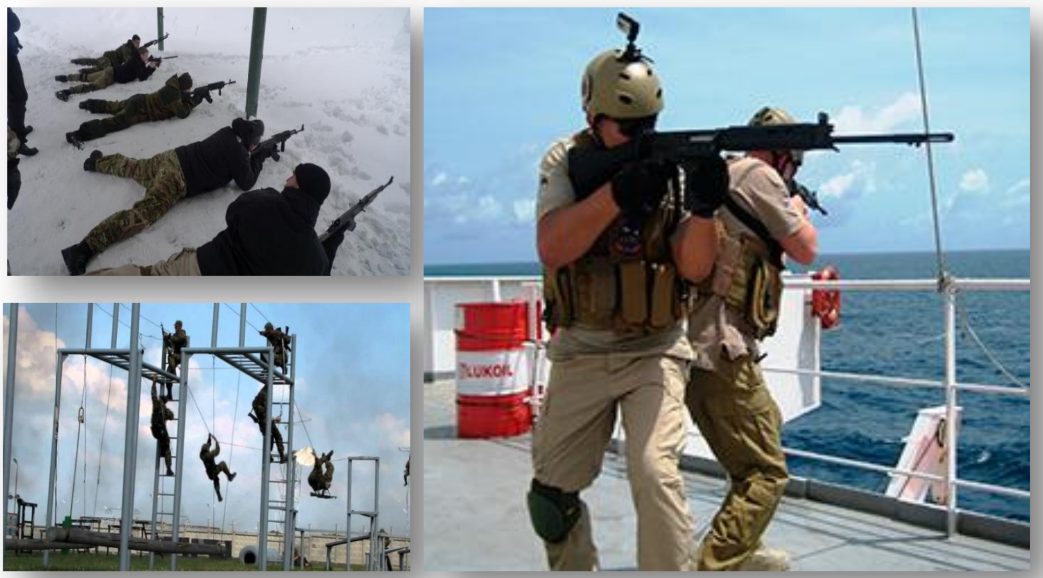
Vega’s maritime exploits are not all that surprising. Registries for offshore companies, online merchant marine recruitment services, and other publicly available records also indicate a nexus with a key node in a related network of shippers, brokers, and offshore registry companies that appear to overlap with business entities reportedly linked to Yevgeny Prigozhin. According to postings on several online shipping recruitment services, several one-time Westberg employees who crewed on Moran Security Group ships worked for a Seychelles registered company called Beratex Ltd.6 Numerous media accounts suggest Prigozhin’s Raytheon Hawker private jet was registered in 2012 to a company called Beratex Group Limited.7 Priogzhin, according to media coverage, made multiple trips to Syria, Sudan, Chad, Kenya, and other locations in Africa on the plane.8 Prigozhin denied in a statement released in response to press queries that he owned or used the plane.9
Still, questions abound about Prigozhin’s involvement and how it connects to larger Russian aims. What do the labyrinthine legal and corporate twists and turns add up to when it comes to the Wagner Group and Russian PMSCs? The very complexity of the system undergirding PMSC operations hints at their larger purpose in the scheme of proxy warfare.
Joining the Dotted Lines in Russia’s PMSC Legal Regime
The majority state ownership of many of the Russian firms that do business with PMSC contingents like the Moran Security Group, Slavonic Corps, Wagner, Vega and others means the Russian state is the chief contracting party, and, therefore, responsible for their conduct. The Kremlin-backed effort to bail out the crew of Moran’s Myre Seadiver crew in Nigeria in 2013 and the decision to shut down the Slavonic Corps only a few weeks later after their offensive operations were exposed are both cases in point.
In form, Moran, Slavonic Corps, Vega, and others appear to hew closely to the normative and legally accepted definition of private-military security contractors. The public face that many Russian PMSCs present is intimately tied to the maritime shipping industry and anti-piracy operations. This is not a coincidence; the Kremlin appears to have created a quasi-legal letters of marque regime that permits PMSCs contracted to secure safe passage for major state firms such as STG and Rosboronexport to give PMSC operators wide latitude to apply the principle of collective self-defense.
On paper, this would appear to allow organizations like Moran and Wagner to interpret rules of engagement more loosely than if they were a strictly land-based force operating in a combat zone where the Russian military serves under a bilateral status of force agreement or military-technical agreement. Under international maritime law, letters of marque permit sovereign states to contract with private parties to protect sovereign property on the high seas from piracy. As noted by legal scholar Todd Emerson Hutchins, the 1982 United Nations Convention on the Law of the Sea (UNCLOS), gives “universal jurisdiction so that ‘every State may seize a pirate ship’ on ‘the high seas, or in any other place outside the jurisdiction of any State,’ but also includes complicit functions, like inciting and facilitating piratical activities, within the definition of piracy.”10
Russian PMSCs are cut considerable slack under the letters of marque regime Russia originally set up in the late 1990s to counter piracy threats. Cooperative international arrangements for collective defense of merchant vessels on the high seas also partially explain the close nexus with offshore business havens, such as Seychelles, Cyprus, Belize, and the British Virgin Islands, where regulatory frameworks for maritime trade are much looser.
Contractual arrangements with Russian state enterprises and legal provisions for joint operations in situations of national emergency provide a path for Russian PMSCs to operate as privateers. Domestic legal prohibitions against mercenary activity, therefore, are a mere technicality that in practice are only enforced when individual players in this elaborate system fall afoul of the publicly unspoken Kremlin dictum of maintaining a code of silence around sensitive covert operations.
The uniqueness of the special arrangement between state-run enterprises and Russian PMSCs like Moran and Wagner suggests the informal networks that constitute power in Russia exert considerable sway over PMSCs. Moreover, the intersecting links between individuals affiliated with various contingents of Russian PMSCs and separatist militias, Russian military associations, veterans’ organizations, and self-proclaimed mercenary communities offline and online reinforce the notion that the Kremlin covertly enables, endorses, and encourages their activities. It may very well be that many or even all Russian PMSCs operating in Syria and Ukraine meet the legal standard for a force for which Russia has overall control. Still, a not insubstantial amount of evidence would need to be compiled from primary sources and witnesses to make the case that the Kremlin maintains effective control over these PMSCs in the classic top down sense. That, however, is the point of the strategy.
Making Sense of Where Tactics Meet Strategy
The Rube Goldberg machine complexity of the legal and financial schemes propping up Russia’s PMSC industry may explain why the Kremlin seems inured to the Wagner Group ghost army mythos. The “Prigozhin as Puppet Master” narrative promotes the notion that he is a rogue profiteer, acting singularly and primarily in his own personal interest, a part of which entails keeping the Kremlin happy. However, the overlap in PMSC networks and deep historical continuities makes it unlikely that any person acting in their private capacity exerts singular control over PMSC contingents linked to the Wagner Group. The nexus between the Russian state and PMSCs like Wagner, Moran, Vega, and others is substantial. While contracting arrangements with state enterprises are generally kept under seal it is clear that at least some Russian PMSCs closely coordinate with the Russian military and cooperate with entities known to be involved in illicit sanctions-busting behaviors. This seems especially clear in the case of the Middle East region where so many of Russia’s strategic state-run enterprises operating there appear to rely on Russian military muscle to protect their interests and those of client regimes, such as Assad’s. These facts belie Putin’s assertion that Moscow exerts no control over PMSCs and so long as they don’t break domestic laws they are free to operate as they wish outside of Russian territory.11
What may be more consequential than any indirect association with Prigozhin, from a Kremlin perspective, is unwelcome scrutiny on how PMSC operations are financially supported. As it stands, Russia’s economy is already laboring under the burden of an international sanction regime due to its activities in Ukraine and Syria. With criminal and civil legal claims also pending against alleged Russian PMSC fighters involved in the downing of MH-17, the Kremlin can ill-afford more political or legal exposure.12 From a Kremlin perspective, the less that is known about the mechanics of Russian PMSC operations and their deep ties to Russia’s domestic economy, the better.
The strategy may also have domestic political benefits. As Russia scholar Stephen Blank rightly suggests, the revival of the Primakov Doctrine is intrinsically linked to Putin’s desire to deflect demands for greater democracy at home.13 Russian public support for the annexation of Crimea has generally been positive, bolstering Putin’s popularity.14 Though poll results indicate some initial nervousness in the general public about the Syria campaign, that has not translated into discontent with the military.15 One reason may be that Russian casualties are not widely publicized and when they are, they are almost always accompanied by a counternarrative that recapitulates the notion of the Wagner Group as a ghost army of mercenaries not directly tied to the state and its responsibilities to the Russian people.
Gerasimov’s Ghosts: Deconstructing “Ambiguous Warfare” and Decoding the Wagner Group
In many contemporary Western formulations, covert Russian PMSC operations are part of an intentional chaos strategy that has the twin objectives of enhancing Russia’s ability to project power and consolidating Kremlin power at home. As Oxford University scholar Andrew Monaghan, adroitly points out, in this commonly held scenario Putin is cast as a calculating grandmaster who single-handedly influences strategic outcomes and a skillful conductor, who harmonizes all the elements of government around a singular pursuit of orchestrated strategic excellence.16 Others, like Lawrence Freedman, suggest Putin has a strategy but Russia’s military engagement in Ukraine and Syria undermine Putin’s arguably higher goal of being readmitted to the great powers club.17
Beyond these differences, there is consensus, nonetheless, that restoration of Russia’s great power status in a multipolar world order has been a driving factor in Putin’s three-pronged strategy. Driving a wedge into the Euro-Atlantic alliance, reviving relations with former Soviet Union (FSU) client states, and projecting power beyond Russian borders are likely to remain central objectives for some time to come.18 Assuming those ends hold, it is an examination of the ways and means that hold the most promise for best understanding how PMSC operations fit into contemporary Russian military doctrine.
In recent years, the so-called Gerasimov Doctrine has emerged as a leitmotif in many Western attempts to explain Russia’s proxy war strategies. Although at the time it was barely noticed beyond a group of specialists, the now famous "Value of Science is in Foresight" speech given by Russia’s Chief of the General Army Staff Gen. Valery Gerasimov in February 2013 has become a touchstone of the chaos strategy camp of hybrid warfare analysts. In his remarks, which were later reprinted in Russia’s Military Affairs Courier, Gerasimov pointed to the emerging primacy of irregular forces and use of non-military means—most notably information warfare—for the achievement of strategic ends.19 Given on the eve of Russia’s military takeover of Crimea during the so-called Russian Spring of early 2014 and two years before Moscow agreed to back the Assad regime, Gerasimov’s commentary appeared in retrospect to presage a new Russian emphasis on warfare by other means.
Yet, it is telling that Mark Galeotti, the Russia expert who first coined the Gerasimov Doctrine phrase, has since cautioned that the overweening emphasis on Gerasimov Doctrine has misinterpreted the meaning of the speech.20 Rather than a clarion call for a new hybrid form of war by other means, Galeotti rightly avers Gerasimov’s take on the state of world affairs in 2013 was a warning about the destabilizing effects of Western instigation of the Color Revolutions and Arab Spring uprisings for Moscow-friendly regimes.21 Nonetheless, a kind of mythos has sprung up around the Wagner Group and Prigozhin, who is colloquially known as “Putin’s Chef.”22 Gerasimov’s doctrine, ghost warriors, and masked bands of “polite people” or vezhliviye ludi have likewise emerged as a kind of zeitgeist in much of the coverage on the topic of Russian PMSCs—so much so that the policy community risks missing the forest for the trees.
A more important takeaway from Gerasimov’s speech is how much it reflects a widely held view among the generation of Russian Cold Warriors Gerasimov came of age with about the inadequacies that continue to haunt Russia’s military preparedness. A former tank specialist and one-time battalion commander of a motor rifle brigade, Gerasimov is part of a wave of senior Russian military leaders who climbed the ranks as the Soviet army crumbled in the wake of the Soviet war in Afghanistan. That experience, successive bloody incursions into the Soviet sphere, as well as the swift U.S. military victory in Iraq in 1991 and the parallel rise of network-centric warfare in U.S. military doctrine in the early 1990s has influenced present day Russian strategic thinking and military doctrine—much more than any singular Russian general’s speech.
The United States and its EU allies appear to have missed important signals about how the ghosts of Russia’s past would end up haunting so much of its military establishment. Gerasimov and many in his cadre have openly acknowledged the many hard lessons learned from the First and Second Chechen Wars and the 2008 incursion in Georgia about “small wars.” For much of the latter half of Putin’s leadership, Russia’s power ministries have been caught up in an internal bureaucratic skirmish over how best to adjust force structures so that the military was better equipped to conduct the kind of low intensity conflicts waged by the United States in Iraq and Afghanistan.23 PMSCs fill big gaps in Russia’s ability to sustain expeditionary campaigns in the Middle East. It is Primakov’s strategic legacy and Gerasimov’s ghosts that are likely far more indicative of the present and future trajectory of Russian PMSCs than any elaborate conception of a Russian grandmaster using new hybrid war techniques to outfox American defenses. Russia’s proxy warfare strategy emerges out of specific historical developments in Soviet and post-Soviet military and economic affairs that haunt and shape its advocates.
To Cut Through the Fog Remember History
Another interpretation of the “Wagner Group as ghost army,” narrative is that it permits Russia to reinforce in the minds of its adversaries that it can almost magically mobilize thousands of forces and deploy them in secret. This fits with the reflexive control theory of using concealment and camouflage, or in Russian terms maskirovka, to nudge adversaries into self-induced deception that the Kremlin can reach far behind enemy lines without detection. This theory is not mutually exclusive to the first, and in fact only reinforces the idea that the Kremlin is far more concerned with breaches in secrecy than breaches in military conduct and legal norms.
Given how central deception has been to Russian military doctrine historically it is important to consider how the idea of Wagner fits into the bigger picture of a strategy of coercion. On the one hand the idea of the Wagner Group increases ambiguity around the nature of the relationship with the group’s sponsors. On the other, narratives about Wagner and Prigozhin may offer only one attractive but ultimately inaccurate alternative theory about how Russian PMSCs operate and fit into proxy strategies. The ambiguity created by the tension between these two theories of the Wagner case is at the heart of Russia’s concept of using disinformation and deception to assert reflexive control over its adversaries by creating confusion around desired goals.24
Since a primary objective of proxy warfare is to enhance the ability to project power by expanding influence while lowering the risk of retaliation, the strategy depends on the tactic of increasing ambiguity around the nature of the sponsor-proxy relationship. Heightened ambiguity can grant proxy sponsors significant, if sometimes short-lived, advantages, permitting “salami slicing” tactics to go unchecked by rivals.25
By “hiding the real,” and “showing the false,”26 in the case of Wagner, the Kremlin gains three distinct but interrelated tactical advantages. First, as seen in the case of Ukraine, misdirection around the patterns of deployment of thousands of Russian operatives manifested force-multiplying surprise. Second, the surprise mobilization of PMSCs in Crimea bought time for covert deployments to Donbas and Syria, speeding territorial control and enhancing Russia’s military advantages. Third, at least initially, surprise and speed in both Ukraine and Syria stoked the narrative that Russia was prepared to change facts on the ground, giving it considerably more room to maneuver at the diplomatic level in the early stages of both conflicts.
Citations
- Candace Rondeaux and David Sterman, “21st Century Proxy Warfare: Confronting Strategic Innovation in a Multipolar World,” New America, Feb. 20, 2019, source
- Several attempts were made to contract several of the individuals directly via their social media accounts and other publicly available contact information, but at the time of publication none of our inquiries received a response.
- Video of the Liwa al-Quds fighters being training by the Russian Vega/Vegacy PMC in Syria. It is their 30th day of training. The video was tweeted out of March 2, 2019 and can be seen at source
- A video show Liwa al-Quds operating in the area of al-Mallah, just north of Aleppo. The video did not show Vegacy contractors but showed buildings and military equipment that matched those in the photos on the pictures published below. ANN News, Feb. 4, 2019. source
- The Vegacy Strategies website can be found at: source
- A company called Beratex Group Limited appears in the UK Companies House registry along with several other companies bearing similar names such as Beratex SA, Beratex Limited and Beratex Inter Limited. According to the UK registry listings, Beratex Limited and Beratex Inter Limited were linked to employees of an offshore company registry service in the Seychelles. According to those records, Beratex Limited was incorporated by Stella Port-Louis, a resident of Seychelles.
- Agnes Jouaneau, another Seychelles resident, is also listed as the original sole employee Beratex Inter Limited. Interestingly, Stella Port St. Louis and Agnes Jouaneau were linked by an inquiry into a web of shell companies operated by New Zealand citizen Geoffrey Taylor and his family members that spans from the Seychelles to Belize. In 2012, the non-profit watchdog group Global Witness published the results of a special investigation into Taylor’s web of shell companies that revealed that the so-called “Taylor Network” had serviced several Russian entities and businessmen connected to the Russian mafia and Russia’s largest tax fraud scandal on record, a case linked to the death of Sergei Magnitsky, the Hermitage Capital tax advisor believed to have been killed while in Russian police custody in 2009.
- Irina Dolnina, and Alesa Morovskaya, “Spets’i i Spetsii,” (“Spies and Spices”) Novaya Gazeta, Feb. 4, 2019, source
- Dolnina and Morovskaya, op.cit., Novaya Gazeta, February 2019.
- Todd Emerson Hutchins, “Structuring a Sustainable Letters of Marque Regime: How Commissioning Privateers Can Defeat the Somali Pirates,” California Law Review 99, no. 3 (June 2011): 838.
- Office of the President of the Russian Federation, “Following Direct Line with Vladimir Putin, the President answered a number of questions from media representatives,” July 20, 2019, source
- Michelle Nichols, “Family of American killed in downed MH17 jet sues Russia banks, money-transfer firms,” Reuters, April 4, 2019, source ; BBC, “MH-17: Four Charged with Shooting Down Plane over Ukraine,” June 19, 2019, source
- Blank, op.cit., p. 3.
- The Moscow Times, “Majority of Russians Support Donbass Breaking Away From Ukraine, Survey Says,” June 11, 2019, source
- Ibid; “Syria,” Levada Center, Sept. 26, 2017. source ; Dina Smeltz and Lily Woljtowicz, “Russians Say Their Country Is A Rising Military Power; And a Growing Percentage of Americans View Russia as a Threat,” Chicago Council on Global Affairs, March 21, 2019. source
- Andrew Monaghan, “The ‘War’ in Russia’s ‘Hybrid Warfare,’” Parameters 45, no. 4 (Winter 2015-16): 65–74.
- Lawrence Freedman, Ukraine and the Art of Strategy (Oxford: Oxford University Press, 2019), 164-185.
- Andrew Monaghan, “Putin's Russia: shaping a 'grand strategy'? International Affairs (Royal Institute of International Affairs) 89, no. 5 (Sept. 2013):1221-1236.
- Valery Gerasimov, “Tsennost nauki v Predvidenii.” Voennoii Promishlenost Kuriyer 8, no. 476 (Feb. 27-March 5, 2013): 2, source
- Mark Galeotti, “I’m Sorry for Creating the ‘Gerasimov Doctrine,’ Foreign Policy, March 5, 2018, source
- Ibid.
- Neil MacFarquhar, “Yevgeny Prigozhin, Russian Oligarch Indicted by U.S., is Known as ‘Putin’s Cook,’” The New York Times, Feb.16, 2018; Luke Harding, “Yevgeny Prigozhin: Who Is the Man Leading Russia's Push into Africa?” The Guardian, June 11, 2019, source
- See: Julian Cooper, “The Military Dimension of a More Militant Russia,” Russian Journal of Economics 2, no. 2 (June 2016): 129-145; Andrew Monaghan, “The ‘War’ in Russia’s ‘Hybrid Warfare,’” Strategic Studies Institute, 2016.
- Kimberly Marten, “Russia’s Use of Semi-State Security Forces: The Case of the Wagner Group,” Journal of Post-Soviet Affairs, March 26, 2019, 7.
- Thomas C. Schelling, Arms and Influence (New Haven: Yale University Press, 1966), 66-68.
- Barton Whaley, Stratagem: Deception and Surprise in War, originally published in 1969 by the Center for International Studies at MIT, Artech House: Boston MA, 2007, 188-190.
The Risks of Russia’s Proxy Warfare Strategy
The above discussion illustrates the way Russia has often deftly used PMSCs as part of a proxy warfare strategy deeply tied to and reliant upon deception and covertness. It is a strategy shaped and constrained by the complex networks that shape Russian interests and policy, but the proxy warfare strategy has also turned these complex networks into an advantage. Yet, in the twenty-first century, social media accounts and digital sleuthing have repeatedly proven to be the Kremlin’s undoing.
The U.S. strike on Russian PMSCs in Deir Ezzor during the Battle of Khasham illustrates the potential for miscalculation and escalation when the covertness—whether agreed upon by governments or not—of proxy warfare breaks down. For Russia and the United States, releasing specific details about Russian casualties in the Deir Ezzor incident at any level would have posed a significant strategic dilemma. For Moscow, admitting that those killed at the Conoco gas field were Russian citizens engaged in combat would mean owning up to long-reported and rumored suggestions that Russian PMSCs carry out offensive operations. Such an acknowledgement would also risk igniting a domestic public outcry over Russia’s involvement in Syria, setting up a potential reprise of the backlash sparked by the Soviet intervention in Afghanistan.
Similarly, for the national security establishment in Washington, an admission that U.S. forces had killed Russian citizens could prove dangerous. If the rumors of high-casualties were true, then the U.S.-Russian clash would constitute the first publicly reported incident of a major escalation of hostilities between the longtime rivals since the Cold War. Since the United States had already imposed stiff sanctions against Russia for its actions in Ukraine and Syria, few rungs on the escalatory ladder were left other than an escalation of force.
Consequently, the Kremlin has poured considerable resources into deploying disinformation about the activities of the Wagner Group and other PMSCs. Some of the active measures taken involve misdirection while others more nefariously have involved silencing sources and murdering messengers who promote alternative versions of the storyline on PMSC operations.1
Information control is an intrinsic feature of escalation management and sowing confusion is part and parcel of proxy strategies. The narratives that sponsors promote about their proxies are as important for power projection as they are for escalation management. The above observations lead to one final and critical implication for those looking to respond to Russia’s tactical innovations.
Opaque Russian PMSC structures make it challenging to attribute actions to actors, but tightly overlapped networks of Kremlin insiders and PMSCs are often hidden in plain sight. Globalization and Russia’s modernization has transformed the way Russian PMSC operate, recruit, and manage operations. At the same time, the arrival of the digital age undercuts Russia’s ability to maintain plausible deniability. Growing global capacity to de-anonymize digital data exposes risks for the covert networks that bind PMSCs to their client constituents, a fact that should prompt a strategic rethink in U.S. circles. Puncturing the narrative of plausible deniability and lifting the lid on Kremlin secrecy and disinformation will be a critical part of any winning strategy.
Citations
- Andrew Roth, “Russian journalists in CAR ‘were researching military firm,’” The Guardian, August 1, 2018, source
Appendix: Glossary of Terms
Alpha (Directorate “A” of the Federal Security Service (FSB) Special Purpose Center)
- Originally formed in 1974 as a KGB domestic antiterrorism force. Sister unit to Vympel (see “Vega or Vympel”).
Antiterror Orel Group
- A private Russian security organization predating the creation of the Wagner Group (see “Wagner Group”). Organized from military and special operations veterans, with many offshoot agencies and affiliated organizations over the years.
EMERCOM (Ministry of Extraordinary Situations)
- The Ministry of Emergency Situations, also known as the Emergency Control Ministry, is a Russian agency responsible for emergency response services varying from disaster relief services to civil defense.
Emercom Demining
- A majority Russian state-owned company, which has won many contracts through connections with EMERCOM.
FSB (Federal Security Service)
- The chief successor agency of the KGB.
GRU (Main Intelligence Directorate)
- Officially known as the Main Directorate (GU) of the General Staff of the Armed Forces of the Russian Federation, but commonly referred to as the GRU. It is the Russian military intelligence agency.
ICIJ (International Consortium of Investigative Journalists)
- A D.C.-based independent investigative research organization, notable for its involvement in the publication of the Panama Papers.
IRA (Internet Research Agency)
- A Russian company noted for its online activities advancing Russian political interests, specifically during the 2016 election.
IRTF (Independent Research Task Force)
- A unit of the Russian private military security contractor RusCorp, offering security risk intelligence services.
KUOS (Development Courses for Officer Personnel)
- Also known as the KGB Higher School, it was comparable to an officer’s school for KGB personnel. Alpha (see “Alpha”) and Vympel (see “Vympel”) units were trained there.
Moran (Moran Security Group)
- One of the most prominent Russian private military security contractors.
MVD (Ministry of Internal Affairs)
- A Russian government ministry responsible for the police forces, drug control and migration.
OCCRP (Organized Crime and Corruption Reporting Project)
- An international NGO dedicated to supporting investigative reporting of organized crime and corruption.
PMSC (Private Military Security Contractor)
- PMSCs are organizations providing armed operational support in conflict zones.
PSC (Private Security Contractor)
- Organizations providing semi-passive protection services such as site security and intelligence but generally understood not to take part in supporting offensive operations, which is the realm of PMSCs (see “PMSC”).
ROSICH (7th Squad of Special Forces)
- An elite force of Russian special forces serving in the Interior Troops of the MVD.
SDF (Syrian Democratic Forces)
- A primarily Kurdish-led force in the Syrian Civil War, supported by the United States and the Global Coalition to Defeat ISIS.
STG (Stroytransgaz)
- A construction and engineering, public joint-stock company founded in 1990, originally as a subsidiary of Gazprom. Involved in the construction of hydrocarbon industry infrastructure in Russia, post-Soviet countries and the Middle East.
SVR (Foreign Intelligence Service)
- A successor agency of the KGB, the SVR is the foreign intelligence agency of Russia.
VDV (Airborne Troops)
- VDV are the intervention forces of the Russian Armed Forces, specially equipped and trained soldiers tasked with special operations and leading full-scale military operations.
Vega or Vympel (Directorate “V” of the FSB Special Purpose Center)
- Originally formed in 1981 as a more aggressive, foreign-operating compliment to Alpha (see “Alpha”). The unit is similarly focused on counterterror operations and nuclear security.
Vityaz (1st Special Purpose Unit of the Internal Forces of MVD)
- Founded during early Soviet times it was dissolved to help form the MVD’s 604th Special Purpose Center.
More About the Authors

Candace Rondeaux
Senior Director, Future Frontlines and Planetary Politics; Professor of Practice, Arizona State University