Debate Watch: Early Education Questions for the Candidates

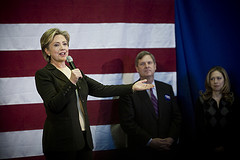 Last week, we looked at early education proposals from Democratic presidential candidates Hillary Clinton and Barack Obama. Tonight, Clinton and Obama will debate one another in Philadelphia, Penn. Early education would be a great topic for moderators Charlie Gibson and George Stephanopoulos to ask them about, because it’s a substantive topic, which hasn’t been addressed in any debate so far, and on which the candidates have both serious proposals and real differences. Here are a few questions we’d love to hear the candidates answer on early education:
- You’ve both proposed substantial new investments in early education, but you seem to have very different ideas about how best to go about improving early education for young children. Senator Clinton, your proposal focuses on helping states establish high-quality, educationally oriented, universal pre-k programs for four years—with the suggestion that they might eventually expand these programs downward to serve younger students. Senator Obama, your proposal focuses on helping states improve quality and coordination across the variety of childcare, education, and family support programs serving children from birth to age five—you suggest that expanding pre-k might be a part of this, but it isn’t the focus. These proposals reflect competing theories of action within the early education movement, and seem to align with other policy differences between the two of you—such as on health care. Please explain why you think your approach to improving early education is better.
- How do the early education investments you are proposing relate to the reforms you’ve proposed for the K-12 public education system? What policies will you support in the K-12 system to ensure that the benefits of high-quality early education don’t fade out as students progress through their schooling?
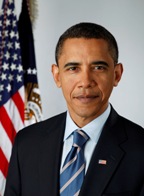 Each of you has proposed spending about $10 billion annually on new early education investments—substantially more than either of you has proposed spending to improve K-12 public education. Why have you chosen to prioritize early education over K-12 public education investments?
 - The investments you have both proposed in early education are substantial: They would roughly double federal investment in early education, and are equivalent to 15 percent of this year’s budget for the entire Department of Education. If fiscal and political restraints require you to settle for smaller investments, which early childhood investments would you prioritize with limited funds?
We’re not holding our breath for Gibson and Stephanopoulos to ask any of these questions. But they are important questions that other journalists—and voters—should be asking Clinton and Obama about their early education proposals in this campaign season.
More About the Authors
Issues
Programs/Projects/Initiatives
Related
Confronting Harmful Federal Disability Policy in Health and Human Services
Federal Early Education Update: March 2026
A Bureaucratic Shakeup Threatens Future Child Care Research