Daniela Lamas
New Arizona Fellow, 2020
You are a pulmonary and critical care doctor at the Brigham & Women’s Hospital in Boston and have been treating patients with COVID-19 and writing about your experiences in a series of op-eds for the New York Times. What is the hardest thing to communicate about this crisis to those outside of the medical field?
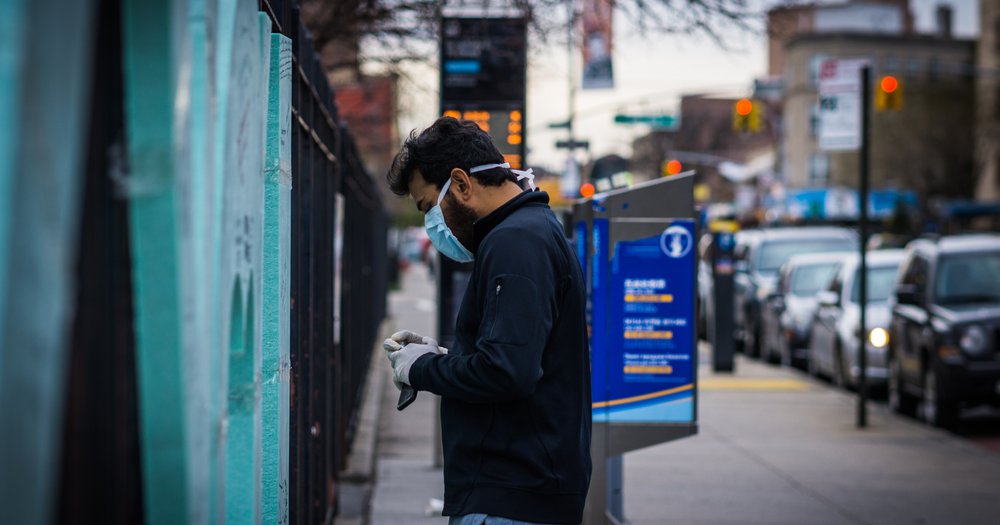
One of the hardest aspects to communicate is how profoundly sick our patients are, and how much their families suffer. We all have an idea of what it is to be sick and likely have lost loved ones, but there is something different here, at least in part as a result of the fear of contagion and the isolation that we have required. Our patients and their families are truly suffering, days to weeks waiting for improvement that might or might not come, and this is something that occurs behind closed doors and that the public likely does not see. There is also something uniquely devastating for us in recognizing how our patients likely became infected. The patients we have seen toward the latter part of this crisis have been the vulnerable—food delivery workers, cab drivers, nursing home workers and group home residents. In many of these cases, it is painful to recognize that if these people had been able to quarantine, they would still be healthy.
Writing allows me to make sense of my experiences and reactions through the creation of narrative.
Were you always a writer and did you always know you would write about your medical work? Has writing about your experiences influenced how you approach your work as a doctor?
I have long found myself drawn to writing. My college identity revolved far more around my work for our daily paper than my pre-med classes, and I worked briefly as a reporter for The Miami Herald after my graduation. But I found myself drawn to medicine too, and left journalism for medical school, hoping I would find my way back but not sure how. Though I did not always know that I would write about my medical work, being a physician offers me a view into some of the most profound and beautiful and tragic moments of what it is to be human—even with all of the ethical challenges and negotiations of writing about patients, it is unparalleled fodder. For me, writing allows me to make sense of my experiences and reactions through the creation of narrative. I think this has made me a better communicator, and in that way a better doctor, too.
What is your process like for writing about your work and patients? Do you take contemporaneous notes or sit down to write after your shifts? How has that changed since the pandemic hit Boston?
You assume I have a process! I find that I compose most of my short essays in my head and play around with them until I feel ready to sit down and write—which I do in off moments, the quiet minutes of an overnight call, days when I am not at work. I try not to think of a moment as a good story while I’m still in it, because I worry that it distracts me, or keeps me from being fully present. But small details, these little kernels of story, stick with me and the ones that remain and don’t fall away—I write. Since the pandemic and this feeling I have that everything we experience is important, I have been taking notes. I don’t want to lose anything.
Subscribe here to receive next month’s issue of The Fifth Draft.
New Arizona Fellow, 2020