Dam Problems, Security Solutions, and a New White House Memo
Egypt has long been
called “the gift of the Nile,” but if Egypt’s upstream neighbor goes ahead with
plans to build the massive Renaissance Dam, the Nile might well be exchanging
that gift for Ethiopia.
This struggle
between Egypt and Ethiopia over water may be peacefully resolved, as are many
international disagreements about water rights, but it also has the potential
to lead to conflict. Indeed, there have been dark murmurings of sabotage among
some Egyptian authorities, who would doubtless find it very difficult to bomb
10 million cubic meters of concrete. This is one security challenge that has no
military solution, even if it ends up having military consequences.
I was thinking about
this case when I heard that the White House would be releasing a new Presidential Memorandum on climate security. At first blush,
the Memorandum may not seem especially impressive – it really just tells 20
government agencies to meet and discuss the topic, and then come up with a plan
for more meetings and discussions. But in other ways, this is exactly what the
U.S. government needs. There’s a governance gap when it comes to climate change
policy in general, and even more to the point, this memo underscores the need
to rethink what national security means in the 21st century.
The Renaissance Dam
is not the only water challenge that has the potential to provoke conflict, nor
is it the only 21st century national security problem that that doesn’t
lend itself to military solutions. But the U.S. government is not really set up
to deal with this kind of non-military, long-term, slow-boil security
challenge. Even in more kinetic situations, the United States is struggling to figure
out how to resolve such crises as Ukraine, Syria, and Afghanistan. You can see
that struggle in the new buzzwords the national security community is coming up
with to describe this not-quite-war conflict environment, such as “full
spectrum warfare,” “anti-access/area-denial threats” and “gray zone conflict.”
Despite the new
lingo and the genuinely creative strategic thinking that goes with it, however,
American national security institutions, people, and equipment remain largely
optimized for warfighting in the industrial age. The recent readiness hearing in front of the Senate Armed Services
Committee was a bit of representative cognitive dissonance: the Service Chiefs
all spoke about this turbulent, new security environment, but then largely referred
to the big equipment they need (admittedly with a healthy dash of cyber).
What we really need
now is a new approach, one that focuses not just on warfighting, but on security
building for the digital age.
Don’t get me wrong:
there will always be war, and the U.S. military still needs conventional
capability. At the same time, the United States is not likely to get in a
shooting war with “near peer” nuclear-armed competitors, such as China and
Russia. Conflict with them is going to look different – it already does. ISIS, al-Qaida, and other non-state
actors will continue to attack U.S. targets and interests regardless of how
many Joint Strike Fighters the Pentagon buys. And some of the most significant
threats to U.S. prosperity, interests, and allies are not military in nature at
all.
Climate change, in
particular, illustrates the importance of making a shift from a warfighting to
a security building approach. Climate change is a pervasive threat to national
security (as outlined in a new National Intelligence Council report), with the potential to undermine
prosperity in ways that can catalyze civil unrest and conflict around the
world. At the same time, this is not a security challenge that lends itself to
military means; you can’t defeat climate change with weapons, not even
GPS-guided bombs or rail guns.
The United States
government is not, however, set up to manage such a threat. There is no
Department of Climate Security, not even a bureau or an office. Instead, the
new Presidential Memorandum is aimed at 20 different agencies.
First among equals,
when it comes to national security, is the Department of Defense, which has
acknowledged climate change, water, and other non-traditional security
challenges in some of its strategy documents, and the intelligence community provides
analysis on such threats. But the Pentagon has done little to actually adapt
its personnel, organization, or equipment for such challenges. The actions it has taken, while not unimportant, are
relegated to areas such as military basing, which are largely a support
function and not core to its mission. In other words, the Pentagon can invest
in resilience to sea level rise at military bases without adapting to a world
in which struggles for access to water may cause conflict.
Arguably, it is not
the Pentagon’s job to actually build resilience to climate change, even if it
is the Pentagon’s job to understand how climate change will affect the defense
mission (more disaster relief operations or Russian aggression in the Arctic, for example). Unfortunately, the U.S.
government lacks civilian capacity to promote global climate security. The
State Department focuses on diplomacy and international negotiations, in
particular, a difficult task, and lacks the staff for an operational mission. USAID
makes important investments in development to support climate resilience, but
those investments are limited (the entire USAID budget is about $23 billion, compared to DoD’s budget of around
$700 billion), generally do not take the potential for conflict into account,
and often are not well connected to other U.S. regional security and foreign
policy priorities.
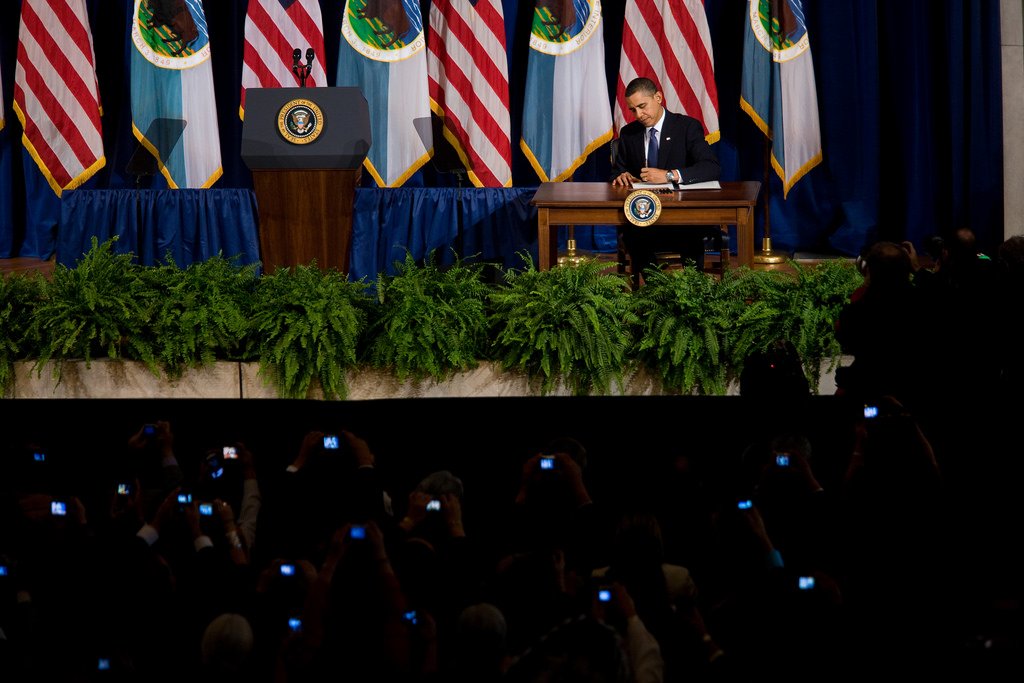
The White House today
tackled this gap in governance by issuing its Presidential Memorandum on
climate security. The memo directs 20 agencies to meet together in a working
group to define the nature of this challenge, as well as the various roles and
responsibilities. It also explicitly tries to bring together the scientists and
the defense, diplomacy, and development communities, looking to bridge an
important gap between information and action. Ultimately, it’s really inviting
the Federal government to begin redefining national security to mean building resilience
to non-military threats such as climate change.
Of course, this
Administration is in its waning days, so for that vision to be fully brought to
life, it’s going to take action from both the next president and Congress. So while
the Memorandum released today is a great step in the right direction, it’s really
someone else’s ball to run down the field.
More About the Authors
Related
Climate Security: Building a Community of Practice

Climate Change, Peace and Security, and the UN Group of Friends

Infrequently Asked Questions