Congress Close to Finalizing Fiscal Year 2011 Appropriations

Following intense bipartisan negotiations, Congress has released a compromise bill that would fund all federal agencies and programs subject to the annual appropriations process through the end of fiscal year 2011. (Fiscal year 2011 began on October 1st, 2010 and ends on September 30th, 2011.) Until now, lawmakers have not been able to agree on a year-long appropriations bill for any federal agency and instead have passed a series of Continuing Resolutions to temporarily fund federal programs in fiscal year 2011 (see timeline here). This compromise bill, which Congress is expected to pass later this week, maintains the education program cuts made to 2011 funding under the preceding Continuing Resolutions. However, it also contains a few surprising developments.
Perhaps most surprising is that final bill provides continued funding for two of the Obama Administration’s key reform programs. The bill provides $700 million for a new round of Race to the Top grants and $150 million for a new round of Investing in Innovation grants. Both programs were originally created in the American Recovery and Reinvestment Act of 2009 to encourage innovation and reform at the state and local levels. The program received no new funding in regular fiscal year 2010 appropriations, which means that this budget bill actually adds two programs that have never been funded through regular appropriations before. The bill also amends the existing law governing the Race to the Top program by adding a new area of focus for the program – high quality early education. This means that any states that choose to apply for Race to the Top under this new round of funding must include a plan to increase participation in and the alignment of high quality early education. Previously, early education was not a competitive priority for Race to the Top, meaning states were not required to include early education in their proposals. For more details, see this post on our sister blog, Early Ed Watch.
The Obama Administration had requested $1.4 billion for Race to the Top in its budget request for fiscal year 2011 and $500 million for the Investing in Innovation program. Though many believed that these programs would not ultimately receive funding in 2011 – previously enacted 2011 Continuing Resolutions and other proposed 2011 appropriations bills did not include either program – the president managed to eek out a deal in the final hours.
The bill provides level funding for several programs including Title I, Part A grants for the disadvantaged ($14.5 billion) and Teacher Incentive Fund grants ($400 million). The bill provides $23 billion in Pell Grant funding and maintains the maximum grant at $5,550. But because program costs have been growing rapidly, the bill eliminates the “summer” or “year-round” Pell program to reduce costs and ensure that the appropriation will be adequate to fund the maximum grant. A previous version of the 2011 appropriations bill released in mid-February that passed in the House by not the Senate included a $693 million cut to Title I and a $845 cut to the maximum Pell grant level. Both of these cuts were unpopular with education stakeholders who disagreed with cutting programs targeted at low-income students.
Many education programs that received funding in 2010 were eliminated in the 2011 bill on top of the previous eliminations and earmark cuts that occurred in Continuing Resolutions – all of which are maintained in the final, year-long bill. These programs include Educational Technology State Grants ($100 million in 2010), Javits Gifted and Talented Education ($7 million in 2010), and Byrd Honors Scholarships ($42 million in 2010). However, the bill does reserve up to approximately $29 million of the $2.9 billion Teacher Quality State Grants program for a competitive grant program that would provide support for some of the recently cut earmarks like Teach for America and the National Writing Project. The Obama Administration’s budget request for 2012 also proposes creating a similar competitive grant program for these programs and projects.
And several programs were cut but not eliminated entirely. These include the International Education and Foreign Language (cut $50 million down from $108 million in 2010), TRIO (cut $25 million down from $853 million in 2010), GEAR UP (cut $20 million down from $323 million in 2010), and the Institute of Education Sciences (cut $49 million down from $659 million in 2010). Of these programs, the president had requested level funding for 2011 with the exception of the Institute of Education Sciences (IES). As a result, the appropriations bill funds IES at $129 million below the president’s request.
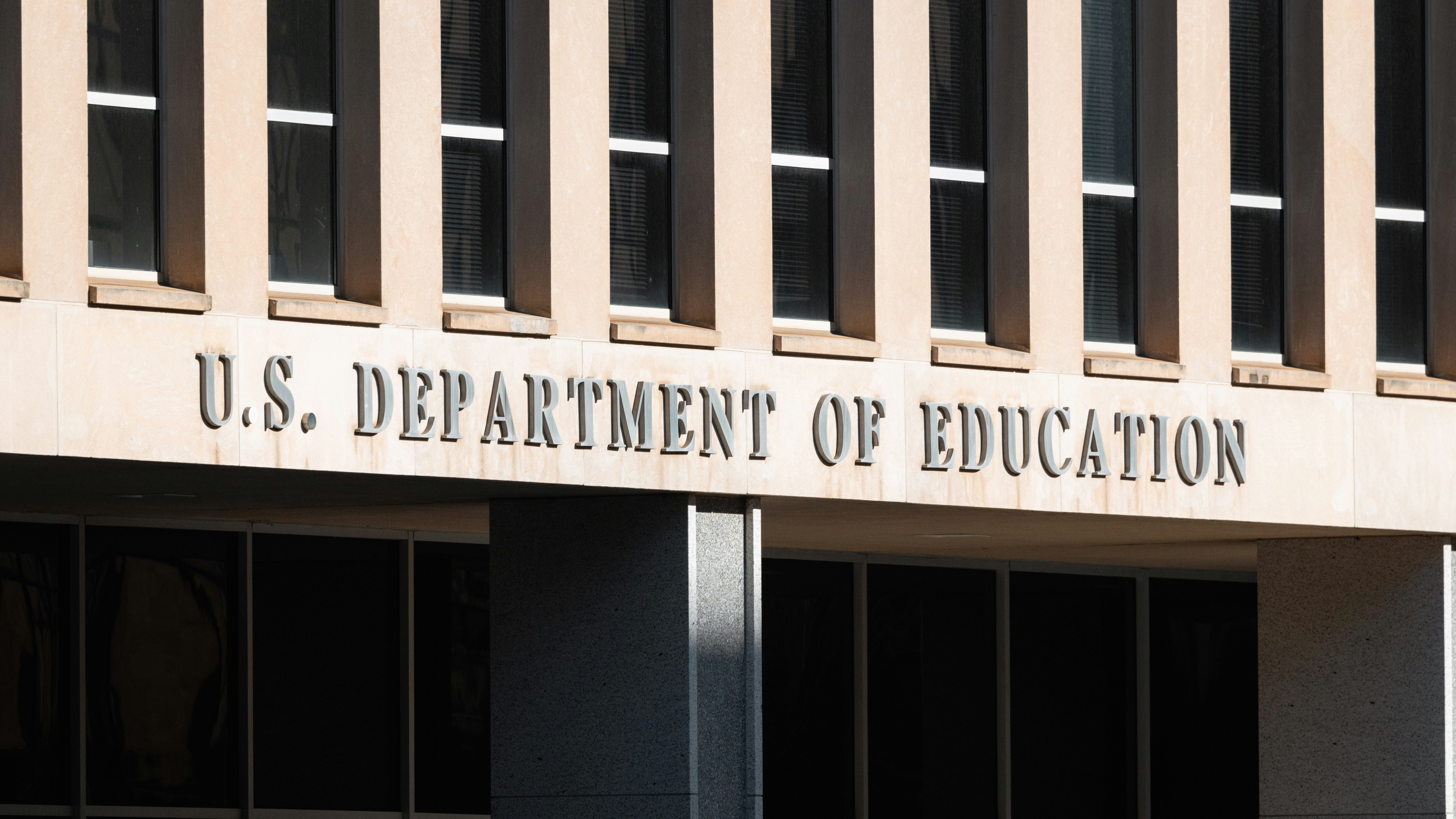
In all, this appropriations bill provides $68.5 billion for the Department of Education, about $1.3 billion less than in 2010. Though the bill does make some significant cuts to education programs, they are focused mainly on small programs, many of which the Obama Administration had previously requested to be cut or eliminated in its budget requests to Congress. The major programs, including Title I, Part A, Individuals with Disabilities Education Act, Part B, and Pell Grants, remain unscathed and the administration sealed a major victory with funding for Race to the Top and Investing in Innovation.
Assuming both houses of Congress pass this bill and the president signs it, it looks like the 2011 appropriations saga is finally coming to an end.
More About the Authors
Issues
Related
5 Takeaways from the Trump Plan Overhauling College Accreditation

Accreditation on the Ground: A Q&A with Heather Perfetti