Emily Ladau
Disability Rights Activist, Writer, and Speaker
Reclaiming the Promise of the ADA
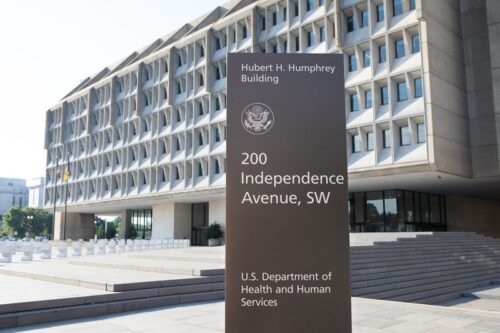
At a moment when federal health policy is rapidly shifting and funding cuts are rampant, disabled and chronically ill Americans are facing dire consequences. The effects of changes being made by the U.S. Department of Health and Human Services (HHS) are not abstract; they are preventing access to care, weakening public health protections, and actively dismantling the infrastructure that millions rely on to live safely in their homes and communities.
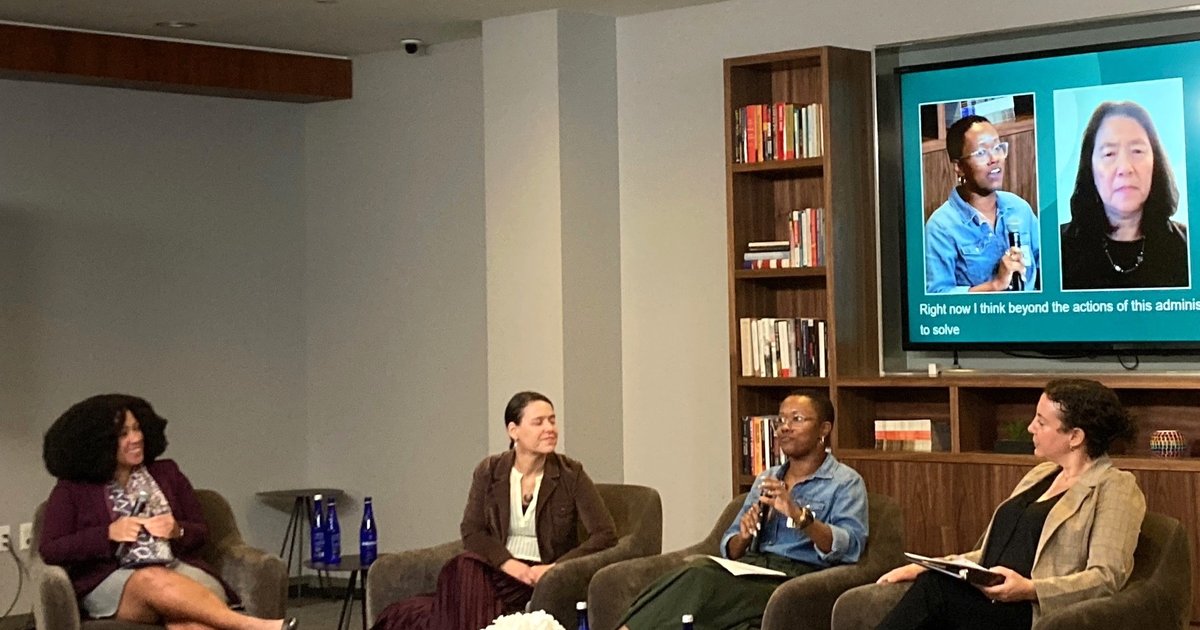
This was the focus of New America’s latest forum in the Advancing Disability Access Series, “Disability Under Threat: Confronting Harmful Rhetoric and Policy at the U.S. Department of Health and Human Services.” As Carrie Gillispie, Project Director of Early Development & Disability for New America’s Education Policy Program, reminded attendees, “More than one in four adults in the United States has a disability and so all policy choices affect disabled Americans.” Yet, she underscored, HHS leadership has “sown public doubt about medical facts, created chaos through contradicting messages, compromised years of invaluable research, and fired or pushed out scores of experts who stuck to their oath to do no harm.”
To help make sense of the ongoing turmoil, New America brought together a group of disability policy experts for a poignant conversation. Guided by moderator Lillie Heigl, Director of Policy at the Association of University Centers on Disabilities, panelists addressed, as Heigl framed it, “what these changes mean on the ground for disabled people, caregivers, and for families who navigate a system that is becoming more fragmented and less accessible.”
Central to the discussion was HR 1, also known as the “One Big Beautiful Bill Act,” which includes more than $1 trillion in cuts to Medicaid, Medicare, and the Affordable Care Act.
Tory Cross, Associate Director of Federal Policy & Government Relations at Caring Across Generations, described the consequences in stark terms: “It is impossible to cut $1 trillion from the program that covers the health and long-term care needs of nearly half of all disabled people and more than half of children with special healthcare needs without hurting us,” she said.
Cross emphasized that Medicaid is the primary payer for long-term care nationwide, supporting more than 7.8 million older adults and disabled people through home and community-based services (HCBS). These services enable individuals to live at home rather than in institutions, and they support paid direct care workers and, in some cases, family caregivers.
Because HCBS is an optional Medicaid benefit, Cross warned, it is often the first target when states face budget shortfalls. “When federal Medicaid funding to states is reduced, the states will make cuts to the optional programs every time,” she said. She pointed to proposals in states such as North Carolina and Colorado, where leaders have considered significant reductions to HCBS, and Idaho, where it’s under consideration to eliminate the services entirely.
The results, Cross explained, would be devastating: “For the millions of people who need care to live and thrive in dignity in their own homes, this loss of Medicaid HCBS is catastrophic.” Cuts could force family caregivers out of the workforce, exacerbate staffing shortages among direct care workers, and push disabled people into institutional settings. “There will be people who will lose their lives because of these massive, massive Medicaid cuts,” she said.
Shifting to another major risk to public health, Heigl asked Mia Ives-Rublee, Senior Director of the Disability Justice Initiative at the Center for American Progress, to discuss the impact of changes to the vaccine schedule for children alongside “a rise in rhetoric that characterizes disability and chronic illnesses as individual failures.”
Reflecting on the promise of collective public health measures during the height of the COVID-19 pandemic, Ives-Rublee recalled her hopes that the experience would foster greater empathy for disabled people who routinely navigate health risks and access barriers.
Instead, she said, recent federal policy shifts represent a retreat from that collective approach. “The point of public health,” Ives-Rublee noted, “is to protect some of the most vulnerable in our community by creating basically a community-wide policy that protects everybody.” But reductions to vaccine recommendations and growing skepticism of scientific consensus are undermining herd immunity and limiting the ability of disabled and immunocompromised people to participate safely in public life.
Ives-Rublee also connected current rhetoric that’s being leveraged against marginalized groups, including disabled people, racial minorities, and immigrants, to troubling historical measures, such as “ugly laws,” which were intended to keep people with disabilities out of public view. “The things that we are seeing now are not new,” she said. “They are things that have been utilized in the past against disabled people to keep them out of communities, to try to eradicate us.”
John Poulos, Senior Policy Advisor at the Autistic Self Advocacy Network (ASAN), described what he called a “playbook” that has long existed as being behind many of the recent changes made by HHS.
Through analysis of federal actions related to autism and public health, a pattern emerges of strategic cultivation of distrust and the spread of misinformation. Poulos warned that replacing scientific experts with individuals who promote pseudoscientific or disproven treatments risks not only confusion but real harm. “There’s not one single threat for people with disabilities and our health,” Poulos said. “It is really the attitude and beliefs and values of the people in charge.” The cumulative effect, he added, is a “shattering” of public health systems and disability protections.
To navigate the challenges ahead, panelists closed with calls to action grounded in community.
Poulos emphasized embracing mutual support networks and grassroots advocacy: “Community building…is the only way that we are going to be prepared to push back.”
Ives-Rublee encouraged engagement at the local level, where organizing, coalition-building, and public education can shape responses to federal actions. “Where you are going to see real change and real pushback happen is on the ground,” she said.
Cross outlined a multi-pronged approach: pushing Congress to rescind harmful provisions of HR 1, advancing legislation such as the HCBS Access Act to make home and community-based services mandatory, advocating for state-level solutions to financially sustain critical programs, and elevating the stories of people directly affected by cuts.
Across the discussion, one theme, articulated by Heigl, remained clear: “policy decisions are never neutral. They reflect whose safety, autonomy, and well-being are valued and who is treated as expendable.” She concluded that rebuilding what has been dismantled requires more than simply restoring prior systems, urging us to “rebuild in a way that honors the civil rights commitments, the community driven approaches, and truly, the dignity of disabled people and those who are at the center of that which we create moving forward.”
Watch highlights of this event in the video below.
Disability Rights Activist, Writer, and Speaker