Table of Contents
Ethiopia
All people and all countries need water, but Ethiopia faces a particular challenge, in a number of ways. For one, the country is critically dependent on rivers—ultimately, rain—for electricity. Taking advantage of its robust topography, Ethiopia's power generation capacity is more than 90 percent of hydropower.1 Throughout the spring of 2019, including during our research visit, the government had to institute power rationing due to low water levels in key dams and mechanical difficulties in others.2 Beyond the direct challenges of rolling blackouts, the economic effects were substantial, with major impacts on domestic industry as well as the suspension of electricity exports to neighboring countries.3,4 Despite the concentration of risk, the government plans to bring much more hydropower capacity online in the years to come, through a national project already well underway. This includes the Grand Ethiopian Renaissance Dam, a project that itself has the potential to spark conflict with Egypt, Ethiopia’s downstream neighbor.5
Ethiopia’s agricultural sector is also enormously dependent on rainfall. Only a small fraction of the country's arable land is irrigated, although that is increasing.6,7 Furthermore, Ethiopia is relatively reliant on food grown within its own borders, rather than imports, so when crops fail, prices can spike dramatically.8 The connection between shortages of staple foodstuffs and civil unrest is well documented.
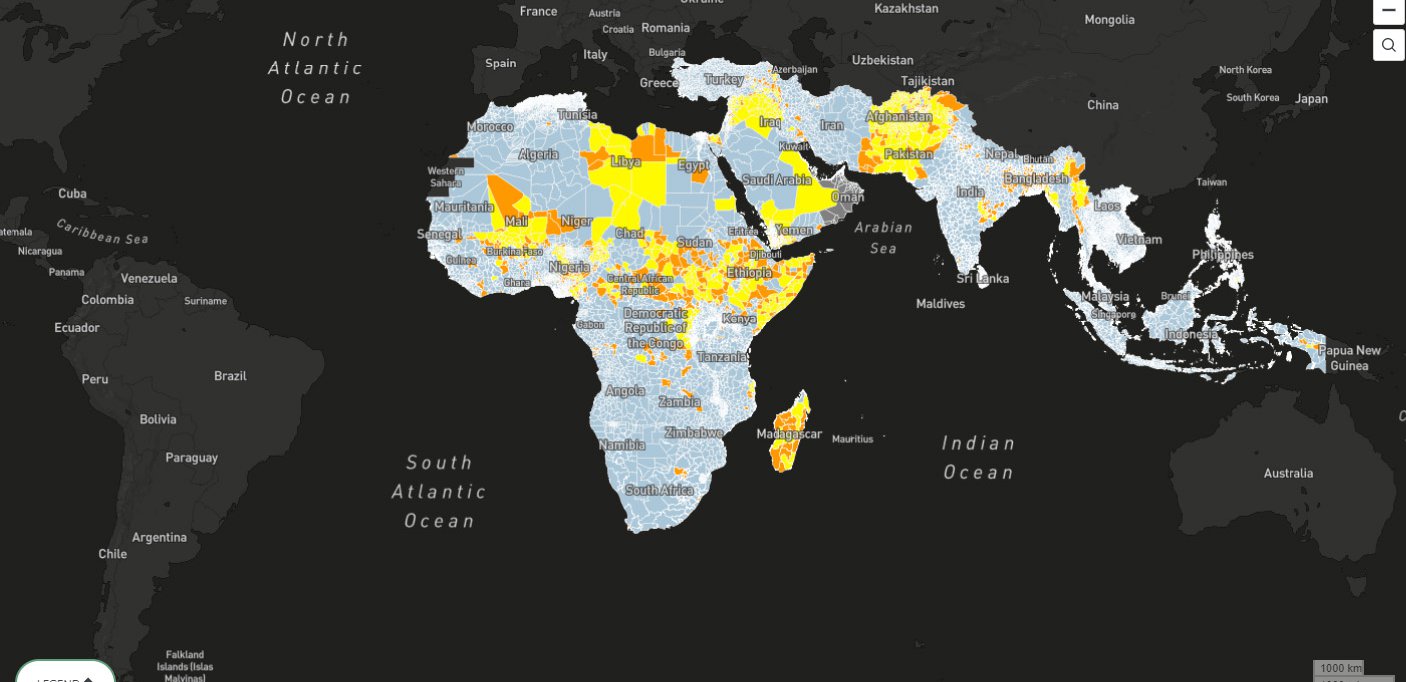
The forecast map appears to show, for example, a significant overlap between the presence of rainfed agriculture and conflict, whether ongoing or emerging. Could the relationship really be so simple, or is this mere coincidence? The answer is, of course, neither. Historically speaking, the presence of rain-fed agriculture is correlated with conflict—but so are many other factors. Forecasted conflict also corresponds pretty neatly with, for example, population density—another relevant but nondeterminative factor. Trying to understand the nature and origins of conflict in a particular place requires a closer look. (The results presented in this case study represent a forecast made at the end of 2018 and covering all of 2019.)
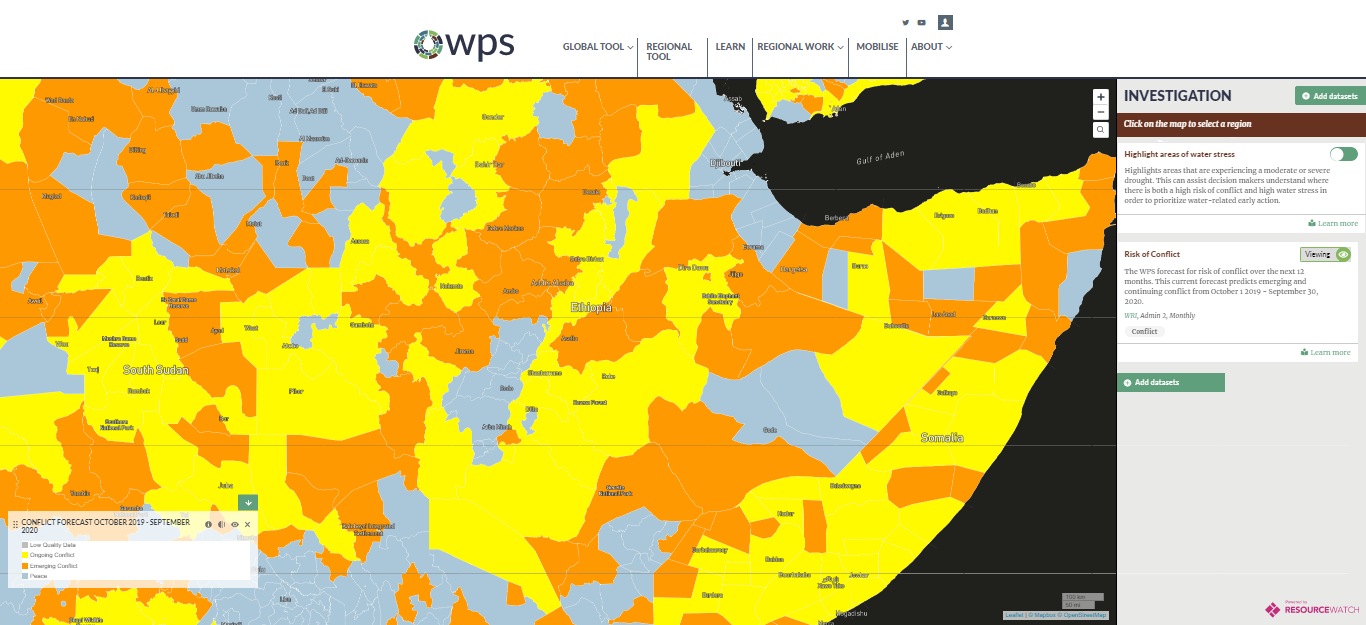
The map appears to show a significant correspondence between the presence of rain-fed agriculture and an elevated risk of conflict. Is the relationship really so simple, or is this overlap mere coincidence? The answer is, of course, neither. Historically speaking, the presence of rain-fed agriculture is correlated with conflict—but so are many other factors. The conflict risk forecast also corresponds pretty neatly with, for example, population density—another relevant but nondeterminative factor. Trying to understand the nature and origins of conflict in a particular place requires a closer look.