Communicating with Immigrant and Non-English Speakers about the COVID-19 Vaccine
Abstract
This guide outlines actionable recommendations and reusable tools for any team, inside or outside of government, seeking to get accurate COVID-19 vaccine information to immigrant communities at scale. Just as there is a “last mile” challenge getting shots in arms, there is a last-mile communication challenge: getting existing public health messages about the vaccine seen and heard by immigrant communities most impacted by COVID-19. Despite unprecedented funding efforts, access to information that is trustworthy and digestible remains limited for non-English speaking communities.
Downloads
Executive Summary
This guide outlines actionable recommendations and reusable tools for any team, inside or outside of government, seeking to get accurate COVID-19 vaccine information to immigrant communities at scale. Just as there is a “last mile” challenge getting shots in arms, there is a last-mile communication challenge: getting existing public health messages about the vaccine seen and heard by immigrant communities most impacted by COVID-19. Despite unprecedented funding efforts, access to information that is trustworthy and digestible remains very limited for non-English speaking communities.
As of the publication of this brief, the United States is far from vaccinating 75 percent of its population, the level American science officials estimate is needed to end the pandemic. The longer the pandemic rages, the greater the toll on immigrant communities disproportionately devastated by COVID-19. Our tools and methods are designed for our present, crucial window of opportunity. Especially now that the vaccine has become widely available to the general public, we must address key vaccine information gaps prevalent in immigrant communities.
Over eight weeks in December through early February 2021, our team of human-centered design, content, and communications experts partnered with Colorado’s Department of Public Health (CDHPE) and the Governor’s Office to test tools and methods aimed at improving COVID-19 vaccine information flows to immigrant communities, particularly those with language barriers. Our eight weeks of research and testing led to:
- Research vaccine concerns and questions from English and Spanish-speaking immigrant Coloradans in December 2020, based on 140 survey responses and 26 interviews.
- A pool of 98 immigrant Coloradans interested in participating in future interviews and usability testing.
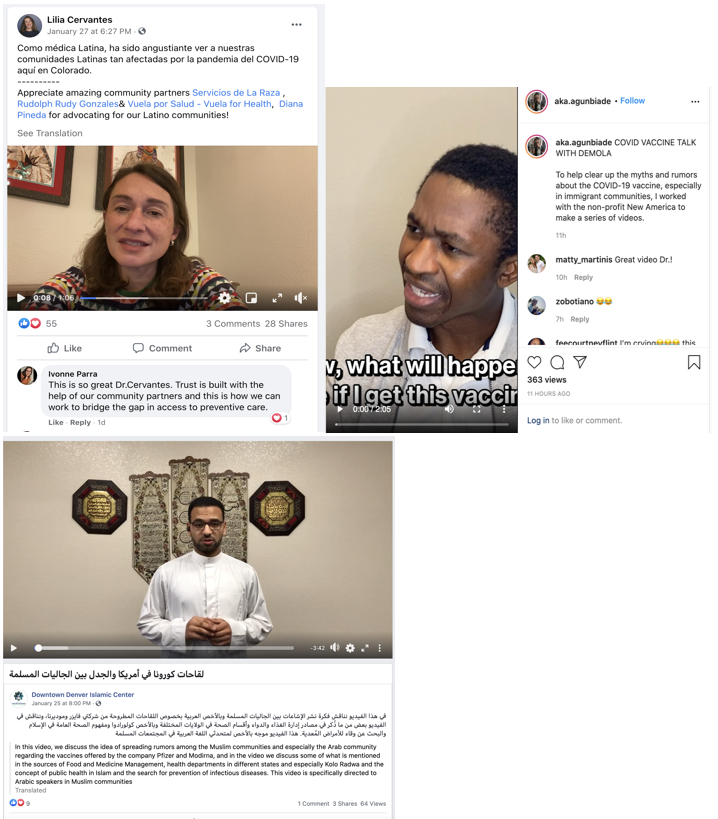
- A pilot of 5 short videos in 4 languages about key vaccine concerns, made and shared on social media in under 2 weeks by immigrant healthcare workers and faith leaders.
- A directory of 50+ multilingual, immigrant influencers and 100+ immigrant community based organizations for future vaccine and public health communication efforts, representing 21 different languages.
- Short and long-term recommendations for making state COVID-19 content more accessible and useful, based on feedback from immigrant Coloradans
Based on what we learned, our top recommendations for teams facing similar communications challenges are:
- Cast a wide net of inquiry to find and collaborate with trusted community messengers (healthcare workers, faith leaders, and community organizers and outreach workers) who are experts at transcreating, not just translating public health communications. Giving them funds and concise instructions is the most effective way to reach hard-to-reach communities at scale.
- Add feedback loops to the content creation process to avoid future communications gaps. Test state vaccine content and websites with immigrant community members on a regular basis. Enable communications staffers to work alongside community organizations and trusted messengers—respect their expertise in crafting and amplifying culturally relevant content.
- Use persuasive message framing and accessible formats. In our testing, the most effective message framing emphasized that getting vaccinated protects loved ones and the larger community. For messages to be heard, acknowledging how viewers are feeling during this stressful time enables them to listen. Prioritize non-written formats, like call centers, videos, and visuals. If content needs to be written, keep it concise, direct, and easily shareable by text message.
The rest of this brief contains detailed insights and links to reusable methods and templates for each of these recommendations. Even though the landscape has changed since these recommendations were formed and vaccines have become much more widely available, we think that the recommendations, tailored as applicable to current communication needs, can still apply.
We operated in a quick-changing environment at a time when the first vaccine was first approved, and much of what we learned from Colorado’s approach has changed or the recommendations we suggested have since been incorporated. For instance, many of the trusted messengers are incorporated into the media campaign and Colorado’s COVID-19 website has been translated into Spanish. The tools used by partners in Colorado continue to evolve. This brief does not reflect the full scope or current approach of Colorado to ensure immigrants and refugees receive the vaccine.
Table of Contents:
How to Find and Collaborate with Trusted Messengers
Understand the COVID-19 Information Landscape in Immigrant Communities
To correctly engage community leaders is to establish the current state of information already flowing through their channels. The initial approach centered on understanding what information is already accessible to them, how they are accessing this information (particularly under the current pandemic shift to online communities), and where did trust fall outside of government outlets.
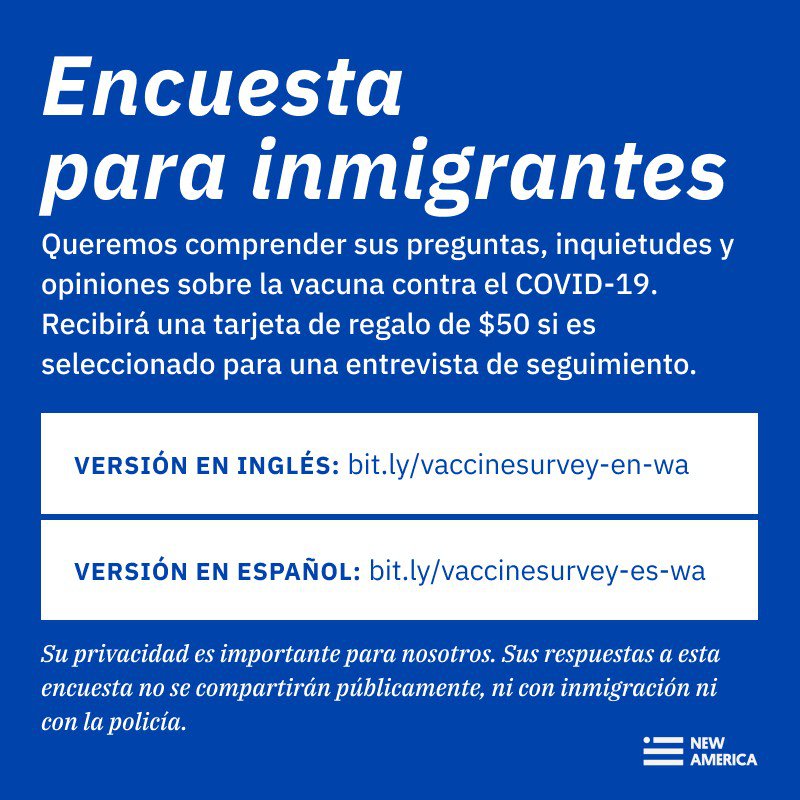
In our case and in order to understand where immigrant Coloradoans were obtaining their COVID-19 information, their top vaccine concerns, and who they trusted for vaccine information, we distributed a survey via Coloradan community organizations, state list-servs, and Craigslist, garnering 140 immigrant respondents in two weeks.
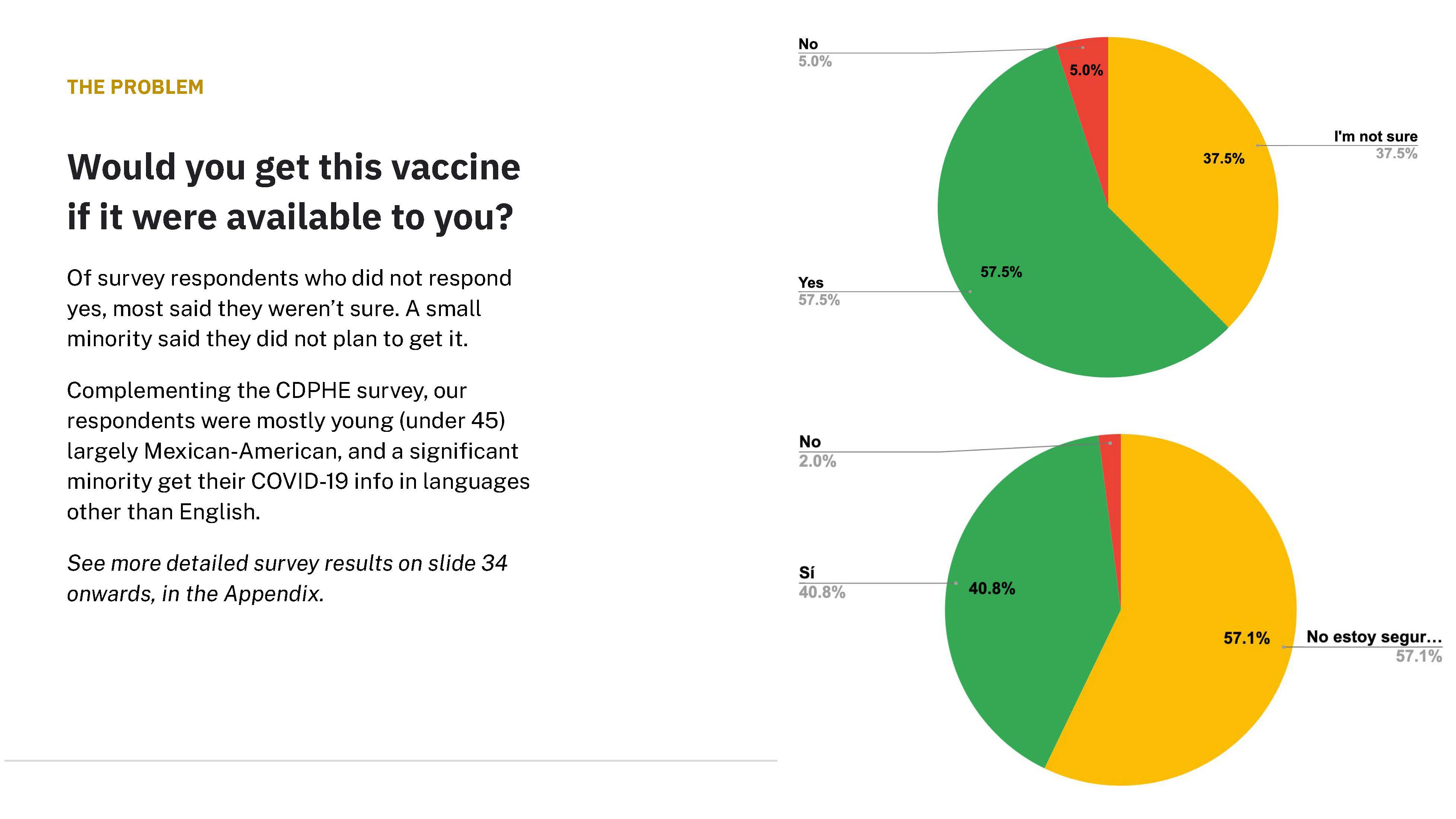
When asked whether they would take the vaccine if it were available today, 37.5 percent of English speaking respondents expressed they were unsure compared to 57.1 percent of Spanish speaking respondents. While statistically representative (the majority of respondents were under 45 and identified as Mexican or Central American), our results were similar to vaccine attitudes among non-White Coloradans from a more quantitatively rigorous survey conducted by CDPHE earlier in 2020.
The top information gaps leading to uncertainty and concern about the vaccine, according to our survey respondents and community leaders we interviewed, fell into three main categories:
- COVID-19 vaccine side effects, hospitalization, and missing work were especially concerning for Coloradans who lacked health insurance or couldn’t afford or access sick leave.
- How the speed of the COVID-19 vaccine development process may have affected its safety or efficacy, and a desire to not be the first test subjects of a new vaccine.
- Availability and logistics for getting the vaccine. Seeing a large number of these questions was promising. They showed an interest in getting the vaccine, if concerns about cost, immigration status, and availability were answered.
These results were promising. They indicate that only a small fragment of immigrant Coloradans were adamantly against the vaccine. A much larger subset described uncertainty due to information gaps that could be resolved. Vaccine hesitancy among immigrant communities is an opportunity to address the concerns of pandemic-stressed residents seeking to avoid additional risk from institutions that have largely not earned their trust. Responding to those who are vaccine hesitant is quite different than responding to those who are anti-vaccines, in general. We chose to focus on the vaccine hesitant.
This process can be easily replicated in any level of government, using open channels of communication, aimed at understanding the landscape before implementing policy changes and new programs.
Cast a Wide Net to Support Trusted Messengers
In interviews with immigrant community leaders and community members, we heard the same recurring theme. It’s best summed up with a quote from a community organizer:
“It’s not just about the content, it’s also about the messenger,” she shrugged. “As government communicators, we often overestimate the influence of traditional government spokespeople (ex: elected officials) with the public. We hope that just because our information is vetted, the public will automatically find it credible.”
Early research confirms that in order for information to really penetrate immigrant communities, it has to go beyond translations of government content. Transcreators, people who can translate public health information into non-English languages, can create content that reframes messages in culturally relevant ways. In particular, transcreators that the community already trusted.
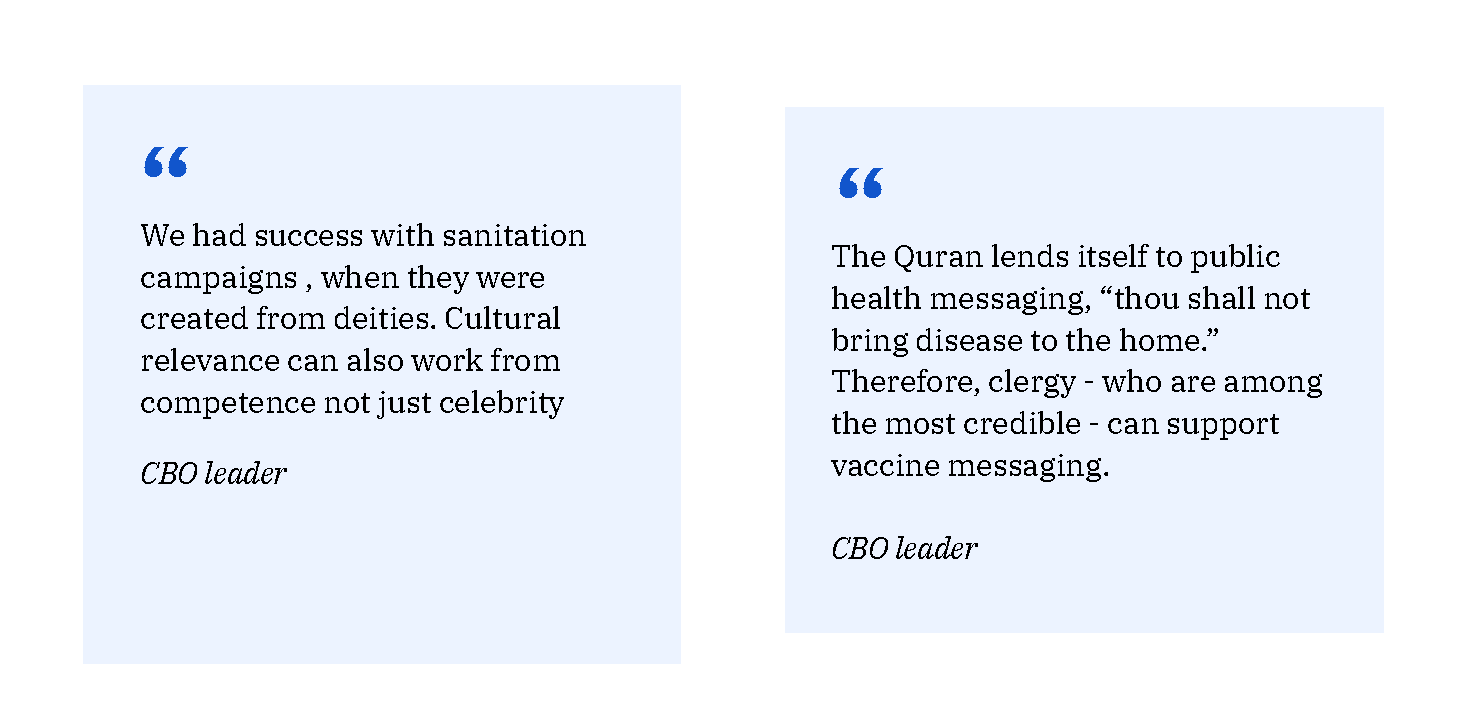
Our survey respondents and interviewees all pointed to the same set of trusted messengers:
- Doctors and other healthcare workers from immigrant backgrounds
- Community organizers from immigrant backgrounds
- Faith leaders in immigrant communities
- Educational leaders from immigrant backgrounds
Other criteria we considered, based on feasibility and feedback from our Colorado partners:
- Social media reach: We found followings as small as a couple hundred to be effective in spreading COVID-19 messages, if they created shareable content in less common languages.
- Location: We heard repeatedly from community leaders that immigrant voices inside and outside Colorado were welcome.
- Diversity: We heard that it was important to consider fluency in languages beyond English and Spanish to reach smaller, underserved immigrant communities.
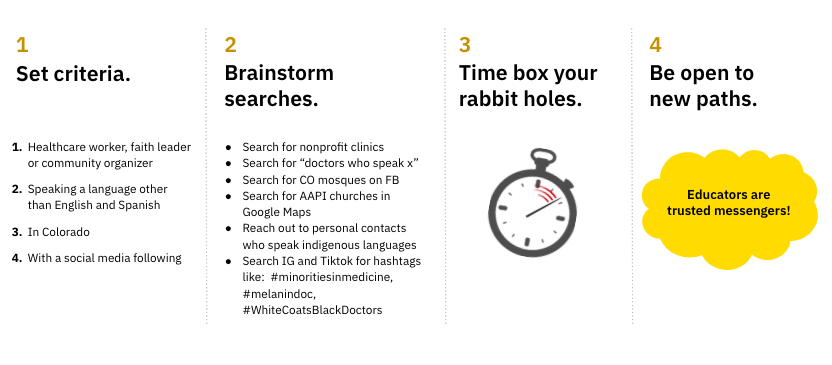
In three weeks, we compiled a supplemental Google Sheets directory of over 50 trusted messengers that matched the majority of our criteria by casting a wide net of inquiry through personal contacts, community organizations, state partners, Google, and social media hashtags. Most of these names were individuals already connected with the state, in various capacities, including participants already working to spread messages in their communities, confirming the importance of maintaining those relationships. By centralizing names of trusted messengers from different staff members in a single spreadsheet, it made it easier for state partners to effectively use those partnerships.
Empower Trusted Messengers to be Rapid-response Content Creators and Amplifiers.
Transcreators, community-based organization leaders, and other important stakeholders in the community are normally eager to help their communities. Maintaining a relationship with them and working alongside them to bring the most relevant information to their public proved to be an effective strategy.
In our sprint, we launched a video pilot that confirmed our hypothesis of supporting trusted messengers with funds and concise instructions would lead to quickly created, easily shareable, and culturally relevant videos about top vaccine concerns in multiple languages. In two short weeks, our team recruited three trusted messengers who produced five videos in English, Spanish, French, and Arabic about vaccine side effects and the development process. Collectively, the videos have now been viewed over a thousand times since they were published the last week of January 2021. We focused on video, using feedback from community leaders who emphasized the need for concise messages that were Facebook, WhatsApp, and YouTube-friendly, and could engage and educate those who could not read large amounts of written content due to a lack of time or literacy.
Supported by contacts at Coloradan community organizations and our directory research, we invited half a dozen trusted messengers (healthcare workers, community organizers, and faith leaders), resulting in three pilot video creators who said yes. Each video creator received $250 for their pilot participation.
Many thanks to our pilot video creators, and their excellent videos, linked here:
- Dr. Lily Cervantes, a Denver-area physician who provided videos in English and Spanish.
- Dr. AK Agunbiade, a Nigerian American ER doctor who recorded videos in English and French (with French support from Jocelyne Tatchou).
- Imam Muhammad Kolila, head of the Downtown Denver Islamic Center who answered vaccine questions in Arabic.
All of the community leaders we interviewed wanted to enhance existing efforts to communicate vaccine information with their community members. With the abundant volume of ever-changing information, they were often unsure what messages to prioritize to help state efforts, or too busy to find and closely read a 20+ page FAQ to find answers to their community’s top concerns. Most of these agencies had received grants from the state or philanthropic partners to enhance outreach to their target communities, some specifically with video content, but we found our pilot additive to those resources.
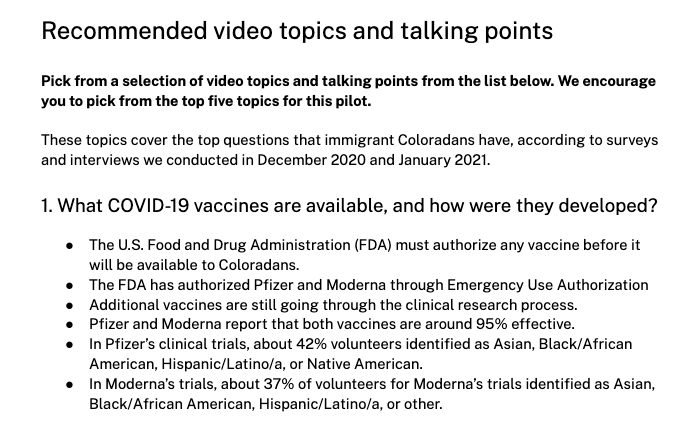
Immigrant community-based organizations and leaders were very busy in 2020, and so, for the video pilot, we made it as easy as possible. Our video guide was a series of concise and clear instructions covering recommended video topics, deadlines, and goals. We used the state’s FAQs to create three pages of video concepts, with bulleted messaging guidance for one- to two-minute videos on the most pressing topics. Each of the creators had a one hour Q&A with our team to align on video goals, understand project deadlines, and discuss initial video ideas. After our team approved their initial scripts, our participants were off to the races, producing and posting social media ready videos in one week.
How to Add Feedback Loops to the Content Creation Process to Avoid Future Communications Gaps
Enable a Communications Staffer to Work alongside CBOs and Trusted Messengers to Regularly Create and Amplify Content
A direct link between a state official and community leaders is a great way of ensuring that content is always up to date, especially under quickly changing circumstances. Fast feedback loops also enable an efficient response to unwanted misinformation and indirectly strengthen the bonds between the government and its public.
For us, fast feedback loops between video creators and our team enabled our creators to shoot their videos quickly and confidently. We worked collaboratively on scripts in shared Google Docs and responded swiftly to questions about draft videos.
Two-way communication between state staffers and community organizations is key to ensuring trusted messenger-made videos are seen by their target audience. Upon the completion of the videos, our team matched relevant community organizations with specific videos to amplify them through organizations’ social platforms and mailing lists. For example, Imam Kolila’s video was shared by the Colorado Muslim Society and other Muslim-serving organizations. After seeing the videos, a number of Colorado groups expressed interest in having members of their outreach teams participate in future video programs.
By using video creation from trusted messengers with approved state talking points, a state communications staffer can quickly utilize a network of trusted messengers across diverse communities, covering numerous languages. Our pilot proves that low-cost, multilingual, culturally relevant, easily distributed, and fast turnaround videos featuring trusted messengers are possible, if there is close collaboration between communications staffers and community organizations.
Test State COVID-19 Content and Websites with the Target Audience on a Regular Basis
A flaw of most state-run communications can be one-sidedness. While significant resources are allocated to the production, approval, and translation of content, feedback on accessibility, cultural relevance, and usefulness of the content rarely reaches government staffers in charge of writing and updating it. In an environment of rapid communication, such as with the vaccine rollout, this can be especially challenging.
Building off of a wealth of industry standard, federal government approved, and trauma-informed usability testing methods, we facilitated remote feedback sessions in English and Spanish with 10 survey respondents who volunteered for further interviews. State partners heard concise feedback on the English and Spanish language web content they had invested a great deal of time and resources into creating. Timely short-term recommendations to a communications staffer that was updating the online COVID-19 vaccine FAQ—a big step towards continuing to improve public health message accessibility with feedback from Coloradans.

How to Use Persuasive Message Framing and Accessible Formats
This section covers the top message framing, usability, and accessibility recommendations that emerged from our feedback sessions.
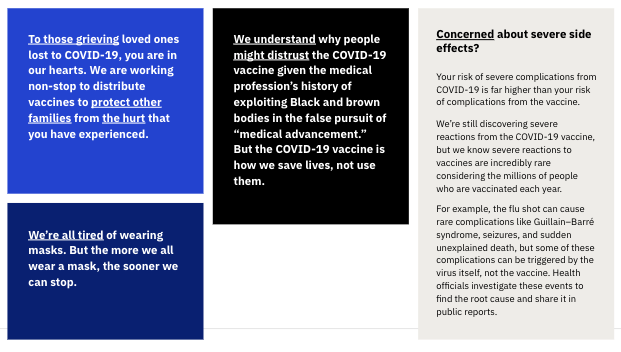
Successful Framing : “Getting vaccinated is how we protect one another.”
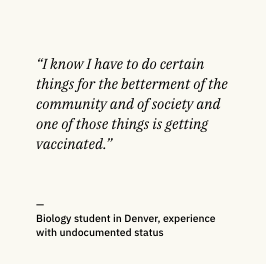
Even when Coloradans we interviewed were unsure about the vaccine, they said they would get it to protect their community. Rarely did they mention wanting to get vaccinated to keep themselves safe. It was about looking out for their family. This was especially true for first generation Americans, who shared an ingrained sense of responsibility to their community.
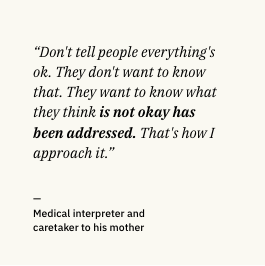
Acknowledge how people are feeling first. It enables them to listen.
Recognizing people’s feelings publicly is not only a graceful gesture in a vulnerable time, it’s psychologically necessary: People need to know you understand them before they’re willing to listen. Acknowledging that people are exhausted, grieving, and worrying about their loved ones, or skeptical of the government is a critical first step to people hearing your message.
In the Short Term, Optimize Non-English Web Content for Mobile Devices and Searchability
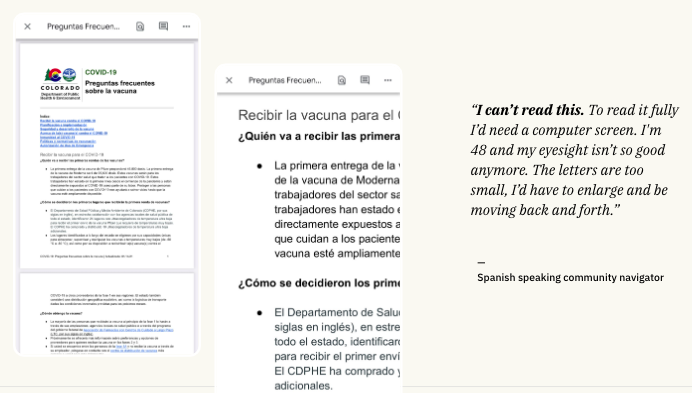
Most research participants said their older friends and relatives search for information on their phones. Some information on Colorado’s website is in PDFs, which aren’t designed to be read on a phone, or to surface in search page results on Google.
We recommend:
- Change PDFs to view-only Google Docs so the text is responsive on mobile
- Always link to specific documents, rather than a Google Drive folder of documents
- Increasing the search engine optimization of non-English documents
Please note that at the time of the sprint project, Colorado was undertaking a project to translate its website into Spanish to ensure equitable access. That project is complete. See here.
Group COVID-19 Vaccine Information Based on How People Experience it in their Daily Lives
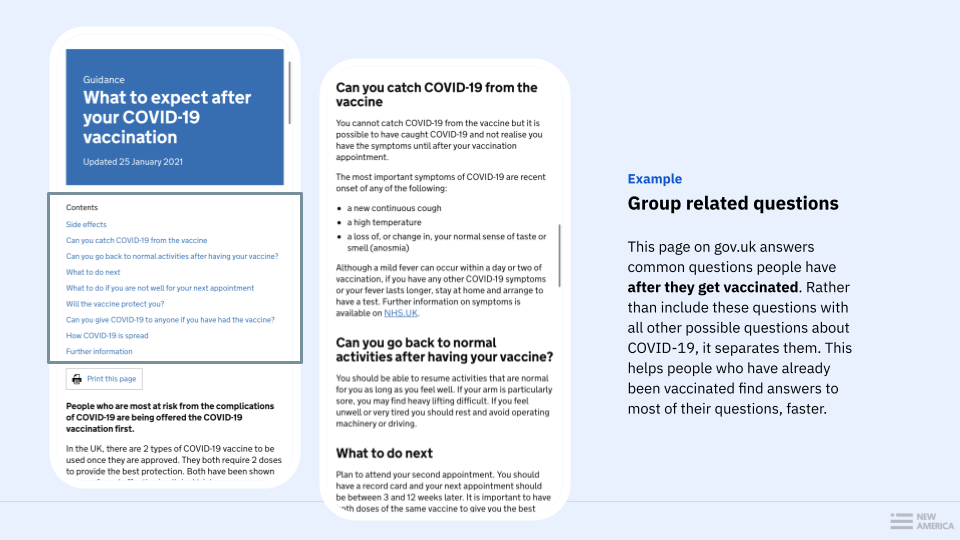
Organize and combine questions based on people’s chronological experience getting vaccinated to make it easier for them to find relevant answers faster.
There is a lot of information about the vaccine. People have a variety of questions, and not everyone has the same concerns. Some people could not find answers to their top of line concerns on the Colorado.gov FAQ page. Feeling overwhelmed, some resorted to niche tech tricks to search the page. Some found the next best question but felt unsatisfied with the answer. An idea to help organize questions is to group by daily experience, but there are also other approaches.
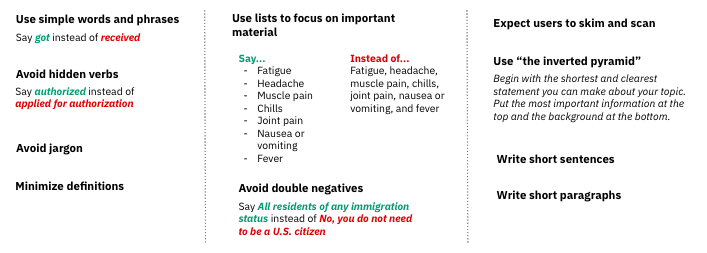
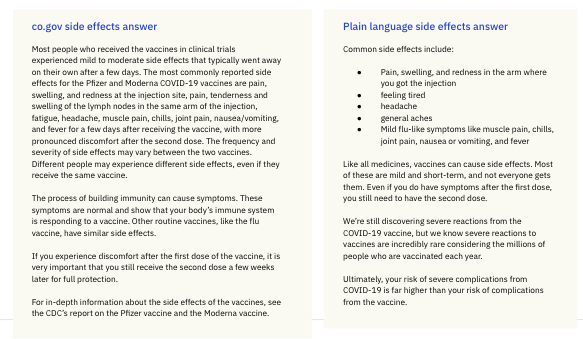
Use Plain, Concise Messages to Make it Easier for “Super Sharers” to Educate their Network
Reaching underinvested populations requires empowering super sharers with information they can easily learn, then teach back to their network. When people read the FAQ, most imagined how they would relay that information to someone else with less language or tech access.
Prioritize Spoken, Visual, and Video Content Instead of the Written Word
For many, reading isn’t the most comfortable way to learn. Community-based organizations know this. They’ve dedicated resources to translating videos rather than blast newsletters, and use word of mouth to spread updated program information. Several research participants indicated that they preferred to speak to someone on the phone, but had difficulty finding call center information on state websites. Colorado, like many states, invested in community-based organizations for this purpose, but the sheer amount of information made it difficult to meet the information needs of all, especially as these were new duties to nonprofit partners.
Conclusion
We are fortunate to have effective vaccines in our COVID-19 fighting toolkit at this point in the pandemic. In order for vaccine delivery and distribution to succeed, last mile vaccine information distribution needs to reach as many Americans as possible. In eight fast-paced weeks, our team, state partners, community organizations, and video creators proved that simple strategies like supporting trusted messengers, producing culturally relevant video content in multiple languages, and testing state vaccine information can be impactful and feasible on short timelines. In the short term, they will help your team reach more immigrant community members effectively. In the long term, they will make your public health communications more inclusive, responsive, and most importantly trustworthy.
More About the Authors

Xena Ni
Research Consultant, NPL

Valentina Pereda
Research Consultant, NPL

Gabriela Perez
Research Consultant, NPL

Allison Press
Research Consultant, NPL

Sydette Harry
Research Consultant, NPL
Issues
Programs/Projects/Initiatives
Related