Table of Contents
Climate Change Will Drive Domestic Migration across the United States
As disasters become more frequent and severe, and as the gradual impacts of sea-level rise and extreme heat become more pronounced, it is increasingly likely that millions of Americans will move away from vulnerable parts of the country. Still, the relationship between climate change and migration is complex, and questions remain around how exactly climate impacts will shape domestic migration patterns, when it will occur at scale, who will be most affected, and where migrants will relocate. A growing body of research and reporting examines these critical issues.
Climate-Driven Displacement and Migration, Defined
- Displacement: People are forced to leave their home temporarily or permanently, typically because of sudden-onset climate disasters, such as hurricanes, floods, and wildfires.
- Migration: People temporarily or permanently relocate based on a number of social, economic, political, demographic, and environmental factors, including climate risk and slow-onset climate impacts like extreme heat and sea-level rise. To a certain degree, this relocation is voluntary.
Why—and When—Will Americans Move amid Climate Change?
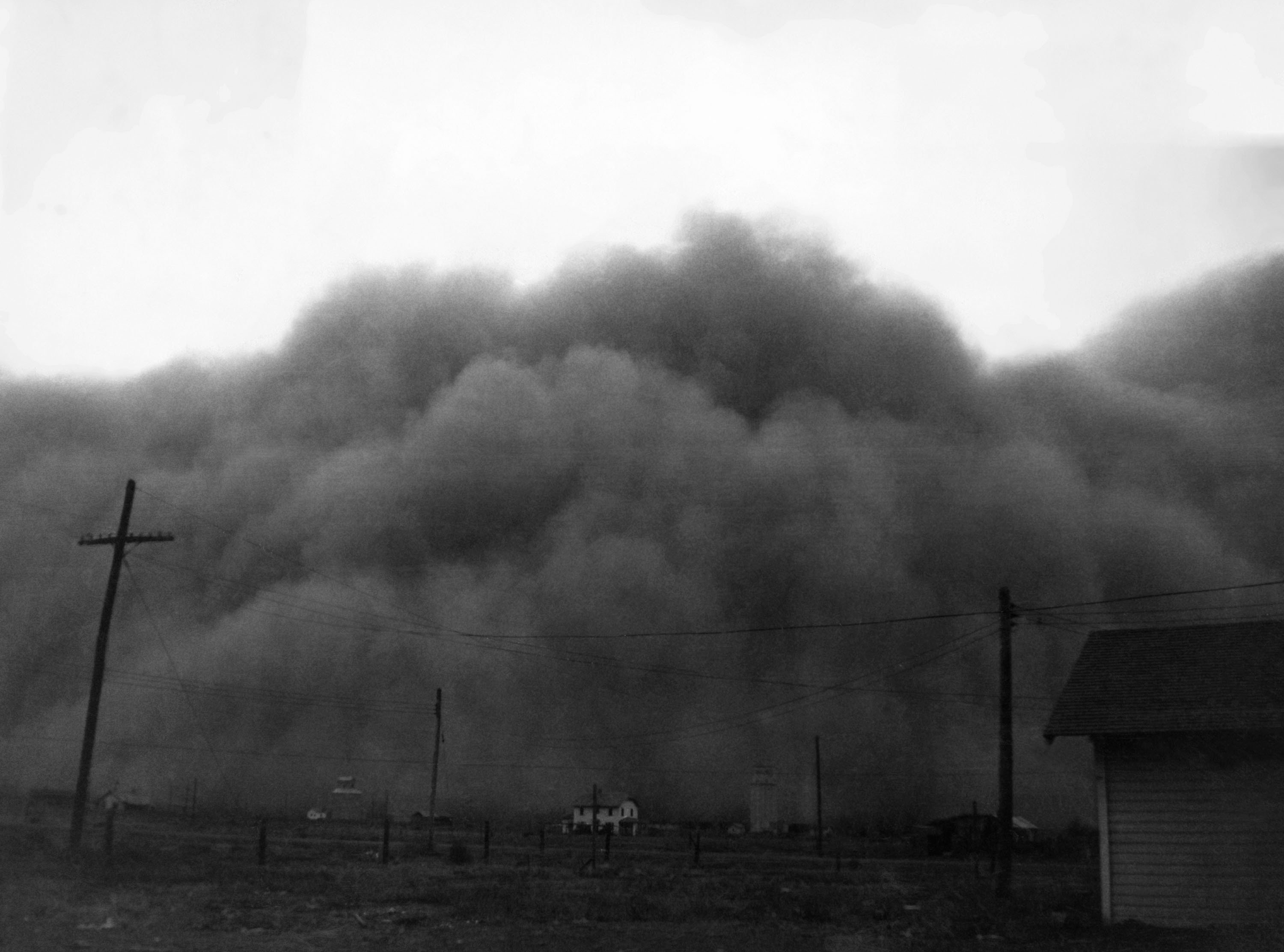
To start, academic literature recognizes that there are usually multiple drivers behind migration: Political, economic, social, and demographic factors exist in addition to environmental considerations. The decision to migrate usually results from a mix of these drivers, although economic motives often dominate. Environmental factors such as climate change rarely act in isolation and tend to influence or compound other stressors: Drought and economic depression combined in the 1930s Dust Bowl to prompt many U.S. farmers westward. Personal and household characteristics from age, wealth, and education to place attachment also inform the decision to move.
Everett Collection/Shutterstock
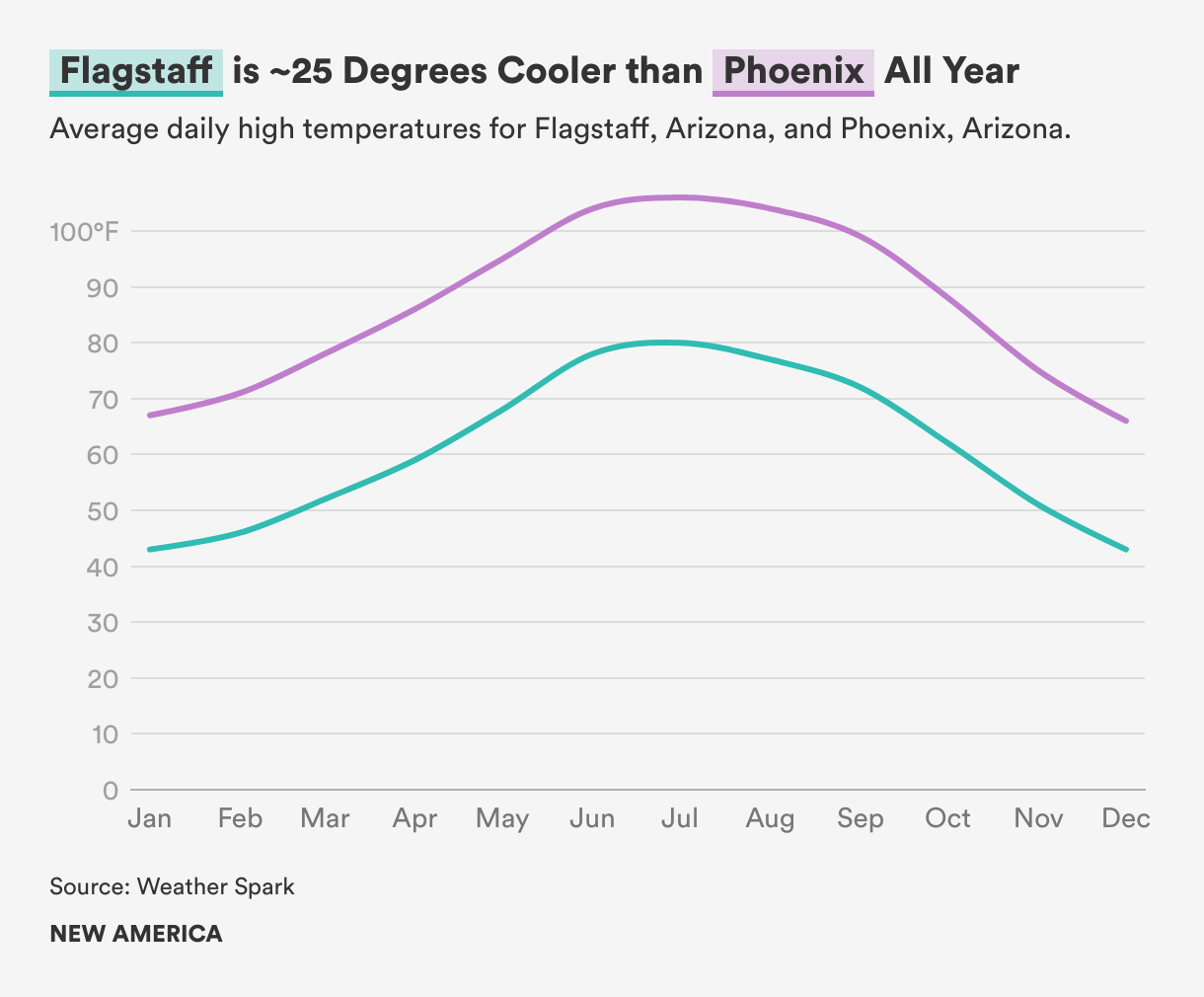
Evidence further indicates that there are multiple pathways for population movement amid climate change. Short-term displacement often results from sudden natural disasters, such as a mandatory evacuation order ahead of a hurricane. But sometimes, an inability to recover and rebuild following a disaster will turn temporary displacement into permanent moves.1 Or repeated disasters in the same geography can encourage relocation. Slow-onset impacts, especially extreme heat and sea-level rise, are also likely to drive longer-term migration. Wealthy households in Phoenix, for example, are actively relocating to Flagstaff, a mountain city in northern Arizona where summer temperatures are 25 degrees cooler than the state capital.
Despite a broad consensus that climate change will result in greater displacement and migration, it is difficult to determine a “tipping point” for very large population movements across the United States. Of course, sudden disasters or slow-onset impacts within a specific geography can cause significant out-migration at the city or regional level. Directly after Hurricane Katrina, for example, New Orleans lost about half of its residents, and the city was home to less than 80 percent of its pre-Katrina population in 2022. And sea-level rise and associated land loss will obviously force relocation, especially on the Atlantic and Gulf coasts.2 Anecdotal reporting and small-scale research indicates that more Americans are grappling with decisions related to climate risk and relocation, but if and at what point exactly many millions across the country will migrate to safer or cooler ground is still largely unknown.
Several scholars and journalists believe that the indirect economic impacts of climate change will likely spur a mass migration, impacting large swaths of the United States. Within this century, the negative effects of climate change on economic sectors such as construction and real estate, manufacturing, tourism and recreation, and agriculture could lead to economic downturns, job loss, and then migration. In many climate-vulnerable regions, lack of access to traditional 30-year mortgages, increasingly expensive or unavailable homeowners insurance, or unsustainable repair costs following repeat disasters may cause real estate prices to crash and convince Americans to relocate. And as ProPublica reporter Abrahm Lustgarten writes: “Once home values begin a one-way plummet, it’s easy for economists to see how entire communities spin out of control. The tax base declines and the school system and civic services falter, creating a negative feedback loop that pushes more people to leave.”
Who Will—or Can—Move in Our Climate Future?
Perhaps obviously, wealthier households and individuals can more easily relocate amid climate change due to greater financial means and access to other resources. But more affluent Americans may alternatively choose not to relocate from vulnerable areas, at least until their home becomes completely unlivable. An influential 2017 study that predicts future population movements amid climate change, for example, assumes that households earning over $100,000 per year are likely to adapt to sea-level rise in some manner other than migration. Rich individuals and households will be able to purchase property without a loan, armor against negative climate impacts, afford progressively expensive insurance, and finance reconstruction following a disaster. At-risk but attractive locations, such as Miami or California’s Sierra Nevada, may very well become expensive and exclusive enclaves, inaccessible to most people.
Differently, some poorer households could be unbound to their socioeconomic status and more quickly search elsewhere for economic opportunities and improved quality of life amid climate change. But low-income and other marginalized communities may also remain in situ as they often have no other choice. Many poor Americans likely lack the financial and social resources to relocate, despite usually residing in areas at greater risk of flooding, storms, and other climate-related hazards.3 Worse, while wealthier households can stay in place, protect themselves from negative climate impacts, and maintain a high standard of living, poorer people more at risk from climate change are often unable to adapt—are trapped, even—and will experience increasingly worse quality of life. Lustgarten reports that low-income, Black, and Native American communities in rural Louisiana and coastal Georgia are already at risk of being left behind as others flee increasingly severe climate impacts.
Income, Race, and Disaster-Driven Displacement
Research from the University of Vermont shows that low-income populations are less able to evacuate in response to disaster warning systems. Hurricane Katrina is a striking example of this intersection between immobility and climate change: Those left behind in New Orleans as the storm approached were disproportionately Black, low-income, and did not have a car or other resources to shelter elsewhere.
But when socially vulnerable populations do evacuate, or when they are forcibly displaced by a natural disaster, such circumstances exacerbate existing racial and socioeconomic inequities. Post-disaster reductions in affordable housing, especially, make it difficult for lower-income households to return to their communities. Families in low-income and minority neighborhoods are much more likely to be displaced long term by natural disasters or struggle to rebuild their homes and recover financially.
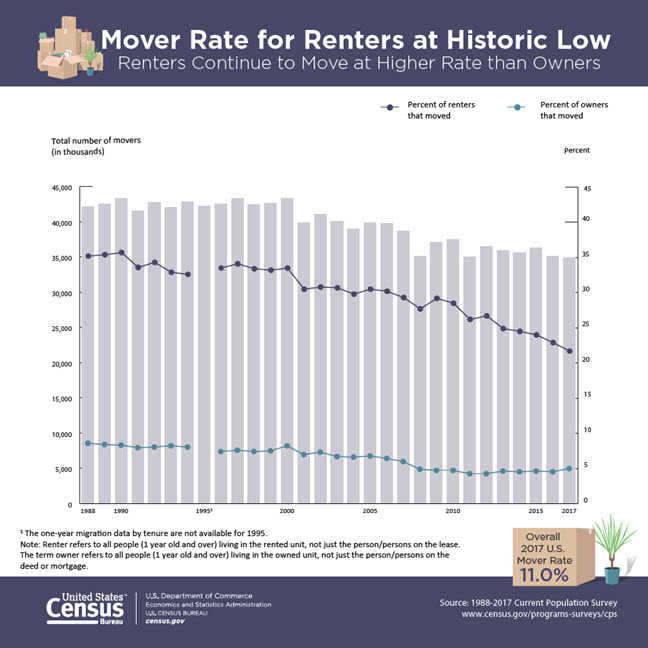
Might it be, then, that the U.S. middle class is the most likely demographic to plan long-term moves amid climate change. Middle-income homeowners in climate-vulnerable areas may soon face dropping property values and financial ruin due to recurrent disasters and proactively choose to relocate. Well-off renters, typically more mobile than homeowners, may also be quick to migrate. Many of these Americans will have sufficient financial and social resources, as well as favorable job prospects, to move away.
Where Will At-Risk Americans Migrate: North or Nearby?
Predictions have proliferated on where domestic climate migrants will move in the United States. Historical trends suggest that the climate crisis will accelerate urbanization, and some researchers believe that 90 percent of the U.S. will live in urban areas by 2050, in part due to negative climate impacts. Future urban growth is largely unsurprising, as decisions around migration are usually influenced by “pull factors” such as social networks, employment opportunities, and the availability of amenities.
According to a 2021 Redfin survey, nearly half of the respondents that planned to relocate in the next year already cited extreme heat and increasingly frequent and severe disasters as a factor in moving. More than a third mentioned sea-level rise. As the southern U.S. in particular becomes increasingly hotter and more vulnerable to rising seas, flooding, and storms, millions of Americans could move to the Pacific Northwest and the Northeast. Cities in these regions might grow by roughly 10 percent in the coming decades, according to one model.
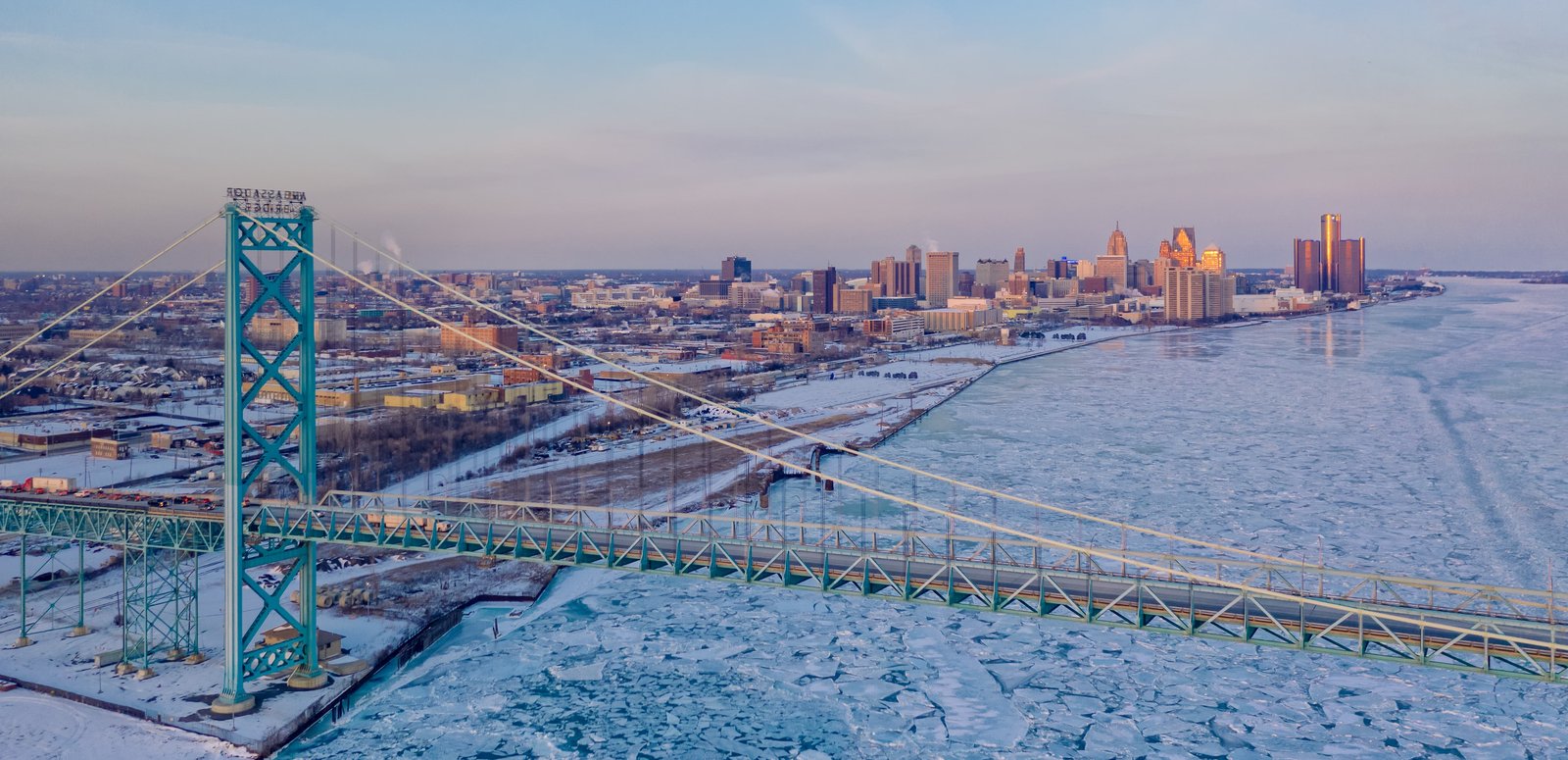
Some of these cities, including old industrial centers in the Rust Belt like Buffalo and Cincinnati, as well as smaller cities such as Ann Arbor, Michigan, and Burlington, Vermont, are increasingly labeled as climate havens. No community in the United States will escape climate change completely, and deadly blizzards, flash floods, and extreme heat are increasingly affecting the Midwest and Northeast. Yet proximity to large sources of freshwater, relatively cooler summer temperatures, and lesser risk of wildfires and hurricanes make these cities more attractive and resilient for the coming decades. And former manufacturing hubs like Detroit, home to roughly 1.8 million people in the 1950s but only 650,000 today, can leverage sparsely populated residential neighborhoods and underutilized public infrastructure to more effectively accommodate rapid population growth.
However, other research and recent trends suggest that climate migrants will remain relatively close to their communities of origin. A recent Rice University report on government buyouts of flood-prone houses found that 58 percent of participating homeowners subsequently relocated within a 10-mile drive of their previous property. Nearly three-quarters remained inside a 20-mile radius. Post-disaster, the Sacramento Bee reported that 80 percent of Camp Fire victims remained within California, while a year after Hurricane Katrina, over half of displaced New Orleans residents had settled elsewhere in Louisiana or Texas. Such findings all correspond with analysis from the Natural Resources Defense Council, which shows that many displaced Americans prefer to remain in their own region, if possible. People in coastal areas may simply move further inland within their own state or region.
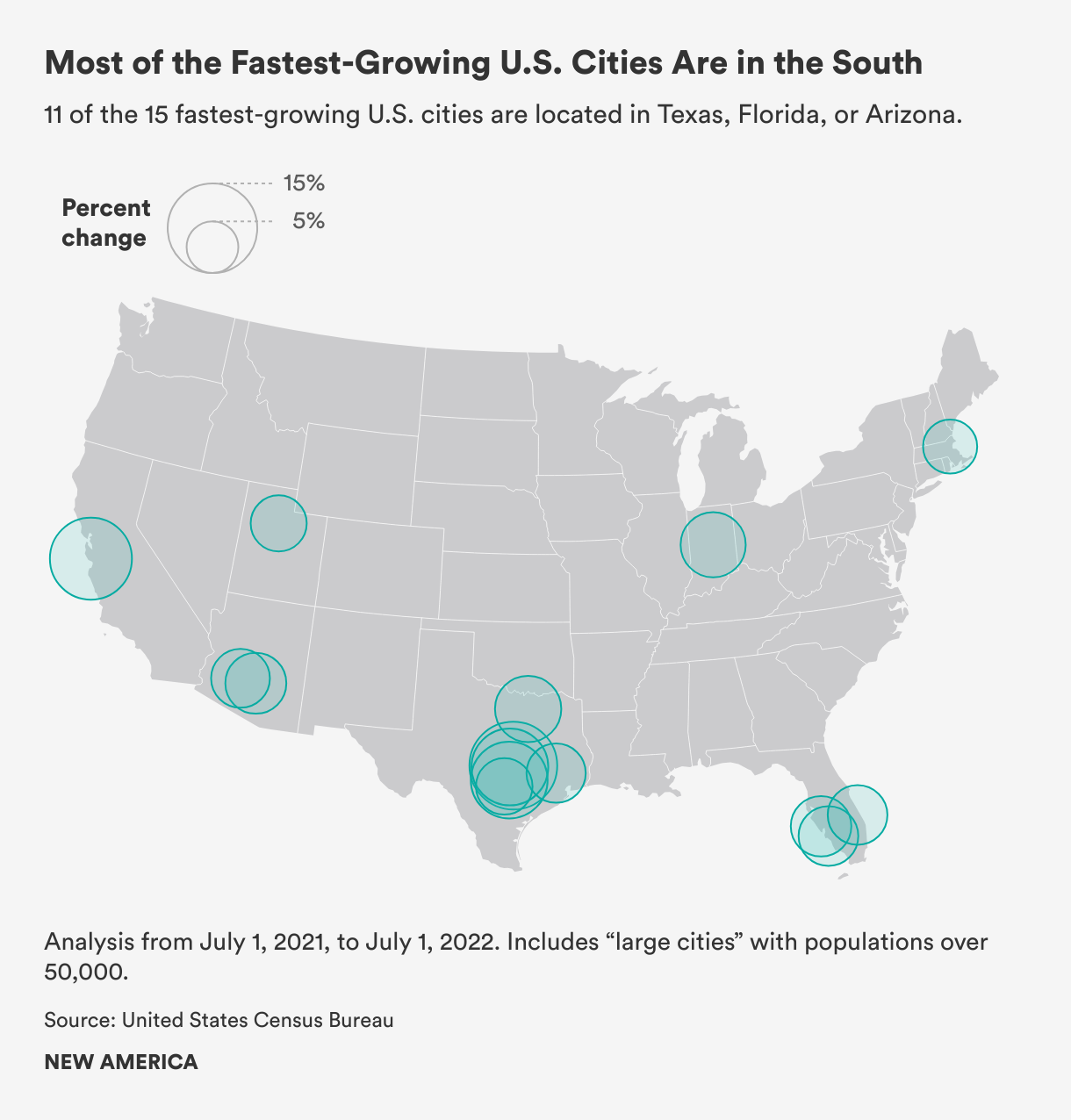
At the same time, millions of Americans continue to move into the country’s most climate-vulnerable areas. U.S. Census Bureau data from last year shows that 11 of the 15 fastest-growing large cities in the country are located in Texas, Florida, or Arizona, states variously at growing risk of sea-level rise, extreme heat and drought, flooding, and hurricanes. In general, lower costs of living, economic growth, and warmer weather are driving population increases across the Sun Belt. But many transplants in the U.S. South may not understand the extent of climate risk to their new properties. For example, roughly one-third of states, including low-lying Florida, lack flood disclosure laws.
Taken together, these two demographic patterns—the Sun Belt’s current population boom and a preference for short-distance moves—mean that climate change could force millions across the U.S. South to relocate to relatively lower-risk urban centers within the region. Thousands of residents might flee a sinking Charleston for an increasingly flood-prone Charlotte, for instance. In fact, results from quantitative modeling by the University of Georgia predict that the cities of Austin, Orlando, and Atlanta will receive hundreds of thousands of migrants each by 2100, due to sea-level rise alone.
Differently, experience suggests that some future climate migration might be seasonal or circular in nature, dependent on economic opportunities and other factors. According to the research firm Rhodium Group, warming temperatures could shift agricultural production to the northern Great Plains, potentially leading to an ebb and flow of migrant labor in the region due to growing seasons. Separately, “reverse snowbirds” might make their primary residence somewhere in the Sun Belt with a summer home in cooler New England or along the Great Lakes.
Ultimately, the United States will probably experience a mix of growth in northern climate havens and in safe harbor cities elsewhere. Following a severe natural disaster, such as a Category 5 hurricane along the Gulf Coast, affected middle-class households will most likely relocate nearby, to cities and towns that are slightly less vulnerable to climate impacts. Concurrently, slow-onset impacts like sea-level rise and extreme heat could gradually undermine the habitability and economic viability of certain regions like the Southwest, pushing many Americans to migrate northwards over longer distances.
Citations
- Lower-income renters are particularly vulnerable to involuntary and permanent relocation following a natural disaster due to loss of affordable rental housing in impacted areas.
- By one estimate, over 13 million Americans could permanently move due to rising seas alone by 2100.
- In large part, these settlement patterns are due to the legacy of racist policies such as redlining, urban renewal, and disinvestment.