Carrie Gillispie
Project Director, Early Development & Disability
Family detention centers deprive children of their right to an education.

“Our school from home has been trying to find ways to get educational materials to us, but even though my teen wants to keep studying here, email access is too limited to make it possible.”
“The school is…a joke here. There is just one teacher for all ages and it is only for one hour, and each child has to line up…but there still might not [be] enough space for them…. It makes my daughter so sad when she is not allowed in.”
“I am so worried about missing three months of my junior year.”
“[Our son’s pre-kindergarten] had been doing some testing to understand his special needs, but we were apprehended before we could find out the full results.”
“[My son] often wakes up worried because he thinks that he missed school. Then he realizes he’s locked up here and there isn’t school.”
“They say they have school, but it’s not real school. Our daughter went for one day and the teacher told her that if she can’t speak English, she shouldn’t speak at all.”
Source: Testimony of detained parents and children collected during Flores counsel visits to the South Texas Family Residential Center in Dilley, Texas in March and May 2026.
Since March 2025 over 6,200 infants, children, and youth have been detained alongside their parents at the South Texas Family Residential Center in Dilley, Texas by U.S. Immigration and Customs Enforcement (ICE). The practice of “family detention,” incarcerating children with their parents, dates back to George W. Bush in 2001, and except for a pause by President Biden in 2021, it has been implemented by every other administration since then.
The story of Gael, a nonverbal five-year-old child with developmental delays being held at Dilley, made national headlines recently when children’s entertainer Ms. Rachel advocated for his release. NBC News reported that Gael was receiving an autism evaluation and related therapy, but his services were halted once he was detained. Gael rapidly deteriorated in detention, “both physically and emotionally.”
On the outside, children like Gael and his family would rely on the public education system to ensure his developmental needs were assessed and supported. All children are entitled to a free public education and various legal frameworks ensure this right is realized for children with additional needs, like students with disabilities and English learners. Evidence of life on the inside of family detention centers, however, shows that all children are going without meaningful access to education.
Children in Unlicensed ICE Facilities
ICE detains children alongside their parents as a family unit in detention centers. Dilley is currently the only operative family detention facility in the United States, and like all previous family detention facilities it is unlicensed, meaning it lacks state standards, oversight, and accountability infrastructure. This is because state licensing systems for child care or residential-care facilities were not designed for families or secure detention settings.
Family detention centers do, however, fall under the purview of the 1997 Flores v. Reno Settlement Agreement (Flores). With limited exceptions, Flores requires the government to place children in non-secure facilities that are state-licensed to care for dependent children. For children placed in unlicensed facilities, like Dilley, it requires that the conditions are safe and sanitary. It also requires that children who remain in federal custody be placed in the least restrictive environment and provided certain services.
ICE also has its own internal Family Residential Standards for family detention centers. These standards outline the philosophy, goals, policies, procedures, and practices that all centers must follow. The guidelines include expected practices and outcomes on issues including admissions and release, health care, hunger strikes, sexual abuse and assault prevention and intervention, educational policy, and others.
Immigrant Children’s Unequal & Inconsistent Education Rights
All children in the United States are entitled to a free public education through Plyler v. Doe (1982). Children with disabilities enrolled in public schools are entitled to a free appropriate public education in the least restrictive environment through the Individuals with Disabilities Education Act (IDEA). A variety of legal and policy frameworks enshrined English learners’ right to an adequate and meaningful education.
All immigrant children in ICE custody are entitled to the protections of Flores, and the Flores Settlement requires facilities housing immigrant children to provide educational services with specific frequency, duration, academic subjects, and language support. However, these requirements only apply to licensed facilities, not unlicensed family detention centers.
ICE’s own Family Residential Standards include a section on education standards that require all family detention centers to provide “appropriate education for all residents 4 to 17 years of age, regardless of English proficiency or disability.” According to these standards, all children must be assessed within three days of arriving and provided at least one hour per day in each core subject. The standards also stipulate that all teaching staff must be qualified, and that education staff be certified as English as a Second Language (ESL) instructors or actively enrolled in an ESL certification program. All materials and curricula are supposed to comply with state requirements, and linguistically appropriate educational materials must be provided in classrooms. Interpretation services must be provided in cases where the teacher and students speak different languages. Children with disabilities must be identified and referred to the appropriate local education agency, and a 504 plan or individualized education program (IEP) must be developed by a multidisciplinary team convened by center staff if children are found eligible for these supports.
Separately, unaccompanied children fall under the jurisdiction of the Office of Refugee Resettlement (ORR). As a result of a settlement in the 2018 class action lawsuit Lucas R. v. Azar, ORR must identify and track all children with disabilities in its custody and provide them with educational evaluations, services, and accommodations. In July 2024, ORR updated its online policy guide to include guidance for ORR facilities in providing 504 plans to children for accommodations, such as access to tutoring and physical and occupational therapy.
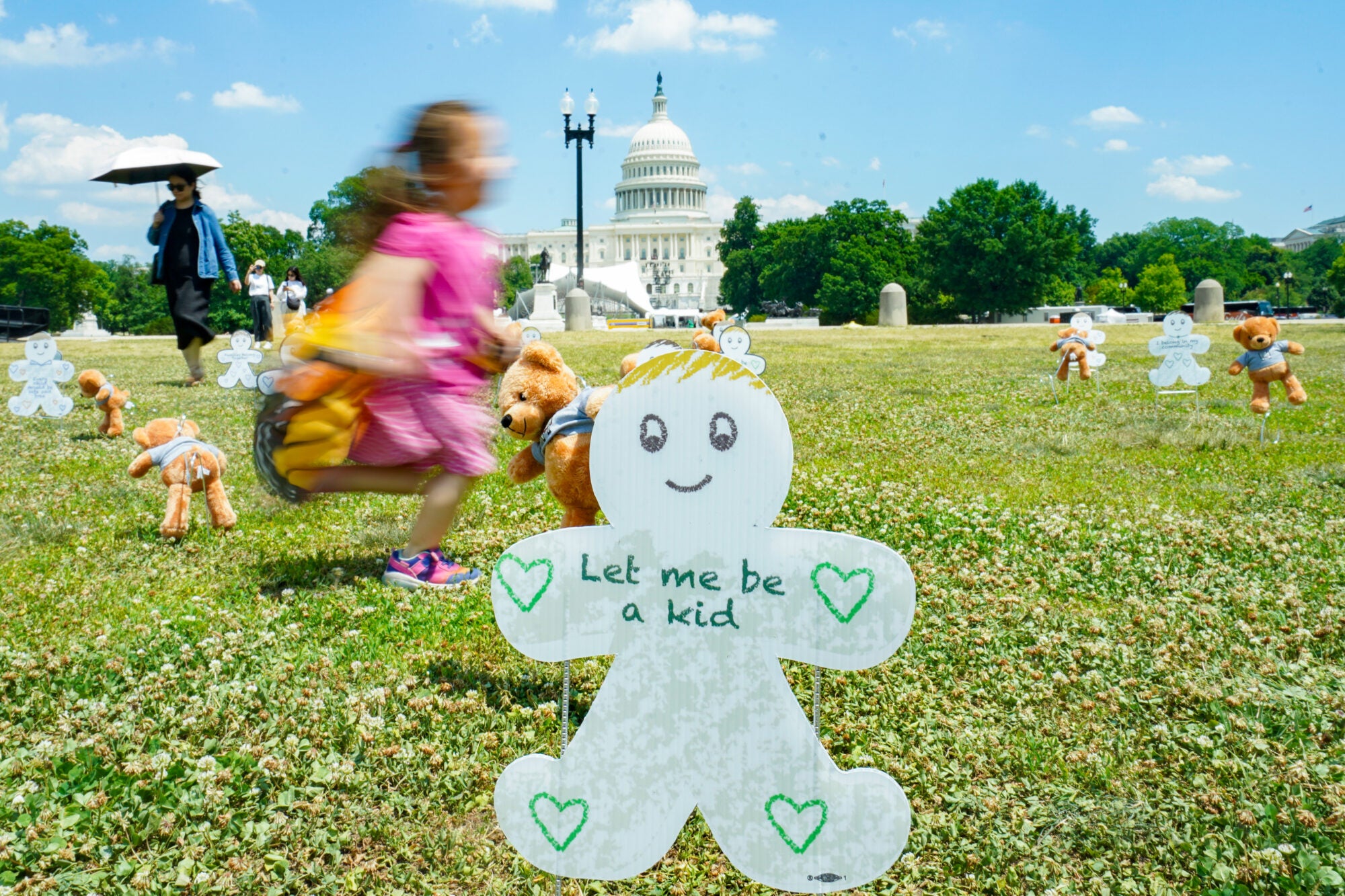
Education Deprivation in ICE Detention
Thorough documentation from detained children and parents, attorneys, members of Congress, and non-profit humanitarian organizations has shown that children are being subjected to extreme and prolonged harm in family detention centers. They are at increased risk of anxiety, depression, trauma-related symptoms, and long-term health risks, according to the American Psychological Association. Family detention centers provide inadequate health care and harmful developmental environments for children, affecting both their physical and mental health, according to the American Academy of Pediatrics and international child development experts. On top of creating dangerous living conditions, the federal government is also subjecting children to education deprivation by providing abysmal learning opportunities.
Under the 1997 Settlement Agreement, Flores counsel attorneys are authorized to conduct site visits at federal detention facilities holding children and to conduct confidential interviews with detained children. Through regular site visits at Dilley, Flores counsel have found no evidence that the detention center is providing access to a meaningful educational environment. Families report that children are grouped into three wide age groups: pre-K through second grade, third through sixth grade, and seventh through 12th grade. Children report short periods of exposure to learning tools and unengaging or inaccessible materials.
The ICE Juvenile Coordinator corroborated these accounts in a May 2026 report that Dilley did not provide even the scheduled one-hour education sessions, instead providing student instruction for only 20 to 30 minutes, with teachers who were not required to be certified. The inspector acting on behalf of ICE also found that there was no special education team despite its requirement, and no students received special education services. In their own words, education remains the “most persistent compliance concern.”
Most of the school-aged children at Dilley interviewed by Flores counsel reported attending American schools prior to being detained and shared that the services being provided at Dilley fell far short of the education they were accustomed to. Many of the students who speak a language other than English or Spanish reported not having access to materials in their home languages. Even if students did have access to some educational resources, they do not receive academic credit for what they complete while in detention, which lowers their motivation to attend the sessions. As one child expressed in the May 18, 2026 court filing by Flores counsel, they have lost a year of school and might never catch up.
Education is Critical to Children’s Success
Education is associated with a host of positive outcomes. A stronger education is linked to a longer, healthier life, according to the U.S. Department of Health and Human Services (HHS). People with more education have better health outcomes, including fewer chronic illnesses, longer lives, better mental health, better physical and cognitive functioning, higher incomes, and higher rates of marriage and family stability. Positive associations with educational attainment begin in early childhood, according to HHS and the National Academies of Sciences, Engineering, and Medicine, including healthier development and potentially more protection against disease and disability as they age, according to HHS.
On the other hand, children who are educationally deprived are more likely to have poorer cognitive outcomes, such as weaker executive functioning. Interacting with the immigration system is in itself an adverse childhood event, associated with disrupted brain development, post-traumatic stress disorder, and academic difficulties.
The long-term effects of locking children up to languish when they should be learning in school cannot be ignored. Children who have experienced educational deprivation require robust interventions to nurture their development, well beyond the supports available to most children in the United States.
No Place for Family Detention
Flores recognized that detaining children is not in their best interest and established a policy favoring the release of children from federal immigration custody. Children being held in an unlicensed and unsafe facility like Dilley for prolonged amounts of time—the longest time served being 10 months—is proof that the government is not abiding by the Flores requirements.
In its May 2026 response to Flores counsel’s court filing which included residents’ accounts of insufficient educational programs, ICE reported that “important elements of the program were still under development” and that library access and curriculum development was “underway.”
However, the truth is that family detention is incompatible with the government’s obligation to honor children’s civil and human rights. No amount of policy or physical infrastructure can mediate the long-term negative effects that family detention will have on children’s development.
It has been 25 years since the federal government began detaining children, and still the education services being provided are wholly inadequate. Family detention facilities are unable to guarantee children’s civil rights. This is true for all children, and is particularly grave for those that require additional support, such as children with disabilities and English learners, whose civil rights are effectuated through the public education system that they have been removed from. There is no version of family detention that can circumvent this harm, so it must stop.
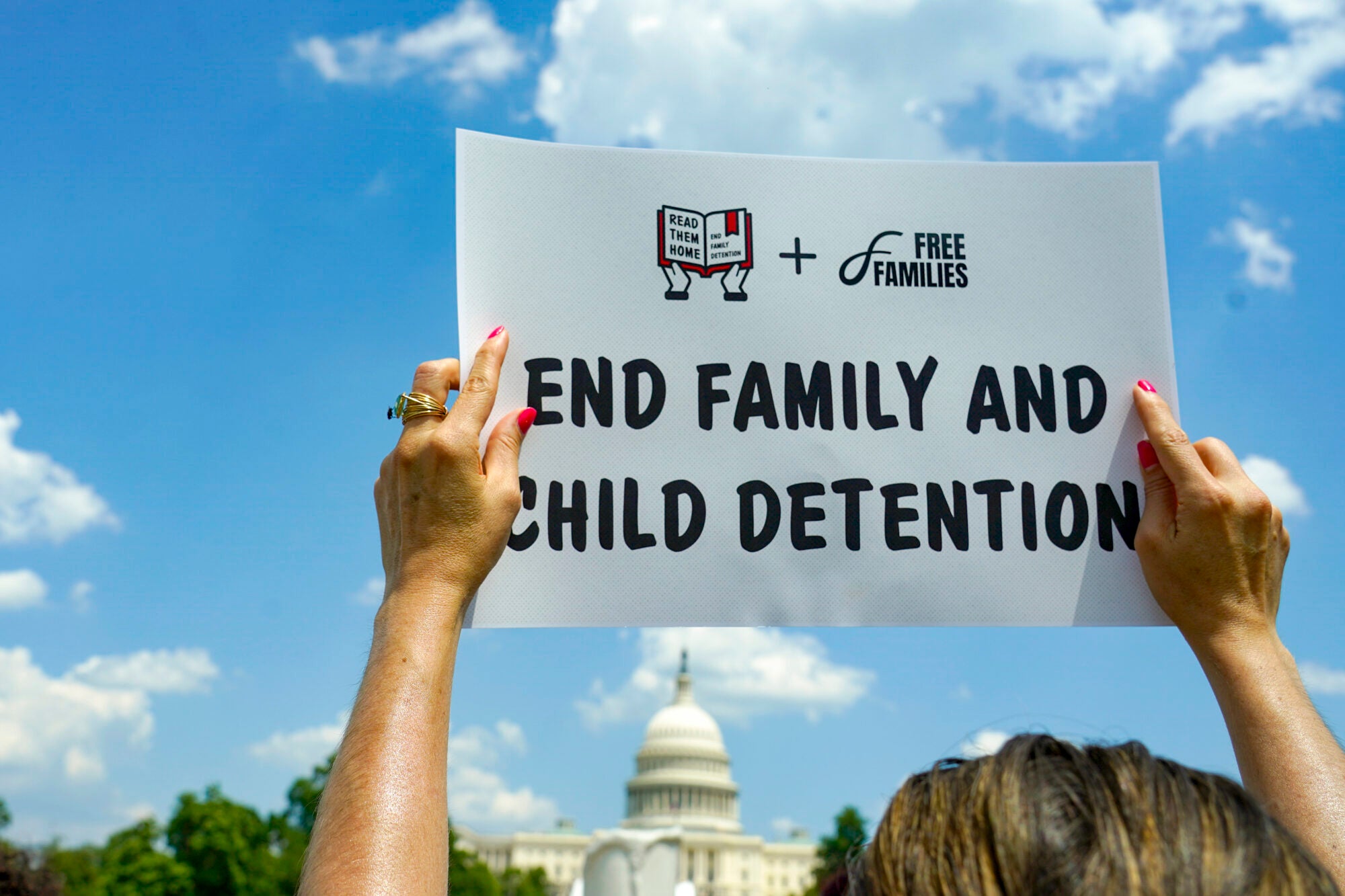
Note: The National Center for Youth Law (NCYL) and co-counsel filed Flores v. Reno in 1985. The case was settled in 1997 and remains under the supervision of U.S. District Judge Dolly M. Gee in the Central District of California. As such, NCYL and co-counsel have been monitoring the Settlement’s enforcement and have filed numerous motions in response to the government’s failure to live up to its terms. This piece was informed by these court filings.
Project Director, Early Development & Disability
Senior Policy Analyst, Education Policy