Chicago Bilingual FINAL
Abstract
Chicago Public Schools (CPS) is in the midst of a teacher shortage crisis. At the same time, the district is looking for ways to increase the racial and linguistic diversity of the educator workforce. A new bilingual teacher residency program is attempting to help close these gaps and ease current shortages by recruiting from within and tapping paraeducators who show promise and interest in becoming licensed teachers. This paper explores how CPS designed and implemented the program in partnership with National Louis University and the National Center for Teacher Residencies.
Acknowledgments
We are grateful for the participation of faculty, administrators, and leaders from Chicago Public Schools, the National Center for Teacher Residencies, and National Louis University’s National College of Education: Elizabeth Allen, Tamara Azar, Felicia Butts, Christine Brennan Davis, Theresa DeCicco, Benjamin Felton, Olga Govea, Shaunti Knauth, Janet Lorch, Liza Mozer, Robert Muller, Sandra Salas, Scott Sullivan, and Kavita Venkatesh. A special thank you to the bilingual teacher residents who participated in interviews and shared their experiences in the program. Thanks to Rebecca Vonderlack-Navarro and Erika Méndez for helpful feedback and context. We appreciate our New America colleagues Elena Silva, Melissa Tooley, and Sabrina Detlef for their critical feedback and edits, as well as Riker Pasterkiewicz, Julie Brosnan, Maria Elkin and Joe Wilkes for their graphics and communication support. New America’s PreK–12 team is generously supported by the Bill & Melinda Gates Foundation, the Heising-Simons Foundation, the Hewlett Foundation, the W. K. Kellogg Foundation, the McKnight Foundation, and the W. Clement and Jessie V. Stone Foundation. The views expressed in this report are those of the authors and do not necessarily reflect the views of these foundations.
Downloads
Introduction
Illinois is facing teacher shortages across the state, but these shortages are most pronounced in Chicago, the largest district in the state and the third largest school district in the country. A 2018 report by the Illinois State Board of Education (ISBE) notes that 40 percent of the state’s teacher vacancies are in Chicago Public Schools (CPS), highlighting the district’s need for a variety of approaches to address this challenge. At the start of the 2019 school year, CPS had an overall vacancy rate of just over 3 percent (669 positions), including 64 vacant bilingual teaching positions. At the same time, CPS is trying to address a racial and linguistic mismatch between students and teachers. While the district has made strides in closing these staffing gaps, it is still in need of innovative programs to help attract new teachers to the profession and to the school system.
A new bilingual teacher residency program is attempting to help close these gaps and ease current shortages.
In the summer of 2018, with support from the National Center for Teacher Residencies (NCTR), CPS launched this teacher residency program in partnership with National Louis University (NLU) to both help address current shortages in bilingual elementary and early childhood teachers and increase the diversity of its teacher workforce.1 As Felicia Butts, director of teacher residencies at CPS, shared with us, the program is designed to supply more bilingual teachers to develop and prepare teachers who share the experiences and backgrounds of students but also to serve the needs of English learners,2 who benefit from bilingual programs that help them maintain their home languages and that foster their English language development and academic growth.3
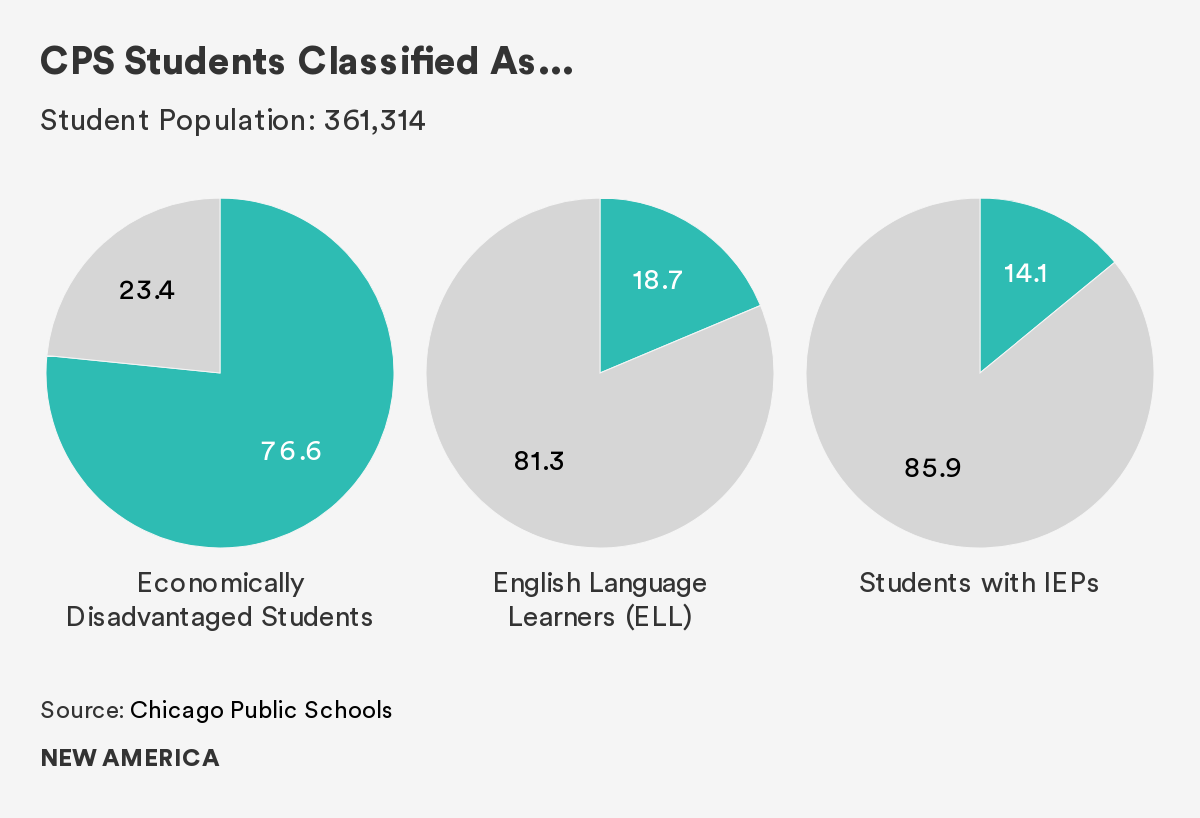
Nearly one in five students in CPS is an EL and teachers that speak Spanish are most in need for bilingual programs across the district. In addition, the city’s schools predominantly educate students of color, with Latinx students making up almost half of the student population (46.7 percent) and African American students representing nearly 37 percent of enrollment. By contrast, 50 percent of teachers are white, while 21 percent of teachers are Latinx and 21 percent of teachers are African American.
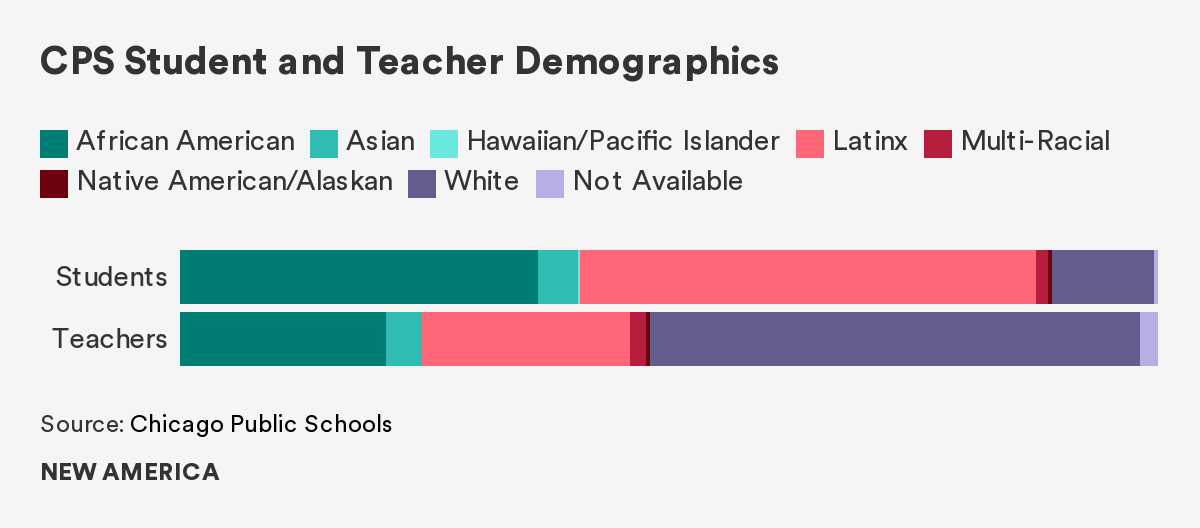
Chicago’s bilingual teacher residency program is helping fill the need for more linguistically and racially diverse teachers by recruiting from within and tapping paraeducators4 who show promise and interest in becoming licensed teachers. Similar to national trends5, the paraeducator workforce in CPS more closely matches the demographics of the student population. The program model mirrors efforts across the country to develop and prepare non-certified school staff (e.g., paraeducators, office administrators, bus drivers) to earn their teacher credential.
Often called Grow Your Own (GYO), these programs are partnerships between educator preparation programs, school districts, and community organizations that recruit and prepare local community members to teach in their communities.6 GYO programs take different forms7, but are typically designed to meet local workforce needs and to remove common barriers to earning a teaching degree for non-traditional candidates.8 GYO programs have a long history in Illinois9 and began as a grassroots effort in Chicago’s Logan Square neighborhood to prepare bilingual community members, including parents, to become teachers for the local schools.10
Indeed, the city has been at the forefront of innovations to help attract and prepare teachers to work in urban settings. The first urban teacher residency program was started in Chicago in 2001 to help place well-prepared teachers in struggling schools, and established the foundational elements that are present in the majority of urban teacher residencies today.11 Residencies provide teacher candidates with the opportunity to get hands-on experience and mentorship by working in a classroom alongside a more experienced teacher before they take on responsibility for leading their own classroom. This approach to teacher preparation typically lasts for an entire school year and is paired with coursework that will result in a graduate degree in education and a teaching license.12 Part of this model’s appeal is that the needs of the school district are central to the residency design and implementation process, which requires preparation programs to tailor content and instruction to meet those needs. Residencies can be designed to offer comprehensive supports to encourage program persistence, completion, and retention.13 Moreover, residencies, in general, tend to attract a higher percentage of racially diverse candidates. Across the 36 residency programs supported by NCTR, over 50 percent of residents are people of color14 compared to 25 percent of individuals enrolled in a traditional teacher preparation program.15
Chicago’s bilingual teacher residency program is a promising example of how school districts are leveraging partnerships with teacher education programs to recruit, prepare, and retain bilingual teacher talent from within the district and local community. As more districts begin experimenting with new approaches to developing teacher talent, they can look to Chicago and other cities on how residency programs can be designed to meet local needs and to provide residents with layers of support to help them feel well-prepared to take their spot at the head of the classroom.
Factors Influencing the Teacher Shortage
The current teacher shortages in Chicago are in part influenced by state policy and district-level initiatives that have raised requirements for teachers and by overall declines in teacher preparation program enrollment. First, Illinois has a bilingual mandate that specifies that any school enrolling more than 20 EL students who speak the same language must offer a bilingual education program.16 In 2009, this mandate was expanded to include state-funded pre-K programs—a shift that had significant implications for the early educator workforce. As reported by New America in 2012, pre-K teachers working in state-funded programs must hold a bachelor's degree and an early childhood teaching certificate. Those who work in an ESL (English as a second language) or bilingual program must also have those credentials.17
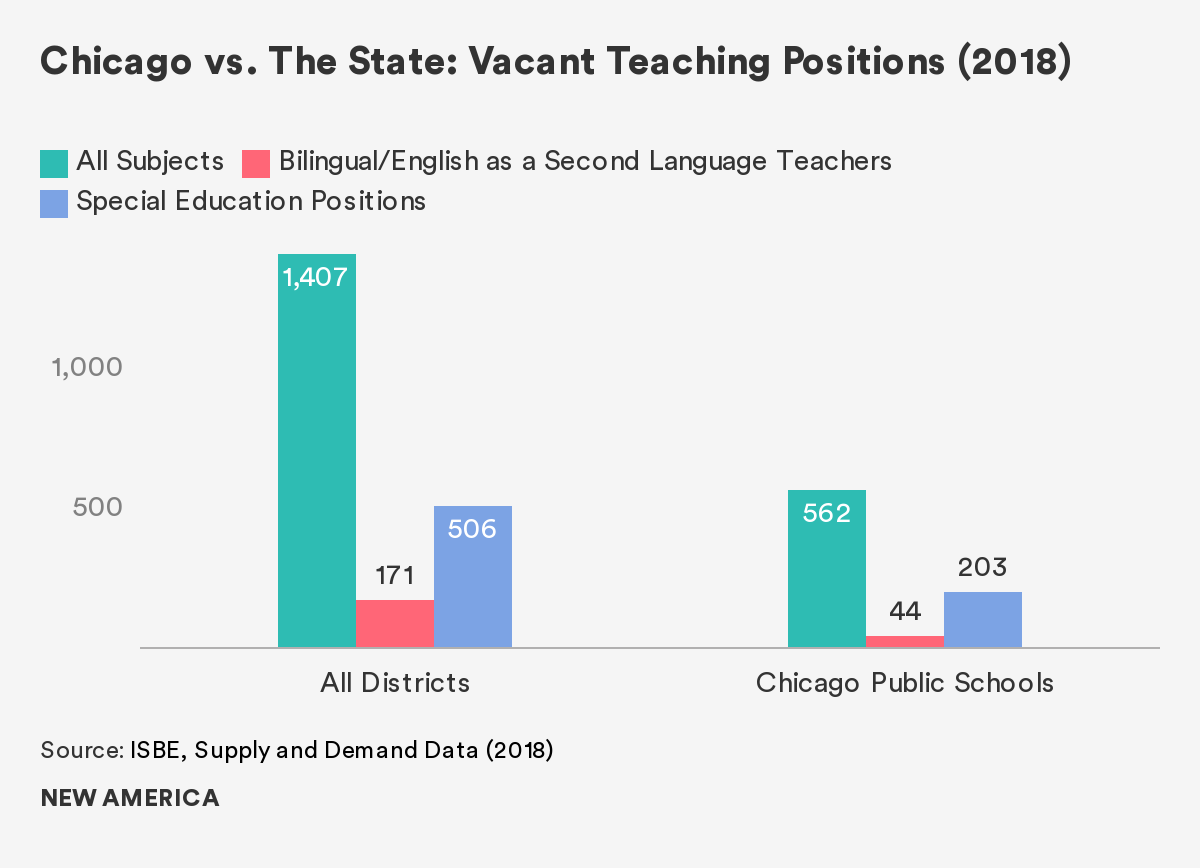
In 2018, the city launched an ambitious plan to provide universal pre-K to all four-year-olds in the city by 2021.18 To reach this goal, an estimated 1,500 additional teachers will be needed across both public schools and community-based organizations. Rebecca Vonderlack-Navarro, manager of education research and policy at the Latino Policy Forum, told us that 400 of these teachers will need a bilingual/ESL endorsement. CPS alone will need to add 500 pre-K classrooms, and recruit and hire the teachers to lead those classrooms.19 Currently, just over half of teacher preparation programs in the state offer a bilingual endorsement and around one-third of programs offer both a bilingual endorsement and early childhood education certification (birth to grade 2).
State testing requirements have also complicated state and district efforts to increase the racial and linguistic diversity of the teacher workforce. State-level data revealed disproportionate outcomes on the basic skills exam (known as the Test of Academic Proficiency or TAP) with 35 percent of white candidates, 14 percent of Latinx, and 12 percent of African American candidates receiving a passing score.20 In August 2019, Illinois Governor J. B. Pritzker signed legislation eliminating the state’s basic skills exam as a requirement for teacher licensure—a big win for advocates who had long argued that the TAP served as a barrier for teacher candidates of color.21 By removing this barrier, the state hopes to ease a long-standing teacher shortage and increase the diversity of the educator workforce.
This legislative change will also have an impact on the bilingual residency program: This year, one-third of CPS teacher residents were provisionally accepted based on the expectation that the basic skills test requirement would be eliminated. This marked a big change from the year prior, when residents were not given this opportunity and could only participate if they passed the TAP (or had an equivalent passing score on the ACT or SAT). Several residents from the 2018 cohort characterized the basic skills test as a barrier that kept prospective candidates out of the program.
Teacher education programs across Illinois have also seen sharp declines in enrollment and completion. According to the ISBE, there was a 53 percent decrease in teacher candidate enrollment and completion between 2010 to 2016.22 Other state-level data indicate that the pipeline of diverse teacher candidates is constricted. A 2013 study by the Illinois Education Research Consortium tracked two cohorts of high school students through college and into the workforce to examine trends in the pipeline.23 First, the study revealed that initial interest in becoming a teacher varied, with 10.5 percent of white, 6.5 percent of Latinx, and 5 percent of African American high school students aspiring to major in education in college. As students progressed through the pipeline, large numbers fell out and in the end the percentage of students who actually earned teacher licensure was quite small. Over 4 percent (6,104) of white students went on to earn their certification and were hired as full time teachers, compared to 1.5 percent (356) of Latinx students, and less than 1 percent (241) of African American students.24
These trends are also part of why district leaders see teacher residencies as one promising “lever to change the diversity and the demographics of the incoming teachers,” as Benjamin Felton, executive director of teacher recruitment and equity strategy at CPS, put it.25 And early evidence shows that the strategy is working: A full 95 percent of elementary education bilingual residents are people of color, as are 100 percent of the early childhood bilingual residents.
Citations
- The residency program also includes a track for early childhood special education teachers who will teach in English-speaking classrooms. Special education is the biggest shortage area in Chicago Public Schools, with 284 vacant positions at the start of the 2019 school year.
- Interview with authors, Chicago, July 17, 2019.
- Sandra A. Alvear, “The Additive Advantage and Bilingual Programs in a Large Urban District,” American Educational Research Journal 56, no 2 (2019): 477–513; Ilana M. Umansky and Sean F. Reardon, “Reclassification Patterns Among Latino English Learner Students in Bilingual, Dual Immersion, and English Immersion Classrooms,” American Educational Research Journal 51, no. 5 (2014): 879–912; and Rachel A. Valentino and Sean F. Reardon, “Effectiveness of Four Instructional Programs Designed to Serve English Learners: Variation by Ethnicity and Initial English Proficiency,” Educational Evaluation and Policy Analysis 37, no. 4 (2015): 612–637.
- Paraeducators (also known as paraprofessionals, teaching assistants, instructional aides) usually support instruction in special education, early education, and/or bilingual classrooms. Their responsibilities often include providing one-on-one tutoring, assisting with classroom management, instructing small groups of students, and translating between students, students’ families, and the lead teacher.
- Conor P. Williams, Amaya Garcia, Kaylan Connally, Shayna Cook and Kim Dancy, Multilingual Paraprofessionals: An Untapped Resource for Supporting American Pluralism (Washington, DC: New America, 2016), source
- New America, Grow Your Own Programs for Bilingual Educators: Essential Policies and Practices (Washington, DC: New America, 2019), source
- Angela Valenzuela, Grow Your Own Educator Programs: A Review of the Literature with an Emphasis on Equity-based Approaches (San Antonio, TX: Intercultural Development Research Association, 2017), source
- Conra Gist, Margarita Bianco, and Marvin Lynn, “Examining Grow Your Own Programs Across the Teacher Development Continuum: Mining Research on Teachers of Color and Nontraditional Educator Pipelines,” Journal of Teacher Education 70, no. 1 (2019): 13–25.
- Today, GYO programs receive funding from the state legislature and are overseen by the organization GYO Illinois. Chicago’s residency program is not part of the statewide GYO program. For more see: Kate Van Winkle, “Grow Your Own IL – Supporting the Teachers Our Students and Schools Need,” EdCentral (blog) New America, April 4, 2019 source; Amy Perona, Robin LaSota, and Lynne Haeffele, Illinois Grow Your Own Teacher Education Initiative 2014 Policy and Program Recommendations (Normal , IL: Illinois State University, Center for the Study of Education Policy, 2015) source
- Elizabeth A. Skinner, “Project "Nueva Generacion" and Grow Your Own Teachers: Transforming Schools and Teacher Education from the Inside Out,” Teacher Education Quarterly 37, no. 3 (2010): 155–167.
- Roneeta Guha, Maria E. Hyler, and Linda Darling Hammond, "The Power and Potential of Teacher Residencies," Phi Delta Kappan 98, no. 8 (2017): 31-37, source; Tim Silva, Allison McKie, Virginia Knechtel, Philip Gleason, and Libby Makowsky, Teaching Residency Programs: A Multisite Look at a New Model to Prepare Teachers for High-Need Schools (Washington, DC: National Center for Education Evaluation and Regional Assistance, Institute of Education Sciences, U.S. Department of Education, 2014), source
- National Center for Teacher Residencies (website), “About: The Residency Model,” source
- Amaya Garcia, Building a Bilingual Teacher Pipeline: Bilingual Teacher Fellows at Highline Public Schools (Washington, DC: New America, 2017), source
- Who We Are (Chicago, IL: National Center for Teacher Residencies, 2018), source
- U.S. Department of Education, The State of Racial Diversity in the Educator Workforce (Washington, DC: Office of Planning, Evaluation and Policy Development, 2016), source
- Illinois General Assembly, School Code 105 ICLS 5, Article 14C. Transitional Bilingual Education, source
- Maggie Severns, Starting Early with English Language Learners: Lessons from Illinois (Washington, DC: New America, 2012), source
- Chicago’s Roadmap for Implementing Universal Pre-K: A Plan for Investment in Chicago’s Early Learning System (Chicago: City of Chicago, March 2019), source
- Chicago’s Roadmap.
- Illinois State Board of Education, “Illinois Licensure Testing System Best Attempt Pass Rate by Test of Academic Proficiency Subtest January 1, 2019 and March 31, 2019,” source
- Yana Kunichoff, “Illinois Says Goodbye to the Basic Skills Test, Long a Barrier for Teacher Candidates of Color,” Chalkbeat, August 8, 2019,source
- Teach Illinois: Strong Teachers, Strong Classrooms: Policy Solutions to Alleviate Teacher Shortages in Illinois (Springfield: Illinois State Board of Education, September 2018), source
- Bradford R. White, Karen J. DeAngelis, and Eric J. Lichtenberger, The Student Has Become the Teacher: Tracking the Racial Diversity and Academic Composition of the Teacher Supply Pipeline (Edwardsville: Illinois Education Research Council at Southern Illinois University Edwardsville, 2013), source
- These data include all students who went on to earn a teaching certificate, regardless of whether they indicated an interest in becoming a teacher previously. The report notes on page 15 that “students who aspired to teach while in high school became IPS teachers at nearly seven times the rate (13.1%) of those who did not do so (1.9%).”
- Interview with authors, Chicago, July 17, 2019.
A Residency Program that Fits the Needs of the District
Program Features
The bilingual residency program was launched as a small pilot in 2018, with a cohort of 11 residents working towards their elementary education license and bilingual endorsement. In 2019, the program was expanded to include new tracks for bilingual early childhood education and early childhood special education. Currently, all of the bilingual residents are being prepared to work in Spanish-English bilingual programs, as that is the greatest area of need in CPS.
The program is designed to provide a one-year residency working alongside mentor teachers while participants simultaneously take courses at NLU to earn their master of arts in teaching (MAT) in either early childhood education (birth to grade 2) or elementary education (grades 1–6), as well as their Professional Educator License (PEL) which is necessary to teach in the state. Upon successful completion of the first residency year, candidates are eligible to work as full-time teachers in CPS as they continue to take the classes necessary to receive an ESL and bilingual endorsement. All teacher residents are required to have a bachelor's degree to be eligible for the program, a 3.0 undergraduate GPA average, a passing grade on a Spanish language proficiency exam, and until recently, pass a basic skills test.1
During the first year of the program, candidates take summer courses five days a week at NLU’s downtown Loop campus as they wait for a final school site placement and CPS mentor teacher. Once the school year starts, residents work in their CPS classrooms four days a week (M–Th) and take classes at NLU on Friday. They also receive ongoing professional development from CPS and work closely with a university faculty supervisor from NLU who teaches the graduate courses and also observes residents in the field. Each resident receives discounted tuition at NLU and a $35,000 salary from CPS to help cover their cost of living. Of this, $15,000 is provided as a zero-interest loan which will be paid back to the district incrementally over the course of three years. “At the very basic level, it's just a part of us trying to build some sustainability for the program model,” said Butts, who added, “and we can then reinvest those dollars to support residents who come in the future.”
In the second year, program graduates take five additional courses with their cohort with the goal of earning their ESL/bilingual endorsement before the start of the next school year. However, two of these courses are offered online and three of these courses follow a blended model that combines in-person meetings with online components. This blended design is due in part to the preferences of the residents, who stated emphatically that they preferred face-to-face instruction. As one resident reflected, a key strength of the courses were in-class discussions that helped enhance learning. “Even though we are all part of the bilingual residency, we all come from different perspectives and different points of view [based] on our own experiences,” she said. “And so I learned from their perspective and I was able to share mine. I wasn’t afraid to ask questions. I wasn’t afraid to share my opinion because I knew it was going to be respected and open a dialogue. Our professors allowed that to happen and we were able to learn from each other.”2 This type of dialogue is simply not possible through an online format, said another resident.
The program design was the result of a collaboration between CPS, NLU, and NCTR, which received a $300,000, 18-month grant from the Chicago Community Trust for consulting services and technical assistance for the design and launch of the program. NCTR Program Director Christine Brennan Davis said NCTR assisted in three key areas:3
- Partnership and program sustainability, which included clearly defining roles and responsibilities of each partner, helping to formalize the partnership through the creation of a memorandum of understanding, providing financial modeling, and helping to map out a theory of change for the residency.
- Recruitment and selection, which included revamping a school training site and mentor recruitment and selection. NCTR helped CPS create an application process for sites, which included conducting visits to those schools to observe prospective mentor teachers and interview principals.
- Aligning coursework with clinical experience by supporting NLU and CPS to ensure that coursework is aligned with what residents are experiencing in the classroom. This included helping CPS and NLU map out co-teaching models that allow for a gradual increase of teaching responsibilities for residents and mid- and end-of-year surveys to provide implementation feedback.
Resident Recruitment, Selection, and Support
When the pilot residency program launched in 2018, a majority of the cohort was made up of current employees of CPS (as are a majority of residents in the 2019 cohort). Many worked as paraeducators with experience supporting classroom instruction and so were ideal candidates. As Felton explained, “We think that the person who has been an excellent classroom assistant for the past six years is a really good bet to be an effective teacher.” Since the residency program is housed in the talent division at CPS, program recruiters have access to a wealth of data that allows them to target prospective candidates. For example, they can pull together a list of current non-certified staff who have a bachelor's degree and reach out with information about the program.
When it came to recruiting prospective participants to this program, Butts and her team were attentive to the question of how to build an equitable and accessible selection process. She said, “We put a lot of thought and design into the interview process for residents, [as well as] how to build a budget that is both sustainable and also helps to break down [financial] barriers for program entry.” To that end, the program has built-in funding support for testing, licensure, and registration costs and emergency funds to help residents who may need support purchasing books or paying their tuition.
The teacher residency program in CPS offers candidates a high level of guidance and assistance navigating a very bureaucratic system. “I think one of the key levers … is the relationship between the recruiter and the resident. We are supporting them through everything. First, you give us your transcripts, and then we support you to take all the tests that you need. And then we support you with matriculation into the university,” said Felton. One bilingual teacher resident told us that the support offered by CPS was part of what made the program attractive. She compared the residency program with an online master’s in education program and realized that she would get more benefit from “partnering up with CPS” than doing it on her own. She noted that the residency would allow her to earn her degree in a year and put her on a faster track to increasing her salary than if she went through a traditional program that would take more time to complete.4
Citations
- The basic skills exam was a requirement for the 2018 cohort and for the 2019 when it initially applied. However, the requirement will be waived for future applicants due to the recent elimination of the basic skills test requirement in Illinois.
- Phone interview with authors, August 7, 2019.
- Phone interview with Roxanne Garza, August 2, 2019.
- Interview with authors, Chicago, July 17, 2019.
A Vision of Residency Programs: Collaboration, Context and Strong Teaching
National Louis University’s National College of Education (NCE) provides a range of pathways to teacher licensure and has a growing portfolio of residency programs in partnership with districts across Illinois. Its vision for residency programs includes three components: 1) context-specific design that responds to the characteristics of local candidates, districts, and communities; 2) core practices that ensure program curriculum and field experiences are aligned with high-leverage teaching practices; and 3) collaborative partnerships with districts that prioritize identifying core practices and systems of communication and feedback to program participants.
Collaborating to Support Student Enrollment
The collaborative partnership between NLU and CPS includes clearly defined roles, and this is particularly true when it comes to admission to the program. This is important because residents have to go through many steps, from filling out an interest form and submitting their college transcripts, to interviewing for a placement, being paired with a mentor, taking tests, applying to the university, and more.
Once candidates make it through the screening and interview process at CPS, they are paired with an enrollment specialist at NLU who assists them with the university application process. CPS recruiters and the enrollment staff at NLU work very closely to ensure they are providing residents with consistent information and directing their questions to the appropriate person. To that end, they hold regular meetings throughout the recruitment process and copy each other on email communication with residents to ensure they are on the same page.
Sandra Salas, enrollment specialist at NLU, helps enroll students into all of NLU’s graduate teacher education programs, but over the past two years has focused more of her time on teacher residents. She assists candidates to ensure they have all of the documentation needed for acceptance into the program (e.g., transcripts, testing requirements) and easing any concerns. Some residents had previously tried to enter a graduate level education program but were unsuccessful due to testing requirements and language barriers. “A lot of them feel like this is their one and only chance, which adds a level of stress and anxiety,” said Salas.1 And this is why having sufficient designated support personnel is so critical to the success of these programs. Additionally, Salas noted that the majority of support staff are Latinx and speak Spanish, which helps students feel more comfortable and empowered to succeed in the program.
As one resident shared, she was initially nervous about participating in the program and being able to handle it all, but she talked with others who had been through it and “they gave me a lot of reassurance that the school was giving them the support they needed, and that the professors were understanding, and that the experience they got working in the classroom helped them a lot to put whatever they were doing in the university into practice.”2
Grounding Coursework in Context
Janet Lorch, assistant professor and residency coordinator at NLU, teaches the Teaching and Learning in Context summer course, which is one of the first classes that residents take. During one class session, she led a group of 20 teacher residents in an activity centered around how to use an asset-based approach when working with students. Residents engaged in several small-group activities focused on strategies for highlighting the strengths that students bring into the classroom. They talked through how to share their own cultures and ideas for learning about the cultures and needs of students. Lorch talked about how the predominant narrative around students of color and English learner students has largely focused on deficits and why it is important to turn that paradigm on its head.
This exemplifies the focus of NLU’s residency programs on making coursework context-specific so that teachers are armed with the skills and knowledge necessary to be successful in the school community in which they will be working. Based on the work of researchers Kavita Kapida Matsko and Karen Hammerness in CPS, this approach provides aspiring teachers opportunities to build their knowledge of how “classroom, school, community, district, and federal contexts” intersect and influence teacher practice and student learning.3 As part of their initial preparation over the summer, each resident plans, researches, and goes on a community walk to learn more about the neighborhoods where their students live and the assets and resources within those communities. As one former resident reflected,
prior to starting the community walk, I was opposed to the idea and believed that it was arbitrary to walk in the community because I knew it was a neighborhood that lives in high-poverty…and because I grew up in Chicago, I only saw this area as being [a place] where people should not travel. However, as we began walking around the neighborhood…I became more willing to participate. After the community walk, I was inspired for the first day of school and ready to immerse [in the] rich culture within the community.4
These community walks are also part of an approach to family and community engagement that draws on the work of teacher education researcher Ken Zeichner and looks beyond school events, activities, and parent/teacher conferences to what is going on in a child’s daily life.5 Beyond helping residents get a strong sense of what happens outside the school walls, NLU faculty supervisors also spend time observing residents in their classrooms as they work alongside their mentor teachers. Theresa DeCicco serves a dual role in the program as both a course instructor and faculty supervisor for the residents, and as one resident shared with us, “[Theresa] was a huge asset, because not only was she our professor and our [supervisor], but she also previously worked with CPS so she understood some of the dynamics and some of the policies that we were dealing with. I think having that support helped us immensely.”6
The presence of faculty in schools has helped to shed light on the disconnect that can happen between what residents are being taught in their courses and the practices they are using in the classroom. Lorch told us that they “discovered challenges last year, that while maybe they were learning the SIOP [EL instructional] model, they weren’t doing any of that in their schools. We can't tell the school to do it differently—we can nudge a little bit, try to do some PD—but we can help the residents come to terms with how they can do the best they can with what they have.”7
Both faculty supervisors and CPS staff observed and heard from mentor teachers needing additional support around best practices for how to coach their residents. In response to that need, this year NLU developed a resident field coach position that will be working directly with mentor teachers on how to give constructive feedback to residents, including in the moment.8
Citations
- Phone interview with authors, July 26, 2019.
- Interview with authors, Chicago, July 17, 2019.
- Kavita Kapadia Matsko and Karen Hammerness, “Unpacking the “Urban” in Urban Teacher Education: Making a Case for Context-Specific Preparation,” Journal of Teacher Education 65 (2014): 128–144.
- This quote was shared in a presentation by Janet Lorch and Elizabeth Allen during our visit to National Louis University’s National College of Education on July 17, 2019 and used with their permission.
- Ken Zeichner, Michael Bowman, Lorena Guillen, and Kate Napolitan, “Engaging and Working in Solidarity with Local Communities in Preparing the Teachers of Their Children,” Journal of Teacher Education 67 (2016): 277–290.
- Phone interview with authors, August 7, 2019.
- Interview with authors, Chicago, July 17, 2019.
- Interview with authors, Chicago, July 17, 2019.
Key Takeaways
While the residency program is still in its early stages, there are three insights that can be gleaned from the first two years of implementation in the areas of program recruitment, administration, and partnerships.
Creative Outreach is Key to Recruitment
While CPS is committed to using the residency program as a tool for developing talent from within its own school buildings, staff in the talent office sought to cast a wider net when recruiting for the 2019 cohort to help engage more individuals from the community. They leveraged social media platforms such as Facebook to create buzz about the program and the strategy worked—20 percent of the enrolled cohort reported having found out about the program on social media. Part of this success was due to hiring a community teacher and communication engagement specialist who Felton characterized as “a genius in marketing [and] telling stories through digital media.” An advertising investment of less than $10,000 helped the district triple its leads and in the end over 300 individuals applied to the program.
Looking forward, the district will continue using social media and also engaging in community outreach. “Sending an email from a computer or having somebody scroll by your ad on Facebook is great. But it's not the same as actually being present in the communities where you'd like to see candidates come to work or from which candidates may come already,” Butts said. To that end CPS will engage in activities such as coffee chats and informational sessions across the south and west sides of the city. These expanded strategies will become even more critical in the future as the district is anticipating that it will need to refocus its recruitment strategy as the supply of paraeducators who have a BA degree dwindles, and so will be looking more to recruiting from within the local community.
Program Operations are a Heavy Lift
CPS is a very large school system with layers of processes to navigate in order to run a successful program (e.g., hiring, benefits, etc.). The residency program has many components that must work together to create a seamless experience for residents, which makes it quite labor intensive for the staff at CPS. Felton described the operation side of the program as a “beast,” given the many moving parts that require attention: resident pay, placement, benefits, and finding and supporting mentor teachers. Given the operational lift, he suggested that other districts who are thinking of starting a residency program have a good plan in place to support running it.
The bureaucratic nature of a large school system can also have implications for aspiring teachers. As the bilingual residency program grows in visibility and reach, the support offered to help candidates navigate the process may also need to deepen. “A special education classroom assistant … [who] has been a part of CPS … is somewhat familiar with the structures. Imagine coming into that system for the first time, and never having [had to] enroll in benefits, or anything at all. And there's just so many moving pieces,” Butts explained.
Partners Should Be Intentional About Ensuring Alignment
National Louis University has deep experience partnering closely with school districts across Illinois to ensure their curricula are aligned with local contexts. But the strength of these partnerships varies, in part due to time and communication. Scott Sullivan, an NLU faculty member who collaborates closely with Janet Lorch to oversee a different residency program with the Academy for Urban School Leadership (AUSL)—a partnership that has spanned 16 years and counting—told us that since candidates spend most of their time as a resident in the PreK–12 classrooms where they will ultimately work, those field experiences often trump the learning in their graduate courses. In response, NLU strives to align its coursework as closely as possible with the district’s teaching and learning approaches through ongoing conversations and collaboration. This fact highlights a tension in designing residency programs that can both meet the needs of a district but also align with any evidence-based best practices taught as part of teachers’ preparation.
To help foster alignment and expectations, program partners have a signed memorandum of understanding that helps clarify the roles and responsibilities of each entity. In addition, they collaborated with NCTR to create a matrix that includes month-by-month expectations for the resident, mentor, and NLU faculty and field supervisors that helps provide a residency structure. It includes practices tied to state standards, evaluation, and coursework connections. For example, in September, residents are expected to learn school routines and begin leading daily classroom routines while also observing how their mentor teachers establish classroom culture. By October, residents and mentors must set up teaching roles and residents are expected to plan and lead at least one lesson in Spanish. And in December, residents should be leading at least two whole-group lessons per week while the mentor teacher plays the role of co-teacher and support. On the curricular side, residents in the early childhood education track are learning about how to model and lead discussions and how to model and lead interactive play. Throughout the fall semester, residents also prepare for the edTPA (one of the tests required for teacher licensure), with a test boot camp in December, so that they are ready to take the exam in April—a strategy that proved effective as all 11 residents in the first cohort passed the exam.
Conclusion
As more states and school districts look to increase the racial and linguistic diversity of their teacher workforce and stem chronic teacher shortages, the need for multiple pathways into the profession will continue to persist. Grow Your Own programs, such as the bilingual residency program in Chicago, are one promising approach to help solve this challenge. From the district’s perspective, investing in its own employees is a smart bet since they already know the myriad benefits and challenges of working in Chicago schools. And while it is too early to analyze program outcomes, research suggests that teachers who are cultivated from local schools and the local community often have high rates of retention in the profession, a promising trend given the disproportionate rates of attrition among teachers of color.1
Chicago Public Schools provides one example of how districts can work with local educator preparation programs to design pathways into teaching that are designed to both meet the unique needs of the district and to provide bilingual teacher candidates with wraparound supports to help them persist and succeed in their professional goals.
Citations
- Desiree Carver-Thomas and Linda Darling-Hammond, Teacher Turnover: Why It Matters and What We Can Do About It (Palo Alto, CA: Learning Policy Institute, 2017), source; Beatriz Chu Clewell and Ana María Villegas, Ahead of the Class A Handbook for Preparing New Teachers from New Sources: Design Lessons from the DeWitt Wallace-Reader's Digest Fund's Pathways to Teaching Careers Initiative (Washington, DC: The Urban Institute, 2001), source; and Kam Fui Lau, Evelyn B. Dandy, and Lorrie Hoffman, “The Pathways Program: A Model for Increasing the Number of Teachers of Color” Teacher Education Quarterly 34, no. 3 (2007): 27–40, source
More About the Authors
Amaya Garcia
Director, PreK-12 Research and Practice