
Table of Contents
- Fueling the Fight for Net Neutrality
- Embracing Ranked-Choice Voting as a Pathway to Pluralism
- Measuring U.S. Drone Use and Misuse
- Fulfilling the Promise of Child Savings Accounts
- Linking the Individual Mandate and Social Responsibility
- Tracking Terrorism in the United States
- Early Education Doesn't End at Pre-K
- Making Higher Education Outcomes Transparent
- Redefining Care Policy
- Using TV "White Spaces" to Create Equitable Internet Access
- Investing in America's Future Thinkers
- Proposing the Public Option
- Creating a Public Interest Technology Sector
- Building a New Practice of Public Problem-Solving
- Expanding Access to High School-Age Youth for High-Quality Apprenticeship Opportunities
- Engaging North Korea
- A Universal 401(k) Plan
- Measuring the Internet for Everyone
- Rethinking Economic Policy
- Documenting the Long Wars
- Ranking Digital Rights
- Future Tense
- Using Fiction to Make Policy More…Realistic
- Pop-Up Magazine
- Developing an MA in Global Security
- Helping Communities Deploy Mesh Networks
- Partnering with Universities
Developing an MA in Global Security
Idea
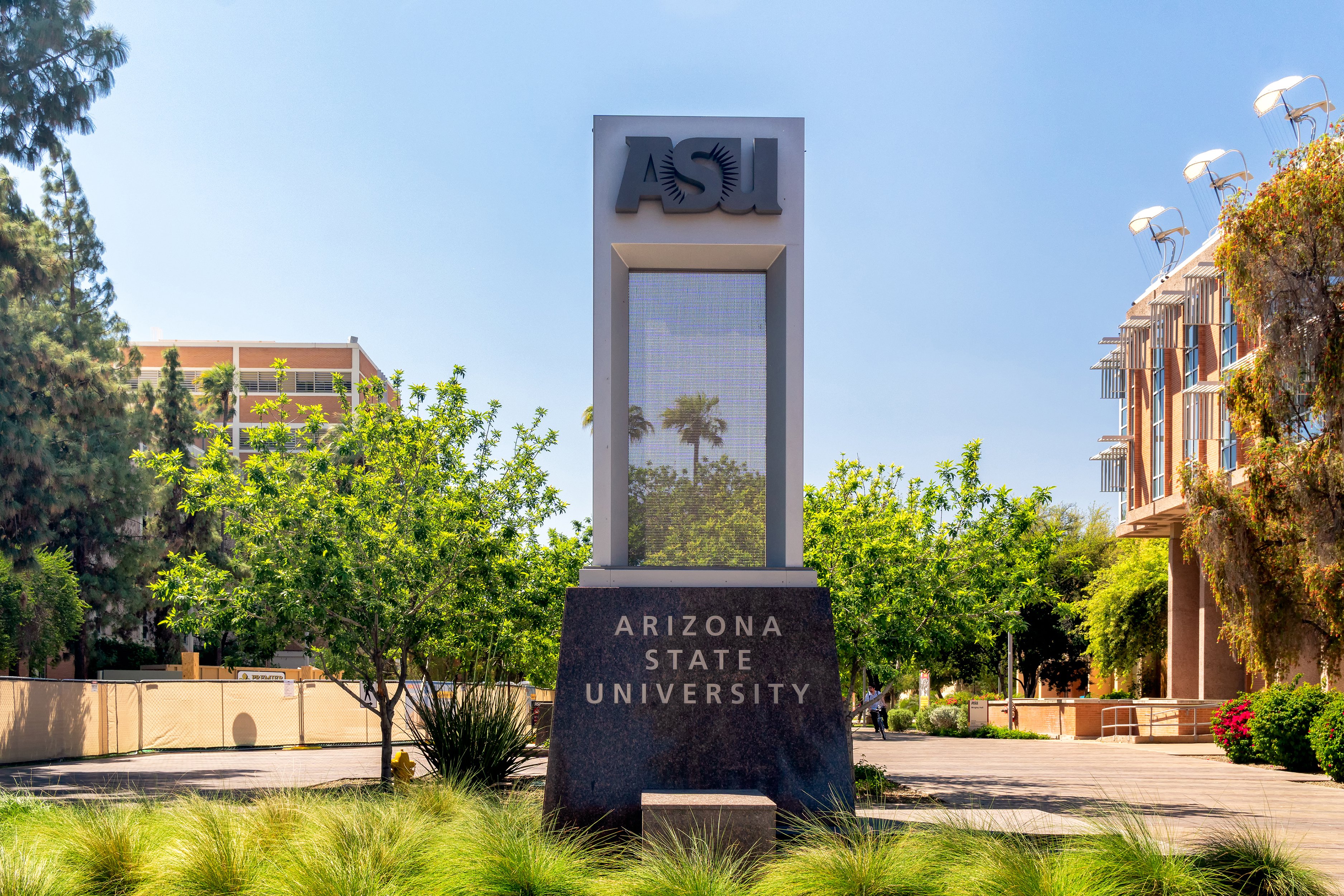
To develop and implement an online interdisciplinary and professional graduate program, New America partnered with the School of Politics and Global Studies at Arizona State University (ASU) to launch the Masters in Global Security (MAGS). The MAGS, which is taught by ASU faculty and New America experts, allows students from all over the world (current and former military, government officials, humanitarian workers, and others) to support their career advancement.
Incubation
The MAGS is a key program of the Center on the Future of War, which was created by ASU and New America in the 2014-2015 academic year (AY) to address urgent conflict and security-related issues through interdisciplinary research, policy-oriented publications, and educational programming. Supported by the Center, the MAGS launched in the 2017-2018 AY as a graduate program within the School of Politics and Global Studies and is now in its third year. Under the program, students have the opportunity to explore the nature of conflict and global security while acquiring tools, skill sets, and insights to influence future policies and programs.
Impact
By August 2019, 34 students had completed the MAGS. All MAGS students are required to complete individual or group capstone projects to receive their degree. This spring, the program organized a capstone project with U.S. Special Operations Command, which included a student briefing in Tampa, Fla. as well as a capstone project with the Crumpton Group, a security/intelligence consultancy. As of fall 2019, the MAGS has 122 students, and the number is expected to grow to 200 students by AY 2020-2021 and 500 in the near future.