California officials have discerned a chilling signal that the
Trump administration may be willing to halt the state’s unique authority to
impose its own vehicle emission rules—a move that could undercut its pioneering
effort to battle climate change.
The threat arose during the confirmation hearing for Scott
Pruitt, Trump’s choice to head the Environmental Protection Agency. Pruitt was
asked by California Democratic Sen. Kamala Harris if he would pledge to
continue the EPA’s decades-long policy of granting California waivers from the
federal Clean Air Act, giving the state the right to set its own more stringent
clean air standards. Pruitt—who as Oklahoma’s attorney general sued the EPA
more than a dozen times—refused to commit to continuing California’s authority,
instead saying he would have to study the issue.
The waivers have been the bedrock on which much of California’s
climate change goals stand. The state’s emissions from passenger cars and light
trucks have been reduced by more than 30 percent since 2009, when California
expanded its use of the air quality waiver to regulate greenhouse gas
emissions.
The ability of the state to chart its own course has brought
California to a place of national and international leadership in combating
climate change, often without the partnership of recalcitrant elected officials
in Washington. In many cases, California’s regulations have become the de facto
federal standards.
Fran Pavley, the recently retired Democratic state senator who
authored most of California’s climate change legislation, said in an interview
that the state would “absolutely not” have been able to achieve the current
greenhouse gas reductions without waivers.
Losing that flexibility under the Trump administration would be
a crushing blow to more than a decade of carefully crafted policies, which
stitched together across multiple state and local agencies, aim to reduce
California’s carbon footprint and dramatically reshape how the state generates
and uses energy.
The clean air waivers also play a critical role in improving
public health across California—and although they’ve helped clean pollutants
from the air, large parts of the state still have air quality that violates
federal ozone thresholds.
“There is no way that the 10 million Californians living in
areas with smoggy air will be able to breathe healthy air without the state
keeping (waiver) authority,” said Bill Magavern, policy director for the
Coalition for Clean air.
Since 1967, California has requested more than 100 waivers on an
array of air quality issues, ranging from requiring more advanced engine
diagnostic information on heavy-duty trucks to emissions standards for
forklifts. All but one was approved. That pushback came as George W. Bush was
leaving office, and the state’s application was granted in Barack Obama’s first
term.
Dave Clegern, a spokesman for the California Air Resources
Board, said the state does not have any waiver requests pending—and that
emission standards for passenger cars and light trucks are in place until 2025.
The Trump administration’s intentions are not yet
clear—President Trump has described himself as an environmentalist, but also
once tweeted that global warming was a Chinese hoax to stymie competition
from U.S. manufacturers. Should a Pruitt-run EPA elect not to grant waivers to
California, the state would likely mount a legal challenge bolstered by 50
years of precedent.
“I think it would be a heavy lift to say no now,” said David
Pettit, a senior attorney in the Natural Resources Defense Council’s Southern
California Air Program. “The EPA can’t do something that is arbitrary or
capricious. If you show a judge a 1,000-page administrative record, that judge
is going to ask EPA what has changed.”
He said that because California’s right to seek an EPA waiver is
written into statute, the “nightmare scenario” would come into play should
Congress undertake to rewrite the Clean Air Act.
“There have been rumblings,” Pettit said.
But some conservatives, who contend that regulations often
saddle businesses with unfair burdens, welcome the notion of eliminating the
right of states to make their own rules. Former state Assemblyman Tim Donnelly
recently wrote a column for the alt-right Breitbart website supporting
dismantling both the state air board (CARB) and the EPA.
“But now, CARB could be on the ropes for a change,”
Donnelly wrote. “If President Trump’s pick for EPA picks a serious fight with
CARB, this could be the first ray of hope for the long-suffering Americans
living behind enemy lines in the Socialist Republic of California.”
Expect California’s leaders to strike back at any such move.
Since the November election, the state has girded for a fight, bringing aboard
a legal hired gun, former U.S. Attorney General Eric Holder, to look out for
the state’s interests. California’s new attorney general, Xavier Becerra, also
intends to defend state policies from erosion by federal decree.
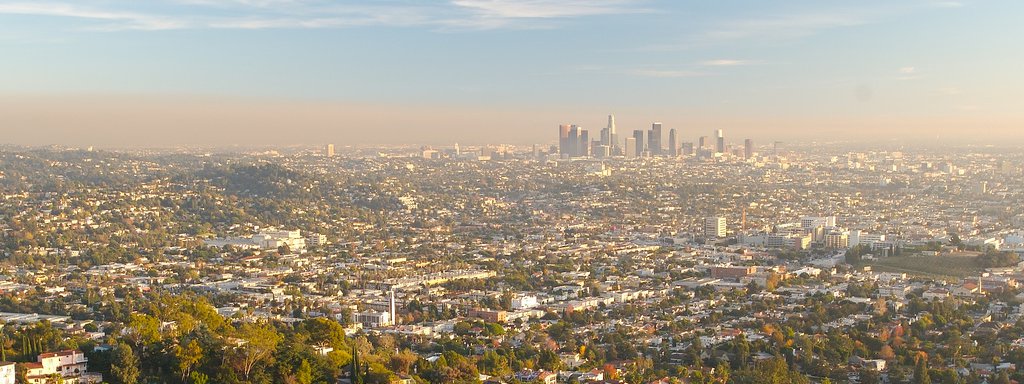
California’s right to set its own clean air standards dates back
to the mid 1960s, when the federal Clean Air Act was written. In acknowledgement
of the state’s smog crisis—when the mountain backdrop of Los Angeles resembled
a brown smudge— California was the only state granted the ability to seek a
waiver from federal regulations so that it could set stricter emission
standards.
“We needed exceptional regulations in order to meet federal
standards,” Clegern said. “We have unique geography, a large population and
millions of vehicles on road of all ages and conditions. The one-size-fits-all
national rule did not get us anywhere.”
In many instances, policies California put in place through
waivers were adopted as national and even international standards. For example,
the state used waivers to mandate the adoption of unleaded gasoline and to
require that vehicles be fitted with catalytic converters.
“An engineer from China told me several years ago, ‘If it
weren’t for California, we wouldn’t have catalytic converters in China,’”
Pavley said.
Pavley was in the delegation that went to Washington in
2008 to negotiate when the EPA issued its only waiver denial. She said that
today California has a target on its back with the Trump administration, but
the battle isn’t just about one state.
“I can’t believe that Americans and other states don’t care
about clean air,” she said.
This article originally appeared at CALMatters.
More About the Authors
Related

The Third Gulf War Is Bringing the AI Cloud Back Down to Earth
New America, Reimagined: Built for What’s Next