Table of Contents
- Introduction
- Chicago: Centering Residents in Neighborhood Development Decisions
- Gainesville: Protecting Historically Black Neighborhoods During Development
- Milwaukee: Youth Organizers Lead the Way on Reforming Public School Safety
- Bushwick: A Community Collaborates on a Zoning and Development Plan
- Colorado: Innovation and Persistence on Paid Leave
Chicago: Centering Residents in Neighborhood Development Decisions
We are grateful for the collaboration and support of Tarsi Dunlop from Local Progress and Alderman Carlos Ramirez-Rosa from Chicago's 35th Ward. The original text on which this case study is based is part of Local Progress’s Dare to Reimagine series and can be accessed here.
Introduction
In 2016, Chicago’s 35th Ward created a Community-Driven Zoning and Development (CDZD)1 process to ensure inclusive, transparent, and democratic decision-making around land use and development. Created collectively by community organizations, local residents, and experts, the CDZD goals and procedures represent over six months of research and community engagement. The process ensures that zoning decisions fully and accurately represent the interests of residents and that the community is fully informed of zoning change requests and their potential impact on the neighborhood.
Under this process, the 35th Ward has held roughly 25 public meetings on proposed zoning developments to date and has green-lighted several development projects. Most recently, the 35th Ward’s CDZD process led to the approval of a Bickerdike Redevelopment Corporation proposal to turn a city-owned parking lot on Emmett Street into a 100-unit, 100 percent affordable housing development in Logan Square,2 which will begin construction in late 2020.3
Prior to the creation of CDZD, communities in Ward 35 had continuously voiced concerns about land use and zoning, indicating that business-as-usual was driving displacement and gentrification. Since 2000, the community has witnessed the displacement of over 19,200 working class and mainly Latinx residents, pushed out by big developers and rising rents. The prevailing sentiment in the community was that developers were using their campaign contributions to influence zoning and land use regulation behind closed doors. These deals facilitated the destruction of the community’s existing affordable housing stock, and led to rampant land speculation that raised housing costs throughout the community.
Rather than having zoning decisions made without them, residents facing displacement desired an inclusive and transparent process that would put their concerns on affordability front and center. They also wanted a system that would allow them to win concessions from developers, prior to a project receiving a green light from the local alderman.
CDZD disrupts business-as-usual by ensuring residents are centered in the development decisions that impact their neighborhoods.
Collaborative Governance
The 35th Ward CDZD process was itself created through a participatory process. Shortly after taking office on a commitment to implement an inclusive, transparent, and democratic zoning review process, Alderman Carlos Ramirez-Rosa convened local community groups, including Logan Square Neighborhood Association, Logan Square Preservation, and affordable housing advocates, to discuss their ideal participatory planning process. This working group studied and discussed existing participatory planning processes throughout North America. After several months of review and discussion, the group finalized a draft process, which was then presented to the community at large for feedback and finally ratification.
The process relies heavily on existing community organizations, referred to as neighbor-led organizations (NLO). The NLOs have deep roots in their communities and decades of organizing experience. These NLOs work to gather community feedback during the earliest stages of zoning review, and the NLOs negotiate directly with zoning change applicants and developers. The NLOs are local community institutions, and help ensure that the process is a success, with consistent participation. Now in its sixth year, the process has become widely understood, standardized, and anticipated by local residents.
Thanks to a proposal from Logan Square Neighborhood Association (LSNA) youth, the 35th Ward CDZD procedures were updated in 2018 to require zoning change applicants to post a large sign detailing the zoning change request on their property. The notice is bilingual, English-Spanish, and includes a rendering of the project, an easy-to-understand description of the project, and information on the upcoming community hearing organized under the CDZD process.
The Chicago City Council, at 50 wards, is one of the largest in the country, with a range of political views represented. The council must vote on all zoning changes, but through a practice known as “aldermanic prerogative,” aldermen have historically deferred to one another on local land use and zoning decisions. This practice has given local aldermen freedom to structure their ward’s process for reviewing zoning changes. While aldermanic prerogative is unique to Chicago, the practice of deferring to local elected officials on legislation solely impacting their district is found in other legislative bodies across the country. This particular effort focused on changing zoning in one ward, a process that is relatively unique in the country.
Today, the process requires developers to provide detailed information and plans on developments (known as a zoning map amendment application). They not only must include renderings and costs, but also seek to minimize incidental costs to residents by providing information on corresponding costs, such as infrastructure stress, increased density, and demand for city services.
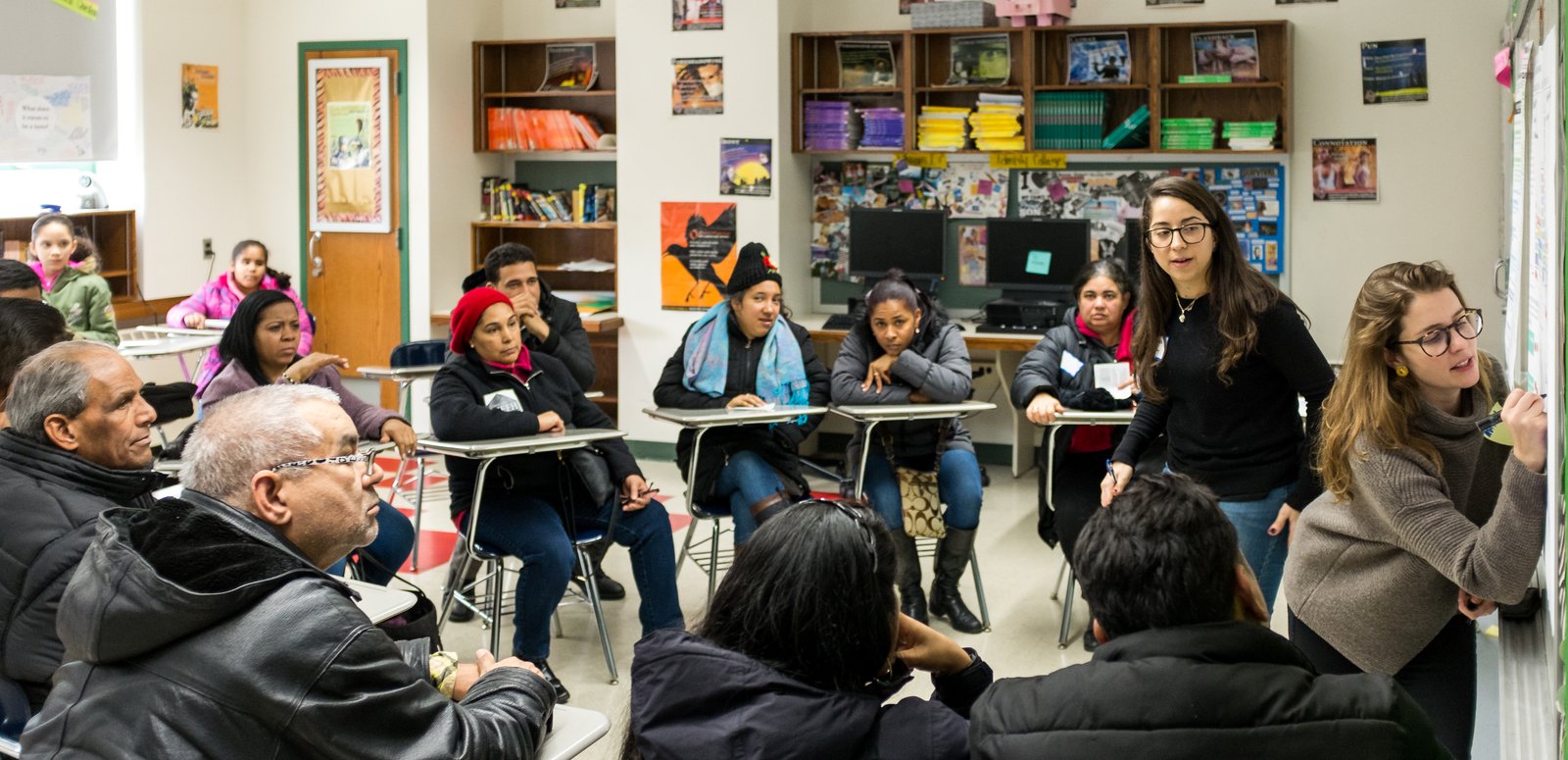
The CDZD process also outlines parameters for holding community meetings to accurately represent residents’ interests and engage community groups that can provide insight and local expertise. After a developer has submitted an application, neighborhood organizations review the application and meet directly with the developers to address questions and concerns. Once the community review process is done, the application then goes to review with a large neighborhood assembly that is advertised at least two weeks in advance, is held within the community, and is bilingual. Larger meetings provide child care services to make them as inclusive as possible and remove barriers for residents to attend.
Conclusion
Community-driven zoning changes that center equity and inclusivity help institutionalize important efforts on issues like increasing the supply of affordable housing. Oftentimes, ambitious commitments such as 100 percent affordability are difficult to impossible to achieve without robust community advocacy and support.
As a result of CDZD, decisions that impact the entire community were no longer made by a connected few behind closed doors. Instead, these decisions occurred in public forums where residents facing displacement and affordable housing advocates felt welcomed and encouraged to participate in the decision-making process. This has led to well-attended and robust meetings, where residents advocate for and win equitable development outcomes.
The process has made clear how important it is for residents to be empowered to make planning decisions and to be given accurate and comprehensive information. Commitment to inclusivity and equity—manifested through language and universal accessibility and other services (e.g., child care at meetings)—must be demonstrated in order to allow people to fully engage in this process. Because every zoning change has its own set of nuanced particulars that are dependent on local contexts, having a standardized process for deciding on these changes helps ensure communities are centered and have buy-in.
The process is founded on a belief that through robust community dialogue and conversation, participatory planning processes can lead to good land use and housing outcomes. While participatory planning processes are often seen as spaces where opposition to new developments and zoning changes thrives, the CDZD process works to educate community participants on good land use and zoning policy. CDZD is also a form of popular education, where residents can deepen their understanding of community development and urbanism. In this way, the community process has helped build support for dense, affordable housing developments that have faced fierce opposition in other communities.