
Building Better Degrees Using Industry Certifications
Acknowledgments
We would like to thank Lumina Foundation for its generous support and to acknowledge the efforts of Holly Zanville, Kelly Porter, and Evelyn Ganzglass, who authored the first phase of this research.
We also thank Prof. Stephen Crawford of the George Washington Institute of Public Policy and Roy Swift of Workcred, who convened the Sub-Baccalaureate Research Network that served as an important early workshop for this topic. Mariam Abdelhamid provided valuable research assistance, and Rob Sentz of Emsi supported us with helpful data and models of earnings premiums from certifications. Finally, alongside the other institutions whose faculty and staff we interviewed, we are particularly grateful to Broward College, Miami Dade College, Alfred State College (SUNY), the Community College of Baltimore County, Lake Area Technical Institute, and Williston State College for their enthusiastic participation in this research. The views expressed in this report are those of its authors and do not necessarily represent the views of Lumina Foundation, its officers, or employees.
Downloads
Introduction
The last place that Michael Coburn expected to find himself when he turned 46 was back in college. He had been there before, studying briefly at Florida Keys Community College after he left the Coast Guard in the early ‘90s, but quickly discovered that the computer skills he had picked up over the years were strong enough to land a job without having to put in years of schooling. Over the next 20 years he had no trouble finding work. Working in information technology for a string of well-known companies, he helped build Chrysler Corporation's first website and the first online shopping portal for Avon cosmetics, and was the webmaster for Bloomingdale’s and a systems engineer for CBS.
When the dot-com bubble burst in 2001, Coburn struggled for the first time ever to find a job suited to his skills. He thought about going back to school but decided instead to earn three valuable IT certifications: Microsoft’s Certified Systems Engineer, Cisco’s Certified Network Professional, and (ISC)2’s Certified Information Security Systems Professional (CISSP). These certifications, plus his ample experience, got him right back to work. Until 2010, that is, when he and his family decided to move back to Florida. As he looked for a job he discovered that many of the positions that matched his experience level also required a bachelor’s degree. He applied anyway, but this time most of his applications went unanswered.
Usually hundreds of dollars each, Michael Coburn's certifications cost him nothing beyond the very reasonable tuition he was already paying at Broward.
The thought of enrolling in a traditional computer science program after all those years working as an IT professional left Coburn cold. But he also felt that without a bachelor’s degree, he would struggle to even get an interview. Luckily, he found a program designed for students like him—people with a lot of experience and work-related credentials, but no degree. Broward College’s Bachelor’s of Applied Science in Information Technology is a competency-based degree program that allowed Coburn to demonstrate his mastery of IT fundamentals and quickly advance to junior standing. Broward awarded him credit for the certifications he had already earned and provided online courses that he could complete at his own pace. He earned an associate degree in May 2018 after just one year of study and will complete his bachelor’s in the summer of 2019. Best of all, he has earned eight more IT certifications since enrolling. Usually hundreds of dollars each, the certifications cost him nothing beyond the very reasonable tuition he was already paying at Broward. Those certifications, in combination with his degree and his experience, will make him a tough candidate to beat in the job market—in South Florida or anywhere else.
The Bachelor’s of Applied Science in IT is one of almost 40 bachelor’s and associate degrees at Broward College that embed industry certifications into the course of study. Programs with embedded certifications allow students to earn two types of credentials: one issued by industry, the other by higher education. The industry certification attests to a set of discrete skills, like network administration, while the degree shows the completion of a broad program of study, including both general and specialized courses.
At a time when innovation in higher education has focused on “unbundling” degrees to make them shorter, faster, and more modularized, embedding certifications is a way of “rebundling” degrees to take advantage of different types of credentials.1 By combining the academic and industry credentials that highly skilled professionals like Coburn accrue through their careers into one program, these new degree designs are particularly well-suited to adult learners with significant work experience and clear career advancement goals.
While Broward is certainly not the only college embedding certifications into its degree programs, relatively little is known about the practice. Which institutions are doing it, in which programs, and to what effect? In 2016, Lumina Foundation conducted the first national survey of institutions aimed at finding out how they use industry certifications. It revealed that many community and technical colleges across the country embed certifications into a number of their certificate and degree programs. The survey also revealed a host of financial, administrative, and practical challenges that make it hard for institutions to scale up the practice beyond a few degree offerings.
Embedding certifications is a way of “rebundling” degrees to take advantage of different types of credentials.
In 2017, New America conducted follow-up research with survey respondents to better understand the opportunities for, and challenges to, embedding certifications into degree programs through a series of in-depth interviews and site visits. We also learned how some institutions were able to overcome challenges through a combination of creative leadership and targeted support from state education and workforce agencies. This paper begins with a review of the research on the use and value of industry certifications. We then summarize the current landscape of embedded certifications as uncovered through Lumina Foundation’s survey. Next, we present the results from our own research, including key similarities and differences among interviewed institutions, followed by an in-depth look at Broward College’s success at embedding industry certifications across a wide range of degree programs. We conclude with some thoughts on next steps for policy development and future research.
Citations
-
The concept of “unbundling” in higher education, which appears to have been coined in 1975 by William Wang of the University of San Diego School of Law, refers to the parceling out of individual services traditionally delivered together at the university, including instruction, credentialing, and career counseling. The concept of “rebundling” is a more recent response to continued discussion of unbundling, coined by Ryan Craig of University Ventures in a 2012 newsletter. See Margaret Andrews, “Foundations of Strategy, Part 3: Technology,” Inside Higher Ed, May 15, 2012, source and Ryan Craig, “The Great Unbundling – Popping Bundles, not Bubbles”, UV Letters, University Ventures, August 15, 2012,
source . For more on contemporary opportunities to “rebundle” degrees, see Jessie Brown and Martin Kurzweil, The Complex Universe of Alternative Postsecondary Credentials and Pathways (Cambridge, MA: American Academy of Arts & Sciences, 2017), 42-3, source
Background
Credentials help individuals communicate their level of education, knowledge, and skills to potential employers or customers. They play an essential role in our increasingly knowledge-based economy, where specific skills and experience are in high demand. They come in many different shapes and sizes, including academic degrees, educational certificates, occupational licenses, and industry or professional certifications. Each type of credential is a little different, but each one is designed to document that an individual has obtained a designated level of knowledge, skill, experience, or ability.
Figure 1: Certifications, Certificates, Licenses
| Certifications | Licenses | Certificates | |
|---|---|---|---|
| Issuer | Industry or professional association, test publisher, or business | Government entity, usually state or local | Usually an educational institution, but also some professional associations |
| Assessment? | Always | Sometimes – may be paired with certification | Rarely – like degrees, earned on completion of a defined curriculum |
| Time-limited? | Usually | Usually | Never |
| Established skill standards? | Always – the basis of the certification exam | Sometimes – usually built on government regulations, not skills standards | Rarely, though expected learning outcomes may be set out |
Certificates, certifications, and licenses are often lumped together into one category reserved for credentials other than the academic degrees. The other commonality among these “nondegree” credentials is that they are usually designed around a specific occupation or discrete set of skills. But the similarities end there. Certificates are designed and awarded by education and training providers, including institutions of higher education, making them most similar to (and the easiest to connect with) degrees. Occupational licenses, by contrast, are awarded by government agencies, are usually time-limited, and often require an examination or proof of experience.
Certifications are also time-limited, include a written, oral, or performance-based assessment, and are designed and awarded outside of higher education by “certification bodies,” including industry associations like CompTIA, private companies like Microsoft, or—crossing over with licenses—by government agencies like the Federal Aviation Administration. The fact that certifications, licenses, and degrees are all awarded by distinct entities is what makes them difficult to combine in a single educational program. As a result, degree and certificate programs are more likely to prepare individuals for certification and licensure exams than to include them as part of the program.
What We Know about Industry Certifications
Research on industry certifications is limited, particularly compared to other types of credentials. In fact, there is no definitive count of how many certifications are on the market today. According to the U.S. Department of Labor’s Certification Finder web application, there are currently more than 5,000 active certifications in use around the United States. National surveys conducted by the U.S. Census Bureau, the Department of Education, and the Bureau of Labor Statistics in 2012, 2016, and 2017, respectively, suggest that between 17 and 22 percent of U.S. adults hold an industry certification or license, with licenses being more common.1 Adults with a bachelor’s degree are slightly more likely to hold a certification than adults without one, and analysis of the 2012 collection of the Census Bureau's Survey of Income and Program Participation (SIPP) showed that the median wage of adults with both an advanced or professional degree and at least one industry certification was 40 percent higher than their counterparts with the same degree but no nondegree credential.2
Benefits to employers, jobseekers, and educators
Certifications appear to offer a variety of potential benefits for jobseekers, workers, employers, and educators, and between 2009 and 2017 the Interagency Working Group on Expanded Measures of Enrollment and Attainment (GEMEnA) worked to develop measures to better evaluate the employment and earnings benefits of certifications and other non-degree credentials.3 Recent analysis by New America of the 2016 Adult Training and Education Survey (ATES) indicates that adults with certifications have higher employment and earnings than adults with other types of nondegree credentials, such as certificates and licenses.4 For example, 47 percent of men who have a certification but no bachelor's degree report making more than $50,000 a year, compared to just 31 percent of men who have no bachelor's degree and a certificate.
Credentials help individuals communicate their level of education, knowledge, and skills to potential employers or customers.
Reports from analytics firms such as Burning Glass Technologies and Emsi, which combine government labor market information with data scraped from internet job postings, also show certification holders earning more on average. Both firms find, for example, that automotive mechanics with the common Automotive Service Excellence (ASE) certification stand to earn about $9,000 a year more on average than those without.5 Using more conventional administrative data-matching techniques, research by CompTIA, a trade association and industry certification body in the IT sector, found that students enrolled in Illinois community colleges who earned a CompTIA certification made more money than students who tried but failed to earn a certification.6
Certifications offer a variety of benefits to employers as well. They can make it easier for companies to find workers with the precise skills they need. In contrast to college degrees or transcripts, most certifications attest to the holder having a very specific and demonstrable set of competencies. Incorporating certifications into recruitment, hiring, and promotion processes can help companies expedite hiring and potentially reduce costs of additional training or turnover associated with new employees that do not have the right skills. Certifying workers can also help firms limit financial or legal liabilities associated with their products or services. For example, companies that issue product warranties often require that any repairs they cover be completed by certified technicians.7
Finally, industry certifications can help educators ensure their programs are up-to-date and aligned with industry standards. Local economies with a supply of certified workers support the expansion of existing employers and can serve to attract new employers in search of similar skills.
Limited and uneven demand
Despite the value of industry certifications for employers, job seekers, and educators, they are not particularly prevalent in the United States: according to the ATES, only 7 percent of U.S. adults in the labor force reported having a certification, the lowest prevalence of all nondegree credentials.8 Moreover, while there is an abundant supply of certifications, only a few dozen seem to have much purchase in the labor market. According to a recent report by Burning Glass, 50 certifications out of the thousands that exist account for two-thirds of job posting requests.9 The use of certifications by employers also varies considerably by occupation. According to the same study, just two percent of online job postings for sales positions requested a certification, compared with 18 percent for computer or mathematical occupations.10
The low penetration of industry certifications in the U.S. is likely due to a number of factors. For employers outside of the few sectors where certifications have become established, awareness is often very limited. At the same time, jobseekers can struggle to find out where or how to obtain an industry certification. Where does one go, exactly, to become certified as a cybersecurity specialist, or an actuary, or a financial advisor? In countries with large certified workforces—Germany, for example—chambers of commerce administer certification exams, building a certified workforce for regional employers in the process. In the U.S., the delivery of certification exams is fragmented and often difficult for employers and jobseekers to navigate.
As the Burning Glass report aptly points out, the absence of a clear employer value proposition for certification is part of a vicious cycle that makes it difficult to build demand for certified workers. As long as there are few certified workers on the market, employers will not adjust their hiring policies; as long as employers do not express a clear preference for workers with certifications, job seekers will have no reason to get them.11 Lack of demand creates lack of supply, even as employers complain of skills gaps and students struggle to find out which skills are the ones that will help them land a job.
Embedding Certifications into Degrees
Institutions of higher education are well-positioned to disrupt this cycle, leveraging their instructional and administrative infrastructure to prepare students for certification exams. Many institutions, particularly community colleges, already do so, primarily on their non-credit or continuing education side. But integrating certifications into degree programs could be an opportunity for institutions to increase the value of both credentials—certifications and degrees—for the students who earn them. On the one hand, college degrees continue to generate the best long-term earnings and employment outcomes of all credentials.12 On the other hand, some certifications have considerable stand-alone value that can be amplified if the individual also has a college degree. As Michael Coburn found out, IT certifications are very valuable, but they were not enough on their own to catch an employer’s attention. Embedding certifications into degrees allows students to obtain both credentials at the same time.
The absence of a clear employer value proposition for certification is part of a vicious cycle that makes it difficult to build demand for certified workers.
While the rationale for embedding industry certifications into degree programs is straightforward, the actual process for doing so is not.13 It requires integrating certifications designed and issued by external entities into academic programs designed and delivered by a college or university. Certification bodies have their own policies, procedures, and financing models that need to be addressed by institutions that want to embed certifications into their degrees. The fact that certifying bodies are in charge of assessing the individual and issuing the certification creates a host of practical challenges: Which certifications are the right ones? Where can a student take the exam? Who pays the certifying body and how? And how does the college find out if a student passed or failed?
In light of these questions, embedding certifications into degree programs is an attractive but poorly understood institutional strategy. In the spring of 2016, Lumina Foundation set out to learn more about how institutions embed industry certifications in degree programs, and what they consider to be the primary benefits and challenges to the practice. Lumina Foundation's findings point to the innovative capacity of colleges and universities, many of which are addressing the challenges outlined above with creative solutions. They also point to the need for more equitable and data-driven approaches to connecting certifications and degree pathways.
Citations
-
The 2012 collection of the Census Bureau's Survey of Income and Program Participation (SIPP) indicated an estimated 21.6 percent of the American population held a professional certification or license; the 2016 Adult Training and Education Survey, administered by the Department of Education's National Center for Education Statistics, indicated that 21 percent of the noninstitutional population aged 16 to 65 held a certification or license, with 6 percent holding certifications; and the Bureau of Labor Statistics' 2017 Current Population Survey found that 17.1 percent of the population age 15 and older had a certification or license, with 1.7 percent having a certification but no license. See, respectively, Stephanie Ewert and Robert Kominski, Measuring Alternative Educational Credentials: 2012 (Washington, DC: U.S. Census Bureau, January 2014), 3,
source ; Stephanie Cronen, Meghan McQuiggan, Emily Isenberg, and Sarah Grady, Adult Training and Education: Results from the National Household Education Surveys Programs of 2016 (Washington, DC: National Center for Education Statistics Institute of Education Sciences, February 2018), 6, source ; and Bureau of Labor Statistics, Labor Force Statistics from the Current Population Survey, “Table 49: Certification and licensing status of the civilian noninstitutional population 16 years and over by employment status, 2017 annual averages”, source - Ewert and Kominski, Measuring Alternative Educational Credentials: 2012, 9.
- See source
- Lul Tesfai, Kim Dancy, and Mary Alice McCarthy, Paying More and Getting Less: How Nondegree Credentials Reflect Labor Market Inequality Between Men and Women (Washington, DC: New America, September 13, 2018), source
- The Narrow Ladder: The Value of Industry Certifications in the Job Market (Boston, MA: Burning Glass Technologies, October 2017), 8, source Emsi staff provided the authors with reports indicating that the median wage of automotive technicians in the Baltimore, MD metropolitan area was about $54,400 for those with ASE certifications, compared with about $46,500 for those without.
- Final Report: Certification Data Exchange Project – Challenges, Lessons Learned and Recommendations from the Certification Data Exchange Project, (Baltimore, MD: Association for Career & Technical Education, October 2017), 4, source
- Mary Alice McCarthy, “How Computer Warranties Paved the Way for Edward Snowden,” New America’s EdCentral, January 27, 2014, source
- Cronen, McQuiggan, and Isenberg, Adult Training and Education: Results from the National Household Education Surveys Programs of 2016, 7.
- The Narrow Ladder, 3.
- Ibid., 5.
- Ibid.
-
Surveying nine studies published since 2005, Clive Belfield and Thomas Bailey conclude in a 2017 report that bachelor’s degree holders earn an average of $423,000 more over a lifetime because of their degree. Even associate degrees confer substantial income premiums, to the tune of between $4,640 and $7,160 more per year. Clive Belfield and Thomas Bailey, “The Labor Market Returns to Sub-Baccalaureate College: A Review”, Center for Analysis of Postsecondary Education and Employment working paper, March 2017, 3 and 7,
source -
Credentials of Value: State Strategies for Identifying and Endorsing Industry-Recognized Credentials, (Silver Spring, MD: Advance CTE, Council of Chief State School Officers, and JP Morgan Chase & Co. New Skills for Youth, 2016), 1 and 9,
source
Key Findings from Lumina Foundation’s Survey
In the summer of 2016, Lumina Foundation fielded a 17-item survey to better understand the growing ecosystem of embedded industry certifications, and the policies and practices associated with the strategy.1 In total, 96 institutions of higher education responded, about 80 percent of which were community and technical colleges.
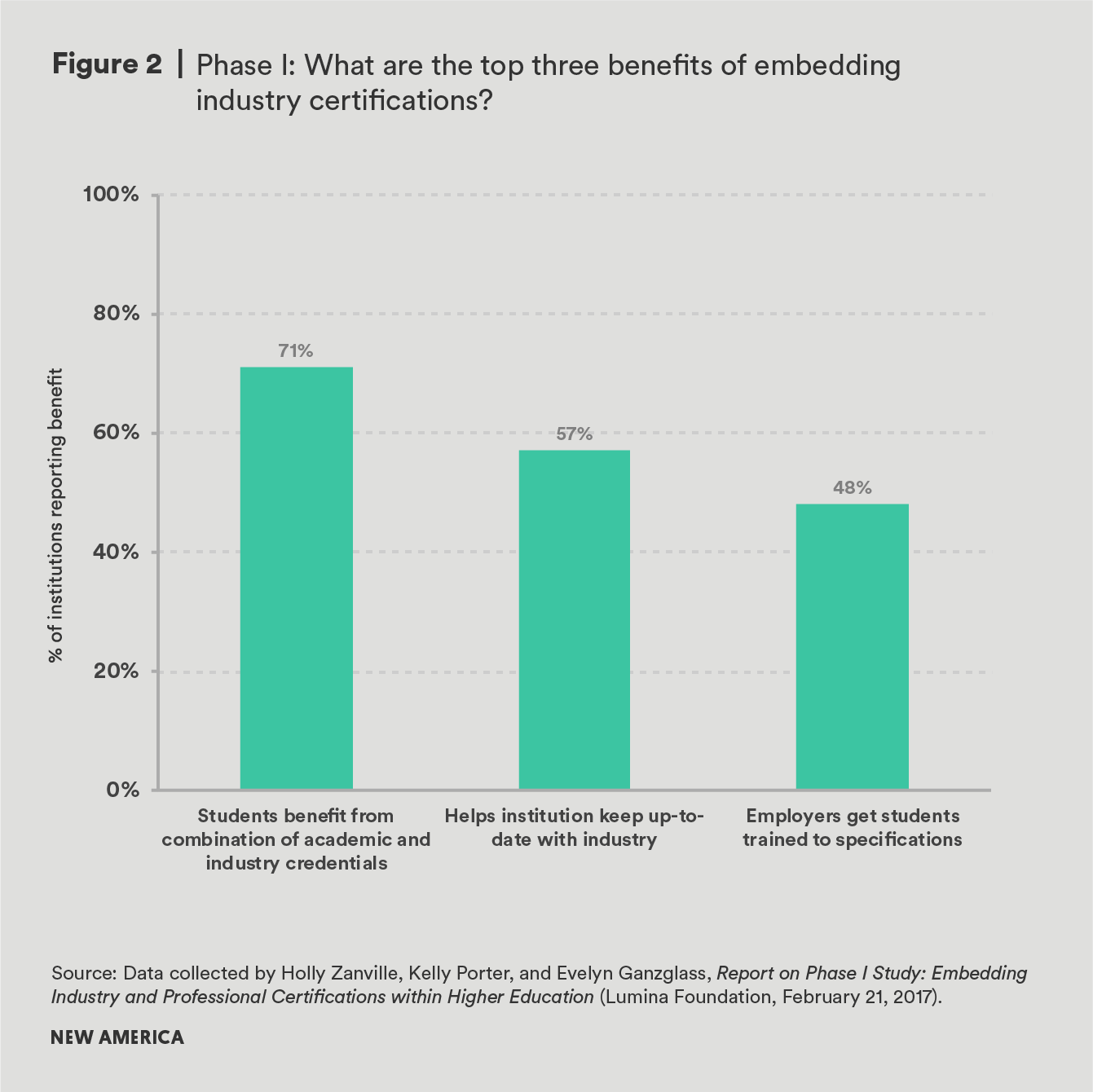
The survey revealed valuable information about the types of institutions and programs with embedded certifications as well as the perceived benefits and challenges to the practice. Survey respondents indicated that they were embedding industry and professional certifications across more than 16 different industry sectors, primarily in their workforce-oriented certificate and associate degree programs. The most commonly cited benefit of the practice—indicated by nearly three-quarters of responding institutions—was that it enabled students to earn valuable industry and academic credentials at the same time. It also helped the colleges and universities to align their curricula with prevailing industry standards, and to strengthen their partnerships with area businesses and industry associations.
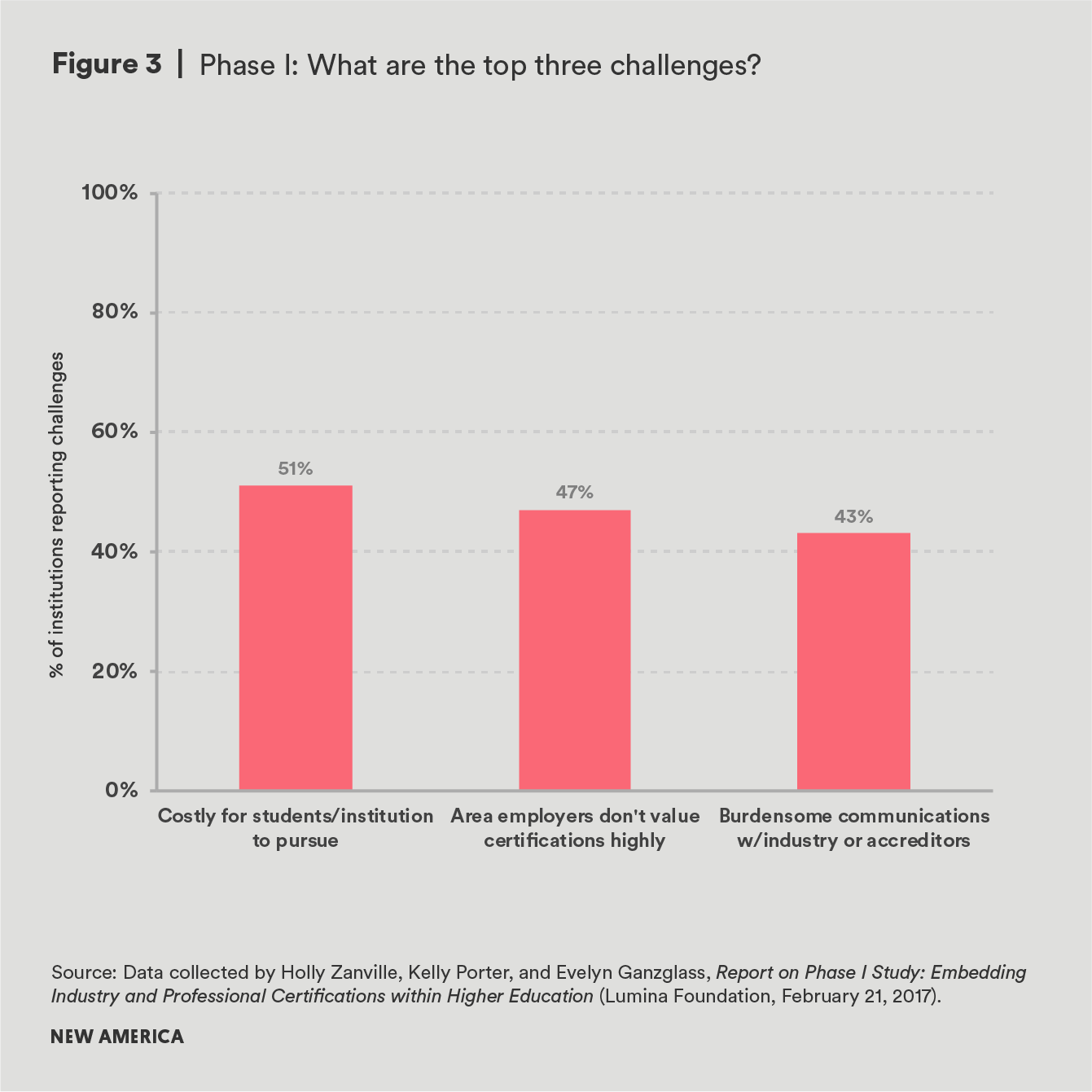
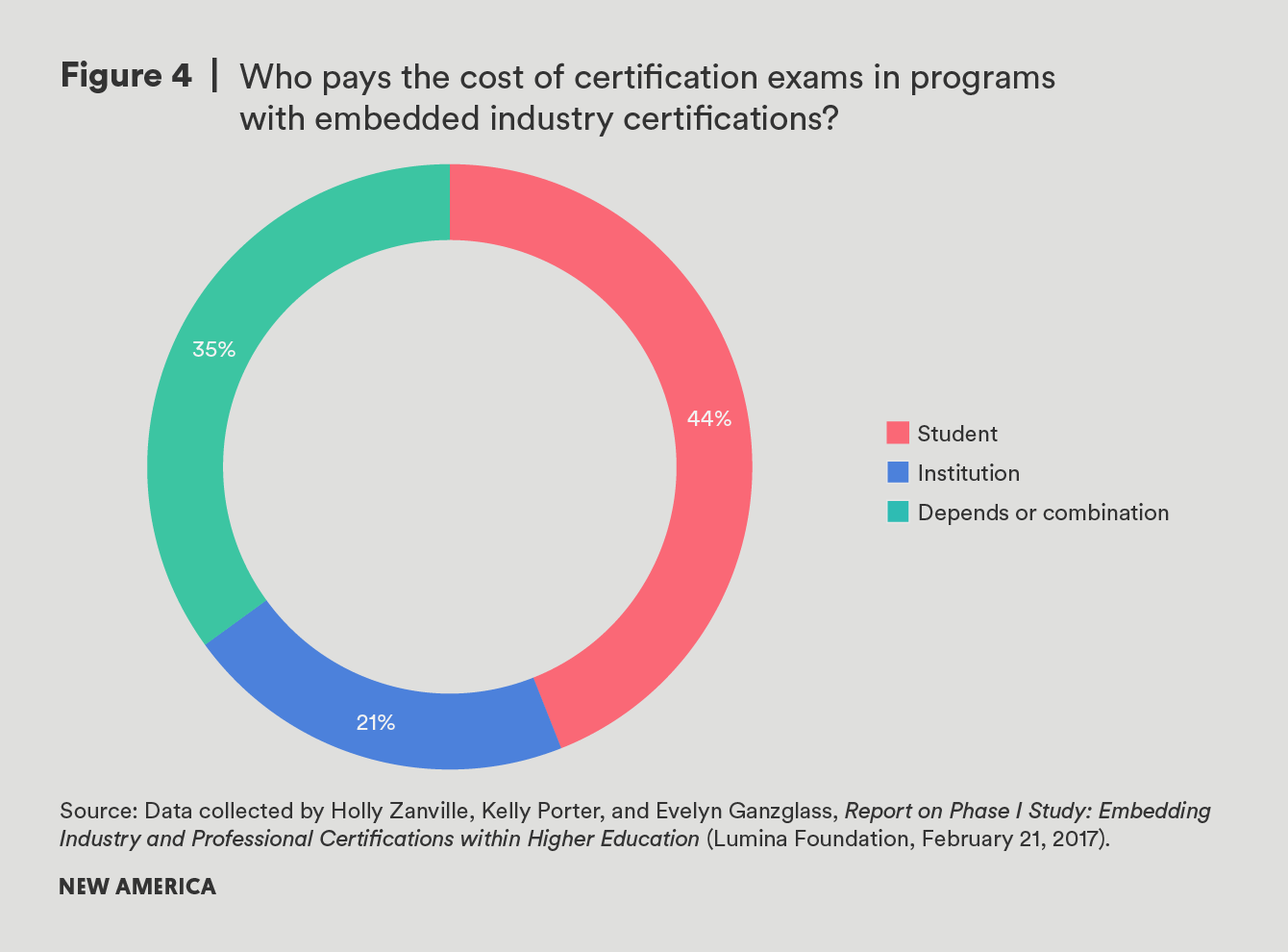
The survey also surfaced a common set of challenges facing institutions, particularly related to expanding or scaling up the practice of embedding certifications into degree programs. The most widely cited challenge was the cost of certification exams and the lack of resources to pay for them. Most respondents indicated that certification exam fees were paid by students, either as part of their tuition and fees or as a separate, additional cost. Certification exam costs can range anywhere from about $60 for the basic OSHA 10 safety certification to over $700 in the case of CISSP cybersecurity certification and the Certified Public Accountant exams. Asking students to shoulder the cost of exams raises a host of other questions around how colleges design and price their degrees. For example, should the college require students to earn a certification in order to complete the degree program, or should it be optional? Should the cost be rolled into the tuition, or should the student pay the certification body directly? And how does the college decide a certification is worth the expense? How does it ensure and monitor the labor market value of any certifications it expects or encourages students to earn?
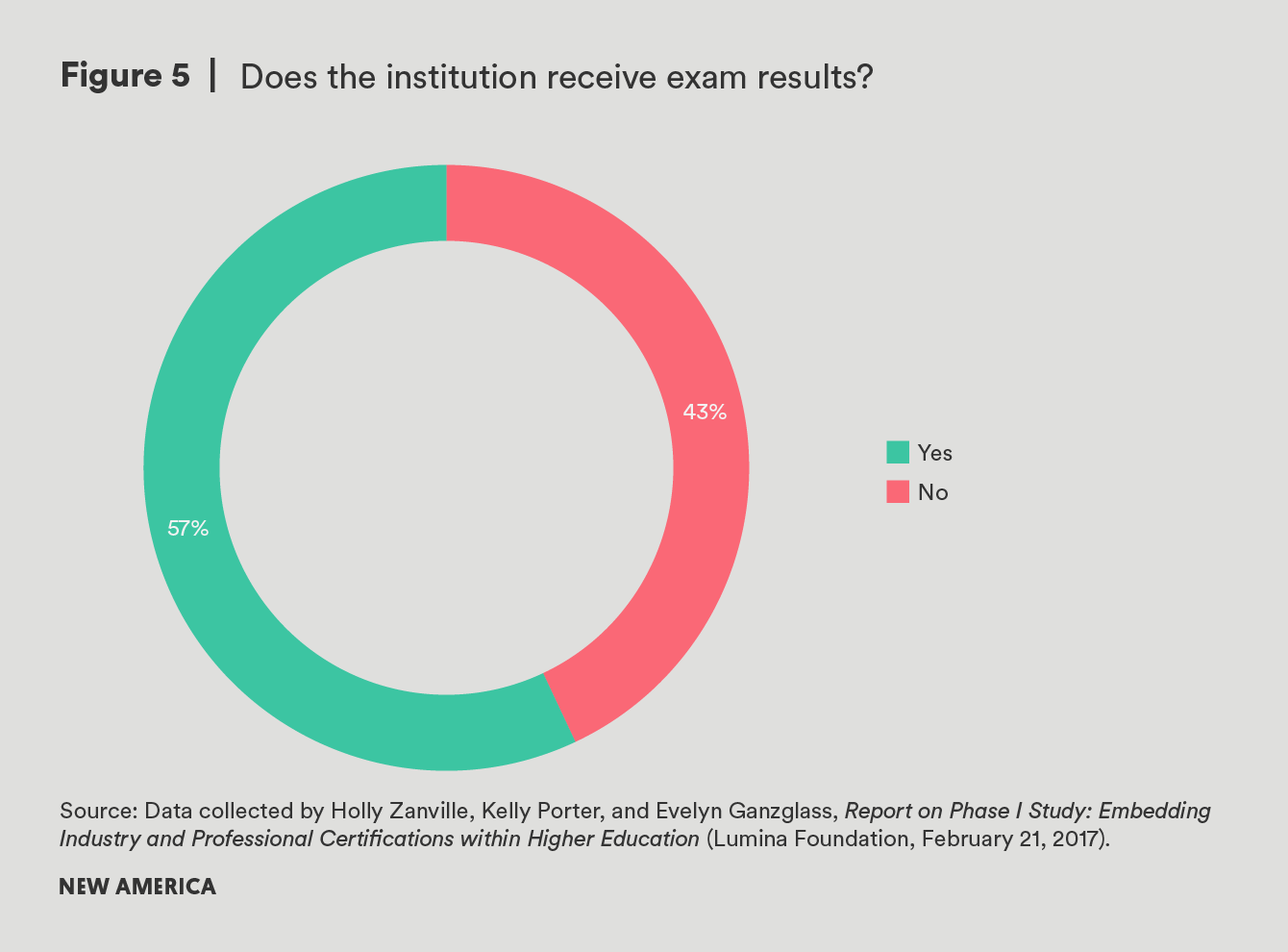
That brings us to another commonly cited challenge: lack of institutional access to employment outcomes, or even to exam results, for students who complete programs with embedded certifications. Given the finding that students themselves are often paying for their certifications, the lack of outcome data is of particular concern. If an institution does not know whether students with certifications have better employment and earnings outcomes than students who do not, why should it expect students to pay for them?
The survey also pointed to “considerable variation in what educators mean when they say they embed credentials in their programs of study.”2 In some cases, institutions required that students pass certification exams to obtain the certificate or degree, while in others earning the certification was optional. Some students earned certification along the way as part of a “stackable” sequence; others took exams at the end of the program, as a capstone. It was also clear that institutions sometimes conflated certifications with licenses and certificates.
Finally, the survey generated some conflicting responses that bear closer examination. For example, though 48 percent of institutional respondents indicated that a key benefit for embedding certifications was to provide employers with prospective employees trained to their specifications, 47 percent also cited a primary challenge in the lack of employer interest in using certifications for hiring. The requirements of external funders, such as federal grant programs or state agencies, was another important reason that institutions cited for embedding certifications, raising questions as to just how much the practice is employer-driven. Similarly, the primary benefit of embedding certifications into degree programs cited by respondents was that students could earn academic and industry credentials at the same time, presumably increasing their employability. However, almost none of the institutions were able to track student employment outcomes. As the report notes:
Though postsecondary institutions typically track whether students pass certification exams, few collect employment data on students who have completed programs and certifications. Even fewer institutions get feedback from employers on the job readiness of former students, and fewer still obtain information on whether employers must provide training for educational institutions that issue the credential (e.g., to improve teaching of the industry-required portion of the curriculum).3
While also revealing some important contradictions and unanswered questions, the survey provided an important first look at the types of institutions of higher education that are embedding certifications into degree programs, why they are doing it, and the practical challenges to building and sustaining these new degree designs.
Citations
- The channels for survey dissemination were: 1) the Connecting Credentials website and newsletter, 2) Connecting Credentials co-sponsors, 3) networks and grantees of the US Department of Labor and Education, 4) the National Manufacturing Association’s network, 5) CompTIA’s partner colleges, and 6) the American Council on Education’s newsletter. Holly Zanville, Kelly Porter, and Evelyn Ganzglass, Report on Phase I Study: Embedding Industry and Professional Certifications within Higher Education (Indianapolis, IN: Lumina Foundation, January 2017), 6, source .
- Ibid., 3.
- Ibid.
Digging Deeper: The Challenge of Embedding Certifications into Degrees
New America conducted a second phase of the study, which consisted of structured interviews with staff from 12 institutions that responded to the Phase I survey. We aimed to identify common practices employed by schools using embedded certifications, and looked for evidence to support the theory that industry certifications help better align learners’ skills with employers’ needs. In addition, we spoke with representatives of industry associations and businesses connected with some of the survey respondents (see Appendix for questions, topic areas, and interviewees' job titles).
Participants were entirely public institutions, and tended to specialize in certificate and degree programs lasting two years or less.1 Nine of 12 institutions were also Trade Adjustment Assistance Community College Career Training (TAACCCT) program grantees, and three had participated in the Lumina-funded Right Signals Initiative.2 In selecting institutions for interviews, we aimed to represent a variety of geographic, programmatic, and institutional contexts.3 The institutions that participated in the interviews are mapped below.
Error: Data visualization bundle URL missing.
Though the challenges and opportunities cited by the institutions we spoke with mirrored the findings from Lumina Foundation’s survey, the interviews allowed us to gain a richer and more nuanced understanding of how specific challenges such as exam costs and lack of access to data hamper efforts by institutions to expand the use of certifications in their degree programs. The interviews also gave us a greater appreciation of the role of institutional champions in initiating and sustaining efforts to rebundle degrees to include industry certifications. We learned that embedding certifications into degree programs is hard, but not impossible. Scaling the practice beyond just a few degree programs is even harder, but can be done with a combination of institutional and external support; measuring the impact of embedding certifications into degrees on student outcomes is harder still. Below are some of the key themes that emerged from the interviews.
Common Goals: Connecting Students and Employers
The interviews revealed a variety of distinct but related motivations for embedding certifications into degree programs. The most commonly cited reasons were to help make students more attractive to employers, to improve relations with local employers, and to address employers' concerns about skills gaps among college graduates. Multiple respondents talked about how certifications provide a common language for colleges and employers to discuss competencies, opening doors to a much broader—and better—conversation around what employers need and how colleges can help. For example, Miami Dade College reported that tech sector employers brought together through its IT entrepreneurship accelerator warmed to the idea of hiring associate degree candidates with certifications for positions for which they had previously required bachelor’s degrees.
Common Barriers—and Diverse Solutions
Our interviews also revealed a common set of challenges to embedding certifications into degree programs, and a variety of innovative strategies for addressing them. For the most part, however, each institution had limited awareness of how other colleges or universities were confronting similar challenges.
Designing the Degree: The interviews revealed a common set of implementation practices and challenges, including in the processes of securing faculty buy-in, changing and aligning curricula, maintaining third-party testing facilities, and determining student test scores. All of the institutions interviewed had systems for awarding credit for prior learning in place, and five of them had established defined credit equivalencies for some industry certifications. But apart from some shared practices among schools in Florida, each program had developed its own policies regarding the timing of certification exams in programs, their status as required or optional components, and subsequent data collection. In most cases, individual faculty or deans made these determinations on their own, sometimes with the input of industry associations and/or certifying bodies, but generally with little outside guidance or technical assistance. 11 participant institutions mentioned the importance of an institutional “champion” in driving embedded certification efforts: at six institutions, this was a faculty member or grant coordinator associated with a single program or department, and at five institutions it was a senior administrator or college president. Higher-placed champions appeared to correspond with a broader variety of disciplines and degree programs with embedded certifications.
Financing: The challenge of paying for certification exams came up in every interview, revealing a common concern and a variety of different approaches. Consistent with Lumina Foundation’s survey findings, the most common approaches involved student payment, either by including the examination cost in program tuition and fees or by requiring students pay at the time of the exam. Six of 12 respondents also drew on state or philanthropic funds to cover exam costs for some students. Only two institutions reported support from employers to pay for certification exams of students (the Community College of Baltimore County from local car dealerships and Mississippi Gulf Coast Community College from shipfitting partners). In each of our interviews, respondents considered the cost of certification exams a significant barrier to expanding access to them.
Paying for certification exams was not the only financial constraint mentioned. Program development costs were also a widely cited barrier, and institutions appeared more likely to embed certifications where they had dedicated funding to do so. All of the institutions we interviewed noted the importance of federal Carl D. Perkins Career and Technical Education (CTE) Act funding to support industry certification use. Other federal and philanthropic funding such as TAACCCT grants, the Right Signals initiative, and JP Morgan Chase’s New Skills for Youth initiative were also cited as having provided critical support for embedding certifications into existing programs.
Certifications provide a common language for colleges and employers to discuss competencies, opening doors to a much broader —and better—conversation around what employers need and how colleges can help.
Expanding Outside Traditional Fields: Lumina Foundation’s survey found institutions that reported embedding certification across all 16 industry sectors listed in its survey instrument. Among our interviewees, the range of disciplines with embedded certifications was much narrower, and was dominated by fields with well-established certifications and certification vendors. These traditional fields included automotive technology (nine out of 12 institutions), aviation (six institutions), welding (seven institutions), and entry-level IT and healthcare occupations (11 institutions each).
The multiple challenges to expanding embedded certifications outside of these traditional fields often came back to a lack of resources to engage faculty, to identify relevant, in-demand certifications, and to secure employer buy-in. The absence of clear evidence that embedding certifications is good for students and employers makes the practice hard to sell in disciplines or industry sectors not familiar with it. In non-traditional sectors, strong industry advocacy or consistent direction from senior leadership were typically necessary to get embedding initiatives off the ground. At Broward College, the Florida Association of Insurance Agents provided both encouragement and accreditation for the institution’s fledgling certified risk management program; at Alfred State College, a member of the State University of New York (SUNY) system, a system-wide push to adopt applied learning practices supported administrators in the expansion of certification practices beyond their traditional purview in the building trades.
Respondents considered the cost of certification exams a significant barrier to expanding access to them.
Despite the challenges of embedding certifications in non-traditional disciplines, a number of participants did report embedded certifications in supply chain management (two institutions), automation and control systems (four institutions), advanced manufacturing (three institutions), advanced IT occupations such as cybersecurity and cloud or virtual computing (four institutions), and banking and finance (two institutions). Each of these disciplines was represented in at least one Florida institution. The broader range of programs and inclusion of costlier certifications among Florida colleges was not an accident, as our case study of Broward College will demonstrate. Rather, it was the consequence of well-targeted state, federal, and institutional investments and policies.
Collecting Outcomes Data: While all respondents expressed confidence that the certifications students earned improved labor market outcomes for students, none had definitive data to back that claim up. Difficulty obtaining student exam scores and pass rates was a widely cited challenge that limited efforts to show the value both of particular certifications and of the overall practice of embedding them. Institutions often have to rely on students themselves to report whether they passed a certification exam, which can be challenging. For example, the Community College of Baltimore County was able to provide a count of students who had received certification and licensure in recent academic years, but this tally depended on program directors collecting student results. Some programs, such as information technology, recorded no certification attainment though dozens of students took and passed certification exams.
Even more challenging for institutions than finding out whether students passed a certification exam is determining whether earning a particular certification increased their likelihood of being employed or increased their wages. None of the colleges we interviewed were able to obtain employment and earnings data for students who had earned specific certifications. While some colleges, such as those in Florida, had access to labor market outcomes for particular degree programs, none were able to obtain the individual level data necessary to compare outcomes among students with and without certifications.
Overall, the interviews revealed enthusiasm about the practice of embedding certifications into degree programs, and a shared belief that their use improved program quality, strengthened relationships with local employers, and led to better student learning and employment outcomes. Because this was a volunteer sample, these beliefs are not surprising. But the interviews also revealed significant barriers to scaling up the practice beyond a relatively narrow set of programs where certifications are well established. Even in traditionally certified disciplines, the practice of embedding certifications often required an infusion of outside funding (TAACCCT, for example), along with committed champions willing to take on the tasks of reaching out to employers, identifying valuable certifications, negotiating with certifying bodies, redesigning curricula, and working with faculty. The overall picture was one of islands of innovation, often with little connection to one another or even to other programs in their own college or university.
Citations
- During interviewee recruitment, we contacted only one private, not-for-profit institution, a primarily four-year university. Its representatives did not respond to outreach.
- The Right Signals Initiative is a credential improvement strategy supported by Lumina Foundation that aims to assess the value of multi-credential strategies in twenty community colleges across the country.
- Two of these institutions declined participation on the grounds of not having enough time; two declined without giving a reason. The remainder either did not respond or did not confirm a preliminary interview after three follow-ups.
How Broward College is Rebundling Degrees with Certifications
There was one notable exception to this general pattern: Broward College. Located in southeastern Florida, Broward's wide range of degree programs with embedded certifications set it apart from other participating institutions. These included the automotive repair, aviation, and healthcare programs seen at many other schools, but also degree programs in supply chain management, marine engineering, insurance and risk management, and public safety. Broward's IT degree programs embedded a very wide range of certifications, including more advanced certifications in cloud computing and cybersecurity,1 and the college was actively exploring opportunities to embed certifications into other disciplines, including financial and banking services and property management. The college also stood out for the sheer number of certifications its degree-seeking students earn.
Given the results in Broward, we conducted a series of follow-up interviews and a site visit to better understand how the college has succeeded in embedding certifications into so many degree programs, and how it has overcome the challenges of finance, selection, and implementation that other colleges now face. We found that state agencies can play a critical role in addressing the challenges of financing and selecting certifications, which in turn frees up college leadership to develop incentives and innovative implementation strategies to support embedding certifications into degree programs.
State Financing: The Career and Professional Education Act
In 2007, Florida passed the Career and Professional Education (CAPE) Act, which reimburses schools for the examination fees of students who earn specific industry certifications. Originally designed to improve the quality of high school career and technical education programs by better aligning them with the needs of industry, the program was expanded to include students at public postsecondary institutions in 2014. Students must be in credit-bearing programs, and reimbursements of up to $1,000 are allocated to institutions for each qualifying certification exam.2
We found that state agencies can play a critical role in addressing the challenges of financing and selecting certifications, which in turn frees up college leadership to develop incentives and innovative implementation strategies to support embedding certifications into degree programs.
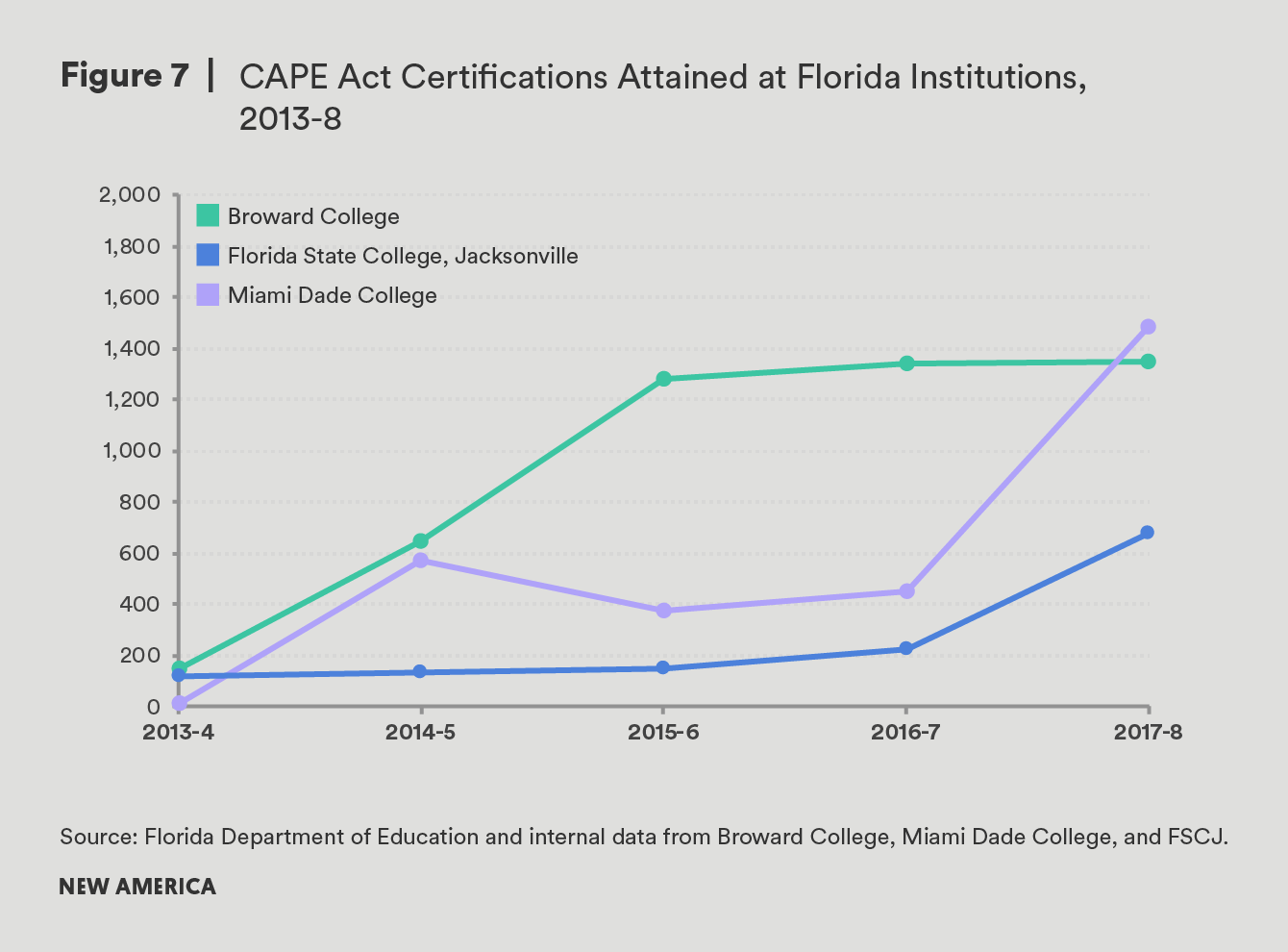
Since its expansion to postsecondary institutions, colleges across the state have used CAPE reimbursements to defray student costs for industry certifications and to build up institutional resources that have supported significantly increased certification attainment. The number of eligible certifications earned by Broward students increased from 148 in 2013-14, the first year the incentive was offered, to 1,349 in 2017-18.3
Before CAPE, Broward had a long-standing practice of reimbursing some certification exams using Perkins funding. Certification fees associated with Broward’s three TAACCCT projects were also paid out of grant funding while the projects lasted, but the CAPE incentive has allowed Broward to expand subsidies to many more certification exams, offering fee vouchers to eligible students. Michael Coburn, who has taken eight certification exams in his time at Broward and plans to take three more before he finishes his bachelor’s, has paid nothing extra for them thus far.
Keeping certifications affordable in the absence of grant funding will be a challenge, however. If CAPE expires, acknowledges Renee Law, dean of workforce education and career services, Broward would have to think carefully about which embedded certifications to preserve. For those that it keeps, the college will continue to use Perkins funding to offset student costs.
Selection: State Generated Lists of In-Demand, High-Quality Certifications
Broward and the two other Florida colleges we examined, Miami Dade College and Florida State College at Jacksonville, have an additional advantage over other schools: access to three lists of high-quality, in-demand industry certifications that have been vetted by the state’s education and workforce agencies. The original list of credentials of value was developed by the state to facilitate reporting on “technical skills attainment” (TSA) by students in programs funded through the Perkins CTE Act. More recently, beginning in March 2013, the state developed a second list of “Gold Standard” certifications that assigns college credit weights for an array of industry certifications connected to Florida’s CTE pathways.4 These Gold Standard certifications can save a student between $315 and $1,250 each through advance credit.
The third list was developed in 2014 to designate certifications eligible for CAPE Act reimbursement at the postsecondary level. To make this third list, certifications had to meet a set of quality criteria, including demonstrated demand from employers in the state, college-level learning outcomes, and rigorous third-party assessments. The CAPE list includes just over 300 certifications, all vetted by the state department of education’s division of Career and Adult Education.
The state’s three certification lists (for state reporting under Perkins CTE, for guaranteed credit articulation, and for institutional reimbursement under CAPE) made it much easier for Broward to select the certifications it would embed into degree programs. As in other institutions participating in our interviews, Broward's faculty and staff still had to engage with local employers to understand their skill needs and determine appropriate certifications to embed into programs, but at least they were not starting from scratch.
Implementation: A College-Wide Vision and Strategy
In contrast to other colleges we interviewed, integrating certifications into degree program is a college-wide priority at Broward, closely tied with other efforts to ensure student success such as guided pathways and career coaching. Certification attainment is measured, rewarded, and actively promoted to students, employers, and internal college stakeholders. In fact, increasing certification attainment is a primary goal of the college’s current five-year strategic plan.5
Broward's faculty and staff still had to engage with local employers to understand their skill needs and determine appropriate certifications to embed into programs, but at least they were not starting from scratch.
While state funding and vetting of certifications provides essential support for Broward’s efforts to integrate certifications into degree programs, the practice would never have reached its current scale without the vision and commitment of college leadership. Broward’s three TAACCCT grants, the first of which began in 2012, were an important precursor to its successes following the expansion of the CAPE Act. The goal of TAACCCT grants was to build programs that met the needs of adult learners and local employers for in-demand skills and to make it easier for students to transition into the labor market. College leaders saw that certification could serve a critical signaling function, helping students and employers find one another.
TAACCCT grants provided funding for the development of programs in supply chain management and information technology that included industry certifications. They also helped the college build its capacity to work with employers and faculty around the use of certifications. In the case of supply chain management, Broward worked directly with an industry association, the Council of Supply Chain Management Professionals (CSCMP), to develop the series of certifications that were then embedded in the degree program. The project started as a way to satisfy local firms’ unmet needs for entry-level employees, who at the time had no pathways—in Florida or anywhere else—that would allow them to acquire both the academic and industry credentials needed to demonstrate job-readiness in the absence of prior experience. The end product, the SCPro Fundamentals certification sequence, is a genuine industry certification whose standards are owned and maintained by CSCMP, and which has been adopted by other colleges. Though the sequence can be pursued outside of an academic program, it is the first we know of that was purpose-built as an embedded certification, intended to match the joint academic and industry credential requirements of modern supply chain management jobs.
After 2014, funding through the CAPE Act provided an opportunity for the college to sustain and expand its efforts to embed certifications into degree programs. Broward’s president at the time, J. David Armstrong, instituted a variety of creative measures to entice department heads and faculty to embed certifications into their degree offerings. For example, he agreed to split the state’s reimbursement of the certification exam costs with the department delivering the program, creating an important financial incentive for department heads to expand certification use. In March 2014, Broward’s Division of Career and Workforce Education and Economic Development hired Renato Cortez for a new role as a full-time CTE certification specialist. Cortez focuses exclusively on implementing and evaluating the college’s industry certification initiatives, and on designing program modifications to respond to the needs of employers in Broward’s environs. Following Broward’s example, nearby Miami Dade College created a part-time role modeled on Cortez’s, which will be expanded to full-time status this year.
President Armstrong also expanded on-campus testing centers to ensure that each of its three main campuses can provide as many certifications as possible, all on-site and during student-friendly windows. Though its testing centers were not unique among our interviewees, Broward’s focus on certification attainment has led it to leverage its centers even more ambitiously. For example, the IT department has begun offering yearly boot camps to allow students to collaboratively study and practice for certification exams. Last year, Information Technology Dean Tom Ayers estimated that about 100 students dropped in each day, earning over 90 certifications during the week-long boot camp session alone.
Broward’s 1,349 CAPE-reimbursed certifications in the 2017–18 academic year represent an over threefold increase over its 2013–14 attainment, and its success has not gone unnoticed by other colleges in the state. Several other Florida colleges have adapted elements of Broward's programs and strategies: in 2017, after several visits to Broward, the much larger Miami-Dade College finally surpassed it in the total number of CAPE-eligible certifications awarded to students in its degree programs.
Broward College’s success in designing and launching a wide range of degree programs that include industry certifications shows what is possible with a combination of well-targeted financial incentives and committed leadership. State resources—both the lists of high-quality certifications and the funding dollars allocated for them—allowed Broward to overcome some of the most vexing challenges to embedding certifications into degrees, and to make the practice a college-wide initiative rather than a feature of one or two programs. But even with state support and buy-in across the college and among employers, Broward is still struggling to measure the impact of its innovative degree designs on student outcomes.
Citations
- CompTIA Cloud+, Microsoft CSE, and ISC2 CCSP, ISC2 SSCP and—for more experienced students—CISSP.
- The exact amount reimbursed to institutions for each certification depends on the annual appropriation and the number of certifications earned system-wide. In 2017-8, for example, the annual allocation of $4.6 million meant that institutions were ultimately reimbursed about $680 for each certification attained.
- By comparison, Florida State College at Jacksonville increased its CAPE-eligible certification attainment from 117 in 2013-4 to 676 in 2017-8. Miami Dade College has experienced even more impressive increase, from 17 in 2013-4 to 1,428 in 2017-8—surpassing Broward’s total for the first year. The vast majority of MDC’s eligible certifications—544 of them—were the national nursing exam, the NCLEX-RN.
- The 2016–17 Gold Standard Career Pathways list establishes credit weights for 124 certifications. By contrast, Alfred State College’s more recent effort to define credit weights for industry certifications currently applies to four certifications. See the Gold Standard list source and Alfred State’s eligible certifications source
-
The other four institutional “Soar” strategies listed in Broward’s 2017-22 plan are to engage faculty in the use of career exploration tools; to increase enrollment in bachelor’s programs; to increase work-based learning experiences and job placements; and to expand seamless transfers to partner institutions. See Broward’s strategic plan:
source
Takeaways and Recommendations
Broward’s experience demonstrates that the most successful efforts at embedding certifications into degree programs stem from mutually supportive commitments from institutions, certifying bodies, and state education and workforce agencies. However, our research also shows that institutions can get the ball rolling on their own. In fact, a number of the institutions we interviewed developed creative solutions to many of the most common challenges—from building on-campus testing centers, to redesigning curricula to align with certification exams, to collecting students' test scores. Colleges and universities that want to embed certifications into specific degree programs can find a way to do it.
Three Strategies for Integrating Industry Certifications and College Degrees
Our research indicated that the most significant challenges to institutions that want to embed certifications into their degree programs include figuring out which certifications are in demand, how to pay for them, and how to ensure they benefit students in their education and careers. Significantly expanding the quantity of degree programs with embedded certifications beyond a relatively narrow range of disciplines will require coordination between colleges, state workforce and education agencies, and certifying bodies to address each of these three challenges. Below are three strategies that are already showing promise for overcoming each challenge.
Developing and Maintaining Lists of In-Demand Certifications: States have access to a much wider range of education and labor market data than individual institutions. Using that data to build lists of high-quality, in-demand certifications can be a big help to institutions, particularly those with limited experience with industry certifications. Secondary and postsecondary systems in Florida, Kansas, Louisiana, Ohio, Tennessee, and Virginia now provide an array of templates for building a state list. Crucially, these lists should precisely specify credentials rather than, for example, occupational categories, and should be limited to a few dozen certifications at first.
Institutions should consider “rebundling” their degree programs to include high-quality and in-demand industry certifications.
Targeting State Funding: Florida’s experience proves that incentive funding can go a long way toward helping colleges get over the biggest barrier to embedding certifications: paying for the certification exam. The reimbursement model established through the CAPE Act has enabled Florida to significantly expand the number of students earning certifications with a relatively modest state investment. The financing model also created opportunities for college leaders to use the funding to reward departments for embedding certifications into their degree programs. States that are interested in expanding the practice of embedding certifications beyond the disciplines where it is already well-established can use the CAPE Act as a model for how to target their funding.
Building a Clearinghouse for Certification Data: The one challenge cited by every institution we interviewed—but resolved by none—was the lack of data on student employment outcomes. The lack of individual-level data on certifications hampers efforts to evaluate their impact on employment and earnings for the students who acquire them. Convincing state legislatures to fund certification attainment without knowing how it contributes to employment and earnings of state residents will always be a challenge without outcomes data. There have been a number of efforts to build systemic connections between data held by certification bodies and data held by state education and workforce agencies. From 2012 to 2017, the Association of Career and Technical Education (ACTE) worked with six states and three certification bodies as part of the Certification Data Exchange Project (CDEP). Through the project, states and certifying bodies established data-sharing protocols and strategies to connect individual certification records with wage record data from each state’s unemployment insurance system.1 The project demonstrated that while it is possible to match certification and wage record data, the process is time-consuming and labor-intensive.
A more promising approach is being developed by a public-private data infrastructure partnership between the National Student Clearinghouse, the National Association of Manufacturers, and the U.S. Census Bureau. The project aims to create an independent and self-sustaining nationwide collaborative that will collect, match, and analyze hundreds of thousands of education and labor market records, including credit and non-credit courses from higher education institutions, certification status from certifying bodies, and employment and earnings data from the federal government. Beginning with certifications from three manufacturing associations and one in the healthcare sector, the project will also integrate with the ongoing Credential Engine initiative to provide greater transparency about certifications and other credentials for employers, educational institutions, and jobseekers, as well as for certifying bodies themselves. The project is still under development, but merits close attention.
Conclusion
In July of this year, while planning a family trip to Disney World, Michael Coburn got a call with an offer to join the country’s largest provider of medical scribes as their information security manager. The company was willing to postpone his start date until after the Disney World trip, and until he received the last of his cybersecurity certifications, which are required for the job. For Coburn, the combination of his certifications, his recent associate degree, and the bachelor’s he plans to earn next year—all through Broward College—was key.
Certifications are unlikely to replace degrees anytime soon, but delivered in tandem, they can help degree-seekers get more from their efforts. Our research indicates that embedding certifications is not easy for institutions; neither is it impossible. Outside of traditionally certification-heavy disciplines, there has been only piecemeal progress in expanding effective certification use in higher education, but well-targeted support and coordination between state governments and institutions can quickly scale up certification practices that benefit both employers and students. Continued expansion will require a more extensive national data infrastructure, but states and colleges already have the successful examples of Broward College and others to draw on as they rebundle academic and industry credentials.
Citations
- Final Report: Certification Data Exchange Project – Challenges, Lessons Learned and Recommendations from the Certification Data Exchange Project, 2.
Appendix
Phase II Interview Topic Areas and Questions
Topic Areas:
- Funding
- Employer engagement
- Program design (degrees, stacking, transfer & articulation)
- Student recruitment
- Connections to K-12 education
- Staffing and professional development
- Testing and certification exams
- Student and certification data
- Campus impacts, and
- Policy levers
Primary Interview Questions:
- In which fields are embedded certifications being implemented?
- Why are embedded certifications being implemented?
- Who is involved?
- What practices do embedded certifications involve? And,
- What are the benefits of embedded certifications for students, employers, and institutions?
Interviewees
Target Institutional Faculty and Staff:
- Alfred State (SUNY):
- Provost; Vice President for Economic Development; Dean – School of Architecture, Management, and Engineering Technology; Professor, Business Department; Institutional Research Analyst.
- Broward College:
- Executive Director of Career and Workforce Education and Economic Development; South Campus President; Associate Vice President – Center for Supply Chain Management; Associate Vice President – Student Achievement Intitiatives; District Director – Testing; Dean – Transportation Programs; Associate Dean – Transportation Programs; Associate Dean and Assistant Professor – Marine Department; Lead CTE Support Specialist.
- Community College of Baltimore County:
- Director – Veterans Services; Director – Institutional Projects and Initiatives (former); Department Chair – Applied Technology; Assistant Dean – Curriculum & Assessment; Program Coordinator – Mopar Career Automotive Program.
- East Central Community College
- Director – Career & Technical Education
- Florida State College – Jacksonville
- Executive Director of Articulations; Program Coordinator – Outreach and Extension; Laboratory Manager – Engineering Programs.
- Lake Area Technical Institute
- President; Vice President; Grants Manager; Career Center Coordinator; Database Administrator.
- Miami Dade College
- Director – Learning and Program Evaluation; District Director – Career & Technical Education; Director of Assessment, Evaluation, and Testing; Dean of Engineering, Technology, and Design; Vice Provost – Institutional Effectiveness; Academic Coordinator; Curriculum Specialist.
- Mississippi Gulf Coast Community College
- Executive Vice President of Administration & Finance; Work Ready Director.
- Northwest Arkansas Community College
- Vice President of Learning and Chief Academic Officer; Director of Retail & Supplier Education; Perkins CTE and Grants Administrator.
- University at Buffalo
- Assistant Dean – Center for Executive Development
- University of New Mexico – Valencia
- Director – Office of Career Services (UNM System); Manager – Community Education; Program Specialist.
- Williston State College
- Regional Director for Technical Programs and Training (formerly TREND Grant Director); Business Technology Chair; Petroleum Technology Instructor.
Additional Interview Participants:
- Businesses and Associations:
- Senior Manufacturing Engineering Team Lead – Johnson & Johnson Vision Care
- Director of Technology and Director of Talent & Finance – Wheelhouse IT
- President & CEO – Center for Financial Training at Miami Dade College
- CEO of Merjen Aviation and President of South Florida Aviation Maintenance Council
- Owner of Templeton Manufacturing Solutions and member of First Coast Manufacturers Association
- STEM Lab Manager – EWI Buffalo Manufacturing Works
- State and City Agencies:
- CTE Program Manager (Student & Assessment Services) – Maryland State Department of Education
- Deputy Director – South Dakota Board of Technical Education
- Associate Vice Chancellor – Florida College System
- Senior Network Engineer – City of Fort Lauderdale (former)
- CAPE Industry Certification Manager
- Students and Other Institutional Personnel:
- Bachelor of Applied Science (IT and Supply Chain Management) students – Broward College
- Electronics Program Coordinator – Illinois Valley Community College
- Associate of Applied Science (Aviation) student – Broward College
More About the Authors

Michael Prebil

Mary Alice McCarthy
Senior Director, Center on Education & Labor