
Understanding Intermediary Funding
Though intermediaries are critical to the success of WBL initiatives, funding them is a complicated endeavor. Intermediaries typically rely on a mix of public and private funding sources, and usually combine several of each type. WBL intermediaries often sit at the intersection of K–12 education, higher education, and the public workforce system, each of which receives public funding that comes with different restrictions, allowable uses, and reporting requirements. Intermediaries may be able to access or leverage public funding, and many do, especially those that are themselves based within public systems. Intermediaries also frequently raise private philanthropic support from local, regional, or national funders. Some also receive in-kind donations from partners or generate revenue from their program offerings.
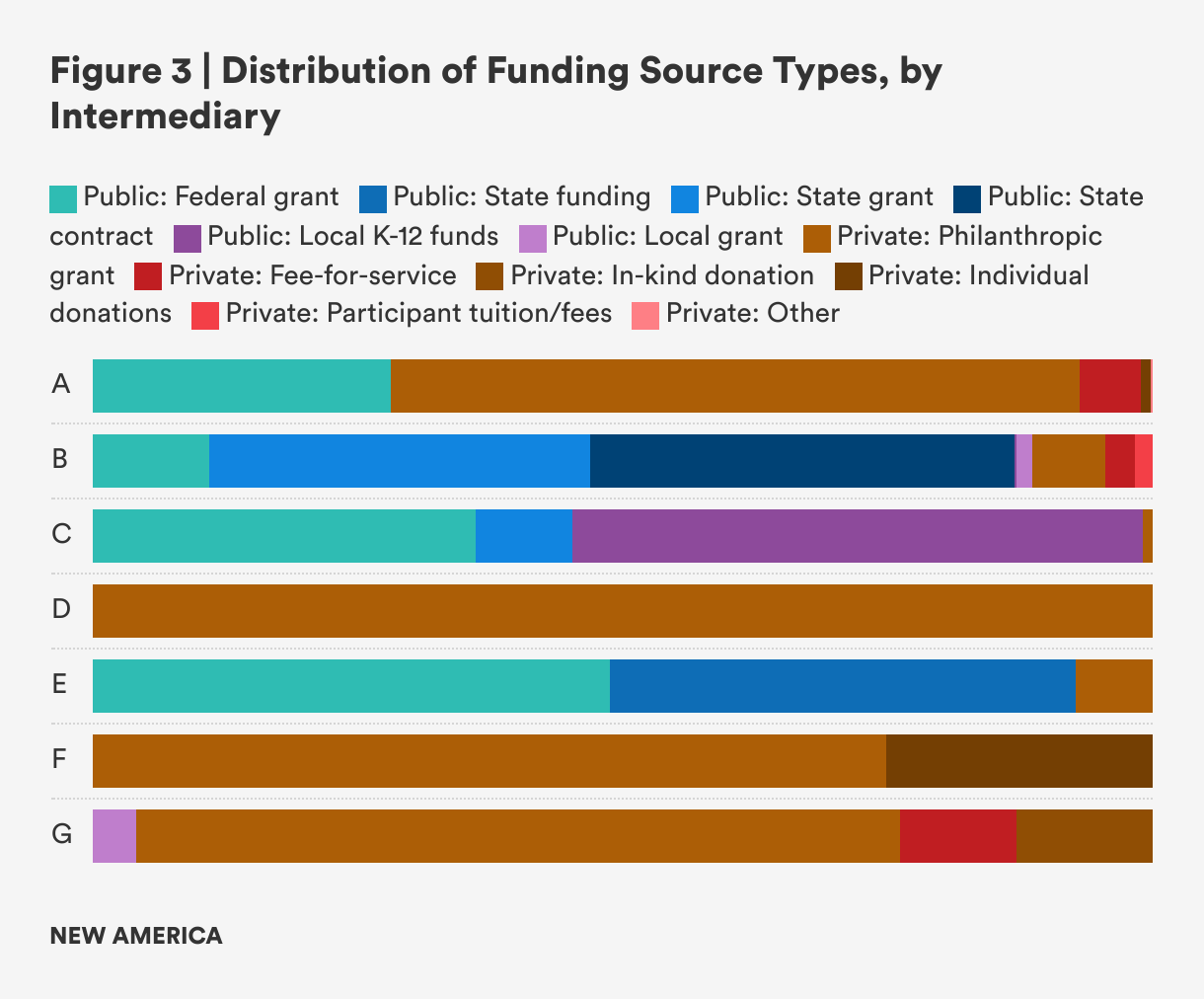
WBL intermediaries play different roles within their ecosystems; they operate distinct programs and vary in size. These and other factors mean the size of their budgets—and the source of funds within them—can vary considerably. The intermediaries in our analysis reported annual revenue ranging from less than $500,000 to more than $5 million. Four of the seven rely primarily on philanthropic dollars to support their work (defined as 50 percent or more of total revenue in the year reported); more than half of revenue for the remaining three comes from public funding sources.
Intermediary budgets are complex (Figure 3). The financial information submitted by the seven intermediaries we examined included state and federal grants, contracts, and formula dollars; local education funding; philanthropic grants, and some in-kind and fee-for-service revenue.1 One organization reported 21 unique funding sources. Grants were the dominant source of funding overall. Public grants or contracts ranged from $220,000 to $1.9 million per annum, with performance periods from one to five years. Of the 31 philanthropic grants reported by the intermediaries, only one grant accounted for more than $1 million in annual revenue; 18 provided less than $100,000.More than half had performance periods of a year or less, despite the fact that many of the WBL programs in the analysis last for a year or longer; only one philanthropic grant reported had a performance period of five years. More than 60 percent of the philanthropic grants were restricted and required reporting on an annual, biannual, or quarterly basis.2
The sources of funds available to intermediaries can vary based on a number of key variables, including:
- The intermediary’s role and mission. Intermediaries that implement WBL programs may have access to funding sources that intermediaries focused exclusively on field-building activities (e.g., policy and advocacy) do not. The reverse may also be true, in cases where a philanthropic partner may be interested only in funding policy reform, for example.
- The intermediary’s organizational status: An intermediary situated within a K–12 school district, for instance, can support WBL with federal, state, and local education funding that an independent nonprofit would not be eligible to receive. On the other hand, a nonprofit organization with a strong development arm might be better positioned than a K–12 school district to secure philanthropic grants. Regardless of where in the ecosystem an intermediary is located, however, it may leverage partners’ funding eligibility to cover some program costs.
- The population of learners it enrolls: The students that an intermediary serves can also affect its access to funding. A WBL program that serves disabled students, for example, might be able to access federal funding via Individuals with Disabilities Education Act (IDEA) grants to support their participation. Likewise, the Workforce Innovation & Opportunity Act (WIOA) Youth Program, which funds many different types of WBL opportunities, can provide resources to support young people who face barriers to education, training, and employment.
- The program type(s) it offers: Different WBL program types come with different costs and, in some cases, dedicated funding. Internships, for example, rarely require interns to complete specific classes, whereas apprenticeships require a specific sequence of courses (called related technical or related supplementary instruction). Many states provide funding to reduce the cost of related technical instruction for apprentices.
- State policy: Public funding for WBL varies considerably from state to state. Some states provide dedicated funding to support particular types of WBL programs or intermediaries. Some also provide geographically targeted funding that supports the development of WBL in areas with specific education or labor market needs or barriers.
We saw evidence of several of these factors at play in our analysis. For example, nearly all of the funding at the two intermediaries embedded within public institutions came from public sources, including some that would not be accessible to nonprofit intermediaries (e.g., local education funding, state appropriations). Multiple intermediaries reported accessing federal IDEA and WIOA dollars to support the participation of WBL students who qualify for those resources, though no intermediary was heavily reliant on either funding type. And several intermediaries were also able to access apprenticeship-specific funding from state and federal sources.
Citations
- Some intermediaries in this study provided program-level funding information for all of the WBL programs they led, while others provided program-level information for only their most intensive WBL offerings (see Figure 2) and excluded budget details for other programming (e.g., career exposure activities embedded in HS courses). It’s possible an intermediary may have additional funding sources not collected or reported in this analysis.
- We suspect that the number of restricted grants requiring reporting is higher than 60 percent. However, due to an inconsistency in the way one respondent interpreted the survey questions about these issues, we have chosen to report a conservative estimate here rather than an exact figure.