Book Notes: Pre-K Teacher Provides Pointers for Educators and Policy Makers

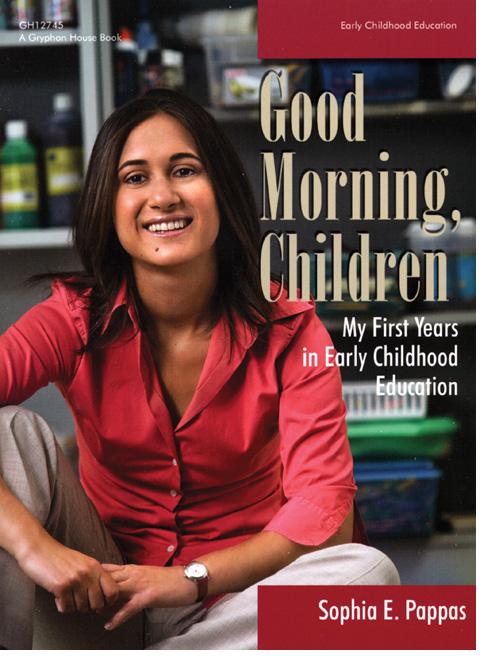 Sophia Pappas isn’t above taking imaginary phone calls from Spongebob to keep her students engaged. These and other playful tactics are woven into the stories Pappas tells in Good Morning, Children, a memoir about her experience teaching pre-kindergarten as a Teach For America corps member. The first half of the book describes her anxieties about teaching pre-K and the ultimate success she finds in her classroom at Carter Elementary in the Newark Public Schools. The second half includes specific anecdotes and musings on her teaching philosophy derived from her blog for Pre-K Now, a non-profit organization that advocates for universal pre-K programs.
The book’s amusing anecdotes keep the reader interested, while Pappas’ careful description of best practices gives the book some real substance. Many chapter headings summarize the lessons Pappas teaches her students: “Making Peace,” Saying Goodbye,” “Taking Charge,” and “Coping with the Bad Days,” to name a few. Other chapters include recommendations for teachers, but without the prescriptive tone present in other “how to” manuals.
Pappas’ instruction strikes a healthy balance between two schools of thought regarding early childhood instruction: the seemingly lackadaiscal approach emphasizing unstructured play and the results-oriented “kindergarten readiness” approach. As Pappas says, “We all seem to want what is best for kids, but in the midst of attacking one straw man after another, we end up committing a greater act of injustice against children: allowing inflexible, dogmatic views to prevent students from a more practical approach that can prepare them for kindergarten in all areas of development.” (It’s heartening to see someone writing so well about erasing false dichotomies, which we’ve also been trying to dispel here at Early Ed Watch in recent posts about playful learning.)
Good Morning, Children has important lessons to offer for early childhood education legislation and policy. Pappas emphasizes the importance of academic standards without neglecting the need for teachers to enable their students’ socio-emotional development. At one point, Pappas visited another pre-K teacher’s classroom, finding it both well-organized and student-centered; however, she noticed that even though it was already late in the year, the teacher “failed to engage the students in higher-order thinking skills capable of laying a strong foundation for future success.” For example, as the children played at various “centers” set up around the room, the teacher asked rudimentary yes-or-no questions such as “is that fun?” Pappas, on the other hand, suggests that teachers ask their students more analytical questions that require them to develop critical thinking, language skills and problem-solving abilities. At one point, when reading the simple nursery rhyme “Jack Be Nimble” with her students, she asks, “What is Jack’s problem?” (His pants could catch fire, the students respond.) “So what should he do?” (Call 911, they say.) “What if he doesn’t have a phone?” She continually pushes her students to look for new solutions to problems and then describe them using clear language.
Pappas also encourages teachers to track student growth as well as make long term goals and plans for students. In a chapter titled “The Power of Planning,” she describes taking notes on her students’ behavior and progress using “Individual Action Plans,” which highlight student strengths and make goals for “target areas.” She ultimately used the notes to develop teaching plans for herself and her students’ families. (The appendix includes a sample Individual Action Plan.)
“I think it’s really exciting that there seems to be a lot of momentum behind early childhood at the state and federal level right now,” Pappas said in an interview with Early Ed Watch last week, but she cautioned that legislators need to hear from teachers and administrators in order “to understand all the different challenges and opportunities at the local level.” She hopes her book, she said, can provide policy makers with the perspective of actual teachers “from the ground – or carpet.”
In the interview, Pappas encouraged states to increase the salaries and benefits for early childhood educators and also proposed looking into different ways of creating quality teachers: “You’re talking about basic salary and benefit changes,” she said, that would give talented teachers an incentive to make their careers in preschool settings. “We need to think seriously,” she said, “about what it takes to be successful in a preschool classroom and provide different routes for people to get there.”
You can contact Sophia directly at earlychild@sophiapappas.com
— Catharine Bellinger
Issues
Programs/Projects/Initiatives
Related

Federal Early Education Update: March 2026
A Bureaucratic Shakeup Threatens Future Child Care Research