
Table of Contents
Employment and Pursuit of Further Education for FCS Baccalaureate Graduates
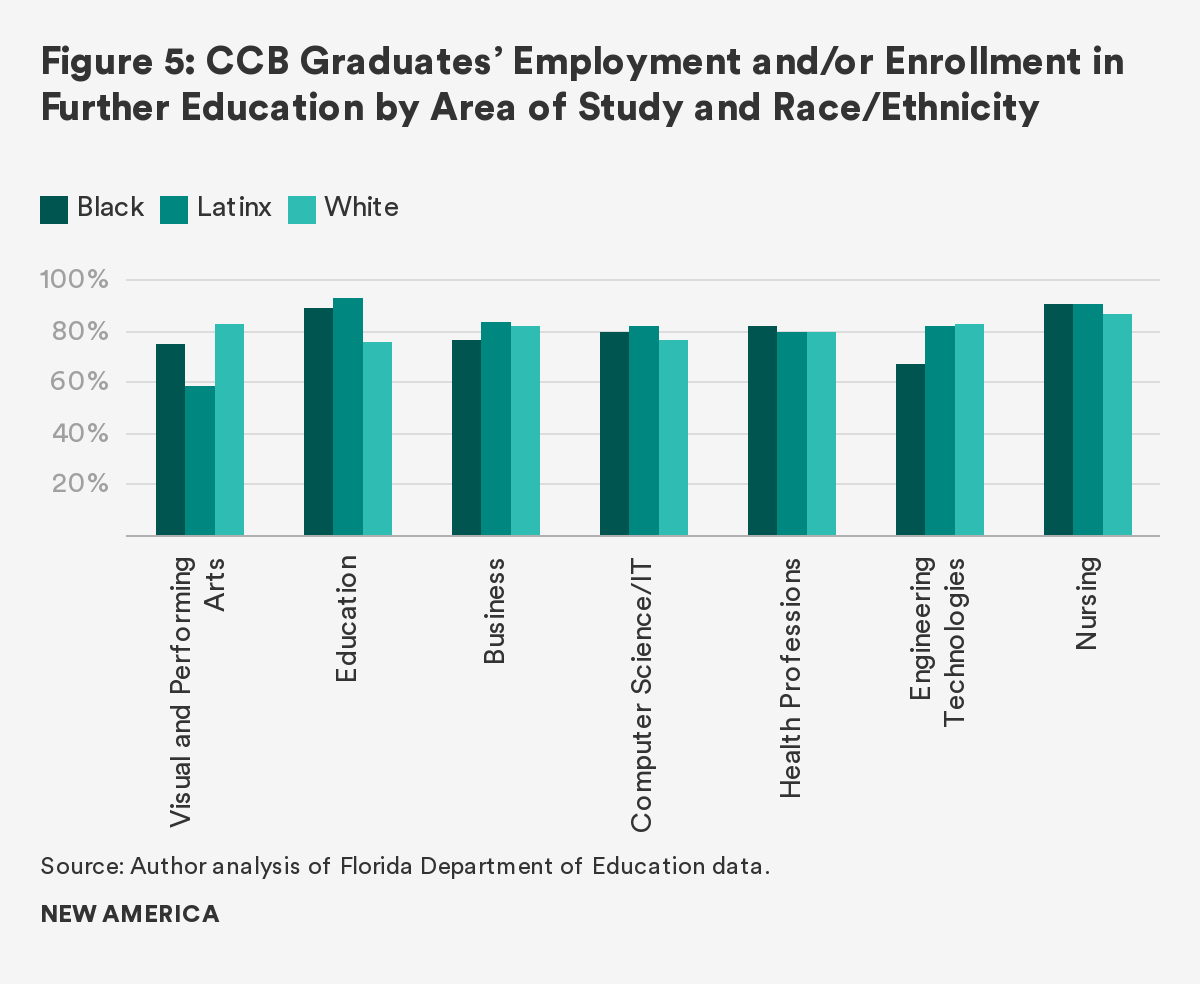
Employment outcomes were strong overall for FCS CCB graduates in this sample, 83 percent of whom were employed one year after graduation. Associate degree graduates in corresponding fields of study were equally likely (83 percent) to be employed. Within baccalaureate graduates, there are some notable differences in employment and further education rates by race/ethnic group that merit further study. For example, Black graduates in business and engineering technologies were considerably less likely than white or Latinx peers to be employed and/or enrolled in further education one year after graduation. Latinx baccalaureate graduates in visual and performing arts, likewise, did not have as positive of employment outcomes as Black or white graduates in the field. In other fields, Black and Latinx graduates outperformed white peers in terms of employment or enrollment in further education one year after graduating. In nursing, education, and IT, white graduates had lower employment and/or further education rates than Black and Latinx graduates, as Figure 51 depicts.
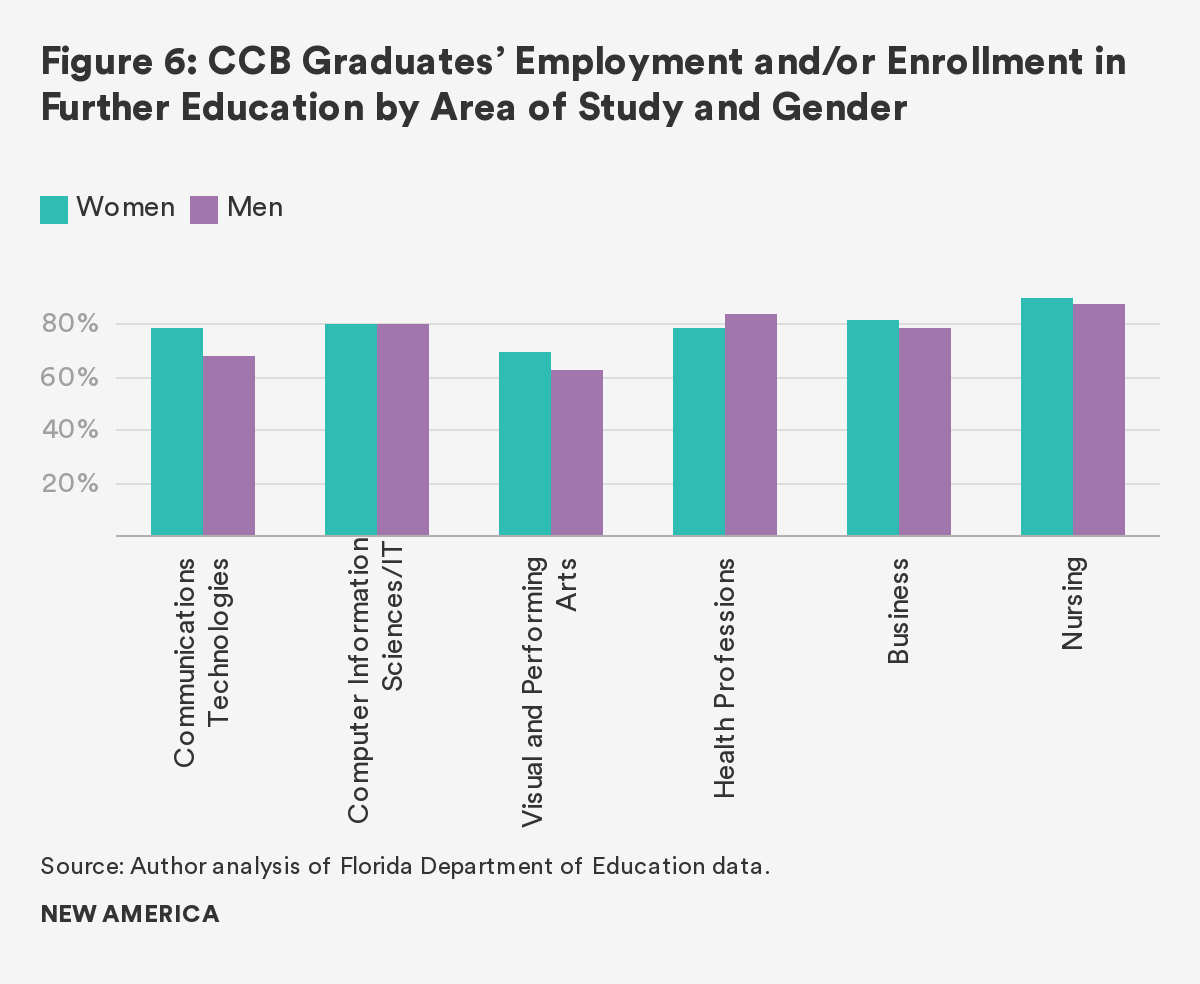
Findings also varied when employment and continuing education rates were disaggregated by gender. As Figure 6 shows, women were more likely to be employed or pursuing additional education one year after earning a bachelor’s degree than men in business, nursing, visual and performing arts, and communications technologies. Men, on the other hand, were more likely to be employed or continuing their education in other health professions. Women and men were equally likely to be employed or continuing their education in IT.
Citations
- Due to the many suppressed values for Asian American, Native Hawaiian, and Pacific Islander graduates and Native American and multiracial graduates, it was not possible to conduct reliable analysis on these groups’ employment or wage outcomes. Further study using other research methods is merited to understand these graduates’ representation in different areas of study and labor market outcomes.