Attention New York State Attorney General Andrew Cuomo

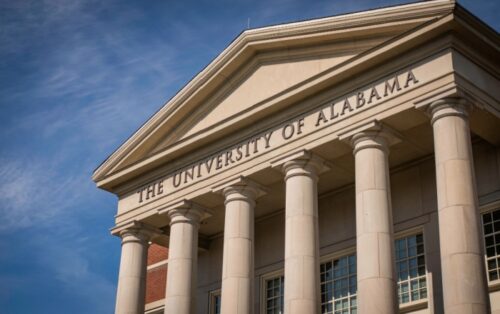
In the Fall of 2004, the Board of Regents at the University of Nebraska at Lincoln agreed to forge an exclusive deal with student loan provider Nelnet. What most of the Regents did not know at the time was that a Foundation connected to the University owned more than 842,000 shares of Nelnet stock, and therefore had a huge stake in the deal being approved.
News of what appears to be a conflict of interest — revealed on Thursday by the Daily Nebraskan, the University’s student newspaper — should be of great interest to New York State Attorney General Andrew Cuomo, who is investigating the sweetheart deals that some lenders have struck with colleges to win student loan business. Perhaps he is aware of it already. The University is one of 60 from which his office has requested information as part of its inquiry.
 The deal that the University made with Nelnet was controversial at the time. Under the arrangement, the University of Nebraska at Lincoln (UNL) agreed to stop providing federal Direct Loans to its graduate and professional students, even though the Direct Loan program is cheaper for taxpayers than the Nelnet and Sallie Mae dominated alternative.
Instead, with the help of Nelnet and its affiliates, the University began lending money to its own graduate students and then flipping the loans to Nelnet for a hefty profit, equal to more than 6 percent of the total amount lent.
To some, this “school as lender” deal is a conflict of interest in and of itself — with the university making hundreds of thousands of dollars off of its own students’ debt.
But while people may debate that point, new revelations leave little doubt that there was an additional conflict present. According to the Daily Nebraskan, and confirmed by UNL officials, the Nebraska University Foundation, a nonprofit corporation that supports private fundraising activities for the university, owned 842,417 shares of Nelnet stock in 2004, and since has sold approximately half of those shares. Given that the value of Nelnet stock has risen sharply since 2004, the Foundation may have made millions in capital gains from selling some 425,000 shares.
Its not hard to find the conflict of interest. UNL is a direct beneficiary of the Nebraska University Foundation, and thus has an undeniable stake in its financial health. Choosing Nelnet as its partner in 2004 (over four other student loan providers) was a profitable choice for UNL for reasons outside of the actual arrangement. The more money Nebraska students borrow (driven by say tuition hikes), the more money the University makes through its school-as-lender deal and derivatively through its interest in the University Foundation’s Nelnet stock.
According to the Daily Nebraskan, Regent members were not informed of the University’s multiple financial relationships with Nelnet when making their decision to approve or disapprove of the college’s school-as-lender deal. Presumably, competing lenders didn’t know of Nelnet’s hidden advantage either. Had they, might they not have offered better bids? Students surely have little idea that their college is getting multiple kickbacks on their student loan business.
Why is this a big deal? The Nelnet-NU Foundation-University of Nebraska love triangle demonstrates how, behind the scenes, universities can have multiple financial relationships with student loan providers that may undermine the integrity of their role as informed intermediaries between students and banks.
Hidden conflicts of interest abound in higher education. But they are especially dangerous when it comes to students loans. Uninformed, young students rely on the advice of their colleges when it comes time to borrow significant sums. Is that advice unfettered? Do students know that it might not be? Might not some care?
The New York State Attorney General appears determined to answer these questions. In a scoop, the Daily Nebraskan published Mr. Cuomo’s letter of inquiry to UNL and 59 other schools. We look forward to seeing his findings and congratulate the Daily Nebraskan for its hard hitting reporting.
Issues
Programs/Projects/Initiatives
Related
State Legislatures Weighing in on Workforce Pell
A Trump Official’s Thin Legal Case Against Accreditors’ DEI Policies