Kalena Thomhave
Emerson National Hunger Fellow, Family-Centered Social Policy Program
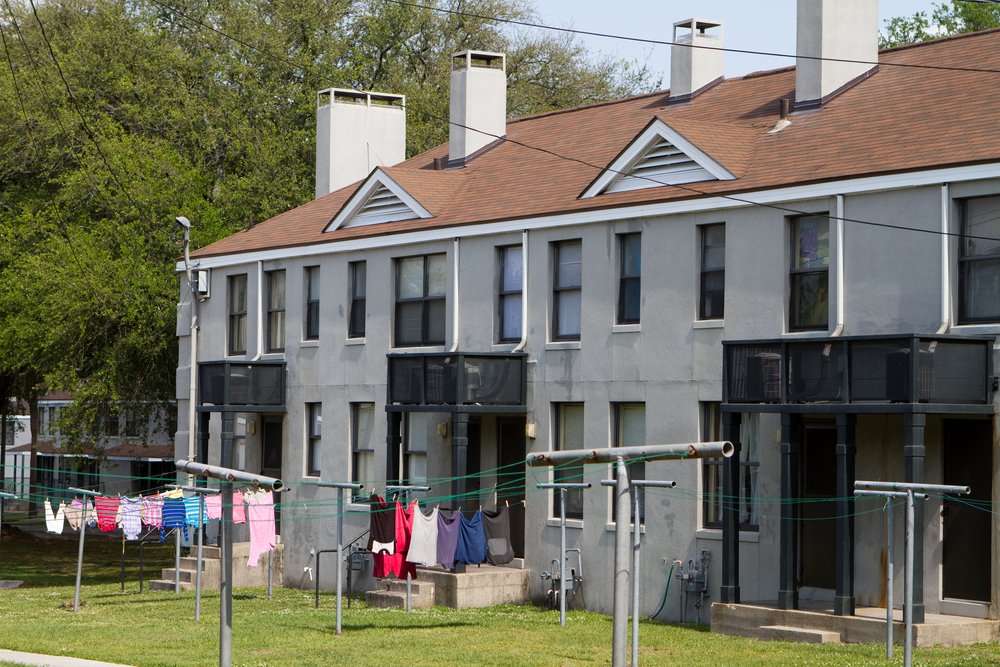


The consequences of inadequate housing and constant housing instability work to compound poverty, causing negative effects not only on a family’s finances, but on their health as well. In Dissent, Mike Konczal writes on the failures of the housing market by shedding light on the different ways it allows low-income people to be violently removed from their homes.
Konczal describes the stories of such failures in a review of Matthew Desmond’s latest book, Evicted, as well as David Dayen’s Chain of Title. Desmond’s analysis centers largely on Milwaukee, where between 2009 and 2011 one in eight renters lost their homes in forced evictions. According to Konczal, violence enters into these scenarios because “in addition to their homes, the evicted lose their possessions, their neighborhoods, their official address for interacting with the state and businesses, [and] their very sense of self and liberty.” The evictions Desmond documents are heavily skewed against people of color, especially women with children.
But, writes Konczal, fault lies not only with landlords that are looking for a profit, but also with the state itself. “Nuisance property ordinances” fine landlords or remove their renting licenses if the police are called to one of their properties too many times for “disorderly behavior.” Pam Fessler reports for NPR on how these ordinances may force landlords’ hands to evict tenants. While the purpose of the ordinances is “to get a handle on crime and safety,” they often affect victims who are calling the police in concern for their own safety. Fessler describes the story of one domestic violence victim who feared calling the police since she knew she could face eviction.
Housing insecurity is a “special kind of exhausting poverty, one that threatens the very security of one’s family” says Konczal.The developmental problems that children face when growing up in inadequate housing are also an area of concern. The Atlantic’s Alexia Fernández Campbell details new research that shows “the amount of time [children spend] living in housing units that [a]re tax delinquent, in foreclosure, or owned by a speculator ha[ve] significant effects on kindergarten readiness.” In addition, substandard housing is linked to higher rates of child abuse as well as family instability. Children who fare the worst are those that test positive for lead poisoning. One of the authors of the study remarked that the discussion on affordable housing “needs to include getting people into better housing, instead of just being satisfied that they have an address.” Konczal ends his piece by asserting that “there’s a fundamental need for security and shelter. If the private market won’t provide it, that points to a more active and assertive role for the state itself.”
Pamela Wood writes in The Washington Post on how Achieving a Better Life Experience Act (ABLE Act) savings accounts will enable people with disabilities to work and save money. According to the 2014 legislation, these accounts are exempt from asset limits up to $350,000. Prior to the ABLE Act, disabled individuals and their families were subject to losing government benefits, including Medicaid, if they had more than $2,000 in their bank accounts. Dozens of states have passed legislation to set up ABLE Account systems for their residents since the federal law has gone into effect. Eric Bromwell, a Democratic member of the Maryland House of Delegates, remarked that the accounts “are a huge first step of getting people with disabilities out of perpetual poverty.”
“Some private equity firms that came in as the cleanup crew for the housing crisis are now repeating errors that banks committed, while others are bypassing the working poor,” reports The New York Times’ Matthew Goldstein, Rachel Abrams, and Ben Protess. In its investigation, The Times examined three of the largest private equity firms currently in the housing market: Lone Star Funds, Nationstar Mortgage, and Blackstone. Unlike banks, Nationstar, the fourth largest collector of mortgage bills, is involved in many different aspects of the housing market: acting as “mortgage bill collector[s], [an] auction house for foreclosed homes and lender[s] to new borrowers.” According to Goldstein, Abrams, and Protess, this potential conflict of interest is the result of an absent social contract. “Private equity, which unlike the banks [do] not borrow money from the government, is answerable to its investors,” they write.
With a focus on Sheboygan, Wisconsin, The Atlantic’s Alana Semuels reports on how even in middle-class strongholds, the future is uncertain. Sheboygan has a strong union presence, a plethora of family-owned businesses like Kohler and Johnsonville Sausage, and technical schools to train students to fill these jobs. “But still, despite all of this,” Semuels writes, “wages are dropping, and it’s getting harder and harder to stay in the middle. Not even Sheboygan is immune to the national and global forces making it tougher for people without a college education.” The reason lies with the need to stay competitive in an increasingly global market. While some companies have greatly benefited from trade and market expansion, “there are others that are shrinking” as a result of globalization.
Building on the Child Tax Credit to Help All Children Thrive | The Century Foundation’s Bernard L. Schwartz Rediscovering Government Initiative and The Center for American Progress | July 8, 2016
The Asset Building News Week will take a holiday respite next Friday, July 8th, 2016. Have a safe and enjoyable Independence Day!
Emerson National Hunger Fellow, Family-Centered Social Policy Program
Policy Analyst, Asset Building Program