Table of Contents
Lead a Renaissance in Great Power Competition Doctrine
History is full of inflection points that inspire analysis into how and why militaries around the world adapted to changes in the strategic environment. In the American context, the interwar period between World War I and World War II and the post-Vietnam era are well documented case studies that frequently inspire modern leaders when they face contemporary challenges. Revising doctrine provides an opportunity for military theorists and practitioners to shift away from the past and towards either a preferred or pragmatic vision of how the military should operate in the future. Publishing the MDO concept sets in motion the Army’s doctrine revision process, opening the door to replicate past successes in rewriting doctrine.
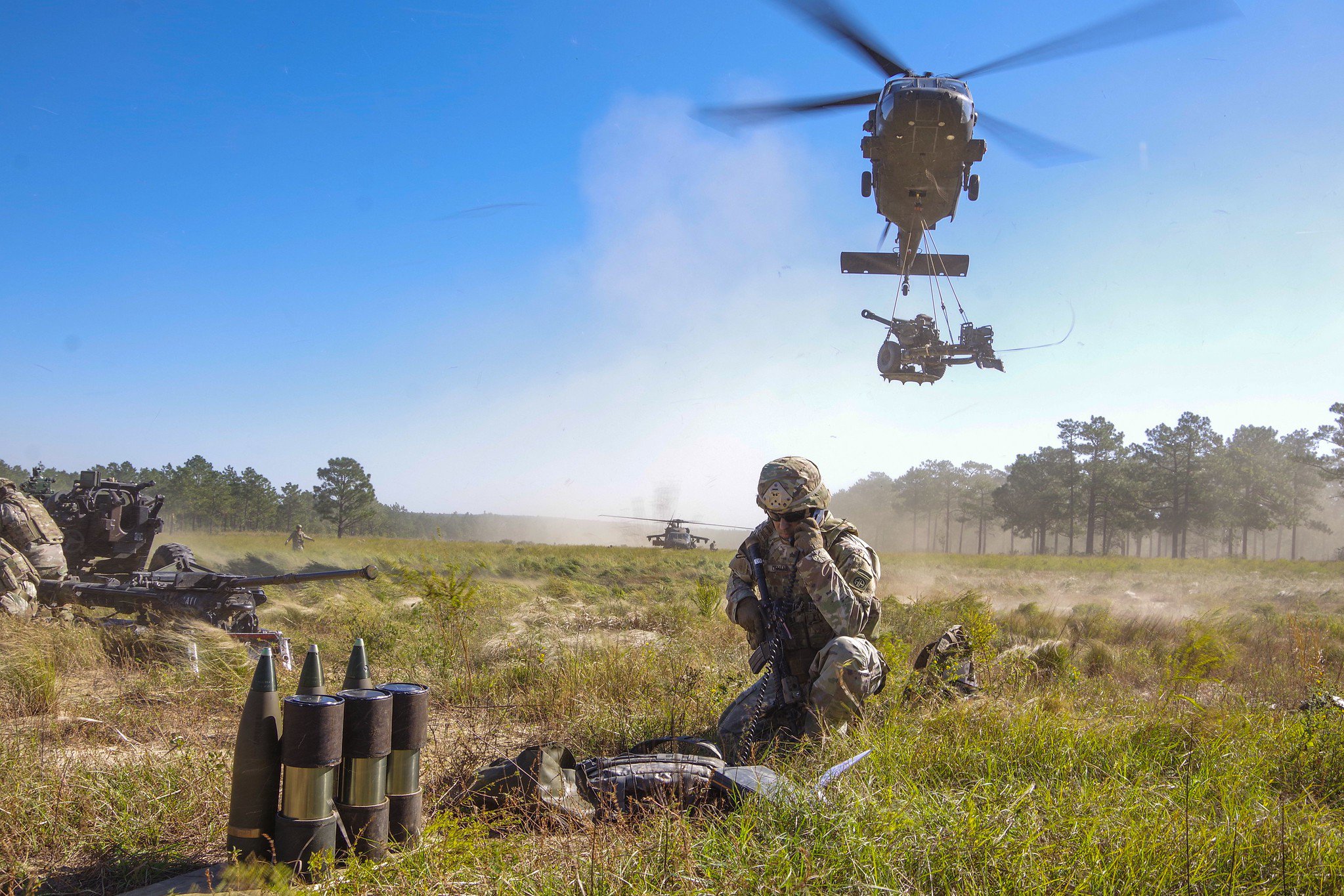
![Ready to deploy whenever, wherever required [Image 44 of 44], by MSG Michel Sauret, DVIDS.jpg](https://d1y8sb8igg2f8e.cloudfront.net/images/Ready_to_deploy_whenever_wherever_required_I.min-800x800.jpg)
MSG Michel Sauret, DVIDS
The 2018 National Defense Strategy (NDS) provides a contemporary inflection point and declares that “inter-state strategic competition, not terrorism, is now the primary concern in U.S. national security.”1 Competition between states has been present throughout history, but the growing influence of countries like Russia and China have highlighted how states can achieve their strategic objectives just short of the threshold of armed conflict. The NDS sets the tone for the entire Joint Force as it shifts towards a world dominated by great power competition.
The evolution of AirLand Battle doctrine took place during a similar period in American history. Following the withdrawal of American forces in Vietnam and shifting its attention to the Soviet threat in Central Europe, the Army found itself looking for new ideas about how to rebuild. In 1973, the Army established a new four-star command known as Training and Doctrine Command (TRADOC). It’s first two commanders, Gen. William E. DePuy and Gen. Donn A. Starry, led the evolution of Army doctrine that came to be known as AirLand Battle.2 The official Army operations doctrine in 1976 was known as “Active Defense,” and it focused more on not losing a war than on achieving decisive outcomes.3 To many, fighting to win was more inspiring than fighting not to lose. Starry assumed command of TRADOC in 1977 and sought to remedy the shortcomings of Active Defense by facilitating a doctrinal debate that focused on firepower and maneuver.4 The outcome of this debate was the 1982 version of Field Manual 100-5, the first Army operations doctrine to be known as AirLand Battle. The Army published a revised version in 1986, but the point at which AirLand Battle became legendary wasn’t until 1991, after the decisive defeat of Iraqi forces during the Persian Gulf War. The application of AirLand Battle doctrine against the Iraqis resulted in such an overwhelming military victory that validated more than 15 years of doctrinal evolution and left deep imprints on the generals that lead the Army today.
The growing insurgencies in Iraq and Afghanistan compelled the Army to think hard about its doctrine and face the reality that it needed to change. The Combined Arms Center at Fort Leavenworth, home of the Army’s Command and General Staff College and Combined Arms Doctrine Directorate, is responsible for updating the Army’s doctrinal manuals. Under the leadership of Gen. David Petraeus, the Combined Arms Center initiated a comprehensive review of Army Field Manual 3-24: Counterinsurgency (FM 3-24), and through the efforts of a strong team of counterinsurgency experts, published the updated doctrine in December 2006. In the process of revising FM 3-24, the Army leadership gave this initiative the attention and priority necessary to motivate the entire Army to study counterinsurgency, which allowed for a quick pivot towards applying the updated doctrine.
In conjunction with the publication of FM 3-24, Military Review (the professional journal of the U.S. Army based at Fort Leavenworth) published a special edition with nearly 200 pages of articles discussing best practices and historical case studies.5 Two years later, Military Review published an equally comprehensive special edition that documented much of the new doctrine’s success on the ground in Iraq.6 Leaders spoke of the updated doctrine at every opportunity. The Army’s embrace of counterinsurgency doctrine was swift and complete. General Petraeus assumed command of the fight in Iraq and received credit for turning the tide of that conflict by applying the new counterinsurgency doctrine. A similar revitalization of doctrine is needed today.
The 2018 NDS defines a strategic approach that expands the competitive space from a position of strength by seeking opportunities for cooperation with competitors and adversaries.7 The existing Joint and Army doctrine for expanding the competitive space can be found in publications that discuss security cooperation.
Joint Publication 3-20, Security Cooperation – Security cooperation (SC) encompasses all Department of Defense (DOD) interactions, programs, and activities with foreign security forces (FSF) and their institutions to build relationships that help promote US interests; enable partner nations (PNs) to provide the US access to territory, infrastructure, information, and resources; and/or to build and apply their capacity and capabilities consistent with US defense objectives. It includes, but is not limited to, military engagements with foreign defense and security establishments (including those governmental organizations that primarily perform disaster or emergency response functions), DOD-administered security assistance (SA) programs, combined exercises, international armaments cooperation, and information sharing and collaboration.8
The Army’s complementary doctrine is Field Manual 3-22: Security Cooperation, which outlines the legal and planning considerations for executing the tasks related to security cooperation. In the back of the manual, written in 2013, is a chapter that discusses considerations for working with foreign security forces, a critical component to conducting any sort of military activities outside of the sovereign confines of the United States.9
As the Army considers how to transition the MDO concept into MDO doctrine, it must first rewrite FM 3-22 so as to more explicitly define how the Army contributes to great power competition. In the same way that Petraeus and the Combined Arms Center used the revision of FM 3-24 to help transform operations in Iraq in 2006, the Army can inspire theorists and practitioners to think hard about how the United States uses its military to achieve its strategic objectives without resorting to armed conflict. Military Review should publish a “Competition Reader” that provides theory, best practices, and case studies that discuss past, present, and future security cooperation. The MDO concept is clear that “Army forces…conduct multi-domain operations to prevail in competition.”10 The best way to keep MDO central to Army modernization, and to keep it nested within the National Defense Strategy, is to publish new security cooperation doctrine that helps the Army understand how it enables the nation to win in great power competition.
Immediate Tasks:
- Initiate a review of Field Manual 3-22: Security Cooperation (TRADOC)
- Identify mission essential tasks related to competition (FORSCOM)
- Establish a series of competition-focused wargames (AFC)
- Establish a series of writing competitions that focus on future warfare (AFC)
Citations
- Mattis, National Defense Strategy (2018), 1.
- Skinner, Douglas W. AirLand Battle Doctrine, (Center for Naval Analyses, Alexandria, VA, 1993), 4-5. source
- Skinner, 3.
- Skinner, 5.
- Special Edition – Counterinsurgency Reader, Military Review, (Fort Leavenworth, Kansas, October 2006). source
- Special Edition – Counterinsurgency Reader II, Military Review, (Fort Leavnworth, Kansas, August 2008). source
- Mattis, National Defense Strategy (2018), 4-5.
- Chairman of the Joint Chiefs of Staff, Department of Defense, Joint Publication 3-20: Security Cooperation, (Washington, DC, 23 May 2017), v. source
- Headquarters, Department of the Army, Field Manual 3-22: Security Cooperation, (Washington, DC, 22 January 2013) 6-1.
- The U.S. Army in Multi-Domain Operations – 2028, page vii.