Table of Contents
Dedicate a Brigade-level Experimental Task Force to Army Futures Command
In the preface of the MDO concept, Gen. Stephen Townsend (Commander of U.S. Army Training and Doctrine Command) wrote that, “To win tomorrow, we [the Army] must evolve how we organize and integrate the Army as part of the joint force.”1 He further emphasized the need to “deepen the operational integration of general purpose and special operations forces.”2 This call to change the way the Army organizes is definitely not a simple undertaking. In most cases, significant changes to Army organizations, especially at the battalion level and above, take years to study and implement. More importantly, the way the Army organizes, also known as its force structure, is a key element of the Army’s overall culture.3
The MDO concept presents the Army with an opportunity to think far more deeply about its force structure. As large and successful organizations go, the Army is an excellent example of one that faces the innovator’s dilemma. Clayton Christensen’s book, The Innovator’s Dilemma, describes how successful, well-managed companies fail in the face of disruptive change.4 A well-known example of this dilemma from military history is the case of the French having the best trained and equipped military in Europe in 1940, and yet the Germans developed tactics and organizations, frequently referred to as Blitzkrieg, that overwhelmed the French defenses. The Army’s overall modernization purpose is to prevent it from becoming the next example in military history of a force that failed to adapt to disruptive change.
While primarily focused on the world of business, The Innovator’s Dilemma makes recommendations to large organizations trying to adapt to disruptive change. With some paraphrasing, the Army can examine Christensen’s three primary options for large organizations trying to create new capabilities.
The first option recommends acquiring an external, existing organization that already accomplishes the new tasks. This option is not feasible for the Army, due to the fact that no such organization exists. In theory, if the Marine Corps had already solved how to conduct multi-domain operations in the way that the concept describes, then the Army could replicate that solution. Unfortunately, both services are on the same quest to improve their capabilities to meet future threats.5
The second option recommends creating new capabilities internally. In many cases, sustaining technologies create innovations within existing organizations or systems through incremental change.6 Christensen argues that companies attempting to experiment with sustaining technologies should use this option, which is the Army’s chosen approach.7 From 2010 to 2016, one of the Army’s armored brigade combat teams (ABCT) served at Fort Bliss, Texas as the Army Evaluation Task Force (AETF).8 In this role, the AETF’s top priority was to help the Army experiment with new equipment and new concepts of operation. However, the Army reassigned the ABCT to become a part of the pool of deployable units, effectively eliminating a dedicated brigade-sized, experimental unit from the force.9 Today, U.S. Army Forces Command and U.S. Army Futures Command will need to create partnerships between Cross Functional Teams and deployable units to conduct experimentation.
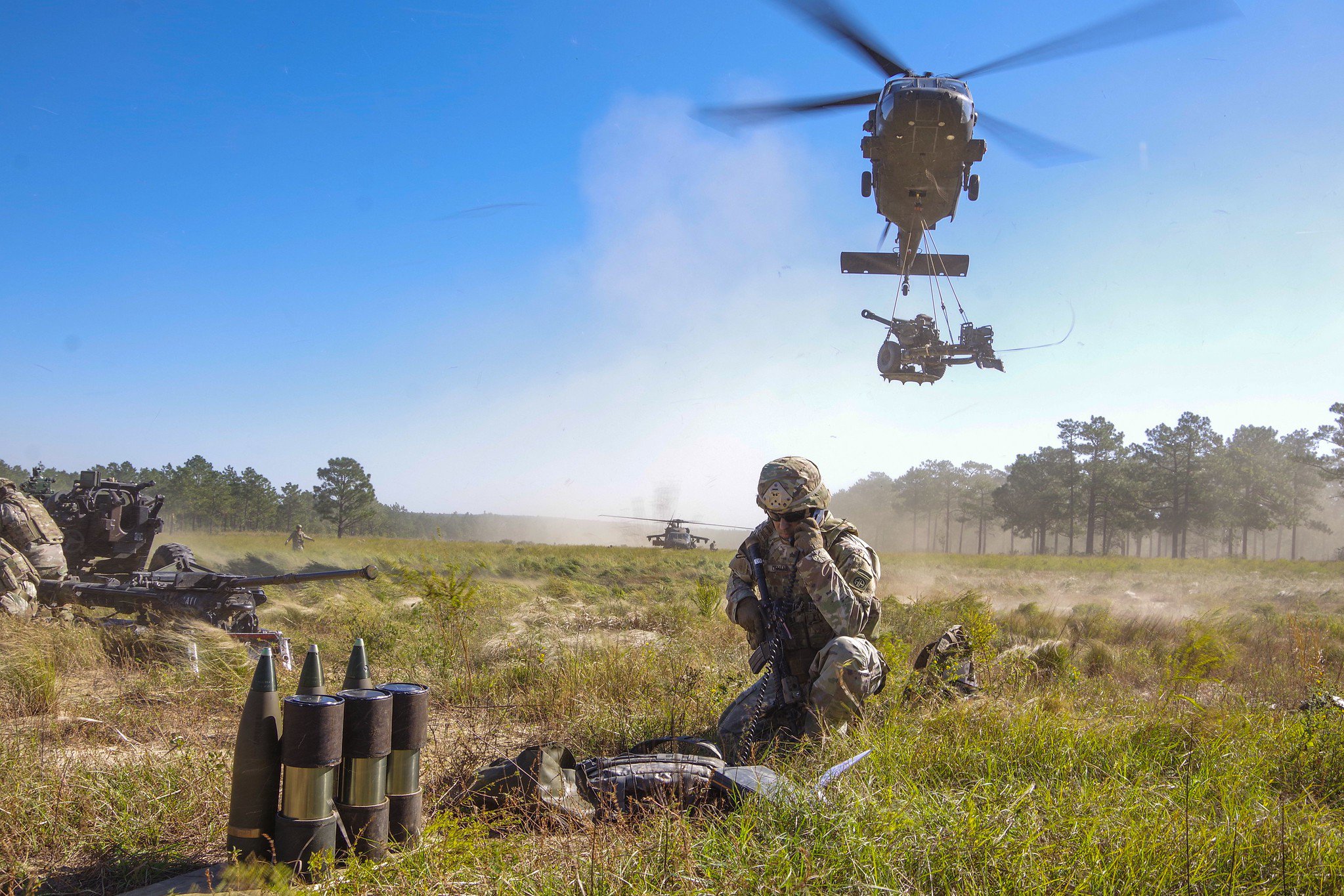
![Combat Support Training Exercise prepares Army Reserve units to be self-sustaining in tactical objectives [Image 5 of 7].jpg](https://d1y8sb8igg2f8e.cloudfront.net/images/Combat_Support_Training_Exercise_prepares_Ar.min-800x800.jpg)
SGT David Lietz, DVIDS
Christensen’s third option recommends creating capabilities by spinning out a new organization. For the Army, this represents a return to a dedicated experimental force. In the 1990s, the Army used the 1st Brigade of the 4th Infantry Division at Fort Hood, Texas as an experimental force under the Force XXI initiative, which was the last major attempt by the Army to examine its organizational structure in the face of a potential disruptive change.10 The AETF at Fort Bliss, from 2010 to 2016, also served in a dedicated, experimental capacity. The Army should return to this model and dedicate one of its brigade-level organizations to serve as the experimental force.
In parallel with the establishment of the CFTs, the Army began experimenting with a new organization called the Multi-Domain Task Force (MDTF). The MDTF seeks to understand how to speed up the integration of the capabilities provided by the intelligence, cyber, electronic warfare, space, and information communities. The Army established the MDTF at Joint Base Lewis-McChord and focused its developmental efforts on military challenges in the Pacific region. The MDTF demonstrates organizational innovation by combining these capabilities within a single battalion. The Intelligence, Information, Cyber, Electronic Warfare, and Space (I2CEWS) battalion, which is currently organized within an Army Fires Brigade, is an example of the type of capability that fulfills all three tenets of the MDO concept.11 The experimental unit has shown enough promise during USINDOPACOM area exercises that the Army has decided to establish a second unit in Germany.12 The MDTF represents a great step towards experimenting on the ideas within the MDO concept, however, by assigning these battalions within readiness-centric fires brigades, the priority towards experimentation will diminish.
The Army cycles back and forth between conducting experimentation internal to deployable units or dedicating a unit solely to experimentation. During the Cold War, the Army dedicated combat units to Combat Developments Command (1962-1973) and Combat Developments Experimentation Command (1974-1988), which provided a centralized structure to the Army’s capability development organizations and processes.13 As the Army explored AirLand Battle, deployable combat organizations located at TRADOC installations served as the capability development community’s experimental force.
One of the key reasons for establishing an experimental force is the recognition that potentially disruptive technologies and concepts will impact the Army’s force structure. Christensen recommends that the most promising approach to addressing disruptive change is to place responsibility to address disruptive technologies in small organizations whose performance meaningfully affects the whole Army’s outcomes.14 A brigade is not exactly small as far as Army organizations go, but its performance definitely affects the Army’s outcomes.
Across the Army’s six modernization priorities, the work of the CFTs is to find sustaining technologies that make each focus area better. Small units can test a better cannon or helicopter or armored vehicle without sacrificing their emphasis on readiness. However, to address disruptive technologies, the Army has to think bigger.
Immediate Tasks:
- Identify a brigade-level organization to serve as an experimental task force for a period of two years (FORSCOM)
- Conduct a series of wargames that objectively measure and compare current and future organizations at all echelons (AFC)
- Establish a series of writing competitions that focus on future warfare (AFC)
Citations
- The U.S. Army in Multi-Domain Operations – 2028, iii.
- The U.S. Army in Multi-Domain Operations – 2028, iii.
- Zimmerman, S. Rebecca, Kimberly Jackson, Natasha Lander, Colin Roberts, Dan Madden, and Rebeca Orrie, Movement and Maneuver: Culture and the Competition for Influence Among the U.S. Military Services. Santa Monica, CA: RAND Corporation, 2019. source. Also available in print form., 31-32.
- Christensen, Clayton M. The Innovator’s Dilemma: When New Technologies Cause Great Firms to Fail. Harvard Business Review Press, 2016., Introduction.
- Christensen, Chapter 8.
- Christensen, Introduction.
- Christensen, Chapter 8.
- “Brigade Modernization Command.” Www.army.mil, U.S. Army, 15 Feb. 2011, www.army.mil/article/51926/brigade_modernization_command.
- “Units/Tenants.” 2nd BCT, 1st Armored Division:: Fort Bliss, U.S. Army, 9 Jan. 2019, home.army.mil/bliss/index.php/units-tenants/1st-armored-division/2nd-bct-1st-armored-division.
- Donnelly, William M. Transforming an Army at War: Designing the Modular Force – 1991-2005, (Center for Military History, (Washington, DC, 2007), 6. source; Hanna, Mark. “Task Force XXI: The Army’s Digital Experiment,” Strategic Forum, (Institute for National Strategic Studies, National Defense University, Washington, DC, July 1997). source
- Wendland, Christopher, “Multi-Domain Task Force Takes on Near-Peer Operations,” Fires, (Fires Center of Excellence, Fort Sill, Oklahoma, May-June 2018). source
- Kimmons, Sean. “Second Phase of Multi-Domain Task Force Pilot Headed to Europe.” Www.army.mil, U.S. Army, Army News Service, 11 Oct. 2018, www.army.mil/article/212342/second_phase_of_multi_domain_task_force_pilot_headed_to_europe.
- Kamara, Hassan, “Army Combat Developments Command: A Way to Modernize Better and Faster than the Competition,” The Land Warfare Papers, (Institute for Land Warfare, Association of the United States Army, Arlington, VA, July 2018). source; Department of the Army: United States Army Combat Developments Experimentation Command (USACDEC), USACDEC Experimentation Manual, (Fort Ord, CA, 1981), 1-3 – 1-9. source
- Christensen, Chapter 6.