Table of Contents
A Summary of Multi-Domain Operations
As is the case for most military concepts, MDO requires some explanation.
Like many previous concepts, MDO describes the threats and components of the future operational environment in order to make a strong case for initiating significant changes. In the same way that the National Defense Strategy identifies China and Russia as strategic competitors, the MDO concept describes how those actors are impacting the operational environment today and into the future. The concept places significant emphasis on how Russia has demonstrated its willingness to stress the international order as it competes below the traditional threshold of armed conflict.1
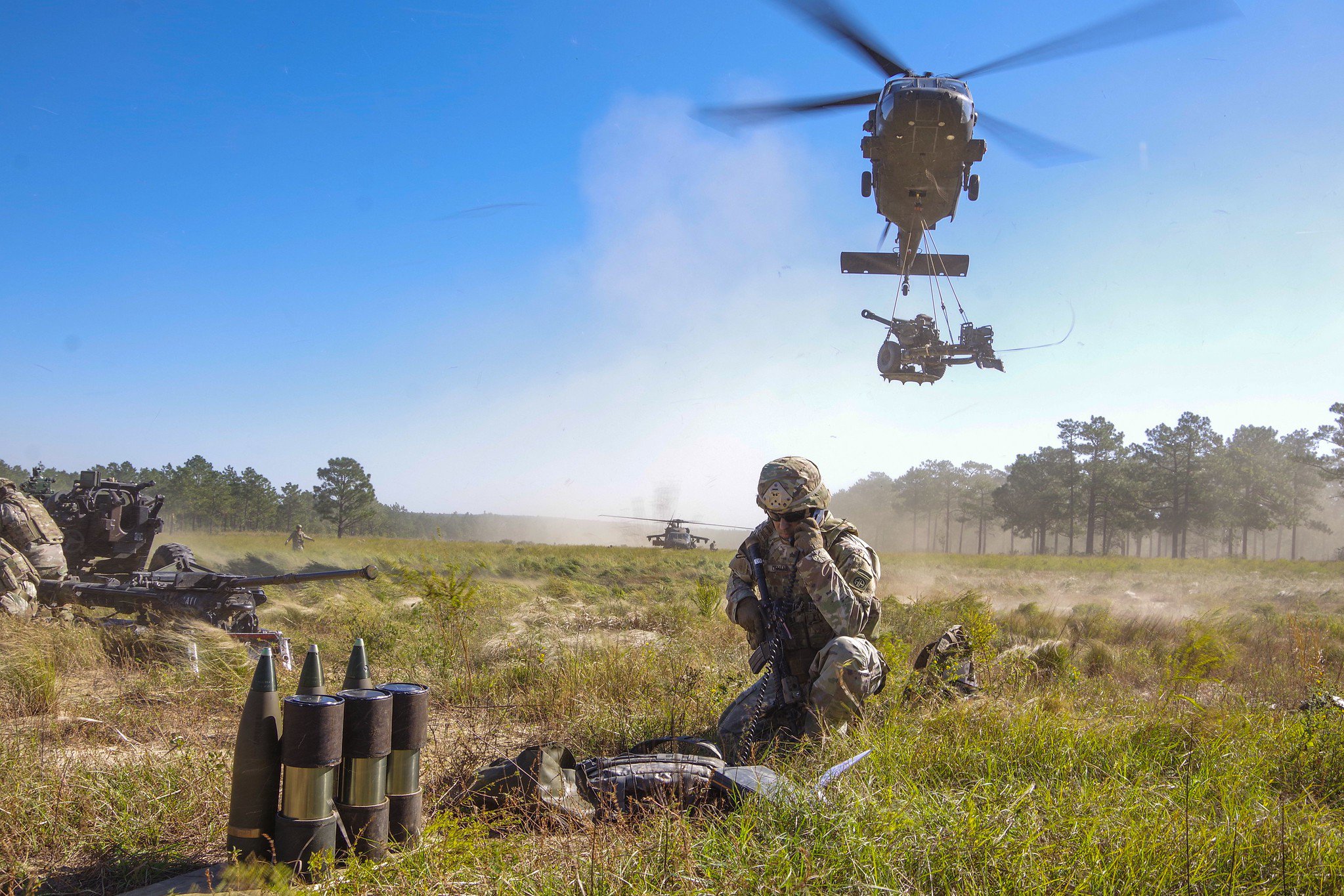
![1st Brigade Combat Team, 82nd Airborne Division trains during Decisive Action Rotation 19-08.5 [Image 6 of 7], by SGT Michelle Blesam, DVIDS.jpg](https://d1y8sb8igg2f8e.cloudfront.net/images/1st_Brigade_Combat_Team_82nd_Airborne_Divisi.min-800x800_bCyOdj9.jpg)
SGT Michelle Blesam, DVIDS
The concept describes three so-called tenets of MDO that help solve the problem that every military faces: How does a joint force compete militarily prior to armed conflict, penetrate and then dis-integrate an enemy’s anti-access and aerial denial systems, exploit the resulting freedom of maneuver, and finally, return to a period of strategic competition following the war?2 The tenets are calibrated force posture, multi-domain formations, and convergence. Collectively, these tenets describe an army organized and authorized to plan and conduct tactical operations in all five military domains, even before the onset of armed conflict.3
Calibrated force posture describes the Army’s worldwide footprint and mirrors the 2018 National Defense Strategy’s global operating model.4 This tenet calls for greater decentralized authorities and access to tightly controlled national capabilities that would allow the Army to better compete against adversaries prior to armed conflict.5
Multi-domain formations describe Army combat organizations that conduct operations in all domains at increasingly lower echelons. A far-reaching element of this tenet is the idea that soldiers will achieve greater levels of individual performance through machine learning, artificial intelligence support systems, and biotechnical sensors.6
The tenet of convergence asserts that through cross-domain synergy, layered options, and mission command, the Army will impose complexity on the enemy in ways not achievable through single domain alternatives. As the Army explores how to achieve this tenet, it must develop systems and processes that help manage the commander’s increased span of control of a diverse collection of capabilities and weave them together on the unit’s synchronization matrix.7
Tenets of MDO
- Calibrated force posture
- Forward presence forces
- Expeditionary forces
- National-level capabilities
- Authorities
- Multi-domain formations
- Conduct independent maneuver
- Employ cross-domain fires
- Maximize human potential
- Convergence
- Cross-domain synergy
- Layered options
- Mission command
Besides publishing this concept, the Army has taken a number of modernization initiatives. Beginning in 2017, the Army leadership issued a new vision8 and six modernization priorities9 that set the tone for all modernization efforts. To disrupt the status quo of the acquisition process, the leadership established eight cross-functional teams (CFTs), managed by a new four-star command.10 The Army also created an Artificial Intelligence Task Force11 and a Talent Management Task Force12 to study and develop information age systems and capabilities that inform the Army’s transition away from legacy Cold War approaches to warfare. Collectively, these initiatives attempt to kick start the Army on the path towards achieving the future described in the MDO concept. The Army leadership recognizes that changes in the character of warfare will take place, and that these changes are unpredictable. The goal of the modernization strategy is to set the conditions for the Army to adapt to those changes better than any possible rival.
The Army's Eight Cross-Functional Teams
- Long range precision fires
- Next generation combat vehicle
- Future vertical lift
- Army network
- Air and missile defense
- Soldier lethality
- Synthetic training environment
- Assured position, navigation, and timing
Citations
- TRADOC Pamphlet 525-3-1, The U.S. Army in Multi-Domain Operations – 2028, (Fort Belvoir, VA: TRADOC, 6 December 2018), 6-7. source
- The U.S. Army in Multi-Domain Operations – 2028, page viii-ix.
- The U.S. Army in Multi-Domain Operations – 2028, 17.
- Mattis, James. Summary of the National Defense Strategy of the United States of America: Sharpening the American Military’s Competitive Edge, (Washington, DC, January 2018), 7. source
- The U.S. Army in Multi-Domain Operations – 2028, page 17-18.
- The U.S. Army in Multi-Domain Operations – 2028, page 19-20.
- The U.S. Army in Multi-Domain Operations – 2028, page 20-24.
- Esper, Mark T. and Mark A. Milley, “The Army Vision,” (Washington, DC, June 2018). source.
- McCarthy, Ryan D. and Mark A. Milley, “Modernization Priorities for the United States Army,” (Washington, DC, 3 October 2017). source.
- “STAND-TO!: Army Futures Command” Www.army.mil, Army Futures Command Task Force, 28 Mar. 2018, www.army.mil/standto/2018-03-28. source.
- Esper, Mark T. “Army Directive 2018-18 (Army Artificial Intelligence Task Force in Supportof the Department of Defense Joint Artificial Intelligence Center),” (Washington, DC, 2 October 2018). source.
- “STAND-TO!: Army Talent Management Task Force.” www.army.mil, Army G1, 11 Aug. 2016, www.army.mil/standto/archive_2016-08-11. source.