
Table of Contents
- Foreword
- The Development of Smart Water Markets Using Blockchain Technology (Aditya K. Kaushik)
- Civilian Drones: Privacy Challenges and Potential Resolution (Ananth Padmanabhan)
- The Privacy Negotiators: The Need for U.S. Tech Companies to Mediate Agreements on Government Access to Data in India (Madhulika Srikumar)
- Governing Data: Non-Discrimination and Non-Domination in Decision-Making (Joshua Simons)
- Open Transit Data in India (Richard Abisla)
- Blockchain Regulation in the United States: Evaluating the overall approach to virtual asset regulation (Tanvi Ratna)
- Improving India’s Parliamentary Voting and Recordkeeping (Pranesh Prakash)
- India and the United States: The Time Has Come to Collaborate on Commercial Drones (Sylvia Mishra)
- Civic Futures 2.0: The Gamification of Civic Engagement in Cities (Subhodeep Jash)
- Key Differences Between the U.S. Social Security System and India’s Aadhaar System (Kaliya Young)
Civic Futures 2.0: The Gamification of Civic Engagement in Cities (Subhodeep Jash)
Subhodeep Jash is a Senior Consultant with FTI Consulting Asia’s Strategic Communications Practice at New Delhi. The idea for this research stemmed from his stint with the WZB Berlin Social Science Center.
Acknowledgements: I would like to express my gratitude to Charru Malhotra, Perry Nunes, Liav Orgad and Jess Riegel for their valuable insights. I wish to express my appreciation for the kind support and guidance of Awista Ayub and Melissa Salyk-Virk at New America. Last, but not the least, I thank the entire cohort of the 2019 India-U.S. Fellows for their feedback towards refining the contours of this paper.
Executive Summary
Citizenship is a fundamentally political institution. This research focuses on the intersection of technology and active citizenship, which is a central component of a republican conception of citizenship where citizens are expected to engage in political deliberation and contribute to the common good of the community. This paper is a primer on the newer forms of civic interactions that emerge when gaming elements (such as points, badges, rankings, rewards, etc.) are introduced into a non-game setting like civic engagement. Further, it maps current trends and variations around the gamification of civic engagement. It begins with two unique use-cases from Boston (United States) and Tlalnepantla (Mexico) that illustrate how gamification can encourage greater participation in governance processes and possibly address gaps in efficiency facing democracies. Finally, the research attempts to form a typology of the various civic innovation projects in Europe and the Americas, and Subsequently, examines the broad level societal benefits and ethical challenges that arise from these interventions.
The closing section of the paper introduces the context of civic engagement in one of the world’s largest digital demos, India and what a potential for gamification in that socio-political context could imply. While this potential for gamified governance looks encouraging, its use is being examined more as a complementary tool to existing approaches surrounding citizen participation and interactions.
Pokemon Gov and “Points” of Kindness
Digital technology is increasingly used to experiment with new forms of encouraging citizen engagement. The spectrum of such experimentation ranges from chatbots that drive interactions between government officials and citizens in Jersey,1 (an island located in the English Channel), to points-based systems such as catalogues of good deeds (in Mexico) to motivate active citizenship. A common thread behind such ideas is to provide incentives that motivate civic activism, with the hope that, over time, such incentives will create a culture of communal activism. Two such salient use-cases for gamification emerging in the U.S. city of Boston and the Mexican city of Tlalnepantla are discussed hereunder that illustrate successful deployment in these new civic interactions.
Digital technology is increasingly used to experiment with new forms of encouraging citizen engagement.
In 2016, the city of Boston in the state of Massachusetts launched a spring-time campaign called “SpotHoles” as a way to encourage constituents to generate more pothole reports during the snow-melt month of March when potholes are especially prevalent. Prior to this campaign, residents could call a helpline to report such civic grievances. However, a major challenge existed within the helpline reporting system: the ability to situate these potholes within the neighborhoods.
Subsequently, the SpotHoles campaign was deployed to report potholes with better accuracy across the city by using a mobile application-based scavenger hunt akin to the augmented reality mobile game, Pokémon Go. After creating a branded campaign with associated digital assets, SpotHoles netted more than 300 percent higher citizen-reported potholes2 than the same period in the previous year. And even better, the increased reports were accompanied by an accurate location because of the mobile reporting application’s ability to geo-locate issues, allowing users to snap a picture and send a note to the city.
The success of the initiative led to a partnership between Niantic Inc., the developer of Pokémon Go and the Boston Mayor’s Office of Urban Mechanics to institute a participatory Pokémon Go initiative with school students. The initiative developed “PokéStops,”3 which provided a way of incorporating real-world locations into the game build. For example, the potential locations for PokéStops could be small parks or historic buildings. Students were asked to make short videos explaining why these locations should be included in the game. Then, a youth-led selection jury would pick the winning locations. The idea of involving citizens into this curation exercise was identified as a way to celebrate meaningful and accessible locations in the city and raise civic awareness among youth.
As another example, Tlalnepantla de Baz, a city in Mexico, suffered from low civic engagement and its residents were indifferent to neighborhood problems. There was little interest even in filing reports of criminal acts, which prevented the authorities from taking action. This indifference threatened the city’s social fabric, making citizens feel disconnected and insecure. In 2016, an initiative from the Mayor’s office4 encouraged local citizens to participate in the community by choosing a “good deed” from a catalog. Examples of good deeds included voting, assistance to the elderly, job training, first-aid courses, safety training, professional consultations, organizing cultural events, and self-employment workshops. Good deeds could be municipal, but also universal—for example, the promotion of environmental activities. Each good deed that was performed was recorded and given a score, and citizens were able to claim benefits according to their score from a parallel “Catalogue of Municipal Benefits.” Municipal benefits included bike rental and public transportation, scholarships, tickets to cultural events, and reduced municipal housing. The goal is to motivate civic activism, with the hope that, over time, such incentives will create a culture of communal activism. In the past few years, there have been suggestions to use technology to motivate more active citizenship.
The Tlalnepantla city officials were inspired by community network projects that promoted a sense of collaboration in other cities but felt that those projects were too narrowly focused. The city’s Mayor, Guillermo Alfredo Martínez González, said that the initiative led to a closer interaction among residents by promoting good deeds, and had a transformative effect on the entire society by “allowing for greater collective development, conflict resolution, stronger identity, and reconstitution of the social fabric.”5
Both these endeavors highlight how game elements such as a points based system or a scavenger hunt akin interface can reinvigorate the interactions between citizens and public policy. This paper examines a range of such similar experiments that brought about this emergence in the gamification of civic engagement.
Defining Gamified Civic Engagement
New forms of civic interactions have been driven by the incorporation of game elements (i.e. points, badges, levels, rankings, rewards) into the non-game context of citizen engagement and have created conditions for gamified civic engagement.6 In recent years, there has been a growing appeal of the gamification of civic engagement as a possible solution to reshaping participatory regimes among residents in cities similar to the cases of Boston and Tlalnepantla.
It is important to distinguish gamification from “mere games”—since the use of game mechanics does not necessarily make a product a (video-) game.7 While the main scope of games is pure entertainment, gamification is aimed at transmitting features that leverage elements of role play, story, and agency.8 According to some authors (Landers et al., 2018), this happens under three conditions:
- The perception of a non-trivial goal that can reasonably be pursued
- The desire to pursue that goal under behavioral rules that differ from the behavioral rules that one would normally apply
- The voluntary nature of the decision to pursue that goal
Background
An increasing number of cities, including a large number in the developed world, suffer from low civic participation, an absence of social solidarity, and a feeling of apathy in creating solutions to common problems. Harvard-based sociologist Robert Putnam suggests that people living in diverse but divided communities tend to “hunker down” and “withdraw from collective life”9 by placing less trust in their neighbors, including those from a similar background. As a result, they assume markedly more negative attitudes towards their local areas, vote less; volunteer less, and give less to charity. A recent report of the City of London portends an alarming development—it indicates a lack of “cross-community contact,” and a low level of active citizenship, especially among newcomers.10 The report finds this reality to be “one of the key challenges facing cities across the world” and urges the need to find solutions to encourage active citizens who “shape the decisions that affect their communities and their city” and share “a sense of rootedness and active participation in community life.”11
The OECD is one of the few public institutions that have guidelines12 on measuring trust, both interpersonal and institutional. A recent OECD study finds that only 43 percent of citizens trust their government. Trust in government is deteriorating in many OECD countries. Lack of trust compromises the willingness of citizens and business to respond to public policies and contribute to a sustainable economic recovery. Open government policies that concentrate on citizen engagement and access to information can increase public trust.
Early Use Cases
What are the earliest use-cases of gamification around civic engagement? One of the early salient cases is the ‘Howard Dean for Iowa Game’,13 the first official video game commissioned in the history of the U.S. presidential elections in 2003. Players in the game earned points for virtual sign-waving, door-to-door canvassing, and pamphleteering. The engagement for this game led to 100,000 plays before the Iowa caucus and signaled a new form of political campaigning.
Another example occurred in 2004 when the Illinois House Republicans released a game called Take Back Illinois14 designed to represent their political positions on various policy issues (such as economic development, healthcare, and education). The game was at the center of that year’s legislative electoral race. The game attained a fair degree of popularity as it received traction from online distribution channels and supported via local blogs. The game was praised for its attempt to capture political communication rhetoric in a persuasive manner.
During the lead up to Barack Obama’s presidential inauguration in 2009, his team asked American citizens to vote for whichever issue they cared about most on a platform called Change.gov. The idea was to crowdsource the highest-priority issues from American citizens.
Then, in 2016, Hillary Clinton’s presidential campaign team launched an app designed to gamify the campaign process. The application, which was inspired by the Facebook game, Farmville, offered virtual badges and real-life rewards for activities such as sharing promotional videos through social media platforms.
These scenarios all have a precise scope: to engage potential voters. Albeit, none of these three campaigns led to successful electoral outcomes for the three candidates, they did herald an innovative approach to bolster citizen engagement.
Certain experiments pertaining to gamification were seen more in a setting to provoke discussions, as seen in citizen engagement processes with SAM from New Zealand,15 where an AI chatbot simulated interaction between a virtual politician and users on Facebook messenger. All of these early engagement efforts sought to explore ways to reinvent the citizen interaction process through gamification as it offered greater motivation towards participation and a transparent mechanism to engage in governance processes.
The Landscape of Citizen Gamification
During the course of this research, 25 to 30 initiatives that attempted to gamify civic engagement were mapped. These projects were geographically diverse, spreading across Europe, North America, and Asia. Based on the mechanisms involved, the projects could be divided into two broad categories:
- Participatory decision-making: consultation/budgeting forums and crowdsourced decision-making, and
- Points-based system and community currencies.
Citizen engagement efforts employ several different “means” to achieve many different “ends.” Depending on the context, citizens can play different roles ranging from providing ideas and expertise (as with policy crowdsourcing platforms) to being representatives of specific interests (as seen with participatory budgeting and deliberative polling).16
Participatory Decision-making: Consultation and budgeting forums
Graham Smith terms “democratic innovations” as the institutions “that have been specifically designed to increase and deepen citizen participation in the political decision-making process.”17 These innovations, as per Smith, are consequential in that they represent a departure from the traditional institutional architecture of advanced industrial nation-states. Citizen assemblies, participatory budgeting forums, town halls, online citizen groups, and newer legislative forms (such as liquid democracy) would be classifiable as democratic innovations based on this taxonomy. In this regard, gamification within the context of participatory consultation and budgeting forums has seen use-cases that have boosted the participatory dimension of citizen engagement.
Ovar, a small town in Portugal, saw an impressive 25 percent of its residents turn out to vote in its first participatory budgeting campaign. A seaside town of 55,398 people, Ovar is one of the oldest municipalities in the country. The city implemented participatory budgeting as a means for the mayor, Salvador Malheiro, to connect with the citizens and better engage with young people. The program, which was allotted €100,000, used a gamification strategy with a leader board that highlighted which proposals were receiving the most votes. It also gave people both online and offline methods of voting, through either paper ballots or a website form.
In 2015, Decide Madrid,18 a platform for public participation in decision-making, was launched by the Madrid city council. Decide Madrid has four main functions: proposals and votes for new local laws; debates; participatory budgeting; and consultations. The platform allows any resident to propose a new local law that other residents can vote on to show support. Proposals that gain support from one percent of the census population are then put to a binding public vote.
A variant similar to participatory budgeting, “CrowdLaw,”19 is a participatory lawmaking process where legislative bodies can tap into new methods for unlocking the intelligence and expertise of the citizenry beyond an electoral process.
In Reykjavik, Iceland, a CrowdLaw web platform for “idea generation” and “policy crowdsourcing” allows citizens to present and discuss ideas related to the services and operations of the city of Reykjavik since 2010. The website has seen a fairly positive response as it’s been used by 20 percent of Iceland’s population.20
vTaiwan,21 an experimental e-consultation platform, was used to engage 200,000 people in crafting legislation on topics as varied as company shareholder requirements, regulating ridesharing services like Uber, internet alcohol sales, and online education. The online engagement process used a combination of an online system called “pol.is”22 and Slido, a questionnaire tool.
Points-based Systems and Community Currencies
There have been a few cities that have promoted the idea of a local civic currency towards promoting social innovation and as a means to invest in projects at a local level.23 Nu Spaarpas,24 for example, was a municipal experiment that was launched in Rotterdam in the Netherlands around 2000 to create a loyalty points-like system to incentivize sustainable and eco-friendly consumption choices. Consumers were rewarded when they engaged in behaviors such as buying green or recyclable products. These loyalty points could be redeemed for gifts such as event tickets or public transportation passes.
Cities such as Gent25 (in Belgium), Cascais26 (in Portugal), and the example of Tlalnepantla (in Mexico) have taken the lead in developing similar community currency (digital or physical) driven initiatives that foster active citizenship or sustainability-driven action.
Recently, a system of digital social credit has been offered by Andrew Yang,27 the founder of Venture for America and U.S. 2020 Democratic presidential candidate. In his view, Digital Social Credits can improve civic engagement, volunteer rates, and social interactions across the community. Credits can be gained by “participating in a town fair,” “tutoring a local student,” or “volunteering at a local shelter.”28
Points- or rating-based system can, however, present a set of technological, psychological, and ethical challenges. Who decides what is a “good deed?” What criteria is used for creating such systems? How should a city disseminate the idea or allow for registering participants or recording data? How effective are such incentives likely to be in cultivating positive habits and morals, and what can be the societal side effects?
While these challenges are not examined in this paper, the feasibility and ethical implications of scoring systems, especially in light of the bad reputation earned with the adoption of China’s Social Credit System, become pertinent for further research into the design of scoring systems. Algorithmic citizenship earned a bad reputation following the adoption of China’s Social Credit System (SCS) in 2014.29 The SCS creates a world in which one’s daily online activities are constantly monitored and evaluated to create a Citizen Score, which is publicly ranked and compared against the entire population. China’s SCS ranks citizens based on criteria such as credit history, consumption behavior, social connections, personal characteristics, and compliance with the government’s ideological framework.30 The Citizen Score affects the eligibility of citizens for basic services (mortgage, job, social benefits, etc.) and provides people with rewards (e.g., one can rent a car without a deposit or have a faster check-in experience at the airport) and punishments (e.g., restricted access to restaurants or removal of the right to travel abroad). As China looks to make this project mandatory by 2020 and its intentions with regard to big data governance systems, notwithstanding, the SCS can be conceived more like an ecosystem of initiatives sharing a similar underlying logic than a fully integrated machine for social control.
The distinction, however, is that unlike the pervasive algorithmic citizenship profiles in China that are punitive in nature, the civic experiments outlined here for cities across Europe and the Americas are largely voluntary and not developed around sanctions or any form of activities that are classified as being negative.
Impact of Gamified Systems
Benefits
What do the gamified systems mean in terms of social benefit at a local level? Gamified innovations provide novel solutions that simultaneously solve a social need and augment capabilities and relationships and improve the use of assets and resources. Social innovation models that are driven through citizen engagement lead to a greater good for society and enhance social interaction and engagement levels. It is evident that gamification can mobilize citizens effectively to participate in public decision-making. Citizen participation needs to be fun, easy and interactive. People are provided a voice and incentive towards building an engaged society with a sense of fulfilling both their rights and responsibilities towards more active civic engagement.31
The efficacy of such platforms depend on a variety of factors, such as: (a) voluntary participation that is sometimes incentivized, but not coerced; (b) trust of the civil society placed in the state authorities to provide the motivation accompanied by an underlying assumption of a republican, “active” citizen rather than a “Marshallian” (passive) citizen;32 (c) ca requirement to perform some sort of action, and not just be a passive recipient33; (d) digital literacy combined with internet and smartphone proliferation within the ecosystem to allow adequate diversity of participation.
In 2009, a study published by the MacArthur Foundation investigated the correlation between video games and their capacity to stimulate civic and political engagement. The report identified a direct correlation between the civic potential of video games and further engagement in civic life, especially by young citizens.34
Participatory processes work best at a local level as party politics are less dominant. Citizens also find it easier to spot problems, identify solutions and evaluate legislation for issues that directly affect their daily lives.35
With several initiatives, a tech interface is meant to be a layer supplementing an offline discussion forum, as happened in Decide Madrid and vTaiwan, the use-cases highlighted earlier.
Measuring Engagement Levels
While we have examined the broad strokes of the kinds of gamification that are being driven in the civic engagement context, it is important to evaluate whether these civic-driven initiatives encourage low-risk/low-cost engagement or whether they can be a driver of social change (both online and offline).
In an effort to measure levels of engagement, the International Association of Public Participation (IAP2) has developed a public participation spectrum to help groups define the public’s role in any public participation process on an increasing level of intensity ranging on a scale of: Inform, Consult, Involve, Collaborate and Empower. These varying degrees of engagement on the participation spectrum can be outlined as follows.
- Inform: To allow citizens with a balanced and objective understanding of a problem alternatives and solutions.
- Consult: To obtain citizen feedback on a policy challenge or problem facing citizens
- Involve: To have a direct engagement mechanism for citizen redressal on their needs and concerns.
- Collaborate: To partner with the public on each aspect of the policy cycle (from the development of alternatives to identifying the preferred solution).
- Empower: To place decision making authority to the public.
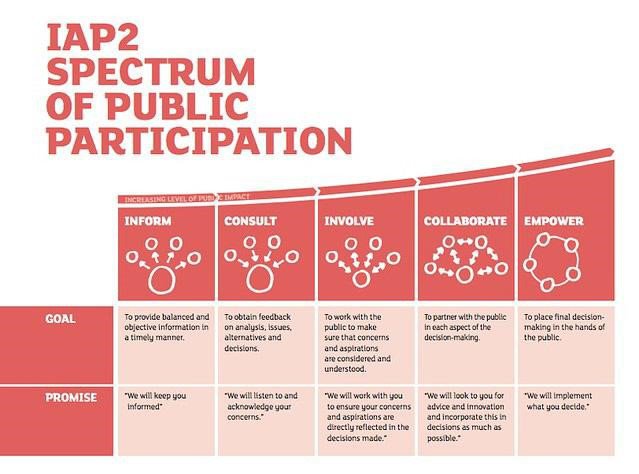
Figure 1: Spectrum of Public Participation
(Source: Tim Bonnemann, City of Vancouver Mayor's Engaged City Task Force Final Report on https://www.flickr.com/photos/planspark/12249559465 )
Taxonomy Of Gamified Civic Engagement Projects
| Initiative/Platform (City/Country) | Category | Mechanics | Depth of Participation |
|---|---|---|---|
| SpotHoles Campaign (Boston, USA) | Participatory (crowdsourced) decision making | Hybrid reality game app-based | Inform, Consult, Involve, Collaborate |
| City Points (Cascais, Portugal) | Points/rating based system | App based | Inform, Involve, Collaborate |
| Change Tomorrow (Ovar, Portugal) | Participatory decision making | Web based + Offline | Inform, Consult, Involve |
| Better Reykjavik (Reykjavik, Iceland) | Participatory decision making | Web based | Inform, Consult, Involve, Collaborate, Empower |
| vTaiwan (Taipei, Taiwan) | Participatory decision making | Web-based + offline forums | Inform, Consult, Involve, Collaborate |
| Nu Spaarpas (Rotterdam, Netherlands) | Points/rating based system | Card based technology | Inform, Involve, Collaborate |
| Torekes (Gent, Belgium) | Points/rating based system | Loyalty card based | Inform, Involve, Collaborate |
| Decide Madrid (Madrid, Spain) | Participatory decision making | Web-based + offline forums | Inform, Consult, Involve, Collaborate |
| Citizenlab (Brussels, Belgium) | Participatory decision making | Web + app based | Inform, Consult, Involve, Collaborate |
| Hull Coin (Hull, England) | Points/rating based system | App based | Inform, Involve, Collaborate |
| Echo Citoyen (Paris, France) | Participatory decision making | Web-based + offline forums | Inform, Consult, Involve, Collaborate |
| Next Election (Bangalore, India) | Participatory decision making | Web + app based | Inform, Consult, Collaborate |
Figure 2: Taxonomy of Gamified Civic Engagement Projects
It is important to note some commonalities among the 12 initiatives presented in Figure 2. First, most of the experiments were created by non-profits or administered through collaborations between startups and city councils. Second, all the initiatives have a similar goal, which is to inform the public and obtain a reasonable degree of participation. Further, over half of the initiatives have a consultative dimension, (i.e. receiving feedback from the citizens on a civic problem) thereby reflecting a fair degree of citizen engagement. Third, a majority (over 70 percent) of the initiatives have used a blend of channels for engagement, including either web/app-based platforms and offline elements. And lastly, all the initiatives are based on positive acts and duties and do not carry any punitive elements.
For a subsequent iteration of the synoptic table, a more detailed study of these initiatives would need to be carried out in order to acquire a better measure of how successful these platforms are. While this paper has not delved into these finer details, any subsequent research in this area could look to incorporate the following aspects:
- Creator of the initiatives
- Participation (voluntary/mandated) and opt-out scope
- Privacy and security features for the web/app based platforms
- Transparency in disclosures for activities or lists in the points or rating based systems
- Feedback mechanisms for users or citizens
Challenges to Gamified Systems
Samuel Bowles in his book The Moral Economy36 argues that substituting moral goodness with a reward and punishment system attacks the core of Rousseau’s social contract. Intrinsic motivation, he believes, is a better motivation than extrinsic rewards. Given that several of the game elements border on steering the choice architecture towards a more rewards-centered arc, this is a trade-off that can produce unintended consequences. For example, the ‘paradox of disincentives’37 may be viewed here as the outcome of an authoritarian exercise of power from the moment in which citizens perceive that they lack the ultimate control of their decisions.
Beth Noveck, of the Governance Lab at New York University, argues that civic innovation in governments implies a conceptual shift in the exercise of public power.38 The introduction of gamified governance implies a shift towards upending the status quo towards reuniting citizenship with expertise. It postulates a bottom-up approach to building public policies, and it necessitates new mental models for conceiving the exercise of regulatory powers from public institutions.
Design becomes a critical challenge, in terms of marshaling convincing evidence for the adoption of new technologies or including the right motivational incentives for a crowdsourced decision-making process.39 Also, the perils of ‘groupthink’ can produce cognitive biases, as studied by eminent behavioral economist, Daniel Kahneman when each decision-maker in a group has too little information to solve a given problem and instead observes others in the hope of becoming wiser.40
With the increased use of computer algorithms to monitor digital activity, any form of scoring systems is bound to raise questions relating to one’s status, identity, and rights. John Cheney-Lippold captured this phenomenon with the term jus algoritmi,41 which describes a new form of citizenship produced by online data collection and used by law enforcement agencies (the NSA’s PRISM Surveillance Program of targeting “algorithmically foreigners,”42 or the U.S. Homeland Security Department’s plan to collect data on immigrants based on search results, social media handles, and mobile phone information43). Algorithmic citizenship brings to the fore fundamental questions on the digital sphere and public function of online activity.
Normative citizen scoring (e.g., general assessment of moral personality or ethical integrity) in all aspects and on a large scale by public authorities endangers individual freedom and autonomy, especially when used in violation of fundamental rights, or “when used disproportionately and without a delineated and communicated legitimate purpose”,44 as has been highlighted in the European Commission’s High Level Expert Group on Artificial Intelligence guidelines titled “Draft Ethics Guidelines for Trustworthy A.I.”45
Scaling solutions is a critical component in the new practice of public problem solving, as argued by Tara McGuinness, Former Director to the White House Task Force on Community solutions and Anne-Marie Slaughter, CEO of New America.46 Some of the startups echoed this sentiment as well in terms of constraints. Navigating the right areas for creating new forms of civic engagement is another important dimension that emerges as a key consideration for some of these projects. The measurement of impact is not quite so straightforward. Accounting for context when measuring impact is imperative, and thereby a theory of change for mapping complex causality is needed. For example, large scale participation if orchestrated by advocacy groups may not be a reliable indicator of citizens’ informed value preferences. In this context, political scientists Robert Dahl and John Dryzek moot the formation of small groups of citizens that comprise the non-elite, typically recruited through random sampling.
These challenges outline the fact that, while it is enticing for gamified applications to offer low-cost and higher engagement forms, the design of such systems are intricate in nature and require much deeper deliberation.
Civic Engagement in India: Potential for Gamification?
In India, the Ministry of Electronics and Information Technology (MeitY) launched the National Portal of India (www.india.gov.in) in November 2005 as well as the Open Government Data Platform (www.data.gov.in) in October 2012 for providing easier access to public information and data. In 2014, the Digital India program laid the groundwork towards increasing the level of citizen participation in the decision-making process through digital tools such as MyGov and the eponymous Prime Minister’s mobile app, Narendra Modi. While these platforms have exhibited some initial promise, the lack of an adequate vision means that they no longer remained relevant and have been reduced to a platform for input on various advertising or marketing campaigns instead of substantive issue-driven citizen interactions.
As far as the civic engagement ecosystem in cities goes, there has typically been sporadic levels of engagement. Traditionally, civic engagement has not been a top priority. However, there is potential in its future application with citizens increasingly using technology (especially mobile) with over 175 million smartphone users expected to emerge in the next four years.47 Civil society organizations such as the Janaagraha Centre for Citizenship and Democracy, and the federal government’s efforts under the ‘Digital India program’ have led to strengthening capacities towards digital literacy.
While gamification in this context is still at a pretty nascent stage, there are a few applications that have been identified during this research.
ichangemycity48 is a locational online social networking platform launched in 2012 by Janaagraha Centre for Citizenship and Democracy for civic action. The site uses the power of the internet to connect people who are in the same vicinity and helps them discuss and act on civic issues. The platform largely uses a complaint redressal system for citizens to raise concerns on potholes, unattended garbage, water supply, and related civic issues. There is a system of “upvoting” (where other users can vote for complaints to be prioritized) as part of the interaction mechanism to ensure resolution of a complaint.
Next Election49 is envisaged as a virtual town hall that brings citizens, politicians, and journalists together. It seeks to create a vertical accountability framework among a diverse range of actors in order to bridge the gap between elected representatives and constituents. It has microsites that comprise sentiment analysis on issues such as sanitation and environment as well as scorecard systems that allow individuals to rate elected representatives, building a network of issue-based champions.
Civis50, started off as a web platform and sought to create meaningful engagements with participatory consultation exercises around livability metrics in Bangalore, Gurgaon, and Mumbai. Civis, thus operates more on the participatory or crowdsourced decision-making spectrum. About 1,074 citizens participated in a consultation on the city of Bangalore’s revised master plan.
Reap Benefit51 is an NGO based out of Bangalore that looks to empower civic problem solving among youth through a mix of skill enhancement, local data, and contextual solutions. The NGO wants to build a community of “solve ninjas” around issues such as sanitation, education, and healthcare. The organization does employ game elements in the form of badges for different skills: mobilize, report, build, prototyping solutions, and campaigning.
Village Capital,52 a venture capital firm in collaboration with the Omidyar Network, ran an accelerator program last year to support the growing ecosystem of civic tech startups in India. Fourteen platforms that were developing ideas about improving governance and augmenting citizen-facing interactions were part of this program. According to Perry Nunes, a manager at Village Capital, a large part of these initiatives were geared towards streamlining public service delivery and helping local or municipal governments. Transparency and governance and citizen participation were two of the broad themes for civic innovation ideas.
The overarching state of play in India looks to be based around improvements in backend governance delivery. There is a resource constraint present when it comes to capacities for scaling civic engagement models. With this context, gamification in India can leverage individual choices at a low cost as it aims to produce a common good. Gamification also has more commonalities with crowdsourcing vis-a-vis ‘nudges’53, which are aspects of a choice architecture that alters people’s behavior in a predictable manner without forbidding any options or significantly altering economic incentives. However, the introduction of any sort of game mechanics must fit the right socio-economic context. At present, the focal point for civic innovations is in Southern India (Bangalore in particular). The design of these innovations is largely geared toward problem identification or grievance redressal, but there is enough room for new forms to emerge that focus on solution identification and crowdsourced policy-making.
The Way Forward: A Blueprint for Gamifying Citizenship
Digital technology is increasingly used to experiment with new forms of encouraging active citizenship. The current spectrum extends from China’s social credit system to ideas such as catalogs of good deeds to motivate active citizenship. While China’s Social Credit System has been unequivocally condemned in the Western world, many of its scoring components are also common for social networks outside China.
A scoring system, therefore, needs to have a more contextual and cognitive design. For example, there are certain principles that could be considered while building such systems. Based on the nascent scholarship and conversations with some of the developers of these civic innovations, future scoring systems should be:
- Voluntary. A voluntary system that provides equal forms of participation in terms of allowing each registered resident to participate and the choice to opt out of a system after signing up.
- Deliberative. The public can participate in something akin to the Catalog of Good Deeds idea in Mexico.
- Flexible. Any list of deeds or activities needs to be subject to a review and constant iteration.
- Transferable. Earned points can be transferred among citizens’ subject to certain conditions.
- Secure. The technological infrastructure on which a system is built needs to be safe and secure (in which data is encrypted).
- Positive Acts. The system can be built around rewards, however, a decision to not participate should not impose any negative costs.
- Adaptive. It is interoperable and can be implemented either at a sub-municipal level or supra-municipal level, such as a consortium of cities (e.g. C40 Cities54) where an individual can claim benefits in one participatory city based on good deeds in other participating cities.
- Activity-centric. It is action-based: no score will be given to individuals—this is not a citizen rating method—but to “deeds.” It is imperative that extrinsic rewards don’t become a substitute for intrinsic motivation. The two would need to go hand in hand.
Gamification can mobilize citizens to effectively participate in public decision-making. But note that gamification can also have detrimental effects if the design is manipulative in terms of the choice architecture it presents or has the unintended consequence of excluding participants in any way. In this regard, it becomes imperative to ensure that any such context starts with the sense of belonging to the local community and to amplify with a smart gamification scheme.
The gamification of civic engagement syncs well with the ability to create new spatial interactions around local issues (such as waste management, potholes, etc.).
Any adaptation of the innovations discussed in this paper would need to fit into the socio-political context of the region. Blended models or formal and unconventional channels should operate together to engage citizens in policy-making.
Conclusion
Gamifying citizen engagement is certainly not a panacea for all societal ills, and it poses various challenges of its own—notably those linked to aspects of privacy, design, and inclusion. But, in combination with other innovations and methods, especially the interlinkages with behavioral economics and collective intelligence, it does offer a potentially valuable and still somewhat under-explored approach55 to governance in the 21st century. The motivation towards greater participation and transparency across the public participation spectrum ranges from informing to empowering the public.
While the verdict for attributing success to gamification in this space is still not clear, the governance potential offered by gamification stems primarily from the avenues it offers for greater motivation and participation, inclusion and, consequently, transparency across the full policy life cycle—from agenda setting to solution ideation, policy development, implementation, enforcement, and review of effectiveness.
Citations
- “The Chatbots Taking Over Government: What Jobs Can They Do?” October 17, 2017, source.
- Lindsay Curdele, “Pokemon Gov: Gamifying Civic Engagement,” July 28, 2016source.
- Participatory Pokemon Go, last modified July 5, 2017, source.
- “Catalog of Good Deeds: Building Civil Society Through Daily Acts of Kindness, Tlalnepantla De Baz, Mexico: Mayors Challenge Finalist, 2016,source.
- Ibid.
- G. Sgueo, A discussion on gamified digital advocacy, Workshop The Future of Law. Technology, Innovation and Access to Justice, Chair for Public Law and Comparative Law, Humboldt University of Berlin and Friedrich Naumann Stiftung for Freedom, November 2018.
- Alan Ivan Chorney, "Taking the Game out of Gamification," Dalhousie Journal of Interdisciplinary Management, Vol. 8, No. 1 (2012).
- Jane McGonigal, Reality is broken: Why games make us better and how they can change the world. (New York: Penguin, 2011).
- Robert D. Putnam, "E Pluribus Unum: Diversity and Community in the Twenty-first Century." (The 2006 Johan Skytte Prize Lecture, 2007).
- Nicholas Plumb, Hannah Millinship Hayes, et al, “Integration City: A new communities agenda for London,” October 2016, source.
- Ibid
- OECD Guidelines on Measuring Trust, Nov. 23, 2017, source.
- I. Bogost, “The rhetoric of video games” in K. SALEN (ed.), The Ecology of Games: Connecting Youth, Games, and Learning, (MIT Press, 2008), p. 130.
- Ibid.
- Gianluca Sgueo, “Games, Powers & Democracies: Chapter 1,” Games, Powers & Democracies, (Milan: Bocconi University Press, 2018).
- , Barnett et al., “Toward Metrics for Re(imagining) Governance: The Promise and Challenge of Evaluating Innovations in How We Govern,” GovLab Working Paper, April 18, 2013.
- Graham Smith, Democratic innovations: Designing institutions for citizen participation (Cambridge: Cambridge University Press, 2009).
- Decide Madrid, source.
- CrowdLaw Introduction, The GovLab, Sep. 2017, source
- “Over Half of Reykjavik Residents Steer Policymaking – Here's How,” Apolitical, Sept. 2017, source.
- Vtaiwan, source.
- “Taiwan Is Using Social Media to Crowdsource Legislation,” Apolitical, June 2017, source.
- Beth Noveck, “More Than A Coin: The Rise Of Civic Cryptocurrency,”June 25, 2018, source.
- Paul van Sambeek, Edgar Kampers, “NU-spaarpas, the Sustainable Incentive Card Scheme, 2004.
- De Torekes, source
- “Engage Your Citizens with Gamification,” Innowave, source.
- Peter Hasson, “Social Credit,” Daily Caller, Nov. 2018, source.
- Andrew Yang, “Modern Time Banking,” source.
- Rachel Botsman, “Big Data Meets Big Brother As China Moves To Rate Its Citizens,” Wired, Oct. 21, 2017, source.
- Rogier Creemers, "China's Social Credit System: An Evolving Practice of Control." (2018)
- A. Davies and J. Simon, “Citizen engagement in social innovation – a case study report,” adeliverable of the project: “The theoretical, empirical and policy foundations for building socialinnovation in Europe” (TEPSIE), European Commission – 7th Framework Programme, Brussels:European Commission, DG Research, 2012.
- Fred Powell, "Civil society, social policy and participatory democracy: Past, present and future." Social Policy and Society 8, no. 1 (2009): 49-58.
- Ibid
- Joseph Kahne, Ellen Middaugh, and Chris Evans. The civic potential of video games. (Cambridge, MA: MIT Press, 2009).
- “Who Knows Best? Cities Consult Citizens for Fresh IdeasPlace,” Feb. 2019, source.
- Samuel Bowles, “The Moral Economy: Why Good Incentives are no substitute for good citizens,” (New Haven, CT: Yale University Press, 2017).
- Cass R. Sunstein, “Why nudge?: The politics of libertarian paternalism,” ((New Haven, CT: Yale University Press, 2014).
- Beth Noveck, Smarter Citizens, Smarter State, (Harvard, MA:Harvard University Press, 2015).
- BETH Noveck, "Wiki-government: How Technology Can Make Government Better, Democracy Stronger, and Citizens More Powerful,” (Washington, DC: Brookings Institution 2009).
- Amos Tversky and Daniel Kahneman, "Judgment Under Uncertainty: Heuristics and Biases," Science 185, no. 4157 (1974): 1124-1131.
- John Cheney-Lippold, "A New Algorithmic Identity: Soft Biopolitics and the Modulation of Control," Theory, Culture & Society 28, no. 6 (2011): 164-181.
- John Cheney-Lippold, "Jus algoritmi: How the National Security Agency Remade Citizenship," International Journal of Communication 10 (2016): 22.
- Colin Daileda “The U.S. Will Start Collecting Social and Search Data on Every Immigrant Soon,” Mashable, September 2017, source.
- Draft Ethics Guidelines for Trustworthy AI, European Commission, December 2018, source.
- Ibid.
- Tara McGuinness and Anne-Marie Slaughter, “The New Practice of Public Problem Solving,” Stanford Social Innovation Review, Spring 2019. source
- Bharath Visweswariah, “Solving India's Most Pressing Challenges with Civic Tech,” Medium, May 21, 2018, source.
- “About: ichangemycity,” source.
- “Next Election: Make It Count!,” source.
- “Civis,” source.
- “Building Young India's Champions | Solve ninja, Reap Benefit,” source
- “Home.” Village Capital, vilcap.com/.
- Richard H. Thaler and Cass R. Sunstein, Nudge: Improving Decisions about Health, Wealth, and Happiness, (New York: Penguin, 2009).
- “C40 Cities | Networks,” source
- Stefaan Verhulst, Towards a Science of Gamification and its Relationship to Governance and Democracy (2018).