
Michael Calabrese
Director, Wireless Future, New America; Senior Advisor, Technology & Democracy, New America
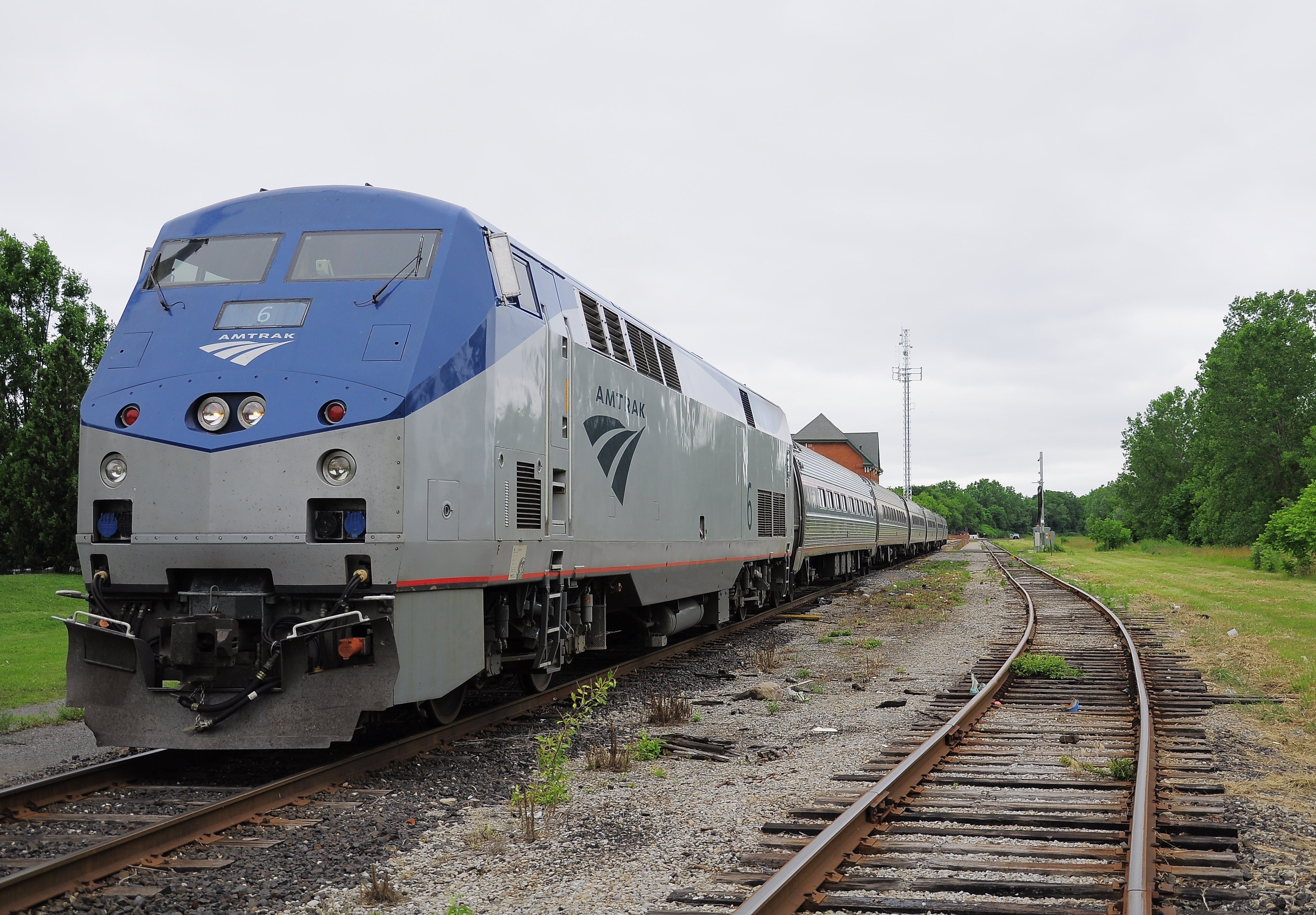
The
precise cause of last week’s tragic Amtrak derailment, which killed eight
people and shut down train service along the busy Northeast Corridor, remains a
mystery. Whatever the cause, the crash revealed some fundamental gaps in
Amtrak’s safety system – most notably the failure to deploy Positive
Train Control (PTC) technology that would have automatically slowed or
stopped the train once it exceeded the speed limit ahead of the curve where it jack-knifed
off the rails. Although Congress mandated PTC technology
seven years ago, Amtrak cited a lack of timely access to wireless spectrum
(the public airwaves) for
delays in implementing the safety system.
Spectrum
refers to the wireless frequencies that power technologies ranging from FM
radio and satellite communication to mobile phones and Wi-Fi routers. While increasingly
critical to modern communications, spectrum—and the rules that govern access to
spectrum in the U.S. — rarely makes headline news. But following the Amtrak
derailment, people are suddenly conscious of the fact that the nation’s policies on access to the
airwaves will impact almost everything in their lives.
So
is Amtrak’s claim that spectrum access is a factor in this disaster legitimate?
The answer is yes and no. Amtrak asked
for exclusive, and expensive, spectrum
and this request—while puzzling—highlights deep structural problems with how our
government has parceled out and regulated spectrum in the past.
PTC
relies on a series of track-side wireless beacons and onboard sensors to
automatically issue warnings to train operators about excessive speed,
potential collisions, or misaligned switches at intersections. To
implement PTC effectively, Amtrak and other railroads needed to decide
among a variety of ways to access the spectrum they needed to send wireless
signals between trains and infrastructure along their tracks.
In
2011, the railroad industry told the
Federal Communications Commission (FCC) that it needed exclusive access to a
specific band of costly spectrum frequencies in order to deploy PTC. Because
equipment was already being manufactured for this band, Amtrak and other
railroads argued that a uniform allocation dedicated to PTC would reduce costs
and promote inter-operability. The
particular band Amtrak requested – at 220 to 222 megahertz – is located just above TV channel 13 and
represents prime wireless real estate because of its ability to go long
distances and penetrate into buildings.
At next year’s auction of TV spectrum being vacated by broadcasters,
mobile carriers like Verizon expect to pay at least $500 million for the
equivalent of a single megahertz of this scarce low-band spectrum.
Tellingly,
the 2008 legislation mandating PTC did
not include language instructing the FCC to allocate exclusive spectrum
licenses to railroads. The industry asked the FCC for a grant of spectrum,
which it declined to do. Even if the industry’s request was good policy (and it
wasn’t), current law requires that valuable commercial spectrum “must be acquired at auction or from
third parties,” as the chief of the FCC’s Wireless Bureau explained in a recent
blog post. Instead, the FCC told the industry that if it
wanted exclusive use of this pricey spectrum along its tracks, it should
negotiate private lease or purchase deals with existing license holders through
secondary market brokers. While a consortium of freight-rail interests were
able to navigate the notoriously illiquid secondary market for spectrum, Amtrak’s
efforts were long delayed due to a lack of resources and other complications.
Amtrak’s
insistence on using expensive, exclusive-use spectrum reflects a traditional and
ultimately unsustainable approach to spectrum policy. Since the government
began issuing spectrum licenses to particular companies in the 1920s, representatives
from each new industry would come, hat in hand, to the FCC to request its own special
purpose spectrum allocation. At this point, almost every desirable frequency
band has been assigned to someone; and because licenses typically renew
automatically and equipment can last many years, it’s enormously difficult to
find spectrum for new technologies and expanding uses like wireless broadband
even though most bands are not used in every area or very intensively.
The
cumulative result of this command-and-control approach to allocation is that
the nation’s spectrum remains extremely “siloed.”
Thankfully,
policymakers in Washington are moving away from exclusive licenses towards a
new framework based on flexible use and shared access to spectrum bands. Amtrak and other entities with very specific needs
for wireless connectivity will increasingly have better, faster and more
affordable options as the FCC expands on its recent efforts to open large,
underutilized bands for shared use.
Spectrum
sharing is not a new idea. Indeed, it led to the development of one of the most
important economically valuable wireless technologies: Wi-Fi. Wi-Fi thrived
because the FCC allocated wide blocks of spectrum for “unlicensed” use.
This meant that any technology could use these frequencies, provided they operated
at low power to avoid interference. Technology did not need an exclusive
license. The flexible and shared approach led to innovation. Spectrum
originally dismissed as “junk bands” and the home of modest technologies like
garage door openers and cordless phones are now home to Wi-Fi, Bluetooth and
other unlicensed technologies central to fueling the growing universe of mobile
devices.
“Unlicensed”
technology utilizing shared spectrum is common not just in consumer devices,
but as a
Harvard Law School study points out they are increasingly the go-to
means of wireless connectivity in a wide variety of industrial settings,
including for critical health care and electric utility applications. A
majority of wireless health care devices, including patient monitoring systems,
utilize unlicensed spectrum. Wireless smart grid and automated meter systems
deployed by electric utilities also rely primarily on unlicensed shared
spectrum.
To
address the scarcity of licensed spectrum, over the past three years the FCC
and Obama administration have worked in tandem to open under-utilized military
and other federal agency bands for spectrum sharing as well. For example, the
U.S. Navy controls a very large and nearly exclusive spectrum assignment for
shipborne radar systems, which for decades has left that hugely valuable spectrum
unused across the entire interior of the country. In 2012, the President’s
Council of Advisors on Science and Technology (PCAST) proposed that this
should be the first band opened for dynamic sharing by private sector devices
and networks that can rely on spectrum sensing and a geolocation database – a
“Spectrum Access System” – to operate on the band while simultaneously
protecting naval radar and a handful of satellite receiver sites from harmful
interference.
To
its credit, last month the FCC unanimously voted to create a
new Citizens Broadband Radio Service (CBRS) that promises to provide
the framework for what the PCAST proposed could be a “shared spectrum
superhighway” spanning more than 1,000 megahertz of underutilized spectrum. On
a portion of the new shared band, companies can pay for “priority access
licenses,” which ensure quality of service over far smaller areas than are sold
at traditional FCC auctions. And across the rest of the band – including the
licensed portion when it’s not in use – any individual or company can operate
on an essentially unlicensed basis, very much as Wi-Fi operates on today’s
unlicensed bands.
Spectrum
sharing approaches like the new CBRS can address the needs of Amtrak and
potentially thousands of other needs for specific wireless connectivity. Rather
than rely on pricey auctions or secondary markets for a single channel of
exclusive-use spectrum, railroads and many other industries can design systems
that can operate on multiple, redundant networks and bands.
In
Amtrak’s case, the fiber optic cable running along the railroad right-of-ways
make shared spectrum bands more practical and reliable. With immediate access
to a high-capacity fiber connection throughout its system, Amtrak and most
other rail operators can rely on the open access and low-power shared spectrum–
such as the unlicensed and 3.5 GHz Citizens Broadband Radio Service bands –
that are increasingly plentiful.
Although
there is no way to undo the tragedy of the derailed Amtrak commuter train north
of Philadelphia, more updated and forward-looking approaches to wireless
connectivity and spectrum acquisition should be among the lessons learned by
policymakers both inside and beyond government. As we move headlong into a
world where virtually every system and device is connected and communicating,
the stakes involved in getting spectrum policy right will only increase.
Director, Wireless Future, New America; Senior Advisor, Technology & Democracy, New America