A Stimulus for Second-Generation QRIS

Child care advocates in several states have urged policymakers to use funds received under the American Recovery and Reinvestment Act (ARRA) to launch or expand a statewide Quality Rating and Improvement Systems (QRIS) for providers of early childhood education and care. Exactly how should they do that? We have some suggestions in a new issue brief, “A Stimulus for Second-Generation QRIS.” Read the whole brief here.
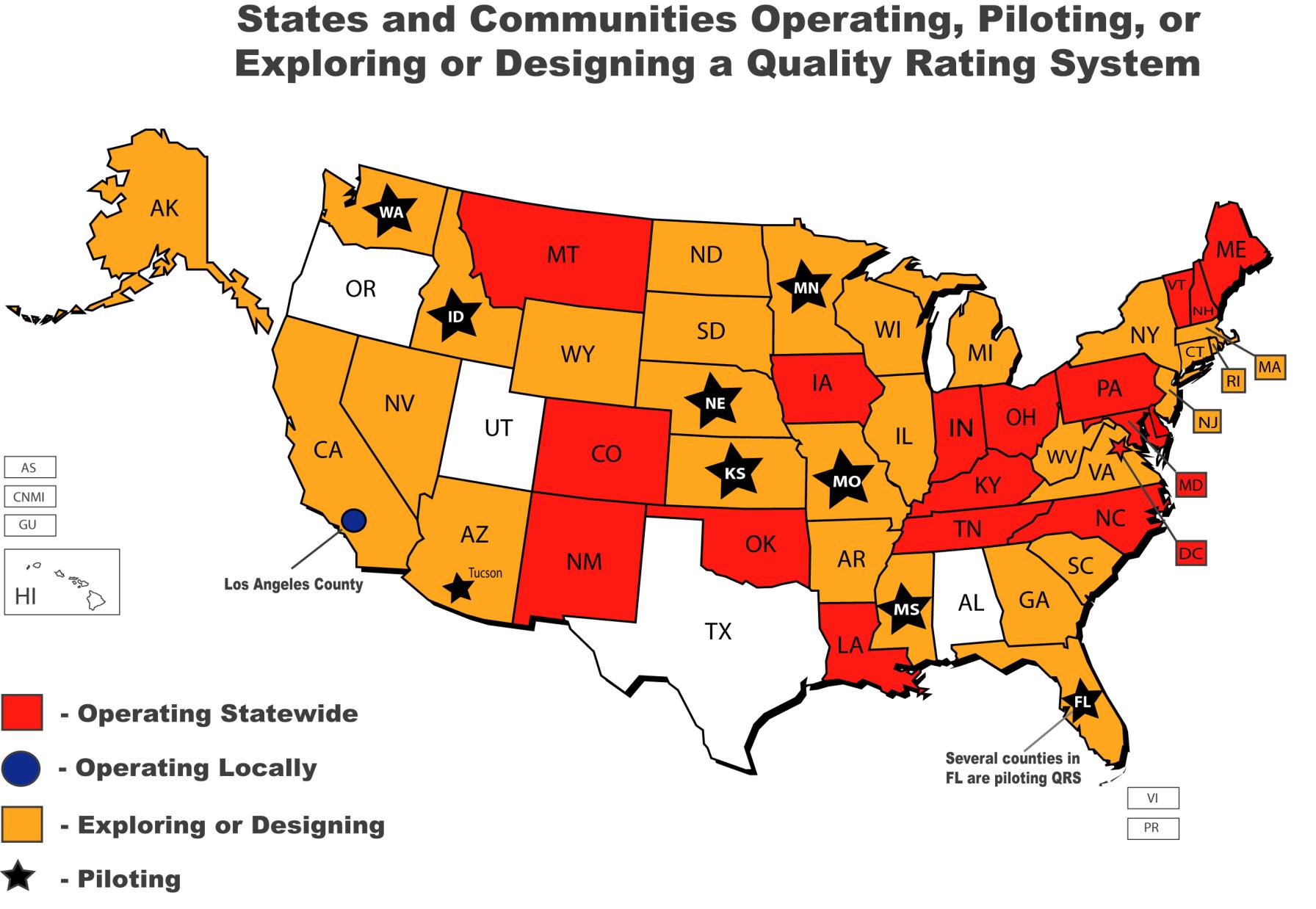 What is a QRIS? A QRIS is a set of tools to measure, collect, and disseminate information about the quality of early childhood care and education (ECE) settings, including those based in centers, homes, preschools, and elementary schools. QRIS evaluators rate the quality of these settings through site visits and off-site data collection, eventually boiling their results down to 3 or 4-star reviews that can be used by parents to determine the best places to enroll their children. Many states supplement their rating systems by providing technical assistance and financial incentives-such as grants and teacher scholarships-to reward and encourage quality improvements.
What is a “second-generation” QRIS? Seventeen states and the District of Columbia already operate QRIS, and 28 other states report that they are exploring or preparing to launch them. Several of the pioneering states are now poised to move to “second generation” systems that will assess new settings that may not already be covered, such as infants and toddlers and afterschool programs. Some second-generation systems also measure quality in richer, more complex ways by incorporating procedural elements of quality (how well a teacher teaches, how well the curriculum fits into the state’s early learning guidelines) in addition to environmental indicators, such as safety standards and class size, which are already covered in most state QRIS evaluations. These more sophisticated definitions of quality allow states to better target improvements that directly affect children’s early learning experiences.
Why is QRIS a good investment? QRIS is a market-based approach to improving quality in early childhood settings, by giving parents (the consumers) comparable information about provider quality that they can use when making decisions about early education and child care. As states move toward building early education systems, QRIS provides a way to institutionalize collaboration among various stakeholders with interest in improving early childhood quality, including teachers, researchers, government programs, and community leaders. When states link QRIS to existing programs, such as those that utlitize child care subsidies, they can ensure that taxpayer dollars are being used to support and encourage high-quality programs.
How can stimulus dollars be used to support QRIS? There are several funding streams in the stimulus legislation that can be used to support these systems. The $2 billion allocated for the Child Care and Development Block Grant program includes a $335.2 million set-aside for state quality activities such as QRIS. There is also $400 million available for IDEA preschool programs and $500 million for IDEA infants and toddlers programs. The $8.85 billion Government Services Fund and the $5 billion “Race to the Top” funds, which are part of the State Fiscal Stabilization Fund, can also be used to invest in QRIS.
The stimulus, however, is only a one-time appropriation, so policymakers wishing to support second-generation QRIS should identify one-time investments that can be incorporated into long-term, sustainably funded visions for improving quality in early childhood. The nature of these investments depends on where states are in the process of building a QRIS.
For example, a state that is thinking about launching a QRIS could use stimulus funds to pay for a survey of its early childhood workforce or a study on the feasibility of developing a system. A state that is ready to launch a system could use these funds to fund initial training for assessors in research-based assessment programs, such as the Environment Rating Scale (ERS) and the Classroom Assessment Scoring System (CLASS). A state wishing to expand a QRIS could set up a one-time “stimulus grant” program would encourage providers to boost quality despite the economic downturn and help raise provider awareness about quality.
There is also an important role for the federal government in supporting QRIS, especially as policymakers in Washington prepare for the reauthorization of the Child Care and Development Block Grant. For more on these recommendations, to learn more about QRIS generally and to read about how Pennsylvania developed its system, read here.
Anne Mitchell and the Build Initiative have another great report on using stimulus funds for QRIS, available here.
Chart courtesy of the National Child Care Information and Technical Assistance Center.
More About the Authors
Issues
Programs/Projects/Initiatives
Related
Confronting Harmful Federal Disability Policy in Health and Human Services

Federal Early Education Update: March 2026
A Bureaucratic Shakeup Threatens Future Child Care Research