Lisa Guernsey
Senior Director, Birth to 12th Grade Policy; Co-Founder and Director, Learning Sciences Exchange

 Anthony D. Pellegrini, an educational psychologist at the University of Minnesota, has been studying the whys, whens and hows of children’s playtime for decades. He is an authority on recess, helping to remind all of us of why it’s crucial for academic and social growth. And he just published a new book, The Role of Play in Human Development, that explores the role of play in our evolution as a species.
So when Pellegrini pens an article titled “Research and Policy on Children’s Play,” it’s time to perk up and pay attention. The piece was just published this month in Child Development Perspectives, a semi-annual journal of the Society for Research in Child Development.
The piece makes two important points. It starts by reminding us that the word “play” needs to be defined more precisely before educators, parents and child development specialists can have a fruitful conversation about what is missing in children’s school routines. And it ends by pressing for more research on exactly what kinds of benefits children derive from play at various stages of their young lives.
One pitfall in speaking too loosely about play is that the meaning of the word can take on many dimensions, meaning different things to different people. It is not true play, Pellegrini points out (and we agree), when children are asked to sing a “scripted letter-sound correspondence song.” They have no freedom of choice; they are following instructions from adults.
Interactions with peers and moments of minimal adult supervision, on the other hand, are closer to qualifying as play, Pellegrini writes. For educators, this may mean that ensuring enough playtime means ensuring enough time for children to socialize and attempt things on their own.
The distinction is worth exploring and elaborating upon — and perhaps even debating a bit. How and when should teachers get involved in children’s play? Are there not ways for teachers to become part of a pretend play scenario (“I’ll be the grocery clerk”) to help children develop skills of language and observation (“How many tomatoes have you got there?” “What are you going to make with those?”)? When should teachers step in, and when should they step out? And how do educators do this dance while maintaining other routines in the classroom?
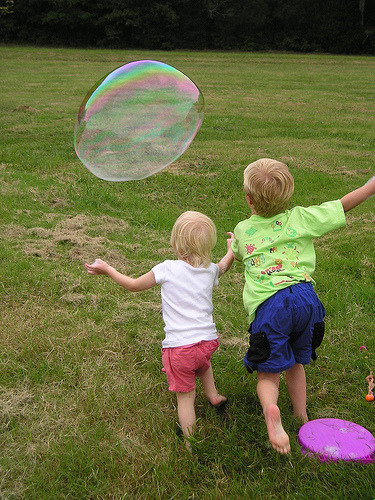
A lack of answers to these questions is why Pellegrini calls for more experimental studies of play that compare outcomes between a group that has a chance to engage in some sort of play and a group that doesn’t. There is still a lot that we don’t know about how children benefit from play and under what circumstances. It seems highly likely, for example, that “locomotor” play — like children chasing each other around the playground — has a lot of physical and social benefits, in expending calories and relieving some of the pressure of the school day. But, as Pellegrini points out, we don’t yet have empirical, research-based evidence that this is the case.
“Although there is a real danger that opportunities for children’s play will be minimized, there is also a corresponding danger that advocates of play for children are overzealous in attributing benefits of play,” Pellegrini writes. “This is understandable in the current educational environment, but such a position also jeopardizes the possibility of future inclusion of play in educational programs because policymakers and parents will equate play with overblown claims.”
“If advocates stick to realistic readings of theory and data,” he writes, “play will be included in the curriculum.” We second that.
Image by flickr user nedradio, reposted under the Creative Commons license
Senior Director, Birth to 12th Grade Policy; Co-Founder and Director, Learning Sciences Exchange