
Table of Contents
- Chapter 1. Introduction and Overview
- Chapter 2. How Pandemic-Era Policies Impacted Study Participants
- Chapter 3. New Key Poverty Narratives
- Chapter 4. The Path Forward: What Families Told Us They Need to Thrive
- Chapter 5. Case Studies
- Appendix A. Methodology
- Appendix B. Ethical Storytelling Guidelines
- Appendix C. Framework for Narrative Change
- Appendix D. Historical Timeline
- Appendix E. Selected Reading
Chapter 4. The Path Forward: What Families Told Us They Need to Thrive
By Brigid Schulte, Haley Swenson, and Julia Craven
In March 2020, the beginning of the COVID-19 pandemic marked a stark departure from politics and policy as usual in the United States. The truly global nature of the threat posed by this novel virus and its potential impact on people in the United States from all walks of life created a palpable, if temporary, feeling that “we are all in this together.” For that short period, keeping people out of poverty became a bipartisan and collective goal that resulted in the unprecedented pandemic aid described in the previous sections of this report.
Yet a failure to adequately understand how poverty worked prior to COVID-19 and what families truly need to survive and thrive led to unequal outcomes, both in terms of who suffered most from COVID-19 and whose worries were alleviated and needs fully met by pandemic aid. This report has sought to contribute unique and authentic narratives of the lives of people living in poverty—or those struggling financially—and their experiences of this extraordinary pandemic aid. While lifesaving during the pandemic for many, the aid did not prove to be a panacea against poverty.
Today, the United States is deeply divided over both the role of government and the importance of public policy support for families in poverty.1 Because of the pandemic, we now have numerous recent data points showing the power and efficacy of temporary public aid, as uneven and imperfect as it was.2 Yet pessimism about government intervention and the deservingness of poor people continues to hamper better policymaking. Changing the poverty narratives that have proven to be the most pervasive—and are enmeshed in our collective common sense about poverty because of it—is critical to creating the political will to change. Psychologist and social theorist Barry Schwartz wrote:
“If you think your poverty is God’s will, you pray. If you think your poverty is the result of your own inadequacy, you shrink into despair. If you think your poverty is the result of oppression and domination, then you rise up and revolt. Whether your response to poverty is resignation or revolution depends on how you understand the sources of your poverty. This is the role that ideas play in shaping us as human beings.”3
To truly understand what families need to thrive, our report makes clear that designing better solutions depends on asking families themselves, listening to their stories and ideas, telling truer, fuller, more respectful narratives, and, with a better understanding of the roots of the problem, push for action. Only when we change the kinds of narratives we listen to, produce, and circulate, when we expand the circle of narrators we deem worthy of listening to and the language we are open to hearing and learning from, will we understand what truly causes and perpetuates poverty, how we can solve it, and how economic equality benefits everyone in a society.
- Listen to and work from fuller stories of poverty. Too often, the stories we hear about poverty are snapshots of a person struggling at a moment in time. This study has sought to understand people’s experiences of poverty within the fullest context possible. To that end, it was important that we not limit the study to the pandemic itself but include an understanding of study participants’ lives before and after. Traditional journalistic reporting on these policy issues or temporary policy measures does not often allow the time or space for such nuanced understandings. The narratives in this report are longer than mainstream media news stories, and they go deeper than traditional policy research in understanding the lives of people who experience engaging with socially supportive policies. This context is vital for understanding why even the most generous policy response in U.S. history could not help these families overcome the social and economic barriers they face.
- Listen to diverse narrators, including those from groups most acutely impacted by the policy and poverty issues we seek to investigate. This is especially critical for those with the power to create substantial change. It is critical that policymakers incorporate the voices of women of color into their processes and follow a race-conscious policy framework.4 Taking a conscious approach to policymaking rather than a neutral one will promote much-needed justice for those long harmed by systemic ills in the United States. Neutral policy does not account for historic or systemic racism, sexism, or other forms of discrimination and supposes that everyone is equal under the law. Centuries of quantitative and qualitative research have shown that that is not true. Addressing racism, discrimination, and other forms of bias—including, but not limited to, transphobia, homophobia, sexism, linguistic racism, and misogynoir5—in the U.S. requires a multifaceted approach that tackles these constructs as root causes for the inequities seen in our society.
- Uplift languages that have historically been deemed unworthy. In this study, we have attempted to preserve participants’ diverse use of language and to include a Spanish-language case study so one immigrant study participant could tell her story in the language with which she was most comfortable. In a 2005 article, education scholar Tara J. Yosso identified six types of cultural wealth that students from historically underserved communities possess. One is linguistic capital, which refers to skills developed through communication in multiple languages, cultural styles, and dialects,6 as well as someone’s ability to express themselves. Yosso directly challenges the presumption that Standard American English (SAE), mass media, and U.S. popular culture tend to promote, which is that there is a singular “proper” way of speaking or writing. Instead, Yosso uplifts multilingualism and code-switching, expressiveness, and the literary and communication skills involved in translation as a form of social capital that allows those with these skills to move through various scenarios. Linguistic diversity is not an obstacle to overcome. We must view accents and non-standard English and the use of languages other than English, like the language of many of our study participants, as assets that enrich collective knowledge and broaden perspectives. Taking a collective point of view provides decision-makers with new tools and insights to better understand what communities need.7 This, in turn, shifts institutional and social perspectives toward inclusivity and equity.8 It can also lead to more inclusive and empathetic societies.9 Policies crafted with this awareness foster a more accessible and representative framework since multiple ways of knowing and communicating are validated.
- Reject overly simplistic narratives about who suffers from poverty and understand the many ways we are all ultimately vulnerable and the connections between what those in poverty experience and the fate of all members of society. In their groundbreaking book, The Spirit Level: Why Greater Equality Makes Societies Stronger, epidemiologists Kate Pickett and Richard Wilkinson draw on 30 years of data to show that when societies have more income equality, everyone benefits, regardless of socioeconomic level. Their data show that when poverty levels rise and economic inequality gets worse, so does a nation’s health and well-being, with shortened lifespans, more chronic disease, less trust in institutions, and increased levels of violence and imprisonment. Children in the most unequal societies, they found, do less well in school, are more likely to be bullied, and have higher levels of mental distress and fewer opportunities for social mobility. “Part of the reason is because inequality puts us in a hierarchy, one above the other,” they write. “It reinforces the idea that some people are worth much more than others.”10 Our narratives must reflect the full humanity of the people and families living in poverty—not just their hardship but their strengths, hopes, dreams, and everyday joys. Without more truthful narratives, we run the risk of thinking people living in poverty and those not living in poverty are profoundly different and that these differences explain the gaps that currently exist between them. Instead, fuller, respectful narratives grounded in our shared humanity can shorten distances, bridge gaps, and foster connection and will to action.
Through these strategies, this study represents an effort to tell better and truer stories about people living in poverty. From these fuller, richer narratives, we were able to glean direct insights from families themselves about what they need to thrive.
Here’s what families told us that they need to thrive.
Health Care
Every single participant in our study talked about how critical it is for them and their families to have access to good medical, dental, and mental health care. The current private insurance system in the United States requires people to rely on their employers to provide health insurance, seek coverage through Affordable Care Act (ACA) exchanges, or, if they qualify because of their low incomes, Medicaid. Study participants talked about the high stress that comes with losing a job or being furloughed, as often happened during the first two years of the pandemic because losing a job also often means losing health insurance. Some, particularly those who worked in care professions, expressed frustration that their employers didn’t offer health insurance or kept their hours below the 30-hour-a-week minimum to skirt federal requirements for providing health insurance to full-time employees.
Our participants expressed enormous relief when lawmakers expanded Medicaid during the pandemic, enabling more people to qualify for it. They spoke of a huge weight being lifted when lawmakers removed onerous rules that require people to recertify for Medicaid every year and instead allowed continuous enrollment.
Having health insurance during the pandemic was a life changer for participants in our study. Latoya Dyer was able to get her daughter new, much-needed glasses. Kel, a single parent of four, and their children used Medicaid to address several health needs, including connecting with mental health therapists to address abuse and accessing gender-affirming care. Still, the application process was difficult for them and other study participants. When continuous renewals ended, Kel had a difficult time reapplying. While the benefits were still active, Dyer struggled to find a provider who took Medicaid because their state’s provider information wasn’t up to date.
Since March 31, 2023, when the continuous enrollment provision ended, over 20 million people have been removed from the Medicaid rolls,11 and 23 percent of those who were disenrolled lacked insurance.12 Automatic renewals prevented the churn that happens when enrollees are disenrolled and re-enrolled within a short time frame. Churn creates real challenges for people trying to access health care by disrupting their coverage; the continuous enrollment provision during the pandemic, an example of simplifying the enrollment process, helped prevent these disruptions.13 To address these issues, seven states have received or are seeking waivers to ensure continuous enrollment beyond current law.14
Research shows that expanding Medicaid reduces uninsured rates, closes health inequity gaps, makes it easier to access care, improves health outcomes for historically underrepresented people and communities, and reduces poverty.15 In 2024, single people with an approximate annual income of $20,780 and above and families of three with a yearly income of $35,630 and above are ineligible for coverage.16
One lasting benefit of Medicaid expansions was the help provided to pregnant people. Fifty-three percent of pregnancy-related deaths occur within the first year postpartum. Gaps in postpartum health coverage, especially for Medicaid enrollees, often prevent people from accessing essential care during this critical period. The American Rescue Plan Act of 2021 introduced a provision allowing states to extend Medicaid postpartum coverage from 60 days to 12 months through a state plan amendment. Initially set for five years starting April 1, 2022, the 2023 Consolidated Appropriations Act made this extension permanent.17
As of May 10, 2024, 46 states and Washington, DC, have adopted 12-month Medicaid postpartum coverage. Two additional states are in the process of implementing the extension, while Wisconsin offers limited coverage for up to 90 days. Another boost for families is the coverage of doula care under Medicaid. As of May 2024, 13 states and Washington, DC, provide Medicaid coverage for doula services, according to the National Health Law Program’s Doula Medicaid Project.
Both Medicaid expansions and doula care coverage have direct correlations to improved maternal and child health outcomes.18
Stable Housing
Eviction moratoriums were one of the most impactful initiatives instituted during the pandemic. The national eviction moratorium prevented more than 1.5 million evictions, while state and local protections stopped an additional 900,000 eviction filings.19 People lost their homes when the programs failed, allowing people to slip through the cracks. One participant, Kirarica Schields, and her three children were evicted three times between 2020 and 2023 despite active eviction moratoriums at the time. She was evicted for a fourth time in August 2024.
A report from the Urban Institute highlights the fact that financial assistance plays a crucial role in the success of eviction diversion efforts.20 Another participant, Chantel Valdez, relied on emergency rental assistance twice in late 2021 to cover her $720 monthly rent. Emergency rental assistance programs distributed $46 billion during the pandemic to keep more than 10 million renters housed.21 The majority of these programs have now shut down due to insufficient funding,22 causing evictions to return to pre-pandemic levels in many parts of the country.23 The link between rental assistance and eviction diversion is vital, and Philadelphia’s approach shows just how transformative it can be. By pairing the two, the city has shifted the dynamics in landlord-tenant negotiations. Simply put, the chance for landlords to recover back rent motivates them to participate in the diversion program. But most importantly, it helps keep tenants in their homes.
Study participant, widow, and home care aide Philipa Nwadike-Laster was able to keep her family in their home, even after she lost her job in the pandemic, through the mortgage forbearance program: Though she wasn’t able to pay her mortgage for 18 months, the program enabled her to tack those months on to the end of her 30-year mortgage. Now that she’s working again and trying to build up more income through several side jobs, Nwadike-Laster said the ability to provide a stable home for her two children, including a son diagnosed with autism, has been a lifesaver for the family.
Right-to-counsel programs, providing legal representation for those facing eviction, helped relatives of some study participants. Tenants with legal representation have a higher chance of remaining in their homes. In Kansas City, legislators used funds from the American Rescue Plan to establish a right-to-counsel ordinance. This move, driven by local advocacy groups, led to an 86 percent reduction in evictions. Given the program’s success, Kansas City is now using city funds to continue it. Currently, only 16 other major cities, one county, and four states have similar right-to-counsel laws.24
These programs drastically decreased eviction rates and prevented many families from spiraling deeper into poverty.
Healthy Food and Nutrition
A 2024 study published in Public Health Nutrition showed that the 15 percent boost in benefits issued during the pandemic led to decreased anxiety symptoms among Supplemental Nutrition Assistance Program (SNAP) recipients and made it easier for them to cover other household expenses.25 The boost in benefits, which came through emergency allotments, provided a buffer against poverty.26 We saw this reflected in the stories our study participants shared as well.
When the emergency allotments ended, our participants felt the hit, and their stress levels rose. Blessing Aghayedo said she and her husband are working harder now to make up the difference in monthly income. Latoya Dyer has returned to figuring out how to feed a family of six on $200 a week, which is all she and her partner can afford. Though Ruaa Sabek still qualifies for SNAP, the amount no longer goes as far, particularly when the benefit was reduced just as inflation drove prices up.
Better Paying Jobs and an Unemployment Insurance System That Helps Get Them Back to Work
All of the participants in our study worked incredibly hard. Many worked long hours or combined several jobs, gigs, and side hustles just to make ends meet. What they wanted more than anything were jobs that paid them a living wage and enabled them to pay their bills and support their families. In our conversations, all of our study participants, many of whom work in care professions, called for higher wages, better working conditions, benefits like paid leave and retirement plans, and equitable economic and tax policies that promote equity and opportunity. “Look at the economy we have right now. Everything increased in price except income,” said one. “That’s why I call it a maze. Why not first increase the income?”
Many didn’t understand why their wages were so low. Many didn’t realize that Congress hasn’t raised the minimum wage of $7.25 an hour since 2009—an amount that isn’t sufficient to pay the rent on a two-bedroom apartment in any U.S. city.27 Many struggled with unpredictable schedules or shifts that made it difficult to find child care. “If we have a very good job. If we are well paid and able to pay our bills and able to take care of everything. If we are not struggling. We are not living paycheck to paycheck. That will be huge for us,” participant Blessing Aghayedo told us. “If our jobs paid us enough money, we wouldn’t need any help at all. If I earn good money, I’m not going to be looking for benefits. I’ll take care of my bills.”
In addition to calling for good jobs, the participants in our study said they needed a better system for when they lost jobs—more time and help to propel them to the next job, rather than trapping them, as one participant described it, in a never-ending cycle of struggle and poverty.
During the pandemic, federal lawmakers, for a time, expanded the amount of money out-of-work workers could receive. They expanded the number of weeks someone could claim unemployment insurance benefits. And they expanded the type of workers eligible for unemployment benefits. For the first time, pandemic-era reforms opened eligibility to the self-employed, independent contractors, freelancers, and gig workers—the type of nontraditional, precarious work that is becoming increasingly common.
As many as 46 million people received unemployment benefits in 2020, about one in every four workers. Without the payments, 4.7 million more people, including 1.4 million children, would have fallen into poverty, reported the Center on Budget and Policy Priorities.28 That data and the experiences of our study participants make clear that, for many families in the United States, the expanded unemployment insurance during the pandemic made an enormous difference in helping them survive.
Chantel Valdez, who lives in Utah, began receiving expanded unemployment benefits after losing her job that, when combined with the initial stimulus checks she received, actually improved her financial position. Unemployment benefits enabled study participant Ivonne Valadez Solano and her partner to stay home when they lost their jobs at the start of the pandemic in 2020 rather than seek work and risk contracting COVID-19 or bringing it home to their children.
But the benefit was short-lived. One participant, Kiarica Schields, who lives in Georgia, found her expanded unemployment insurance cut off just a few months after she lost her hospice nursing job at the start of the pandemic. She doesn’t understand why, nor why her appeal was rejected.
Although the reforms did help many families during the pandemic, the impact was muted because the programs have been chronically underfunded for years. The current program, first designed in 1935, is funded by the federal government but left to the states to run. That has led to wild variations for unemployed workers, which has led many advocates to push for federalizing the program and ensuring it operates more like the federal Social Security system. Unemployment insurance rules vary state-to-state, creating dramatically different benefit levels; technological modernization in some states but not others leads to vastly different user experiences and claims processing times. For example, before the pandemic, barely one-third of unemployed workers in the United States received unemployment insurance benefits. But the share varied dramatically by state. In New Jersey, nearly 60 percent of unemployed workers received benefits in 2019. In North Carolina, 9 percent did. And the replacement rate, too, varies by state: Washington State replaces 51 percent of a worker’s earnings. Louisiana replaces 36 percent.29
Affordable, High-Quality Child Care and Care Infrastructure
Child care, or rather the lack of it, impacted our study participants in profound ways. Many are care workers themselves, and, though they love their work, can’t survive on the low wages.
One participant didn’t sleep for years as she juggled working a night shift and caring for her children during the day because the family couldn’t afford child care and didn’t qualify for a child care subsidy. Another, Mariam Dewi, a certified nursing assistant and mother of three, was daunted by the long waiting list for underfunded child care subsidies, so she never applied. She can only work because she has extended family nearby to help her. She coordinates her shift schedule with her mother so that both women and Dewi’s husband can manage work and child care. And for Schields, a single mother of four who was once able to provide a stable life for her family as a hospice nurse, losing child care during the pandemic sent her spiraling into poverty and instability. Without child care, Schields wasn’t able to work. Another participant quit two full-time jobs to care for her increasingly ailing mother. Though she’s now paid through Medicaid to be her mother’s full-time caregiver, she’s earning a fraction of what she earned before, and the family is struggling. While family caregiving benefits for the elderly and disabled through Medicaid are beneficial for all involved, there is still very little structural support or tax benefits for people who take time off paid work to care for young children.
The federal government did allocate funds to keep the child care system afloat during the pandemic, an effort that helped more than 200,000 child care facilities stay open, pay for cleaning supplies, and even pay living wages or give bonuses to staff for the first time. Study participant Tiffany Gale, who runs a child care facility in West Virginia, said the funds gave her and her staff just a brief glimpse of what a better functioning child care system could look like. When the funding ended in 2022, Gale found herself and her staff struggling once again, cutting activities, shrinking staff and salaries, and replacing healthy snacks of fresh fruit and vegetables with cheaper, less nutritious packaged food.
The United States is the only wealthy democracy without a national guarantee of paid family and medical leave and currently invests among the least in early care and education30 and in home and community-based care for the disabled, ill, and elderly who rely on it.31 The need will become even more pressing as Americans age; home care workers are projected to be the largest professional group in the economy in the 2030s.
The pandemic showed clearly that the current underfunded, patchwork child care system in the United States doesn’t work for many families, particularly those living on low or precarious incomes. Yet more research is showing that stable, accessible, affordable, high-quality child care, starting with paid family and medical leave for infants through early care and education, after care, summer care, and home and community-based care, have long-lasting and far-reaching benefits.32
Some research has found that increased investment in care infrastructure will ultimately pay for itself. Stable child care enables parents, particularly single parents, to work rather than be forced out of a job or into precarious gig work. Research on Quebec’s universal child care program, where parents pay less than $10 a day, found that the investment more than paid for itself.33 When child care enabled parents to stay employed, not only did family economic security and well-being improve, but their income supported local businesses and helped increase the local tax base.
More Control, More Cash, and Less Financial Stress
The families in our studies’ experiences highlight the importance of direct cash assistance in helping families reach a stable financial baseline. Rather than tying families up in a tangle of bureaucracy or complicated spending rules, direct cash assistance, like the three stimulus payments, the expanded Child Tax Credit (CTC), and some experiments using federal funds to start guaranteed basic income programs, gives families the power to decide how best to use the cash to meet their needs or improve their circumstances.
Participants said that, unlike other government programs that are restrictive and designed with preventing fraud in mind, the cash they received gave them the power to decide how best to use it. For instance, SNAP for Women, Infants, and Children (WIC) only allows families to buy certain brands. And SNAP will only cover food, not diapers or other necessities. Our study and other research show that parents used the CTC to pay bills like rent, food, and child-related expenses; pay down debt; and begin to save or cover big expenses, like car repairs, that could have disrupted their economic stability.
The expanded CTC, a policy that just about every other high-income country already had in place prior to the pandemic, was one of the most powerful pandemic-era policies that lifted nearly three million children in the United States out of poverty, reduced food insecurity, and improved family economic security and well-being, as well as family mental and emotional health. Instead of coming once a year when families file their taxes, families received monthly payments deposited directly into their bank accounts. And the payments were available for the first time to families who earn so little that they don’t typically receive tax refunds.
Some participants, like Mariam Dewi, said the direct cash payments increased their trust in government institutions and their belief that their government could work to make their lives better. “People were going through a lot,” she said. “It was just so beautiful.”
Philipa Nwadike-Laster used the money she received through the CTC to enroll her daughter in music and dance classes she could not otherwise have afforded.
Some states and municipalities, seeing how well direct cash assistance helped struggling families, chose to continue some pandemic-era policies. The City of Alexandria, Virginia, for example, voted to continue a guaranteed basic income program that was started using federal pandemic funds. The $500 monthly payment is what Vilma Cabrera, a family caregiver, uses to pay the rent and keep her family housed. “It’s changed my life,” she told us.
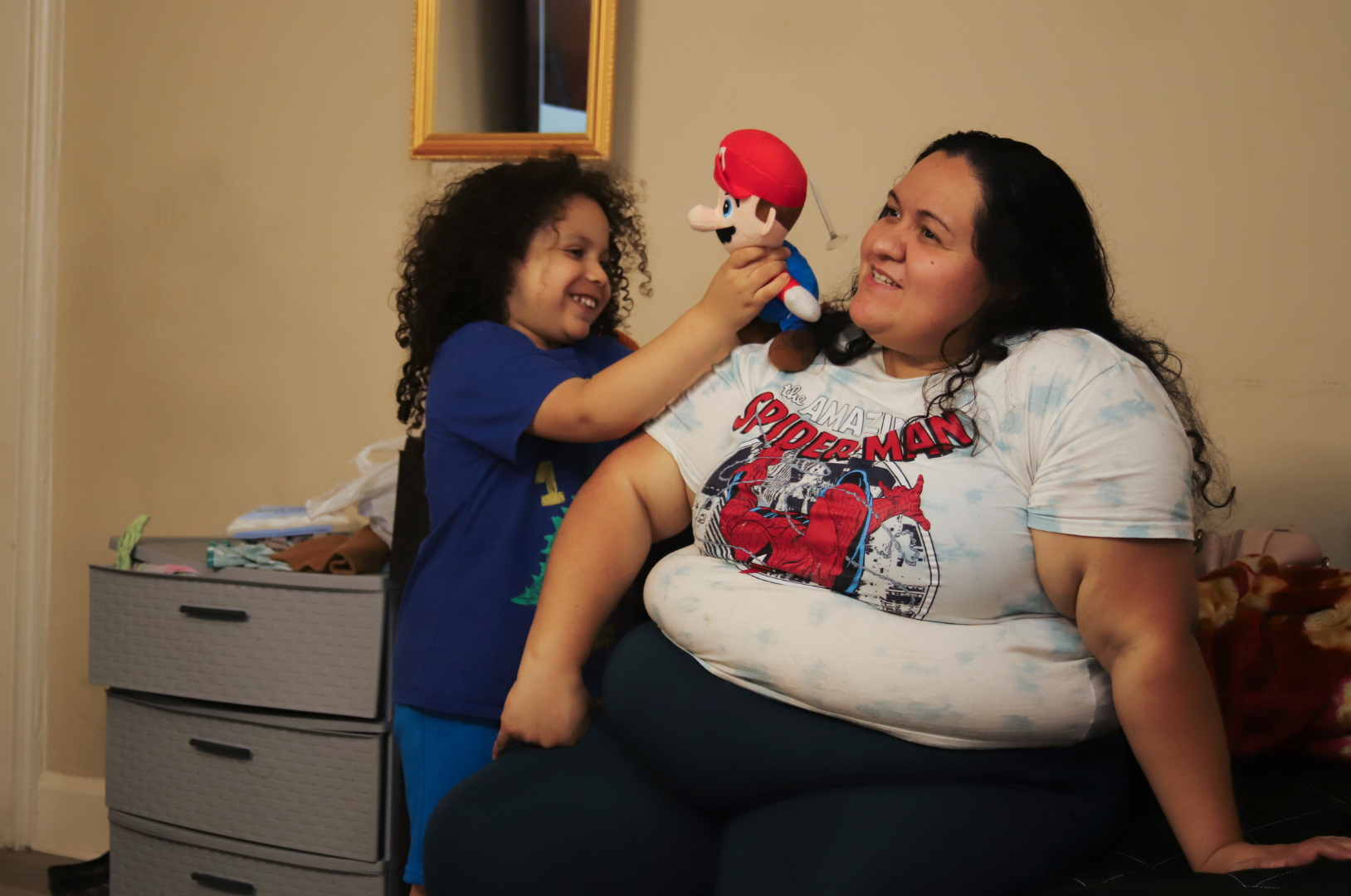
Jasmine Heyward/New America
Guaranteed income initiatives take a more targeted and equitable approach by providing cash payments to those living in poverty or without a reliable income.34 A guaranteed income policy provides every community member whose income falls below a certain threshold with an unconditional payment, ensuring their income is raised above the income floor in their area. This approach can prevent people from falling deeper into poverty, promote financial stability, and support overall well-being by giving people the means to meet their basic needs. Researchers from Columbia University’s Center on Poverty and Social Policy found that a $250 per month payment would drop poverty by 40 percent.35
When the cash payments ended, study participant families told us they again struggled. Once the Child Tax Credit expired, the total poverty rate increased, and the child poverty rate nearly doubled.36
Supportive Policies Designed with People in Mind
During the pandemic, several efforts were made to implement leading practices for service design and digital service delivery, including simplified forms, streamlined processes, and data sharing across silos to determine eligibility. The families who participated in our study spoke enthusiastically about how much easier it became to apply for some of the benefits they needed to meet a minimum standard of living. Many felt a greater peace of mind and less stress at keeping their health care, for instance, through the simplified Medicaid continuous enrollment, rather than going through the annual recertification process that is often overly complicated. One found the application for a guaranteed basic income pilot so easy she forgot she’d applied.
Some of those streamlining changes, long in the works, are sticking: More child care programs, for example, are using enrollment rather than attendance to designate subsidies. That move no longer penalizes families earning low wages who may not be able to get their child to a child care facility if they have an illness, transportation issues, or a job loss. Many participants described the process of seeking benefits as so complicated they often felt punitive, as if it were designed to dissuade people from applying for benefits in the first place.37 Some study participants said applying for benefits was so complicated it wasn’t worth trying. Others were angry that the process itself was part of the problem.
Other participants felt their low-wage jobs came without benefits to help their families survive, so they needed public assistance. But if they received more training or education to get better jobs, they’d risk losing those life-sustaining benefits and drop off the so-called “benefits cliff.” They felt trapped.
Study participants like Schields and Kel spoke about narrowing their job searches or setting their sights low. They worried that if they found jobs that paid over a certain amount, they’d lose their benefits, but the new job wouldn’t pay enough to cover their bills, leaving them worse off than before.
It’s a situation that people like Glynnis Johnson find themselves in. Like others considered Asset Limited, Income Constrained, Employed (ALICE), Johnson and her husband worked full time and qualified for no benefits, even though they were barely scraping by, supporting themselves and their teenage son. Because the pandemic aid gave local jurisdictions more flexibility than usual to respond to community needs, Johnson was chosen by lottery to participate in her city’s $500 a month guaranteed basic income pilot, which, once Johnson’s cancer treatments left her no longer able to work, has meant the family can continue to eat and pay their rent. “It’s like I have to be homeless, then they’ll give me everything,” Johnson said. “But why let it get to that point?”
Equitable Opportunity
Social and economic barriers in the United States are rooted in historical, ongoing, systemic barriers by race, gender, ability, and other factors. Several study participants explained either explicit instances of discrimination to us or instances where internalized systemic ills were affecting their mental or emotional well-being. Study participant Ivonne Valadez Solano switched jobs just before the pandemic due to racism. When she reported a white store manager for making racist comments about a Black leader at the district level, the report was ignored, and the working environment became increasingly hostile.
Study participant Kiarica Schields worried that her hair not being done was causing employers not to offer her employment—a common concern for Black women in the U.S. workforce.38 Schields also expressed concern that people judged her for wearing long, acrylic nails, a gift from a friend, while she was out of work. Both instances are familiar to Black women, who are 83 percent more likely to report being discriminated against because of the way they look compared to women of other racial or ethnic backgrounds.39
Historical divisions set the stage for how differently COVID-19 and the pandemic aid impacted Indigenous and non-Indigenous residents of Blanding, Utah, where participant Chantel Valdez lives with her family. During the first two years of the Public Health Emergency, what Valdez experienced interpersonally mirrored national trends—particularly regarding masking. “I remember my grandma was in the hospital dying, and I was arguing with someone online about masks, about whether they were worthwhile,” she said. “And I started crying because it was like they just did not care.” Studies have shown that white Americans became less vigilant about following safety protocols during the pandemic once it became publicized that people of color were dying disproportionately from complications of the virus.40 These behaviors and assumptions based on race and other identities have bled over into policy for centuries. Addressing racism, discrimination, and other forms of bias—including, but not limited to, transphobia, homophobia, sexism, linguistic racism, and misogynoir—in the United States requires a multifaceted approach that tackles these constructs as root causes for the inequities seen in our society. By implementing evidence-based policies, investing in community-driven initiatives, and centering people and communities whose voices are underrepresented, meaningful progress can be made toward building a society where everyone can thrive.
Participants’ experiences also show the need for policymakers to follow a race-conscious framework when shaping policies and programs aimed at helping underserved communities.41 Researchers Shekinah A. Fashaw-Walters and Cydney M. McGuire, who work in health equity, break down the process as such:
- Analyze existing inequities;
- Review policies related to these inequities to determine whether they worsen or reduce the disparities identified;
- Break down policy mechanisms and outcomes to understand how each policy operates and the consequences it produces;
- Highlight the impact of racism, or another form of discrimination, to explore its influence on the inequities observed and how it operates through the identified policy mechanisms to create these disparities; and
- Develop new policies that address racism or other forms of discrimination and incorporate strategies for effective implementation.42
Taking a conscious approach to policymaking rather than a neutral one will promote much-needed justice for those long harmed by systemic ills in the United States. Neutral policy doesn’t account for historical or systemic racism, sexism, or other forms of discrimination and supposes that everyone is equal under the law. Centuries of quantitative and qualitative research have shown that that is a lie. Our research and the recommendations born from it face that fact head-on because it is the first of many steps toward creating a better life for all. Policymakers should do the same.
Respect
In her 2005 article, “Whose Culture Has Capital? A Critical Race Theory Discussion of Community Cultural Wealth,” education scholar Tara J. Yosso identified six types of cultural wealth that marginalized students possess. One is linguistic capital, which refers to skills developed through communication in multiple languages, cultural styles, and dialects,43 as well as someone’s ability to express themselves using them. Yosso directly challenges the presumption that Standard American English (SAE), mass media, and U.S. popular culture tend to promote, which is that there is a singular “proper” way of speaking or writing. Instead, Yosso uplifts multilingualism and code-switching, expressiveness, and the literary and communication skills involved in translation as a form of social capital that allows those with these skills to move through various scenarios.
Linguistic diversity is not an obstacle to overcome. (It’s worth noting that such thinking promotes assimilation.) In educational settings and the workplace, recognizing linguistic capital encourages a shift from viewing language diversity—which includes accents or speaking in “broken English”—as a challenge to seeing it as an asset that enriches collective knowledge and broadens perspectives. Taking a collective point of view provides decision-makers with new tools and insights to better understand what communities need.44 This, in turn, shifts institutional and social perspectives toward inclusivity and equity.45 It can also lead to more inclusive and empathetic societies.46 Policies crafted with this awareness foster a more accessible and representative framework since multiple ways of knowing and communicating are validated.
In our writing and editing process, we observed how language impacts the stories our collaborators shared. Sometimes, the linguistic nuances were subtle—for example, one collaborator wished her daughter “to relax that her brother’s in a good place,” illustrating her hope for her child’s peace of mind. Other times, it was more direct, like a collaborator’s assurance that understanding SAE isn’t what stopped her from applying for WIC alone. Valadez Solano explained that prejudice in the working environment is why she left a second customer service job in late 2023. She remembers hearing one coworker ask another why she didn’t speak English. Valadez Solano cracked a joke—it was because they all lived in Los Ángeles, a city bearing a Spanish name—but the comment still stuck with her. It’s an example of the racist and xenophobic undertones that dominate common narratives about people living in the United States with limited English fluency.
Preserving language choices gave us a window into their experiences that would have been lost if edited into SAE. It also would have stripped away their authenticity, undermining our project’s goal of subverting stereotypes about those who live in poverty. To honor the integrity and verismo of each narrator, we refrained from altering their dialects or expressions to fit within privileged language norms. As we state in our New Key Narratives and introduction to facilitated storytelling, we allowed narrators to use their own words, recognizing that while their language may not always fit into SAE, it is genuine and deeply connected to their experiences.
Their voices deserve respect. And to be heard.
Citations
- “The Political Values of Harris and Trump Supporters,” Pew Research Center, August 26, 2024, source.
- Danilo Trisi, Government’s Pandemic Response Turned a Would-Be Poverty Surge Into a Record Poverty Decline (Center on Budget and Policy Priorities, August 29, 2023), source.
- Barry Schwartz, “The Way We Think About Work is Broken,” Ted Talk, March 2014, source.
- Shekinah A. Fashaw-Walters and Cydney M. McGuire, “Proposing A Racism-Conscious Approach To Policy Making and Health Care Practices,” Health Affairs 42, no. 10 (October 2023): 1351–58, source.
- Misogynoir refers to the combined impacts of racism and sexism on Black women.
- Yosso, “Whose Culture Has Capital?” 78, source.
- Gil Siegal, Neomi Siegal, and Richard J. Bonnie, “An Account of Collective Actions in Public Health,” American Journal of Public Health 99, no. 9 (September 2009): 1583, source.
- Cynthia Groff et al., “Language Diversity as Resource or as Problem? Educator Discourses and Language Policy at High Schools in the Netherlands,” International Multilingual Research Journal 17, no. 2 (April 3, 2023): 157–75, source.
- “5 Ways Languages Contribute to a Safer and More Inclusive World,” United Nations University, February 17, 2023, source.
- Richard Wilkinson and Kate Pickett, “Our Landmark Book Revealed the Cost of Inequality. Fifteen Years Later, Things Have Only Got Worse,” The Guardian, July 23, 2024, source.
- Lunna Lopes, Grace Sparks, Marley Presiado, Jennifer Tolbert, Robin Rudowitz, Amaya Diana, and Ashley Kirzinger, “KFF Survey of Medicaid Unwinding,” KFF, April 12, 2024, source.
- Lopes et al., “KFF Survey of Medicaid Unwinding,” source.
- Jennifer Tolbert and Meghana Ammula Published, “10 Things to Know About the Unwinding of the Medicaid Continuous Enrollment Provision,” KFF, June 9, 2023, source.
- Elizabeth Hinton, Amaya Diana, and Jennifer Tolbert, “Section 1115 Waiver Watch: Continuous Eligibility Waivers,” KFF, February 15, 2024, source.
- Center on Budget and Policy Priorities (CBPP), “The Medicaid Coverage Gap: State Fact Sheets,” CBPP, July 8, 2021, source.
- Center on Budget and Policy Priorities, “The Medicaid Coverage Gap,” source.
- Julia Craven, The U.S. Black Maternal and Child Health Crisis Is Centuries in the Making (Better Life Lab, New America, updated August 2, 2024), source.
- The Biden Administration, The White House Blueprint for Addressing the Maternal Health Crisis (The White House, June 2022), source.
- Jasmine Rangel, Jacob Haas, Emily Lemmerman, Joe Fish, and Peter Hepburn, “Preliminary Analysis: 11 Months of the CDC Moratorium,” Eviction Lab, August 21, 2021, source.
- Mark Treskon, Solomon Greene, Olivia Fiol, and Anne Junod, Eviction Prevention and Diversion Programs (Urban Institute, April 2021), source.
- “Emergency Rental Assistance Program,” U.S. Department of the Treasury, September 20, 2024, source.
- “Rental Assistance,” National Low Income Housing Coalition, accessed October 16, 2024, source.
- Julia Craven, “Eviction Is One of the Biggest Health Risks Facing Black Children,” New America, December 7, 2023, source.
- Craven, “Eviction Is One of the Biggest Health Risks Facing Black Children,” source.
- Kaitlyn E. Jackson, Amy Yunyu Chiang, and Rita Hamad, “The Association of Increased SNAP Benefits during COVID-19 with Food Insufficiency and Anxiety among US Adults: A Quasi-Experimental Study,” Public Health Nutrition 27, no. 1 (January 2024): e186, source.
- Laura Wheaton and Danielle Kwon, Effect of the Reevaluated Thrifty Food Plan and Emergency Allotments on Supplemental Nutrition Assistance Program Benefits and Poverty (Urban Institute, August 2022), source.
- National Low Income Housing Coalition (NLIHC), “About Out of Reach,” NLIHC, June 2024, source.
- Nick Gwyn, Historic Unemployment Programs Provided Vital Support to Workers and the Economy During Pandemic, Offer Roadmap for Future Reform (Center on Budget and Policy Priorities, March 2022), source.
- Arindrajit Dube, A Plan to Reform the Unemployment Insurance System in the United States (Hamilton Project, Brookings, April 2021), source
- U.S. Congressional Joint Economic Committee (JEC), “Infrastructure Fast Facts: The United States Invests Less in Child Care Than Almost Every Other OECD Country,” JEC, 2021, source.
- Celli Horstman, Evan D. Gumas, and Gretchen Jacobson, U.S. and Global Approaches to Financing Long-Term Care: Understanding the Patchwork (Commonwealth Fund, February 16, 2023), source.
- Benjamin Horowitz, “Why Equitable Access to Quality Child Care Matters to the Economy,” Fed Communities, May 9, 2023, source.
- “Eight Lessons from Quebec on Designing Universal Early Care and Learning in the U.S.,” New America, 2021, source.
- Julia Craven, “Eviction Is One of the Biggest Health Risks Facing Black Children,” New America, December 7, 2023, source.
- Robert Paul Hartley and Irwin Garfinkel, Income Guarantee Benefits and Financing: Poverty and Distributional Impacts (Center on Poverty and Social Policy, February 13, 2020), source.
- Danilo Trisi, Expiration of Pandemic Relief Led to Record Increases in Poverty and Child Poverty in 2022 (Center on Budget and Policy Priorities, June 2024), source.
- Eleanor Pratt, Marla McDaniel, Heather Hahn, Jennifer M. Haley, Dulce Gonzalez, Soumita Bose, Sarah Morriss, and Laura Wagner, Improvements in Public Programs’ Customer Service Experiences Could Better Meet Enrollees’ Needs and Help Build Trust in Government (Urban Institute, January 2023), source.
- Bellamy, “25% of Black Women Say They Were Denied Job Interviews Because of Their Hair, Survey Says,” NBC News, March 24, 2023, source.
- Janice Gassam Asare, “How Hair Discrimination Affects Black Women at Work,” Harvard Business Review, May 10, 2023, source.
- Allison L. Skinner-Dorkenoo, Apoorva Sarmal, Kasheena G. Rogbeer, Chloe J. André, Bhumi Patel, and Leah Cha, “Highlighting COVID-19 Racial Disparities Can Reduce Support for Safety Precautions among White U.S. Residents,” Social Science & Medicine 301 (May 1, 2022): 114951, source.
- Shekinah A. Fashaw-Walters and Cydney M. McGuire, “Proposing A Racism-Conscious Approach To Policy Making And Health Care Practices,” Health Affairs 42, no. 10 (October 2023): 1351–58, source.
- Fashaw-Walters and McGuire, “Proposing A Racism-Conscious Approach To Policy Making And Health Care Practices,” 1355, source.
- Yosso, “Whose Culture Has Capital?” 78, source.
- Gil Siegal, Neomi Siegal, and Richard J. Bonnie, “An Account of Collective Actions in Public Health,” American Journal of Public Health 99, no. 9 (September 2009): 1583, source.
- Cynthia Groff et al., “Language Diversity as Resource or as Problem? Educator Discourses and Language Policy at High Schools in the Netherlands,” International Multilingual Research Journal 17, no. 2 (April 3, 2023): 157–75, source.
- “5 Ways Languages Contribute to a Safer and More Inclusive World,” United Nations University, February 17, 2023, source.