Lisa Guernsey
Senior Director, Birth to 12th Grade Policy; Co-Founder and Director, Learning Sciences Exchange

Amid this fall’s high-pitched debates over education reform, the early grades of elementary school – those grades that don’t come with high-stakes statewide testing – are not getting much attention. So when a high-level Obama Administration official recently made the case for elementary school improvements in a public forum, we took note.
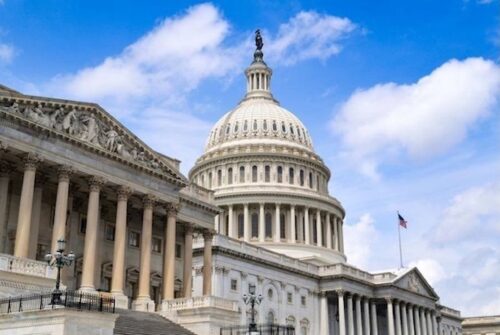
Roberto Rodriguez, special assistant to President Obama on education, spoke at Investing in Children, an event on Capitol Hill hosted by the Brookings Institution and the National Institute for Early Education Research to promote the release of a new collection of research and policy recommendations on federal early childhood policy.
The main point of the event was to stir discussion on how to use federal dollars most efficiently to produce the best learning experiences for young children before arriving in kindergarten. (Read more about it in Early Ed Watch’s post about waiving regulations to spur innovative and more coherent early childhood systems.) A growing interest in early childhood policy among many sectors, combined with January’s results from the Head Start Impact Study have prompted a new round of debates about how to improve the effectiveness of Head Start and other early childhood programs. The Head Start study show that while Head Start children showed some modest gains after a year in the program, by the time they finished first grade, there was virtually no difference between their levels of cognitive development and those of a control group.
Rodriguez pointed to efforts by the Office of Head Start, under the leadership of Yvette Sanchez-Fuentes, to improve the quality of Head Start programs. (The recent re-competition proposal is a big part of their plans.) But he also signaled out elementary schools as being worthy of greater attention as well.
The lack of substantial impact of Head Start after first grade, he said, should lead the Administration and other proponents of early childhood investments to “think about the quality of kindergarten and grade one” experiences.
“How can we turn to a reform agenda around early learning in grades K, 1, 2 and 3?” he asked.
This is question that many in early childhood circles have been asking for a long time, and it’s encouraging to see the Obama Administration putting it on the table. A need for more emphasis on elementary school reforms has been mentioned frequently over the past year by Jacqueline Jones, senior advisor on early learning for U.S. Secretary of Education Arne Duncan. Dr. Jones and Joan Lombardi, her counterpart at the U.S. Department of Health and Human Services, speak often about the need to extend investments across the spectrum of children’s years of early development, before birth through the third grade.
Easy answers, however, are not easy to come by. At the event, for example, Rodriguez referred the audience to the Administration’s Blueprint for Reform, a document outlining ideas for the long overdue reauthorization of the Elementary and Secondary Education Act. The Blueprint does call out the need for an emphasis on early learning (something that was not as explicit in its original release). It proposes, for example, the inclusion of early childhood teachers in federally funded professional development programs, as well as increased support for elementary school principals who may not have a strong understanding of how young children learn and the classroom environments that will allow them to thrive. These are very important steps to take (and ones noted in a consensus letter to Congress that we helped draft this spring). But it remains to be seen whether such prescriptions will be enough to lead to significant change in the early grades.
Here at Early Ed Watch we see a need for deeper discussion about how to trigger more improvement in the early grades. Are there policies at the federal level that could encourage districts to provide full-day kindergarten? How can schools be rewarded for the use of observation tools and coaching programs that help elementary teachers reflect on ways to promote more rich conversation and inquiry-based learning in the classroom? We applaud the recognition by several Obama Administration officials of the importance of the early grades. We hope that next steps will include a more focused look at what can be done to reform them.
UPDATED 10/28 with link to corollary post on other ideas that came out of the Investing in Children event.
Senior Director, Birth to 12th Grade Policy; Co-Founder and Director, Learning Sciences Exchange