
7/9 FCC Coalition Ex Parte Urging Revision of 12 GHz Band Rules
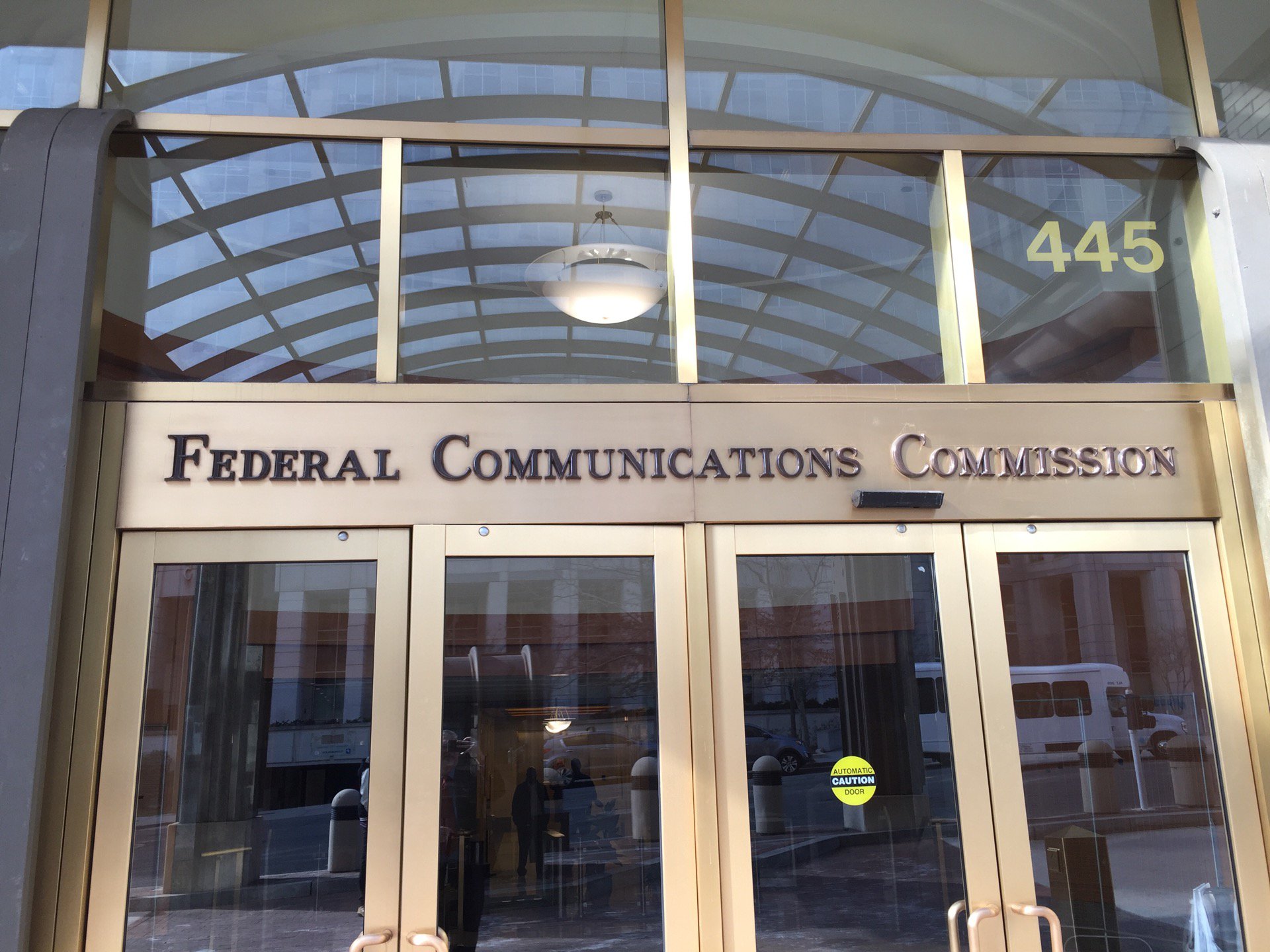
New America's Open Technology Institute filed an ex parte letter alongside coalition partners with the Federal Communications Commission ("Commission") urging the agency to initiate a Notice of Proposed Rulemaking proceeding to look at revising the rules governing the 12 GHz band to ensure this spectrum can be used for 5G services to increase mobile market competition and for open access by fixed wireless providers to improve connectivity in rural and other underserved areas. OTI signed the letter alongside Public Knowledge, Access Humboldt, Center for Rural Strategies, Consumer Federation of America, Institute for Local Self-Reliance, Next Century Cities, National Consumer Law Center on behalf of its low-income clients, National Digital Inclusion Alliance, Tribal Digital Village, and X-Lab. Available below is the introduction to the letter:
Dear Chairman Pai:
The undersigned 11 organizations write to urge the Commission to initiate a Notice of Proposed Rulemaking to revisit and revise the service rules governing use of the highly valuable but grossly underutilized spectrum between 12.2 and 12.7 GHz (the “12 GHz Band”). In light of the vast progress made in the last two decades on spectrum sharing technology, and the everincreasing need for new spectrum for advanced wireless services and rural connectivity, the current very low-power and one-way constraints on terrestrial use of the band are antiquated, unnecessary and a hindrance to bridging the digital divide. By adding the 12 GHz Band to the Commission’s 5G FAST Plan, the Commission can make an additional 500 megahertz of contiguous spectrum available for two-way fixed and mobile 5G wireless broadband services, while protecting incumbent satellite uses (including satellite broadband) from harmful interference. This will promote competition, innovation and improve services to underserved communities.
When the Commission adopted the current MVDDS rules in 2000, long before smartphones or online video services, we lived in a very different world. At that time, DBS was a fast-growing service and much of the speculation around the use of the band was as a means of supplementing DBS – such as providing “local-into-local” television service. Experience with shared use of bands relying on interference mitigation technologies was barely in its infancy, with many of the technologies for spectrum re-use and sharing not even imagined. Wi-Fi and other technologies that rely on unlicensed access had only just begun to take hold, and wireless for broadband (indeed, broadband itself) hardly existed. Today, DBS is rapidly losing customers, while broadband satellite providers using an entirely different technology from DBS are poised to enter the market. Wi-Fi and other unlicensed spectrum uses are fully integrated into our lives and play an important role in the economy. Fixed wireless using both licensed and unlicensed spectrum has become an important component in closing the rural digital divide. And competition in the mobile wireless sector has gone from highly competitive in 2000 to highly concentrated in 2020.
The 12 GHz Band provides an opportunity to adopt a sharing framework that greatly expands the availability of spectrum for both fixed and mobile broadband deployments with midband propagation characteristics significantly better than the millimeter wave bands at 24 GHz and beyond. The Commission should seek comment on how best to expand more flexible and intensive terrestrial uses of the band while continuing to ensure that co-primary satellite services are protected from harmful interference.
Specifically, our groups support consideration of the proposal made in the petition for rulemaking filed by the MVDDS Coalition.2 We agree with other stakeholders that “if two-way, 5G wireless broadband services were allowed, initial use cases would include fixed broadband, mobile 5G services to handsets and street-level Internet of Things opportunities.”3 Given this Commission’s commitment to opening additional mid-band spectrum for 5G services, including low-power unlicensed uses for Wi-Fi 6, a NPRM considering the best way to achieve more intensive and efficient use of the 12 GHz band is in the public interest. This would follow the highly successful approach to expanding use of the C-Band, which began with a similar NPRM considering multiple options and resolved with adding 300 MHz of new 5G spectrum while protecting incumbent services.
Issues
Programs/Projects/Initiatives
Related

Data Matters: Power, Democracy, and Our Data One Year In