
5/27 FCC Communications Marketplace Report Reply Comments
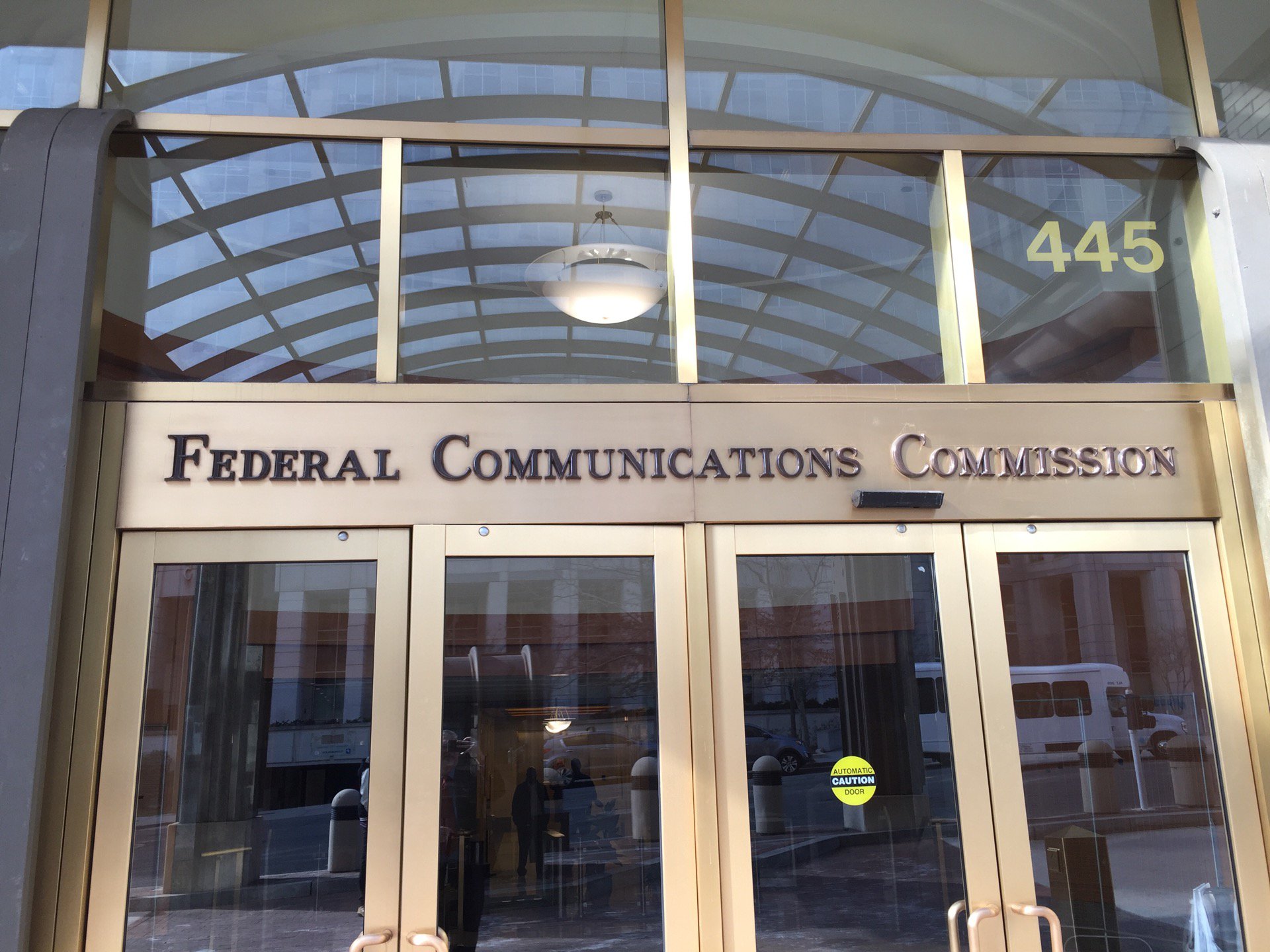
New America's Open Technology Institute submitted reply comments to the Federal Communications Commission ("Commission") responding to arguments made in the record for the Commission's upcoming Communications Marketplace Report to detail the state of competition in the U.S. broadband market. OTI also attached a recent report it published on community broadband as an appendix to the reply comments. In the reply comments, OTI highlighted the importance of using the most accurate data possible in analyzing the broadband marketplace to ensure that the findings correctly guide efforts by policymakers to improve broadband access in this country. The reply comments also highlighted the importance of open internet protections in fostering competition, as well as policies that empower localities to pursue community networks and public-private partnerships and those that open up unlicensed spectrum. Below is an introduction and summary to the reply comments:
New America’s Open Technology Institute (“OTI”) respectfully submits these reply comments in response to the Federal Communications Commission’s (“Commission”) Public Notice seeking comment on its upcoming Communications Marketplace Report. OTI submitted comments in the Commission’s same proceeding in 2018 for its Communications Marketplace Report with the Institute for Local Self-Reliance, the National Association of Telecommunications Officers and Advisors, the National League of Cities, and Next Century Cities. Many of the fundamental problems with the state of the broadband marketplace in the United States that our organizations detailed in those comments remain true today, and we urge the Commission to take action to improve the level of competition for the market and consumers alike.
First, to adequately assess the state of broadband competition in the U.S., OTI urges the Commission to reconsider its reliance on its Form 477 data for information regarding where internet service providers (ISPs) have deployed high-speed services. This data source is widely understood to be inaccurate and likely to overstate broadband access and availability not only by observers but by a bipartisan group of policymakers in the House of Representatives, the Senate, and the Commission itself. The Commission has, in other contexts such as its regular Internet Access Services reports, attached a warning that its Form 477 “does not purport to measure competition” to a chart that shows the number of providers available by census block.3 If the Commission does not feel able to claim in another context that its Form 477 data is sufficient to measure competition when reporting the number of providers by census block, then it certainly should not rely on this data in the context of a report that specifically seeks to review the state of competition in the country.
Second, the Commission should review evidence in the record for this proceeding and the proceeding regarding the remand of Mozilla Corp. v. FCC that the Commission’s 2015 Open Internet Order promoted competition in the broadband marketplace. The Commission’s order, and its Title II-enforced protections against blocking, throttling, and paid prioritization schemes, provided strong rules that incumbent and larger ISPs would not have the ability to abuse their market power through interconnection disputes and paid prioritization schemes to benefit themselves and gain an edge over competitive providers.
Third, the Commission should consider the harms posed by anti-competitive state laws that restrict localities from pursuing community networks and public-private partnerships intended to either improve competition in their area or to gain a high-speed broadband provider where there might not already be one. The laws that prohibit or restrict communities from moving forward with municipal broadband networks only serve to protect incumbents. The Commission should review the evidence in the record of this proceeding as well as other accounts that reflect how community networks provide localities with much-needed competition, as well as their ability to lower prices and provide crucial consumer benefits.
Fourth, the Commission should continue the good work it has begun in expanding access to unlicensed spectrum to improve Wi-Fi services and offer fixed wireless providers with the infrastructure needed to expand high-speed broadband to rural and other underserved areas. Adding the capacity needed to support 5G-capable, next generation Wi-Fi and expanding opportunities to use unlicensed spectrum such as TV White Spaces in rural and underserved areas both improves consumer welfare directly and it promotes competition in both the fixed and mobile broadband markets.
Finally, OTI urges the Commission to proceed with caution when considering mobile 5G networks as part of its review of the competitiveness of the current broadband marketplace. The Commission should not consider future 5G networks as proof of a competitive marketplace when conducting its analysis. Widespread deployment of 5G networks will be reliant on expanded fiber deployment and added Wi-Fi capacity for offload and backhaul, and the Commission must focus on policies to ensure 5G is best situated to succeed for all Americans. Further, 5G networks are expected to provide their strongest benefits for urban areas with high population densities. Ultimately, mobile 5G networks are too nascent at the moment for the Commission to accurately assess their effect on competition in the marketplace, and the Commission should not make any conclusions until more evidence is available to do so.
Issues
Programs/Projects/Initiatives
Related

Data Matters: Power, Democracy, and Our Data One Year In