
3/18 FCC Public Interest Reply Comments on Opening 6 GHz Band For Unlicensed Use
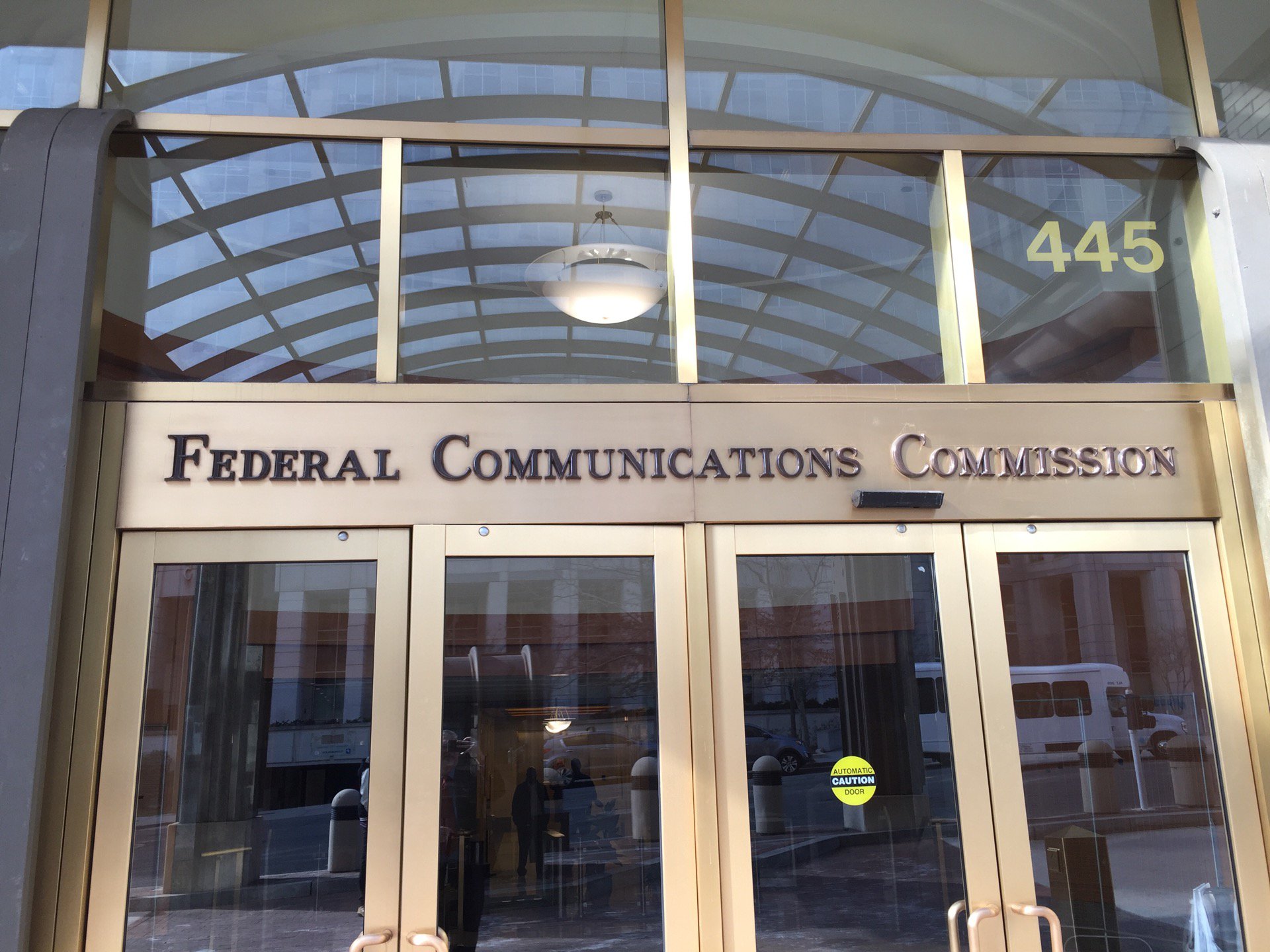
New America's Open Technology Institute wrote and submitted reply comments to the Federal Communications Commission ("Commission") that followed up on initial comments calling on the Commission to open and authorize unlicensed sharing across the entire 1,200 megahertz in the 6 GHz band, and allow low-power, indoor-only operations on an unlicensed basis in the U-NII-6 and U-NII-8 bands. The American Library Association, Consumer Federation of America, CoSN—Consortium for School Networking, Public Knowledge, Access Humboldt, and X-Lab all signed the reply comments as well.
The reply comments highlighted the strong and diverse support in the record for the Commission‘s proposals to extend unlicensed use across all 1200 megahertz from 5925 to 7125 MHz as well as the Commission‘s proposal to authorize low-power and indoor-only operations in all four segments of the 6 GHz band without requiring coordination. The reply comments also highlighted the strong showing in the record rebutting arguments that enabling unlicensed operations in the band would cause harmful interference to incumbents, and argued that the auto industry's attempts to use ongoing licenses in the 5.9 GHz band are insufficient to forego the vast public interest benefits that would come from opening up the 6 GHz band for unlicensed use and to add capacity to Wi-Fi. A summary of the comments is copy and pasted below:
"As organizations committed to facilitating more open, fast and affordable wireless connectivity for all Americans, the PIOs strongly agree that affordable access to the 6 GHz band in every home and business is essential for gigabit-fast Wi-Fi and other connectivity needs as the nation advances to a 5G wireless ecosystem. Access to 6 GHz spectrum proximate to the 5 GHz band is also needed to facilitate high-capacity and affordable fixed wireless broadband in rural and underserved communities. Continued rapid growth in data traffic on unlicensed bands will only continue as the emerging Internet of Things ("IoT") and 5G ecosystem require much more capacity, particularly indoors where bottlenecks to distributing the gigabit capacity delivered to homes and businesses by fixed providers are already apparent. The 6 GHz band, being adjacent to the 5 GHz band, offers the contiguous and high-capacity channels critical to ensure Wi-Fi and other unlicensed innovations needed to extend the benefits of a 5G ecosystem to all Americans.
The record reflects diverse and strong support for the Commission‘s proposals to extend unlicensed use across all 1200 megahertz from 5925 to 7125 MHz. More specifically, the record demonstrates broad support for the Commission‘s proposal to authorize low-power and indoor-only ("LPI") operations in the U-NII-6 and U-NII-8 without a coordination requirement and for extending this LPI authorization to the U-NII-5 and U-NII-7 band segments as well. Allowing LPI without the cost or complexity of prior or ongoing Automated Frequency Coordination ("AFC") will give consumers, small businesses, schools, libraries and other ordinary users the benefit of gigabit-fast Wi-Fi and other unlicensed innovations indoors at the lowest possible cost and complexity. Leading companies and trade associations representing not only consumers, but the cable industry, rural Internet service providers, the technology and semiconductor industries, consumer electronics and aerospace industries, and other commenters joined the Public Interest Organizations in support of extending low-power, indoor-only use across all four band segments.
The Commission should base policies on risk-informed interference assessments and not unrealistic worst-case scenarios. The imposition on an AFC system is as unnecessary for LPI use of U-NII-5 and U-NII-7 as it is for use of U-NII-6 and U-NII-8. All four band segments can host LPI operations without harming incumbents, as studies have shown. The Commission‘s conclusion that low-power indoor devices can share the U-NII-6 and U-NII-8 bands logically extends to the U-NII-5 and U-NII-7 bands as well due to the fact both currently host the same incumbent operations. The PIOs join the many commenters that strongly oppose any requirement of professional installation for indoor use, whether LPI or at standard power under AFC control.
Despite this very low risk of interference, some FS incumbents argue that the excess margins that enable their links to tolerate a degree of interference are somehow "paid for" and cannot be considered to justify unlicensed sharing. Such claims do not withstand a reasonable balancing that considers the overall public interest. It would not serve the broader public interest to set FS protection criteria to maximize throughput on a link, regardless of the social cost. While it‘s true that FS operators may choose to increase the modulation of their links, marginally improving the economics of the band for their own service, the Commission should conclude that the overall public interest is not served by overly-restrictive protections for higher-order modulations far excess of the minimum 4.4 bits/sec/Hz required 99.7% of the time by the Commission‘s rules.
The 6 GHz proceeding also presents an opportunity to make more wide-channel spectrum available as public infrastructure for WISPs and other operators attempting to deploy high-capacity and affordable fixed wireless broadband in rural and other underserved areas. There is strong support for authorizing higher-power operations outdoors in rural and underserved areas, subject to automated frequency control, for both point-to-point and point-to-multipoint ("PtMP") operations. This will enable more cost-effective point-to-point and point-to-multipoint services that could bring high-speed broadband access to more Americans. Accordingly, we urge the Commission to adopt for U-NII-5 and U-NII-7 the same antenna gain and power limits that apply to the 5 GHz U-NII bands, subject to prior coordination by a certified AFC system.
The Commission should also dismiss the predictable objections from the automotive industry that unlicensed operations in the 6 GHz band will harm hypothetical DSRC or C-V2X safety operations in the 5.9 GHz. That band remains, after several decades, almost entirely unused. Because of this, DSRC is largely seen as an outdated technology, and the future of the 5.9 GHz band is itself is likely to be reconsidered by the Commission. At least two commissioners agree that the 5.9 GHz band should be shared for unlicensed as well. Therefore, to the degree the Commission takes the 5.9 GHz band into consideration in this proceeding, it should only serve to strengthen arguments for authorizing unlicensed access in both bands. The combination would create a more contiguous band of wide channels for unlicensed use that could enable next generation, gigabit-fast Wi-Fi and other unlicensed innovation.
Finally, the Commission should reject Qualcomm‘s proposal to give its synchronous RLAN technology priority in the U-NII-7 band. Adopting rules that give a particular technology priority use of an unlicensed band is the exact opposite of the "technology-neutral" approach that has always been at the heart of the Commission‘s unlicensed rules. While the Commission could reasonably consider requiring similar RLAN technologies to include coexistence features, the agency should not adopt any rules that prioritizes any specific technology, even if it is (today, but probably only temporarily) more efficient than another unlicensed technology."
Issues
Programs/Projects/Initiatives
Topics
Related

OTI Joins Bipartisan Group Asking FCC to Update EPFD Limits Imposed on Satellites

OTI Files Comments to Inform the USF Working Group