
2/8 FCC Public Interest Organization Comments Opposing 5GAA Petition on 5.9 GHz Band
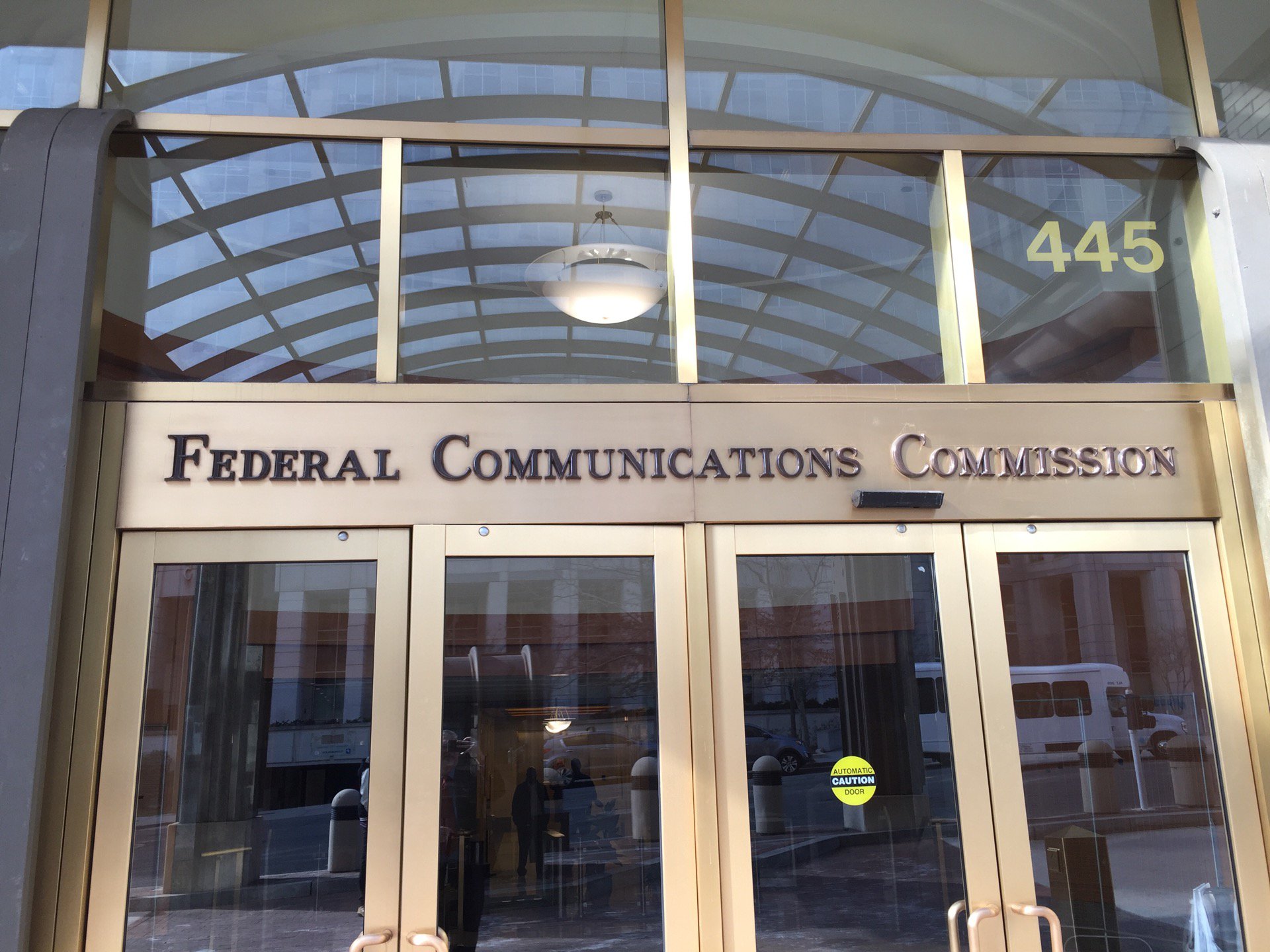
New America's Open Technology Institute wrote and submitted comments to the Federal Communications Commission ("Commission") opposing a waiver submitted by the 5G Automotive Association ("5GAA") requesting permanent, nationwide, and exclusive use of 20 megahertz of spectrum in the upper portion of the 5850- 5925 MHz band (the 5.9 GHz band). The comments were also signed by the American Library Association, Benton Foundation, Consumer Federation of America, Public Knowledge, and X-Lab. The Commission already has an open proceeding into the use of this spectrum that has been active for years, and undermining this process to accommodate 5GAA's request would circumvent the Commission's ongoing procedure to assess the best use of this spectrum. Further, this band represents a key to the country's future wireless world as the industry prepares to roll out 5G services. The 5.9 GHz band, if opened for unlicensed use, would be a necessary foundation for building stronger, gigabit Wi-Fi that can serve as backhaul for mobile data and help improve Wi-Fi services that have been widely used and improved broadband connectivity across the United States. Available below is a summary of the comments:
5GAA‘s "Petition for Waiver" is in reality a request to open a new 5.9 GHz rulemaking that would substantially overlap and undermine the Commission‘s pending 5.9 GHz rulemaking. The Commission already has an ongoing, multi-stage rulemaking that is specifically aimed at reconsidering the allocation and potential uses of the entire 75 megahertz ITS band. That rulemaking is into its sixth year and is expressly considering options that are directly contradictory to carving out a portion of the band for the exclusive use of yet another command-and-control technology that has not even been adopted by the Department of Transportation. 5GAA is using the procedurally inapt contrivance of a ―waiver‖ to circumvent a fresh look at the highest and best use of the entire 5.9 GHz band through a broader and more appropriate Further Notice of Proposed Rulemaking.
One option still explicitly under consideration would segment the band, moving ITS realtime safety signaling (V2X) into an exclusive assignment at the top of the band (e.g., 20 or 30 megahertz, as in Europe). By proposing that the top 20 megahertz be set aside exclusively for one particular ITS standard (C-V2X), 5GAA effectively seeks to hijack what is probably at this time the most plausible outcome of the pending 5.9 GHz NPRM. The Petition also contradicts what 5GAA has proposed for Europe, with both technologies coexisting on just 30 megahertz. The Public Interest Organizations strongly support the NCTA and WISPA requests for an immediate FNPRM to consider what allocation of the 5.9 GHz band best serves the public interest going forward.
Even putting aside the petition‘s procedural defects, the technology is at such an early stage that an experimental license or other temporary authorization that facilitates real-world field testing could meet 5GAA‘s needs during the period the FCC needs to issue a FNPRM and decide on a complete, coherent realignment of the ITS band. The public interest will not benefit from a narrow, near-term decision that this particular 20 megahertz is the prize in a beauty contest and should be awarded exclusively to the C-V2X faction of the auto industry without a broader consideration of alternative technologies (e.g., DSRC, automated vehicle and driver-assist), alternative uses (e.g., unlicensed sharing), and alternative bands for V2X that are potentially more useful for a system that is an application integrated with 5G mobile networks.
Commission spectrum policy has evolved over the past two decades in a direction that is distinctly incompatible with 5GAA‘s proposal. The Commission should continue to move away from silos of special-purpose spectrum bands and toward more intensively-used and flexible general-purpose use of spectrum. C-V2X has a perfect opportunity to prevail in the market as an application on general purpose mobile 5G networks. But even if the Commission decides that a spectrum set-aside for time-critical safety signaling is justified, the band segmentation approach that has been before the agency for three years at least minimizes the cost of another DSRC-type failure. As the Commission has stated multiple times in policy statements since the 2002 Spectrum Policy Task Force Report, exceptions made for public safety or other public interest allocations should be narrowly defined “and the amount of spectrum . . . limited to that which ensures that those [compelling public interest] objectives are achieved.”
As Commissioner O‘Rielly so aptly put it, the 5.9 GHz band is "the missing link between the 5 GHz and 6 GHz bands." The 5.9 GHz band is underused and is perfectly situated to fuel the next generation of gigabit-fast Wi-Fi as a complementary pillar of a robust 5G wireless ecosystem. During the two decades the 5.9 GHz has sat unused, the U.S economy‘s reliance on unlicensed technologies such as Wi-Fi has soared. Wi-Fi yields hundreds of billions of dollars annually for U.S. consumers and the economy more broadly. As the European Union has already determined, only up to 30 megahertz is necessary for time-critical road safety. The record in the ongoing 5.9 GHz proceeding shows that the lion‘s share of the 5.9 GHz band can be shared between multiple technologies – and certainly should be for commercial and non-real-time, safety-related applications.
The 5GAA‘s proposal should be subsumed in a broader FNPRM that takes a fresh look at what spectrum is best suited for V2X safety signaling – and what spectrum for unlicensed and next generation Wi-Fi – in the decades ahead. As consumer advocates, our groups believe the Commission can optimize the public interest benefits of both allocations. 5GAA‘s petition is welcome as well in the sense that it confirms the end of the proposed DSRC mandate. The exclusive set-aside of prime spectrum for a specific, unproven technology has proven to be an unwise and wasteful remnant of command-and-control spectrum policy. Our organizations urge the Commission to take a step back and reexamine the 5.9 GHz band in a holistic, forward-looking fashion through the process of a band-wide FNPRM that considers all options.
Issues
Programs/Projects/Initiatives
Topics
Related

OTI Joins Bipartisan Group Asking FCC to Update EPFD Limits Imposed on Satellites

OTI Files Comments to Inform the USF Working Group