Table of Contents
What’s New? Comparing the 2019 and 2017 RAAI Leaders List
When comparing the 2019 and 2017 Leaders Lists, three major differences stand out.
It was harder to make the Leaders List in 2019 than it was in 2017, because of increased competition and a higher bar for inclusion. In 2019, 197 asset allocators were rated compared to 121 in 2017. Additionally, in 2019, asset allocators were rated on 20 criteria, eight more than in 2017, and a higher score was needed to qualify. Leaders in 2019 needed to score at least 94 to make the cut, versus a minimum score of 90 in 2017.

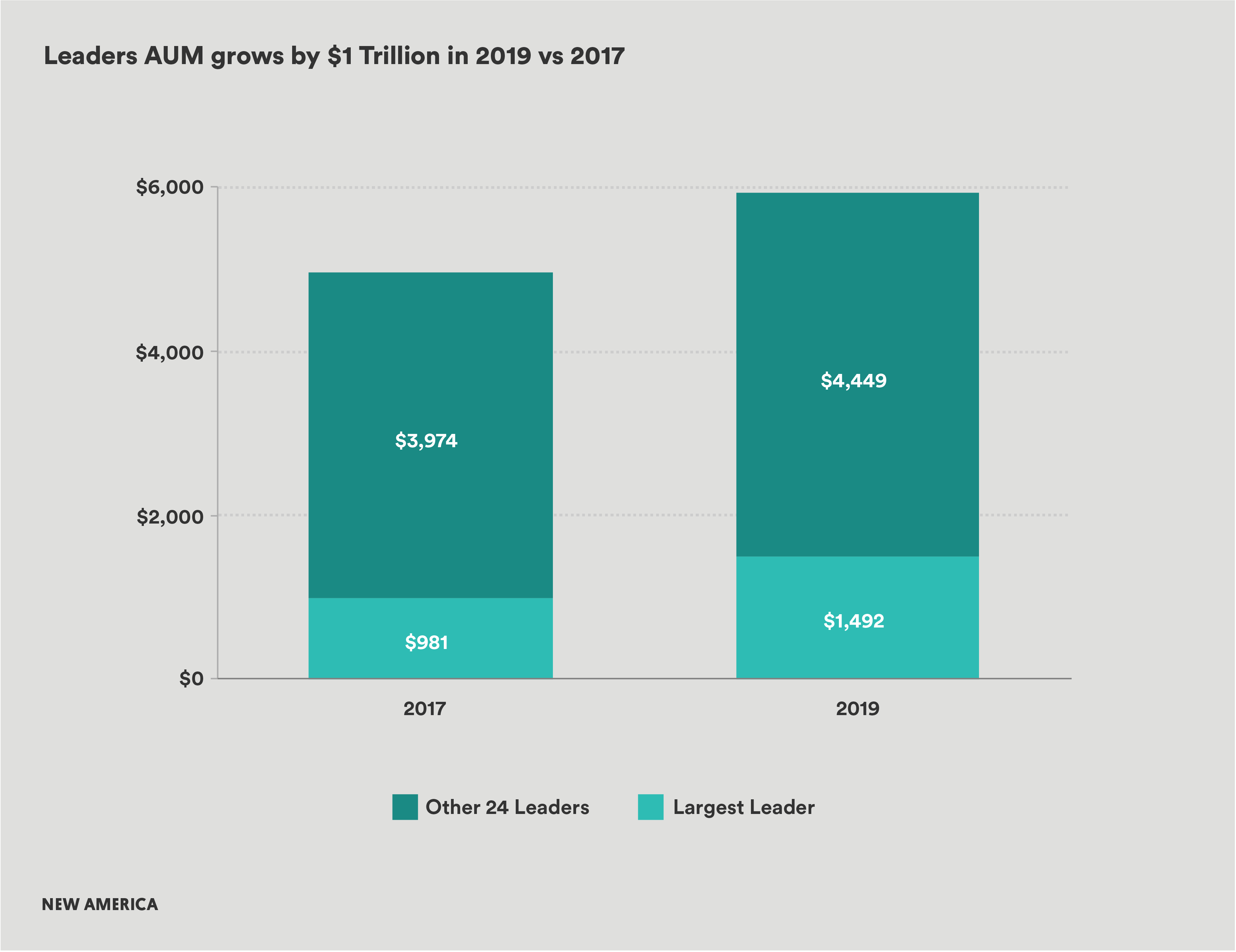
The total AUM of Leaders in 2019 is $1 trillion higher at ($5.94 trillion) than it was in 2017. This indicates that larger, more mature asset allocators are increasingly focused on responsible investing and hence more assets are being deployed toward social and environmental goals alongside financial returns. Part of the jump in assets was due to the inclusion of the Government Pension Investment Fund (GPIF) of Japan, the world’s largest government pension fund with assets of $1.5 trillion. However, even excluding the AUM of the GPIF, the next 24 Leaders together accounted for $4.45 trillion of AUM, versus $3.97 trillion for the equivalent group of Leaders in 2017.
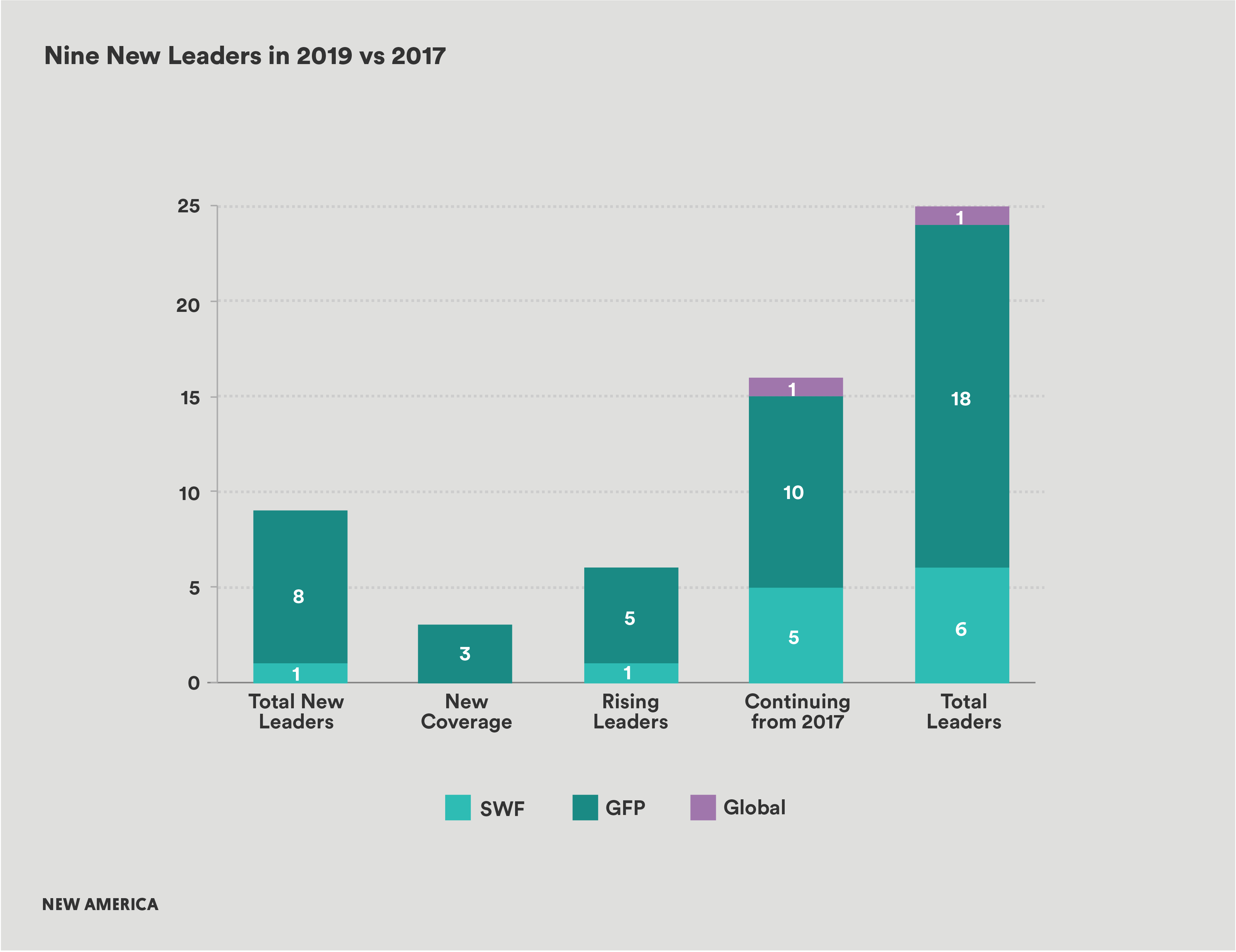
The Leaders List is dynamic, with room for improvement from previously rated funds and the opportunity for newly rated funds to be recognized for their leadership on responsible investing. Nine new asset allocators were selected for the Leaders List in 2019 – three were new to the RAAI and not covered in 2017: PensionDanmark of Denmark, Strathclyde Pension Fund of the UK and RPMI Railpen, also from the UK . Of the remaining six new Leaders, all were ranked in the second quintile in 2017 (that is, those funds that ranked 26-50), and were able to raise their scores in 2019, including: Australian Super and Victoria Funds Management Corp of Australia, Fonds de Reserve pour les Retraites (FRR) in France, the Government Pension Investment Fund (GPIF) in Japan, the UC Regents Investment Funds in the US and the California State Teachers' Retirement System (CalSTERS), also of the US.