
1/16 Section 706 Ex Parte Meeting
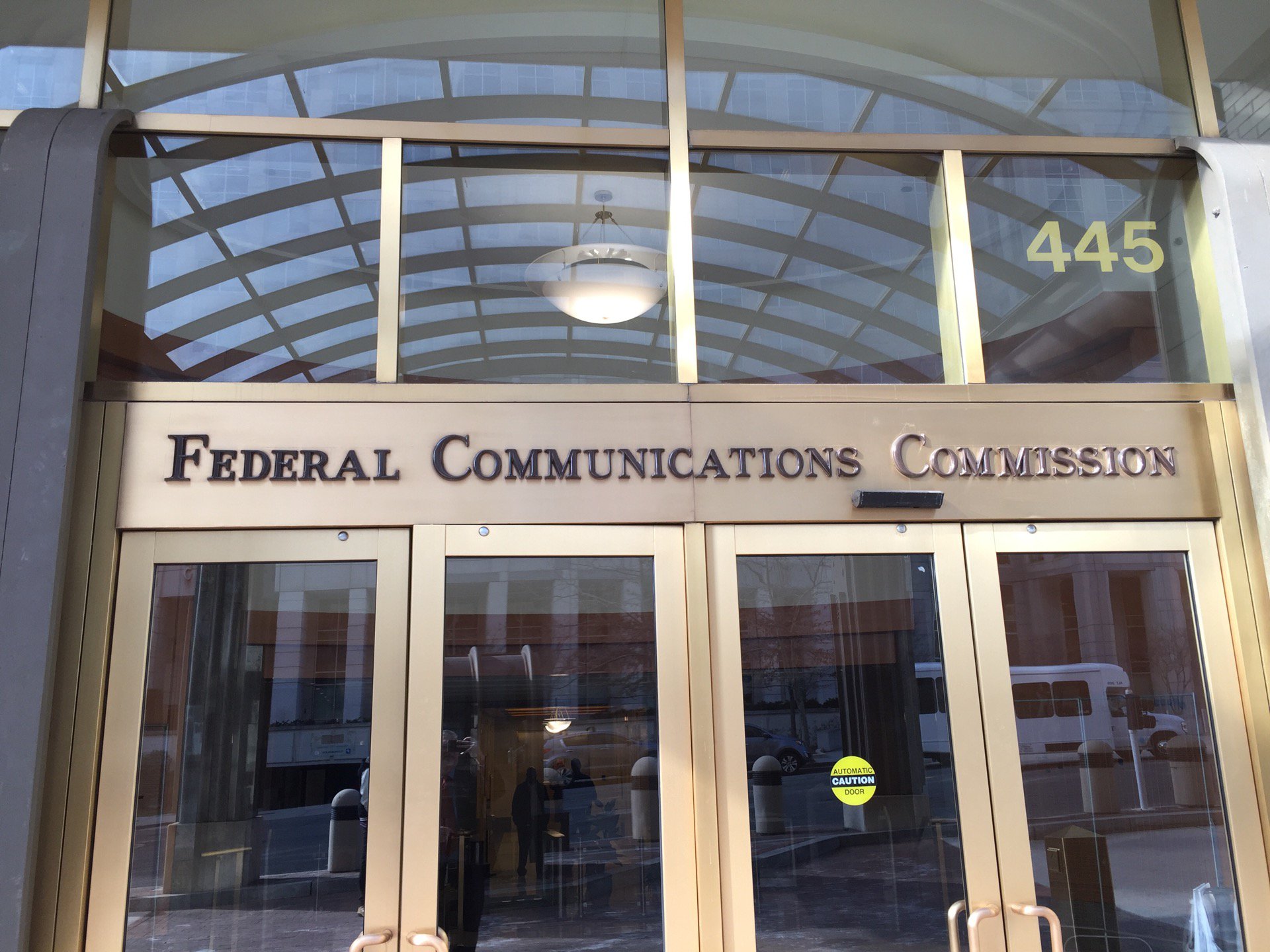
New America's Open Technology Institute joined allies in a meeting with Federal Communications Commission (FCC, the Commission) staff from the Wireline Competition Bureau and the Office of Economics and Analytics to discuss the FCC's Section 706 proceeding—OTI filed comments in that proceeding in November.
In the meeting, OTI and Public Knowledge, Common Cause, Next Century Cities, and National Hispanic Media Coalition argued the need for the FCC to increase the current benchmark speeds, to deem that mobile broadband is not a substitute for fixed broadband, to collect pricing data from broadband providers, and to address the Commission’s data collection process and use of Form 477. The ex parte letter is available here, and a copy-and-pasted portion of the ex parte, addressing the fact that mobile is not a substitute for fixed broadband, is below:
The Commission Should Continue To Find That Mobile Broadband Is Not A Substitute for Fixed Broadband
The Commission should conclude that mobile broadband is not a substitute for fixed broadband, as it has concluded for the past two years. As the Advocates explained, consumers do not view the two services as substitutes. In fact, low-income Americans are more likely to exclusively rely on mobile broadband than those with higher incomes. Mobile is generally (1) more expensive for consumers, (2) less reliable (especially in rural areas), (3) slower, and (4) subject to data caps and expensive overage fees compared to fixed. Mobile is also increasingly reliant on fixed broadband for offloaded traffic and backhaul. As such, it would not make sense for the Commission to deem mobile a substitute for fixed when it is dependent on fixed for its own functioning.
Devices that typically are associated with mobile broadband (e.g., smartphones, tablets) are limited in functionality compared to fixed. Studies have also shown that people who rely on mobile devices and mobile broadband for homework, teleworking, and searching for employment have cited that reliance as a problem. Mobile broadband cannot handle the volume of data that households consume on fixed broadband plans. Comcast and Charter—two of the largest fixed providers in the country—have reported that customers consume 200 gigabytes of data per month. Broadband-only cord-cutting customers consume 400 GB per month, according to Charter. Mobile cannot handle that amount of data for an entire household. Most plans throttle data or charge expensive overage fees after 25-50 GB of data that month, and even AT&T's “Unlimited Elite” plan only offers 100 GB of data before they throttle service.
The Advocates discussed how 5G does not change any of these realities, and the Commission should not use 5G as a reason to deem mobile as a substitute for fixed broadband. 5G should not heavily influence the Commission’s conclusion here as it is too early to conclude how these networks work and change consumer behavior. 5G has not been deployed in any consistent or widespread manner, but instead has mostly been showcased or demonstrated at shows or in limited urban areas. We have not seen enough from these limited deployments to reasonably conclude that this new technology renders mobile as substitutable to fixed broadband. Further, mobile carriers themselves have acknowledged that the most “revolutionary” speeds that they tout as possible through 5G networks—those using millimeter wave spectrum—will never scale beyond urban and high-population density areas. This will deepen the digital divide and leave rural, Tribal, and other historically underserved and unserved areas behind. For example, Verizon recently admitted that the 5G deployed on low-band spectrum (the 5G service that will be deployed to rural areas) would be equivalent to “good 4G.” The FCC cannot deem mobile as a substitute for fixed broadband based on the capabilities of 5G that are only available in certain parts of the country. If 5G only brings “fixed-like” capabilities to some and not all Americans, then it cannot and should not be determined to be substitutable for fixed broadband in the context of the Commission’s Section 706 obligations.
Issues
Programs/Projects/Initiatives
Related