The War in Libya
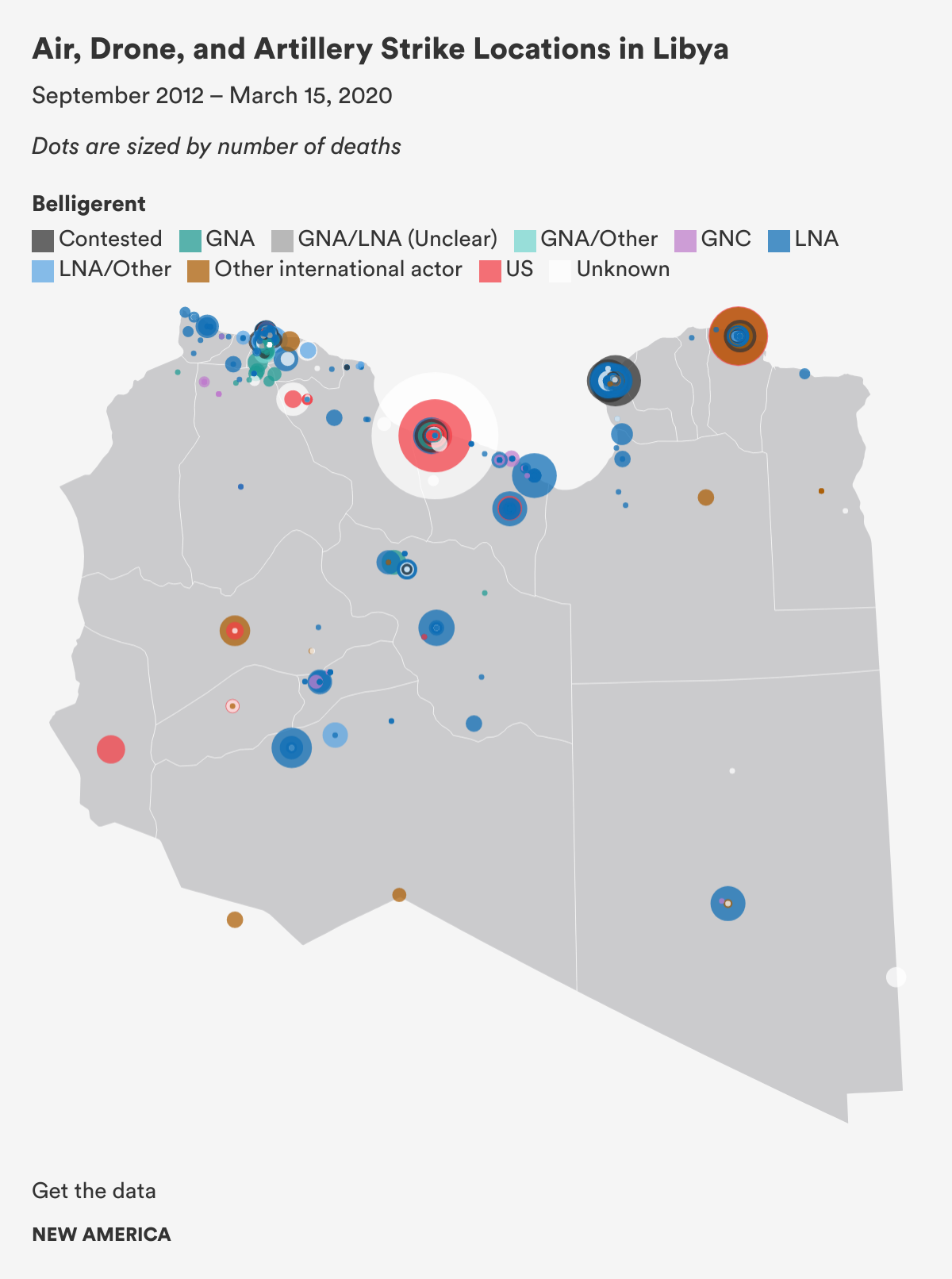
New America and Airwars track air, drone, and artillery strikes, and their resultant civilian and combatant fatalities in the ongoing civil war turned international proxy conflict in Libya. This project concluded on March 31, 2020.
Airstrikes in Libya since the 2011 NATO Intervention
In 2011, during a national uprising in Libya, NATO intervened to protect civilians from the forces of Libyan leader Muammar al-Gaddafi, a military action that significantly contributed to the regime’s defeat. Though the United Nations-sanctioned campaign ended on October 31, 2011, several countries and local militias have continued to conduct airstrikes and drone strikes intermittently with scant accountability. With the aid of a team of Libyan researchers, New America and Airwars have documented these airstrikes and the resulting civilian deaths.
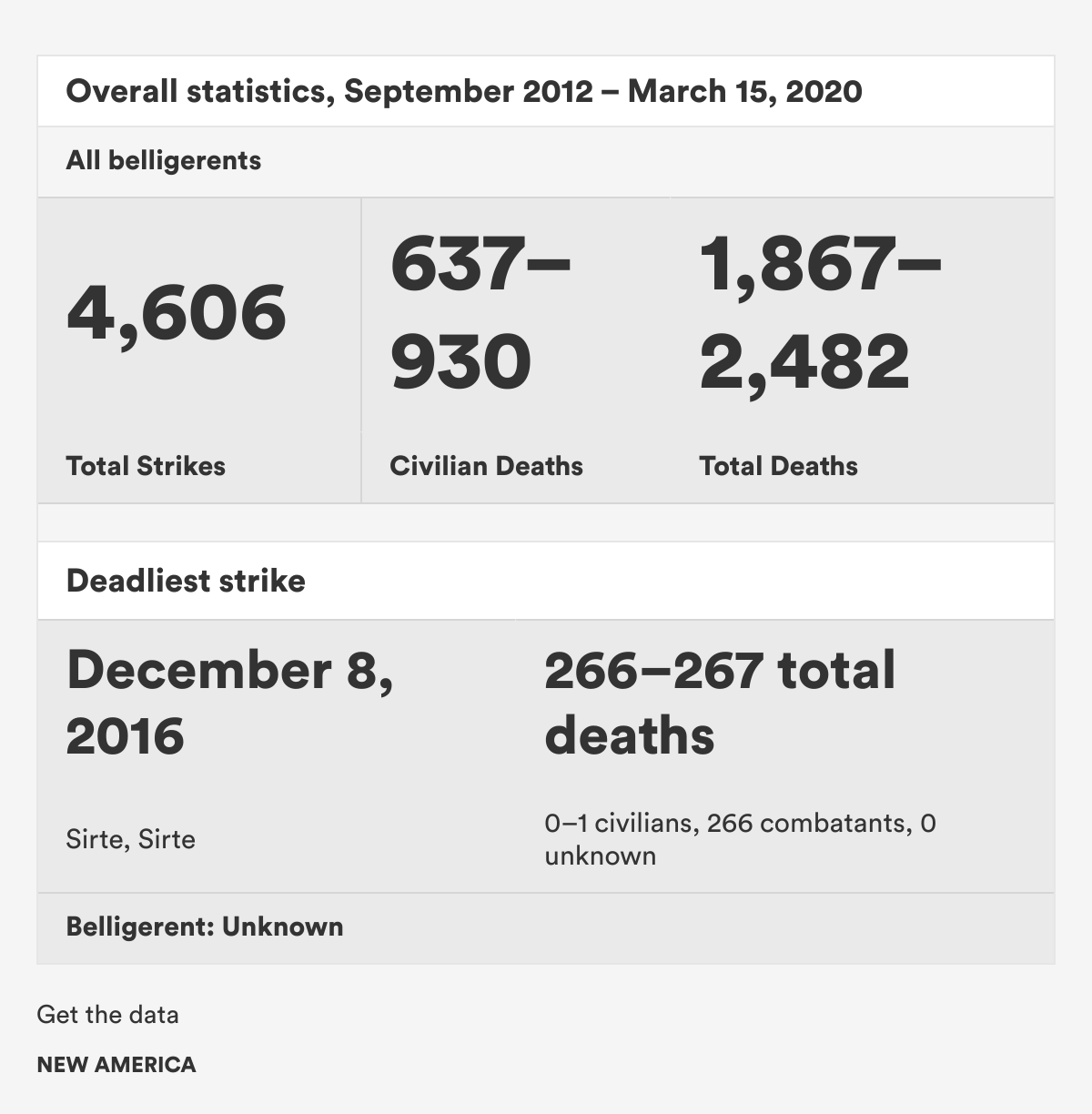
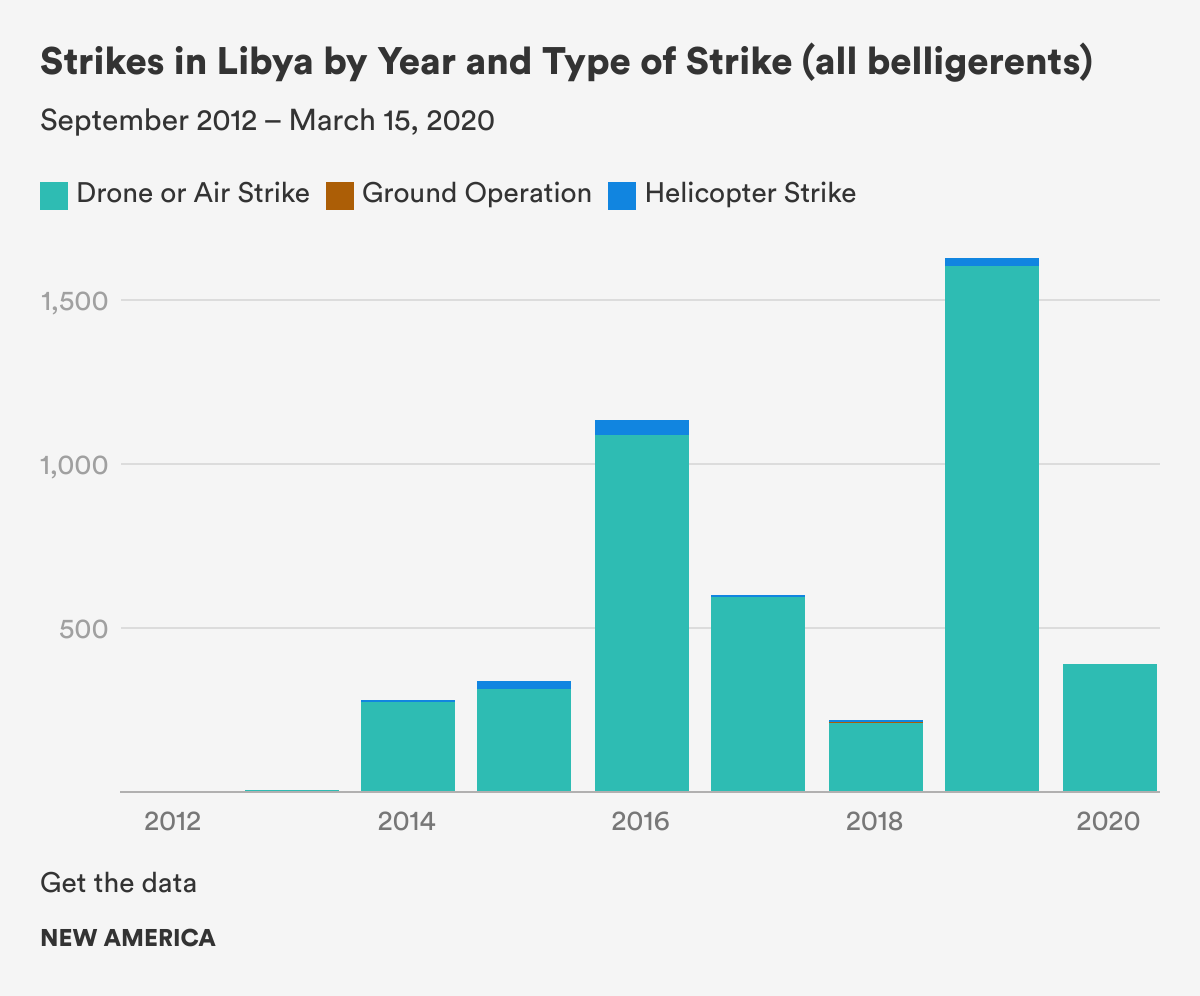
According to reports by some of the belligerents as well as news reporting and accounts in social media, the nations and local groups operating in Libya have conducted more than 4,500 air, drone, and artillery strikes in Libya since the end of the UN-sanctioned intervention. Hundreds of civilians are reportedly killed in these strikes.
Civil War and Airstrikes
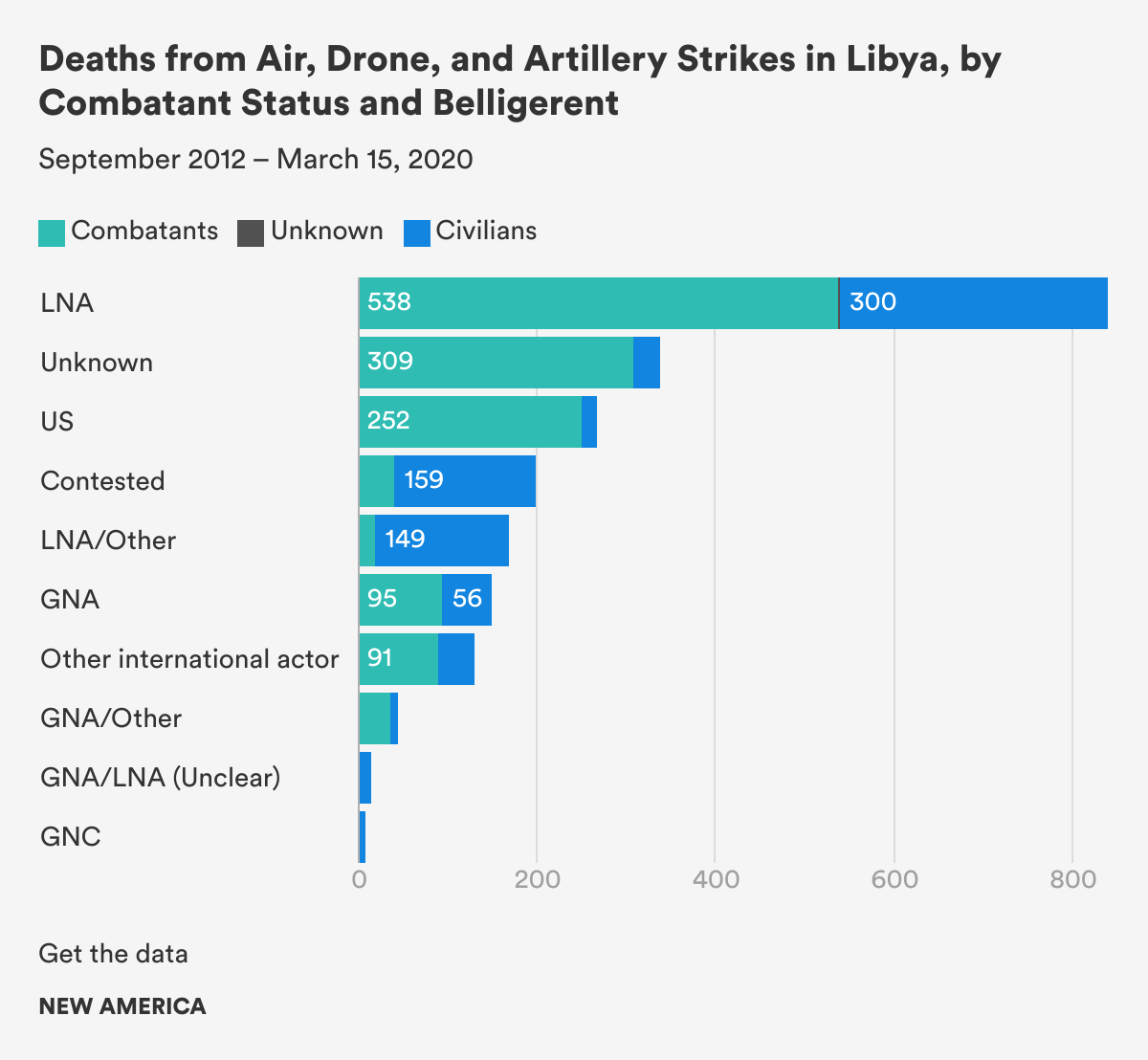
Several leaders among the various rebel factions had begun to jockey for control over the direction of the revolution before Gaddafi’s death, so when the regime finally collapsed, the stage was set for bitter disagreements between rebel camps. Fighting between the two main factions, the elected congressional body and a rival group led by General Khalifa Haftar called the Libyan National Army (LNA), spread to southern Libya and, in late 2014 and early 2015, to the oil crescent, where both sides conducted airstrikes. The LNA is responsible for the most civilian deaths in the aerial conflict in Libya.
In December 2015, after a lengthy U.N.-led mediation process, representatives from the GNC and the LNA signed a deal in Skhirat, Morocco, to end their conflict. In April 2016, the unity government called the Government of National Accord (GNA) took over in Tripoli. However, the GNA remained contested by Haftar and his forces.
This political contest, in conjunction with the expansion of militant-held territory in the country, sparked action from foreign states, which have conducted airstrikes in support of either the LNA or the GNA, and/or have targeted Islamist militants (in many cases, those objectives overlap). Western nations such as the United Kingdom, France and the United States were active in the mediation process that led to the GNA’s formation, and the United States has conducted hundreds of strikes in Libya with the consent of the GNA. Turkey is the most recent country to join the conflict, and coordinates and conducts strikes with the GNA.
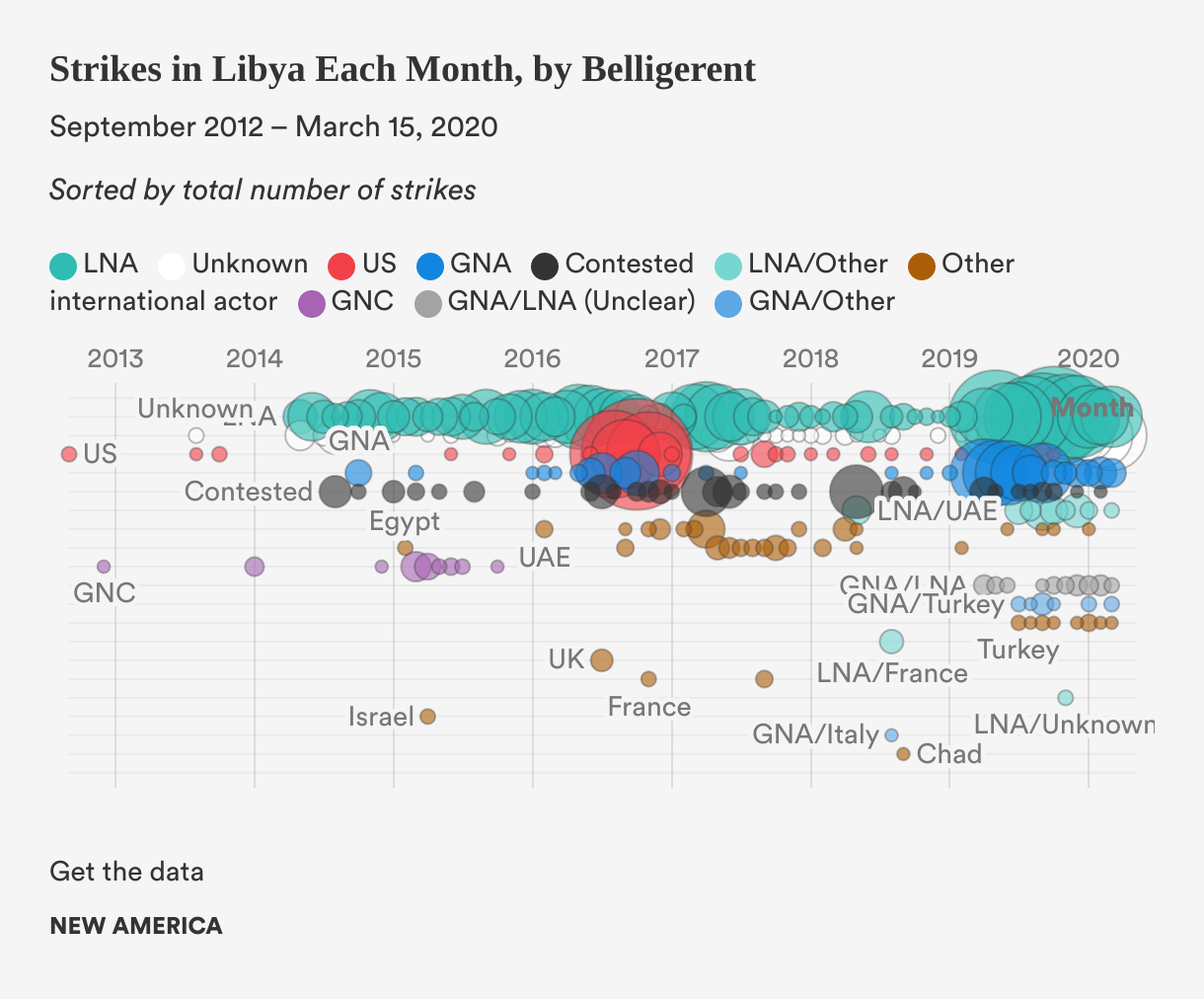
For its part, the LNA has enlisted the help of Egypt and the United Arab Emirates in its aerial campaign. Egypt’s strikes in Libya aren’t always in the service of the LNA. Some are conducted unilaterally, ostensibly to defend the border between the two countries. However, civilians have been victims on occasion, according to reports, though Egypt hasn’t claimed any unintended casualties.
Emirati airstrikes in Libya began from an Egyptian air base in August 2014. By this point, the UAE, joined by Egypt and Saudi Arabia in particular, and Qatar, allied with Turkey and Sudan, had put their support behind different Libyan groups. The strikes conducted by the UAE in August 2014 were primarily to undermine Misratan and Libya Dawn militias in Tripoli, which were supported by Qatar. Though Egypt denied being actively involved in these strikes and the UAE did not comment on them, four American officials confirmed both countries’ involvement.
As recently as December 2017, the UAE was expanding its footprint at Al Khadim air base—roughly 65 miles east of Benghazi—in an effort to combat ISIS and other non-ISIS Islamist groups in Libya, but the primary focus of the UAE’s air campaign in Libya continues to be its opposition to Qatari-backed Islamist groups. In the spring of 2019, Haftar began a military offensive to capture Tripoli, which intensified fighting between the LNA and GNA. According to media reports, since the offensive began, nearly 400 people have died, almost 2,000 have been injured, and tens of thousands have migrated from greater Tripoli.
Civilian Deaths from Airstrikes
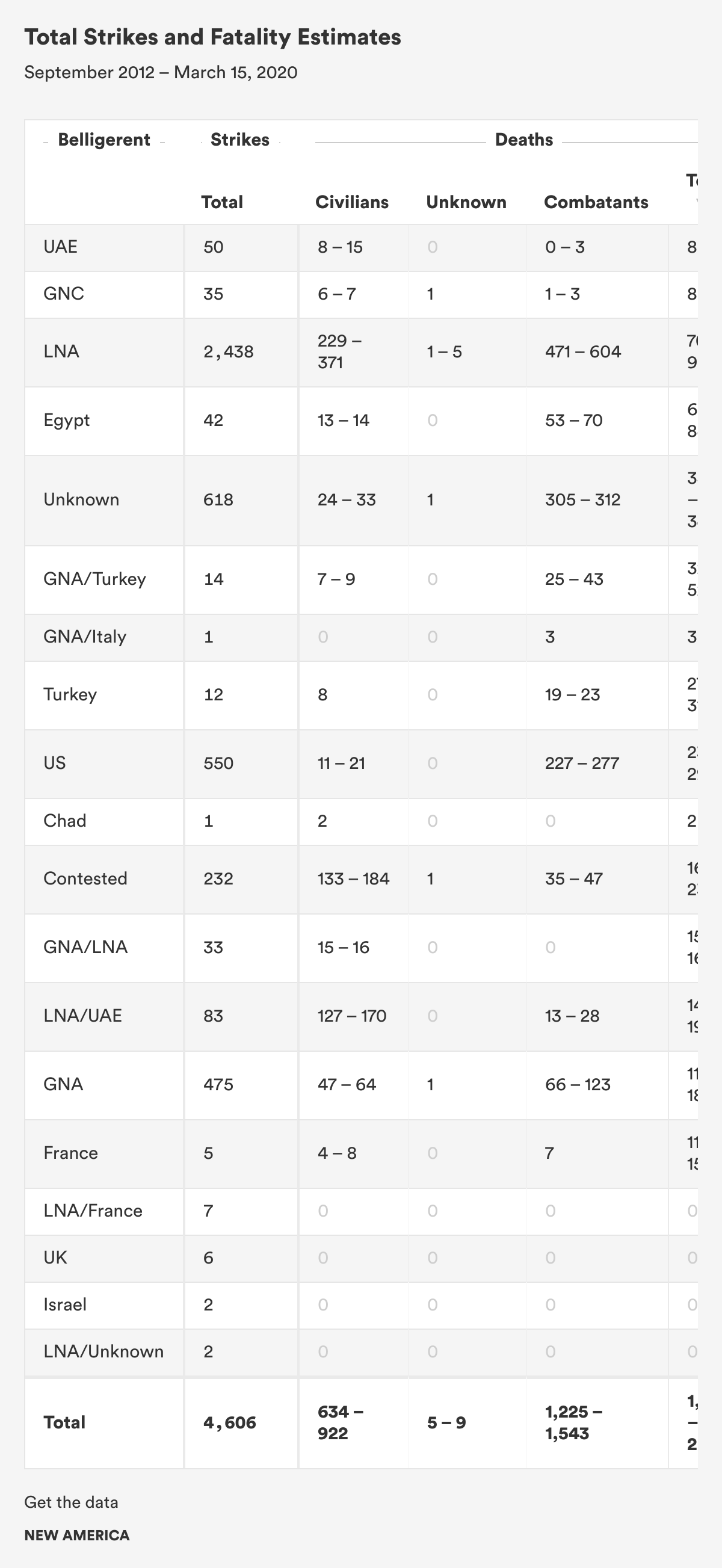
Reported civilian deaths as a result of the air wars in Libya from September 2012 to March 15, 2020, at least 624 and potentially as many as 915, based on the minimum and maximum estimates of civilian casualties in our database. These are low estimates compared to Iraq and Syria, similar conflicts in that multiple belligerents are conducting strikes. A total of 4,517 strikes are logged in our database over this period. Across this period of analysis, the majority of allegations of civilian deaths are attributed to the LNA and the UAE.
Libya is one of the many countries the United States has extended its controversial armed drone program—part of its robust counterterrorism campaign in countries outside of conventional war zones such as Afghanistan and Iraq. Other countries include Pakistan, Somalia, and Yemen.
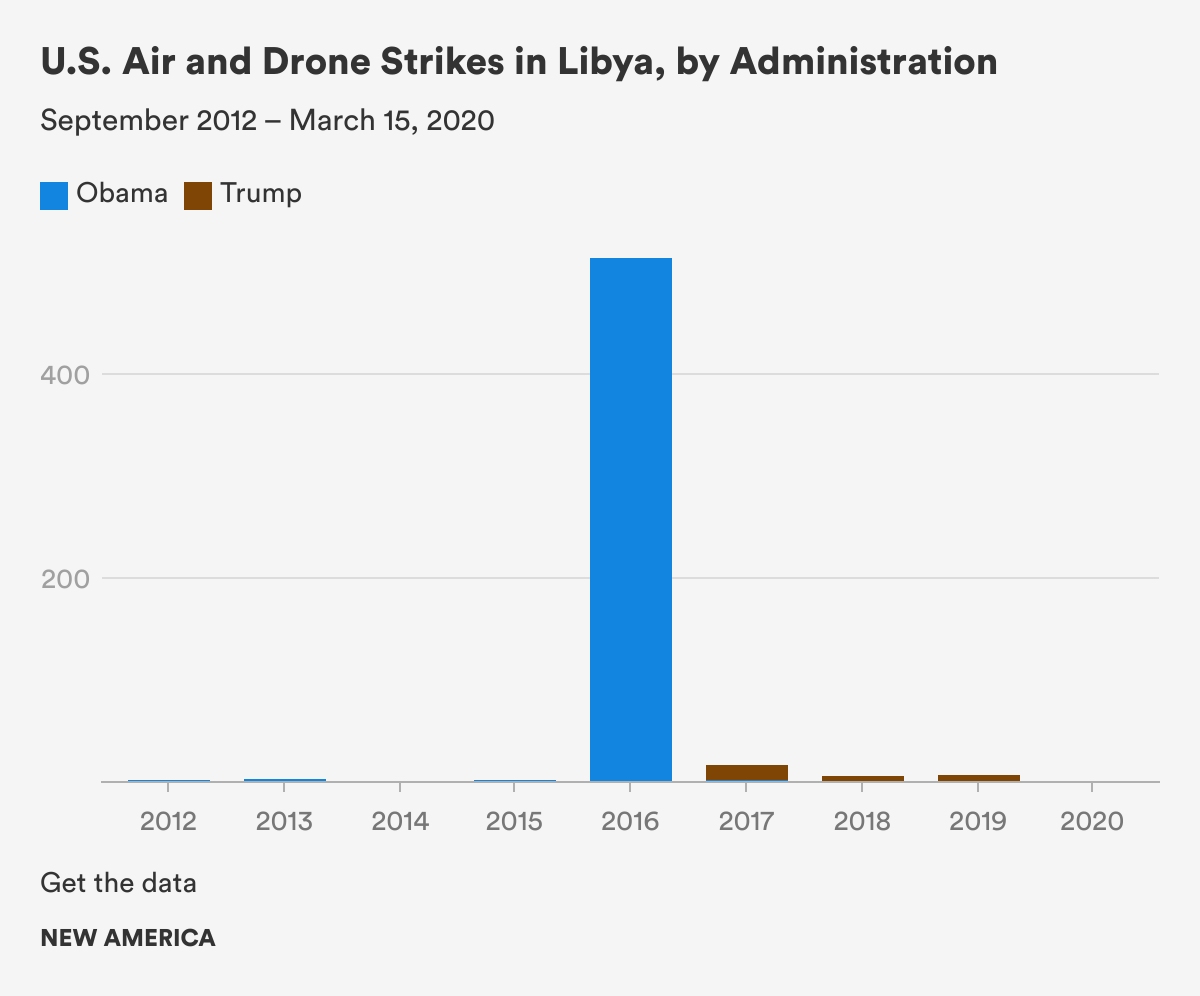
Strikes in Libya were authorized under President Obama’s PPG in the second half of 2016, in an effort to destroy ISIS’s stronghold in the coastal city of Sirte. At the request of the internationally recognized Government of National Accord, the United States launched Operation Odyssey Lightning, a combination of drone attacks and airstrikes that started in Aug. 2016 and ended in Dec. 2016.
President Trump replaced the Obama administration’s 2013 Presidential Policy Guidance (PPG) with the PSP or Principles, Standards and Procedures in 2017.
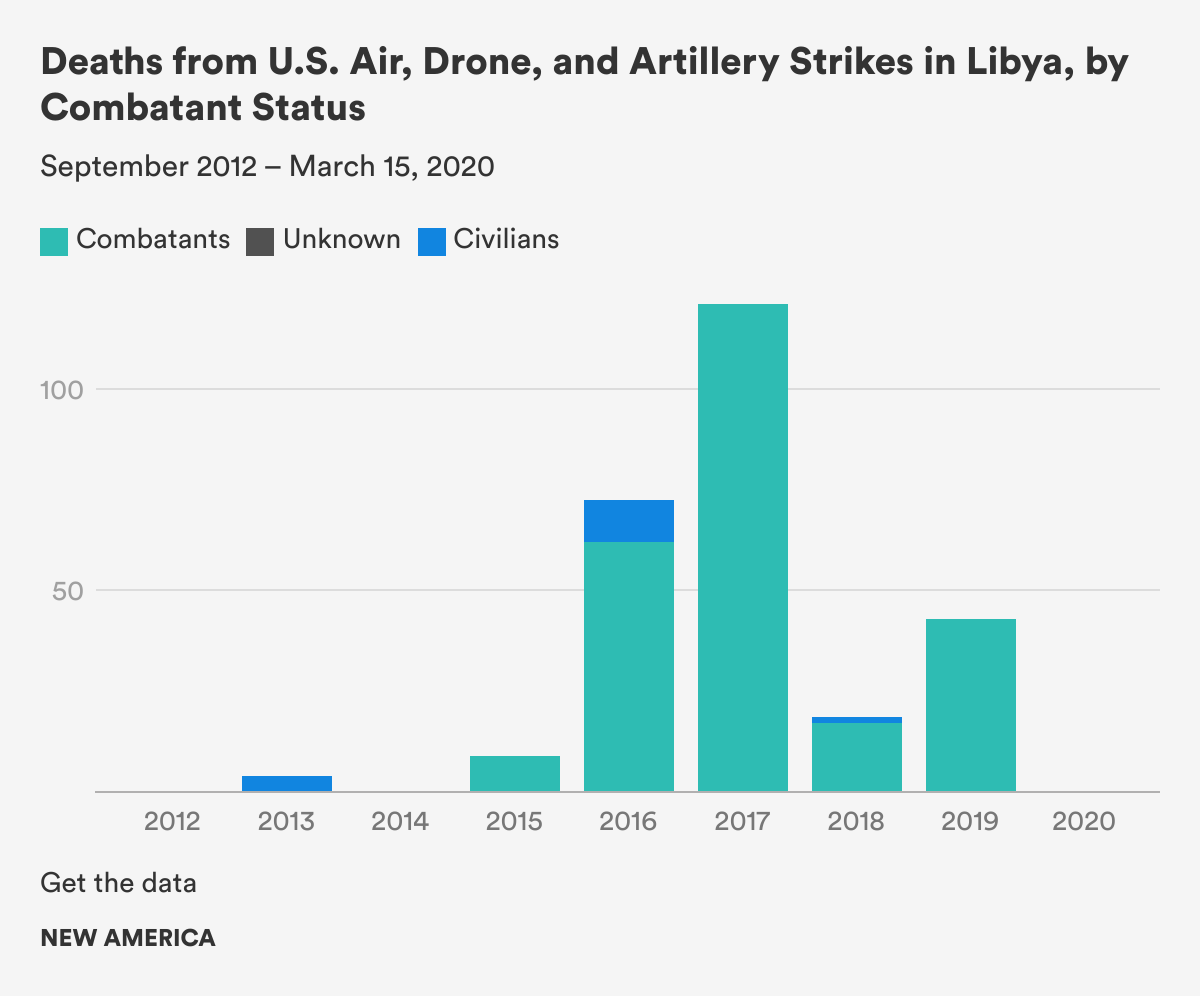
The United States has the highest standard of reporting strikes among international parties to the aerial conflict in Libya, and has the lowest number of strikes that have been reported to result in civilian fatalities, according to New America and Airwars data. However, under the Trump administration, the Pentagon has seemingly taken steps to conceal the extent of its operations in Libya and elsewhere by delaying the submission of a report to Congress and sometimes withholding information about certain strikes.
AFRICOM has not reported any civilian deaths in its operations in Libya.
Our Project Partner