Our Principles
A Shared Vision for Advancing High-Quality Youth Apprenticeship
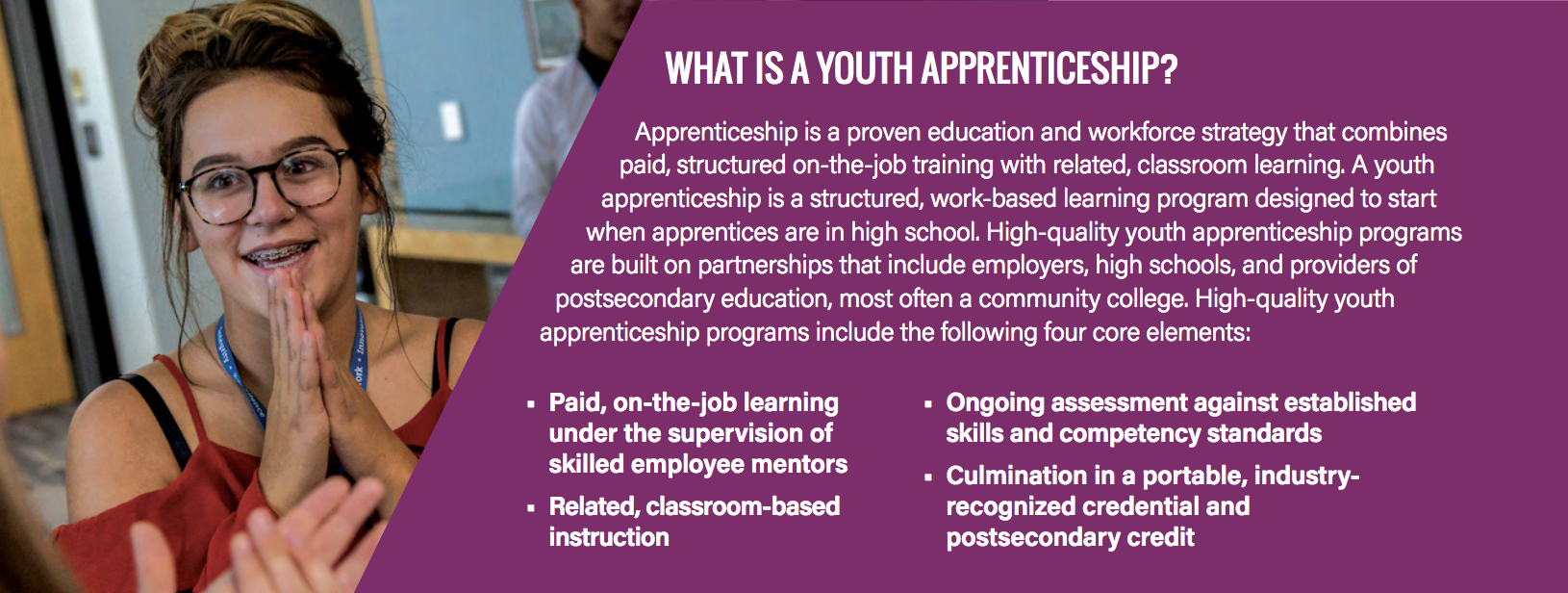
Our Definition of Youth Apprenticeship
Five Principles for High-Quality Youth Apprenticeship
The Partnership to Advance Youth Apprenticeship believes in five core principles for high-quality youth apprenticeship programs:
Career-oriented
Youth apprenticeship combines valuable work experience with academic learning that is linked to and aligned with careers that offer family-sustaining wages and opportunities for advancement. This unique pathway relies on the direct investment of employers to ensure the knowledge, skills, and competencies apprentices develop are tied to current workforce needs and aligned to relevant industry standards. Alongside educators, employers develop, sequence, and assess student learning to provide a coherent experience that better prepares students for the future.
To learn more about career-oriented youth apprenticeships, read this post from our partners at CareerWise Colorado.
Equitable
Designed well, youth apprenticeship can advance equity by increasing access to valuable, affordable postsecondary credentials and by increasing the social capital and paid work experience that are especially important for under-resourced youth. Programs must guard against inequities that unfairly limit access and opportunity by gender, income, disability, and — most starkly — race. Youth apprenticeship programs must not reinforce educational segregation or privilege the most well-resourced students. This requires programs to recognize inequities embedded within their education and workforce systems and to develop programmatic interventions to address them, including student recruitment strategies, advising, and on-the-job support from employer mentors.
To learn more about building equitable youth apprenticeships, read this post from our partners at National Alliance for Partnerships in Equity (NAPE).
Portable
Youth apprenticeship programs provide young people a clear path to a college degree or other valuable postsecondary credential and a foundation for advancing their careers. For youth apprenticeship to expand rather than limit students’ postsecondary options, learning must be documented and recognized within the education system as credit, and by industry in the form of certifications, where appropriate. The college credits that students receive through an apprenticeship program should count toward an associate or bachelor’s degree and be transferable to other institutions, so apprentices can build upon their learning over time.
To learn more about the importance of portability in youth apprenticeship, read this post from our partners at Education Strategy Group (ESG).
Adaptable
Youth apprenticeship is an investment by an employer in future talent and an investment by students in their future selves. To protect these investments, employers across a sector must collaborate to ensure the knowledge, skills, and competencies students acquire are not narrowly tied to any single employer and are broadly valued across employers in an industry, sector, or region. Doing so helps employers guard against the risk that they will lose the talent they helped develop and helps students ensure their learning is not tied to a single employer but valued more broadly across an industry, sector, or region.
To learn more about the adaptability principle in youth apprenticeship, read this post from our partners at JFF.
Accountable
Youth apprentices straddle the worlds of education and employment. To support students as they navigate the critical transition to adulthood, youth apprenticeship programs demand high-level buy-in and coordination across employers, postsecondary institutions, high schools, and communities. This complex, mutually-beneficial partnership needs to be managed by an intermediary organization that facilitates the program, balances partners’ interests, and holds each partner accountable for the success of the program and the apprentices. To do so, programs must collect, monitor, and disaggregate data to evaluate the whole picture of apprentice and program performance and to drive continuous improvement.
Read more about each principle and their related outcomes in the full document here.