John Sessler
Fellow, Learning Sciences Exchange

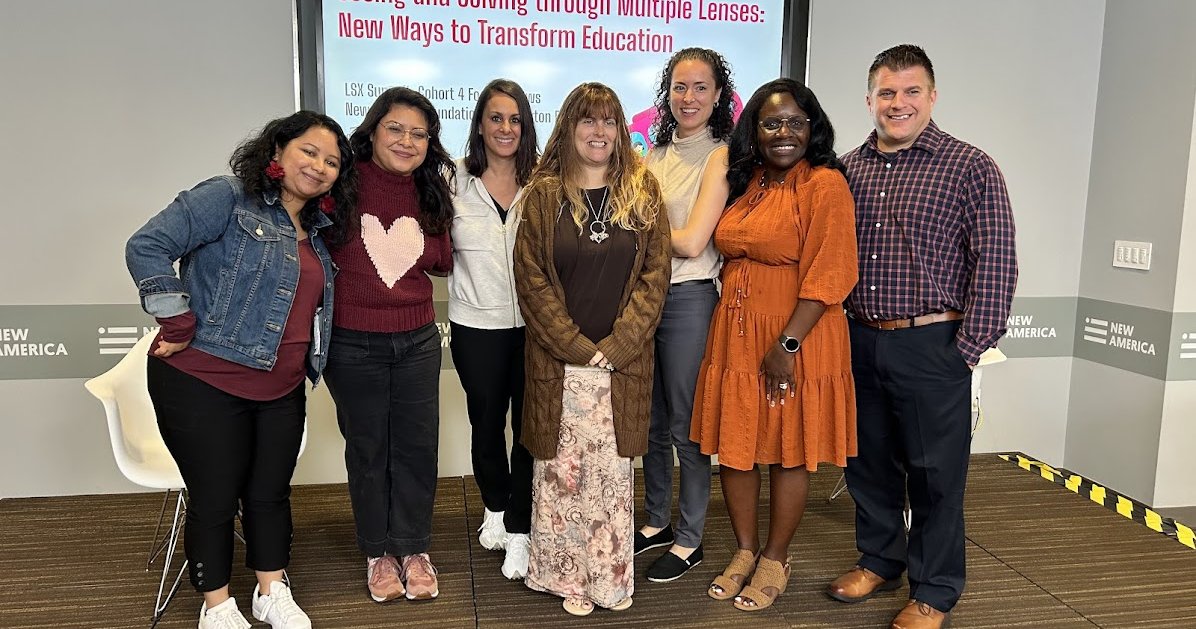
The Learning Sciences Exchange (LSX) is a cross-sector fellowship program designed to bring together journalists, entertainment producers, policy influencers, researchers, and social entrepreneurs around the science of learning. As part of the program, our fellows contribute to various publications, including New America’s EdCentral blog; BOLD, the blog on learning development published by the Jacobs Foundation; and outside publications.
John Sessler was an LSX Fellow in the 2020-2022 cohort.
“Put on your own oxygen mask before assisting others.” The ubiquitous airline safety message has been a recurring refrain for educators. The phrase is a reminder to address our own basic needs in order to take care of others. Yet, how often do we as adults include self-awareness in our self-care practice to reflect on what we need to learn, grow, and be there for others?
As an early childhood educator and lifelong learner, I often reflect on what it means to “put on my own oxygen mask” as it relates to modeling self-awareness for children, a foundational social and emotional competency. Self-awareness requires time and ongoing practice to think about the new information we learn.
Even more mentally demanding is reflecting on what to do with what we learn; yet, awareness of our thinking, or metacognition, is essential to the learning process. Metacognition and reflective practices help us apply what we learn to different contexts.
Any early childhood educator will share how much time they spend with children practicing SEL and self-awareness skills necessary to identify emotions, make friends, and resolve conflicts. In his book, Know Thyself: The New Science of Self-Awareness, Prof. Stephen M. Fleming emphasizes the interconnectedness of self-awareness and “mind-reading,” or awareness of others. Research shows that children develop an awareness of others’ perspectives after the age of four and even as late as six or seven.
Fleming notes that along with awareness of others, self-awareness is equally important and should be an ongoing practice throughout life. Metacognition is strengthened through strategies like journaling, mentoring, and mindfulness activities. Most of us weren’t taught about metacognition in school or ways to monitor and reflect on what we learn as we age.
Challenging times can impact our ability to learn and remain self-aware. As the pandemic dragged on, I made a daily commitment to practice a self-awareness strategy Fleming describes as taking a “third person perspective on yourself.” I’m thankful I did. In focusing on my self-awareness, I uncovered the following ways I can support my own learning and metacognition to better serve other learners:
I understand that drawing comparisons between self-awareness, the science of learning, and an overused oxygen mask metaphor may be simplistic. However, in prioritizing my self-awareness practices the past two years, I was reminded that everything we carry as educators is mirrored in our interactions with children. Through our ongoing practice of self-awareness and reflection, we can model for children the critical skills that are essential to learning and life.
Enjoy what you read? Subscribe to our newsletter to receive updates on what’s new in Education Policy!
For more on early childhood educators and social emotional learning, we invite to you to explore the work of the Early & Elementary Education Policy team at New America.
Fellow, Learning Sciences Exchange