Lancy Downs
Senior Policy Analyst, Center on Education & Labor
Authentic youth-adult partnerships can promote both equity and positive development for young people

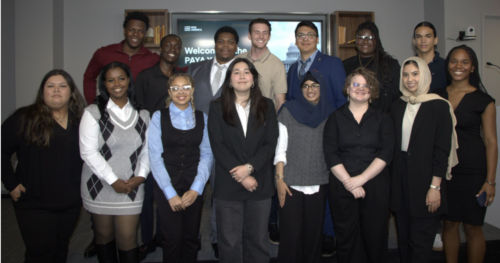
On Thursday, March 29, the American Youth Policy Forum (AYPF) hosted a panel discussion on Capitol Hill called Youth as Experts in Federal Policymaking. Moderated by Dr. Stephanie McGencey, Executive Director of AYPF, the conversation addressed how to meaningfully engage youth in federal policymaking as well as the challenges young people and their allies encounter in this work. The panel featured three speakers: LaVontae Brooks, Deputy Chief of Staff for U.S. Representative Steven Horsford; Kenvin Lacayo, AYPF Youth Policy Consultant, educator, and young advocate for education reform and youth empowerment; and Margarita Alegria, PhD, Chief of the Disparities Research Unit at Massachusetts General Hospital.
While the discussion largely focused on the federal policymaking context, speakers offered best practices for centering youth voices and building strong youth-adult partnerships in a range of systems change and advocacy efforts, including youth apprenticeship. Here are some of the key strategies they recommended:
Be honest about the challenges of systems change work. In an effort to mobilize young people, allies sometimes make promises about the possibility of sweeping change that is unlikely to occur in the near future. When grand-scale change doesn’t materialize as promised, young people are often left feeling disillusioned and discouraged. Speakers recommended setting realistic expectations of what can be accomplished and being honest with youth about the painstaking nature of working within systems to create lasting change.
At the same time, it’s crucial that young people stay excited and motivated. While honesty about the challenges of this work is important, so is preventing burnout and fatigue. Youth allies should develop strategies to support sustainable engagement among young people to help them stay excited and invested in the work for the long term. Panelists highlighted several different options for keeping up momentum: Identify local and hyperlocal opportunities for change, including in schools and neighborhoods; build alliances and coalitions so that young people have a rich community of support through both disappointment and success; and celebrate any victory achieved, no matter how small.
Treat youth as the experts they are. Young people have valuable insights to share about their personal experiences and can provide policymakers and other leaders with feedback and ideas they may not have heard before. Speakers recommended the following approaches to seeking input from young people:
These strategies are closely aligned with the approaches several PAYA communities have adopted to ensure that youth and young adults are provided with meaningful opportunities to provide input on the policies and programs that affect them. For example, PAYA grantee Ascend Indiana, in partnership with EmployIndy, the Marion County workforce development board, has established an advisory board of youth apprentices in the Modern Apprenticeship program who provide feedback and guidance to program administrators. Some of those youth advisors recently spoke at a gathering of state leaders where they offered policymakers, employers, and educators strategies for raising awareness of youth apprenticeship and better supporting young people through their apprenticeship.
PAYA communities have also fostered authentic youth engagement through co-design, in which users of a program or public service (in this case, young people) are considered equal partners in decisions about program design and delivery. In 2021, PAYA supported three teams through a co-design process to develop more inclusive and equitable program recruitment strategies for youth work-based learning opportunities. Young people took on leadership roles throughout the process, developed strategies for addressing barriers to equitable recruitment in their communities, and were compensated for their time and labor.
PAYA values authentic youth engagement because it is both an effective equity strategy and a tool for positive youth development. As the speakers at the AYPF event emphasized, youth engagement ensures that young people who may have traditionally been marginalized or excluded from decision-making processes, such as youth of color, youth with disabilities, or LGBTQ+ individuals, have a say in the policies and programs that most impact them. Research also finds that, as youth transition into adulthood, the experiences they gain in positive youth-adult partnerships allow them to develop key socioemotional and intellectual skills like decision-making, self-regulation, and self-advocacy.
To learn more about building authentic, effective youth-adult partnerships, you can explore this resource from the Jim Casey Youth Opportunities Initiative.
Enjoy what you read? Subscribe to our newsletter to receive updates on what’s new in Education Policy!
Senior Policy Analyst, Center on Education & Labor