Carrie Gillispie
Project Director, Early Development & Disability
The new film “Being Heumann” arrives at a critical moment when many hard-won rights of disabled people are under threat.

Disability only becomes a tragedy when society fails to provide the things we need to lead our lives... it is not a tragedy to me that I’m living in a wheelchair.
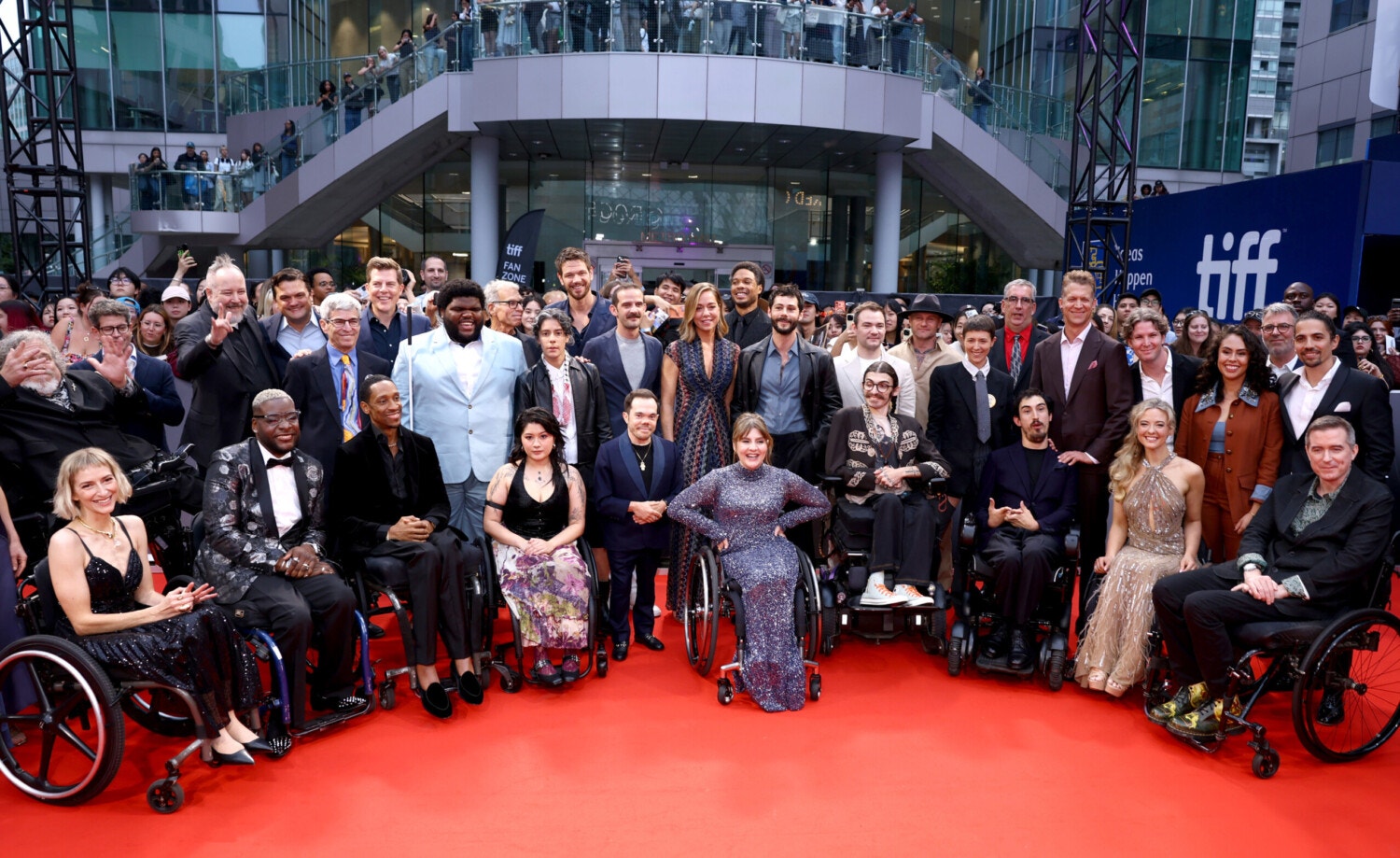
In 1977, activist Judy Heumann organized a record-breaking sit-in that brought the Disability Rights Movement into a national conversation. Nearly 50 years later, a new film based on her memoir, Being Heumann, premiered at the 2026 Toronto International Film Festival (TIFF). New America was there to celebrate Heumann’s leadership and legacy of inclusive coalition building, a legacy that was born out in an unprecedented film project that brought dozens of disabled creatives into the spotlight.
All projects take collaboration, but this took a community.
The film tells the story of what it took to pass regulations guiding Section 504 of the Rehabilitation Act of 1973, which barred discrimination on the basis of disability in federally funded programs. Protesters’ occupation of a San Francisco federal building broke records, shaped policy, and changed the lives of thousands of Americans with disabilities.
Crowd reactions in and around TIFF made it clear that this story is long overdue. Audience members of all ages shared that they had never learned about the protests in school, a gap that undermines a collective understanding of the fight for disability rights in the United States. Many accommodations feel commonplace now because they are required, but they weren’t always. Being Heumann reminds us of what it took to get where we are today.
The timing of Being Heumann’s release is remarkably prescient, arriving at a moment when many hard-won rights that ensure that disabled people can live independently, receive an education, and work are under threat.
If you or someone you love is disabled, this feels imminent and deeply personal. You may be trying to make sense of new Medicaid and Supplemental Nutrition Assistance Program (SNAP) work requirements, or changes to protections for community-based living or services in integrated settings. You may be searching for affordable health care for yourself or someone you support, or waiting for answers to appeals for Medicaid coverage or services.
If these words don’t mean anything to you today, they may in the future. One out of four Americans has a disability, and disability is something anyone can experience in their lifetime. This might feel abstract, but stories like Being Heumann show us the reach and impact of policy on our daily lives, and remind us why we should keep working to make the world better, even when it’s hard.
Here are three lessons from the film that demonstrate the “why” behind the fight for 504.
Before the Rehabilitation Act of 1973, inaccessibility was a problem for disabled people to solve on their own. This is clear in the film’s opening scene, where a frustrated Judy Heumann navigates harrowing New York City streets in her wheelchair, demonstrating the urgent need for legal protections for accessibility.
Until then, the law’s access provisions—Section 504—gathered dust for four years without federal rules to guide enforcement. Businesses and institutions lobbied against its implementation, arguing that compliance would be too difficult or expensive.
Disability is not a tragedy, it’s a tremendous hassle.
Section 504 is not about creating red tape; it’s about equal access and recognizing that accessibility is a civil rights issue. People with disabilities, like all of us, want meaningful choices and the ability to participate in public life. This includes access to schools, doctors’ offices, housing, and public transportation, all of which receive significant federal funding.
Notably, when the 1977 occupation of San Francisco’s Health, Education, and Welfare (HEW) building began, it was still inaccessible. Without Section 504, persistent barriers to participation in public life threatened to become an ongoing cycle, allowing skeptics to say, without a trace of self-awareness, that accommodations are unnecessary because they’d never seen a disabled person engaging in an activity such as riding a bus or going to a movie. It doesn’t occur to them that the buses or theaters are inaccessible. Section 504 and other disability protections help fix this.
Ableist attitudes assume everyone’s mind and body function the same way. So much of the world is designed based on that assumption.
In Being Heumann, stairs are a frequent barrier. Stairs themselves are not ableist. They are stairs. Ableism is the disinterest or downright refusal to accommodate people who can’t use them. For instance, stairs were cited as a reason to keep young Judy out of public school, and later to deny her a job as a teacher. She refused to accept this.
They see you in front of the stairs and they think that you’re the problem. The stairs are the problem.
Stairs also initially blocked protesters’ entry to the San Francisco HEW building, but that was quickly remedied by a makeshift ramp. Many accommodations like this can be easily implemented—and they can benefit more than just people with disabilities. This is known as the “curb cut effect.” People with strollers and rolling bags use curb cuts, for example, and many people without hearing loss like watching captioned videos.
The real challenge, then, is shifting mindsets. Disabled people can internalize pervasive ableism, which can in turn chip away at their confidence and discourage them from pursuing very achievable goals.
Visibility and inclusion are the antidote to rewire our thinking about what disabled people want, expect, and deserve: self-determination and the opportunity to live full lives.
For much of the film, Heumann and fellow activists struggle to be seen and heard. Phone calls, letters, and messages are routinely ignored. Their sustained building occupation ultimately drives a Washington bureaucrat and a member of Congress to San Francisco for a field hearing.
The makeshift meeting space is a far cry from the stately, made-for-television hearing rooms of the U.S. Capitol complex. The room is brimming with people making the case for 504 implementation to policymakers, sharing the raw, real stories of the discrimination they face as they pursue their hopes and dreams.
Being Heumann highlights how Joseph Califano, the U.S. Secretary of Health, Education, and Welfare during the Carter administration, was continually caught between running a federal human services agency in a fiscal crisis and ensuring disabled people’s rights were protected. He seems simultaneously moved by the activists’ courage, annoyed by their refusal to accept his civil rights bona fides, and at a loss for how to resolve the public relations mess resulting from years of inaction.
When the stalemate brings protesters to his door step, his wife admonishes him to take a new approach.
Maybe you should try listening to them, Joe.
Being Heumann premieres in theaters around the United States this Friday, November 6th before moving to streaming, and it could not come at a better moment. The film has broad and timely themes beyond the current threats to disability rights. Across the country, voters and elected officials are grappling with a challenging political landscape, loss of trust in institutions and policymakers, and a yearning to reconnect with American ideals. Data, research, and policy recommendations will only get us so far. We need a bigger toolkit.
Maybe storytelling can insist on our shared humanity in the ways legislation can’t.
Being Heumann’s retelling of the fight for Section 504 should serve as a call to action to bring more such stories to light. Our New America colleagues in the Better Life Lab’s Entertainment Initiative have worked with the industry to ensure what people see on screen reflects their lived experiences with family and caregiving. And across the entertainment industry, initiatives like Inevitable Foundation and Disability Culture Lab are working to center disability in storylines by promoting the hiring of disabled screenwriters and creatives, and ensuring that disabled actors play disabled characters.
One mark of success in these efforts is a world where more people know Judy Heumann’s name; another is when disability is an integral part of the entertainment landscape.
The authors would like to thank Emily Ladau, an activist, writer, and consultant to New America’s Disability Policy work.
Project Director, Early Development & Disability
Senior Policy Manager, New Practice Lab