Tiffany Thai
Policy Analyst, Center on Education & Labor
The first publication under the Accelerator for Community Colleges in the Innovation Economy exploring how to connect community colleges to regional economic development initiatives.





America’s 1,000+ community colleges are celebrated as “engines” of economic development and affordable pathways to opportunity, serving more than 10 million people nationwide.
But for decades, public policy and national initiatives have underinvested in building colleges’ capacity to support economic development: public-private efforts to create, retain, and recruit jobs. As a result, too few colleges have the evidence, resources, and community of practice they need to realize their economic development role fully. This is true of advanced technology investments, especially as it relates to investments in advanced technology development for economic growth.
To fill that gap, New America’s Future of Work & Innovation Economy initiative and the National Science Foundation (NSF) launched the Accelerator for Community Colleges in the Innovation Economy in 2024. It launched just as the CHIPS & Science Act expanded NSF’s mission with its first new arm in over 30 years, the Technology, Innovation, and Partnerships Directorate, which recognized the need to empower community colleges.
Through this TIP directorate, Congress called on NSF to invest in applied R&D, technology development, and science- and tech-based workforce development in regions of need, strengthening national security and economic resilience.
The Accelerator strengthens support for community college partners via signature CHIPS investments like the NSF Regional Innovation Engines, the broadest place-based, R&D-driven economic development program since President Lincoln signed the Morrill Act, creating land-grant universities.
Skilled technical workforce training is essential to grow these sectors, support reindustrialization, and create good jobs that renew the American middle class. Under the Accelerator, New America began working with the Association of Community College Trustees (ACCT) to study the role of trustees in colleges’ capacity and integration with regional economic development. Alongside partners like the American Association of Community Colleges, we also studied and advocated for a clearer community college role in federal economic development investments.
In February 2026, New America and ACCT formally partnered to expand the Accelerator’s mission beyond NSF’s footprint to the entire community college sector. This brief, examining the roles, attitudes, and needs of community college trustees and presidents in supporting economic development, is the first product of our collaboration.
We thank our teams, advisors, and partners, and we hope you will join us in building community college capacity to expand opportunity and pathways to the American Dream. We invite you to sign up using our interest form.
Sincerely,
Shalin Jyotishi, Founder & Director
Future of Work & Innovation Economy initiative, New America
Steve Jurch, Associate Vice President
Center for Policy and Practice, Association of Community College Trustees
Community college trustees play a critical role in ensuring colleges stay true to their place-based mission, including for economic development. The Association of Community College Trustees (ACCT) says that boards have core responsibilities, including policymaking and planning, oversight, resource allocation, and leadership. Through these responsibilities, trustees help shape their institution’s long-term direction while bringing professional expertise and relationships to regional businesses, policymakers, and economic developers.
Yet the potential role of trustees in regional economic and workforce development remains largely untapped. A 2025 Rutgers University report found that community colleges play an important role in regional economic development and job growth through education and training, business support, and regional engagement, particularly in manufacturing and high-tech industries. However, their contributions and capacities often remain underrecognized and underutilized. Even when scoped to workforce training, a 2025 ACCT survey found that half of community college trustees saw workforce development as a key “opportunity area” for their colleges.
While college presidents translate institutional priorities into strategy and action, trustees can help define their college’s role in economic development by investing in institutional capacity and partnership infrastructure, bringing data into the boardrooms to understand economic projections, leveraging their relationships to strengthen the college’s role in local job creation and retention efforts, and supporting coalitions seeking large-scale federal and philanthropic investments.
The case studies that follow illustrate five ways trustees can help their college presidents and leaders build capacity for regional economic development impact, particularly in advanced and emerging technology fields:
Trustees can monitor trends, public policies, and private-sector developments that shape job creation, retention, and recruitment. They can set priorities that strengthen the college’s reputation, expand its programs and partnerships, and help the state and economic developers create and retain jobs while improving job quality.
Trustees can leverage budget approval, fiscal oversight, and fundraising relationships to help presidents and college foundations secure resources for faculty and staff upskilling, facilities, employer-partnership infrastructure, data systems, wraparound student support services, and new or expanded partnerships. These investments can strengthen the college’s capacity to serve as an effective economic development partner.
Trustees can use their relationships and influence to build federal and state support for institutional capacity-building aligned with the college’s economic development mission. They can help presidents ensure that lawmakers and government agency leaders understand the college’s economic contributions and funding priorities. Trustees can also help raise the college’s visibility through news and social media, as well as events at state capitols and in Washington, DC.
Trustees can leverage their community networks to strengthen the college’s visibility and relationships with strategically important employers, government agencies, economic development organizations, universities, public-private partnerships, and industry associations. These connections can help the college contribute to job creation and retention while keeping pace with technological advances and changing market conditions. Trustees can also help integrate these partnerships into institutional priorities and the regional workforce ecosystem.
Trustees can set institutional priorities and monitor progress toward aligning the college’s workforce offerings with economic development goals, while supporting presidents in determining the best way to achieve them. They can schedule data-informed conversations around the region’s economic development big picture to add texture to the college’s workforce outcomes.
This brief examines the attitudes, roles, and leadership development needs of trustees and presidents as they build college capacity for economic development in an age of technological change.
We began with a first-of-its-kind, sector-wide survey of trustees and presidents at community and technical colleges. We promoted the survey through email outreach to ACCT’s membership of 6,500 trustees serving on more than 500 governing boards of community, technical, and junior colleges in the United States and beyond, as well as through broad publication on the New America website. Administered through SurveyMonkey, the survey included two versions with similar questions: one for trustees (24 questions) and one for presidents (23 questions). Both surveys included multiple-choice and open-ended questions. This brief presents findings from a selection of questions.
After cleaning the data and excluding incomplete and duplicate responses, we received 145 responses from 100 institutions. Respondents included 49 presidents and 96 trustees representing institutions across 29 U.S. states, Palau, and the Federated States of Micronesia. Their institutions ranged from small, remote colleges like Palau Community College and the College of Micronesia-FSM to large systems like Lone Star College System, and from single-industry rural economies in Nebraska and Wyoming to tech hubs like Boston and the Bay Area.
Because this survey is designed as a needs assessment rather than a nationally representative study, it captures the perspectives and capacity-building needs of trustees and presidents interested in economic development. The survey examines their views and experiences on economic development and leadership development, drawing on responses from ACCT’s international membership. The survey sample is not intended to be statistically representative of ACCT’s membership, but rather to provide an initial snapshot of participating trustees’ and presidents’ perspectives, priorities, and needs. The case studies, however, focus specifically on the role of trustees in economic development in the United States.
To complement the survey findings and examine these dynamics in greater depth, we conducted subsequent Zoom interviews with five trustee-president pairs at colleges that our team identified as strong performers in regional economic development. Using a semi-structured interview protocol, we asked a series of questions tailored to each institution and informed by their survey responses. These interviews provided the foundation for the five case studies featured in this brief.
The survey responses below show near-universal agreement that economic development is central to the community college mission, even though engagement in economic development varies. Presidents and trustees we surveyed identified shared barriers, especially funding and staff capacity. They expressed strong interest in leadership development, peer learning, and clearer guidance on and collaboration around federal and state investments. Results from 12 questions selected from the full survey point to an opportunity to use governance to build institutional capacity.
When asked how relevant supporting regional or state economic development is to their college’s mission and strategic priorities, most presidents and trustees rated it “extremely relevant” (see Figure 1).
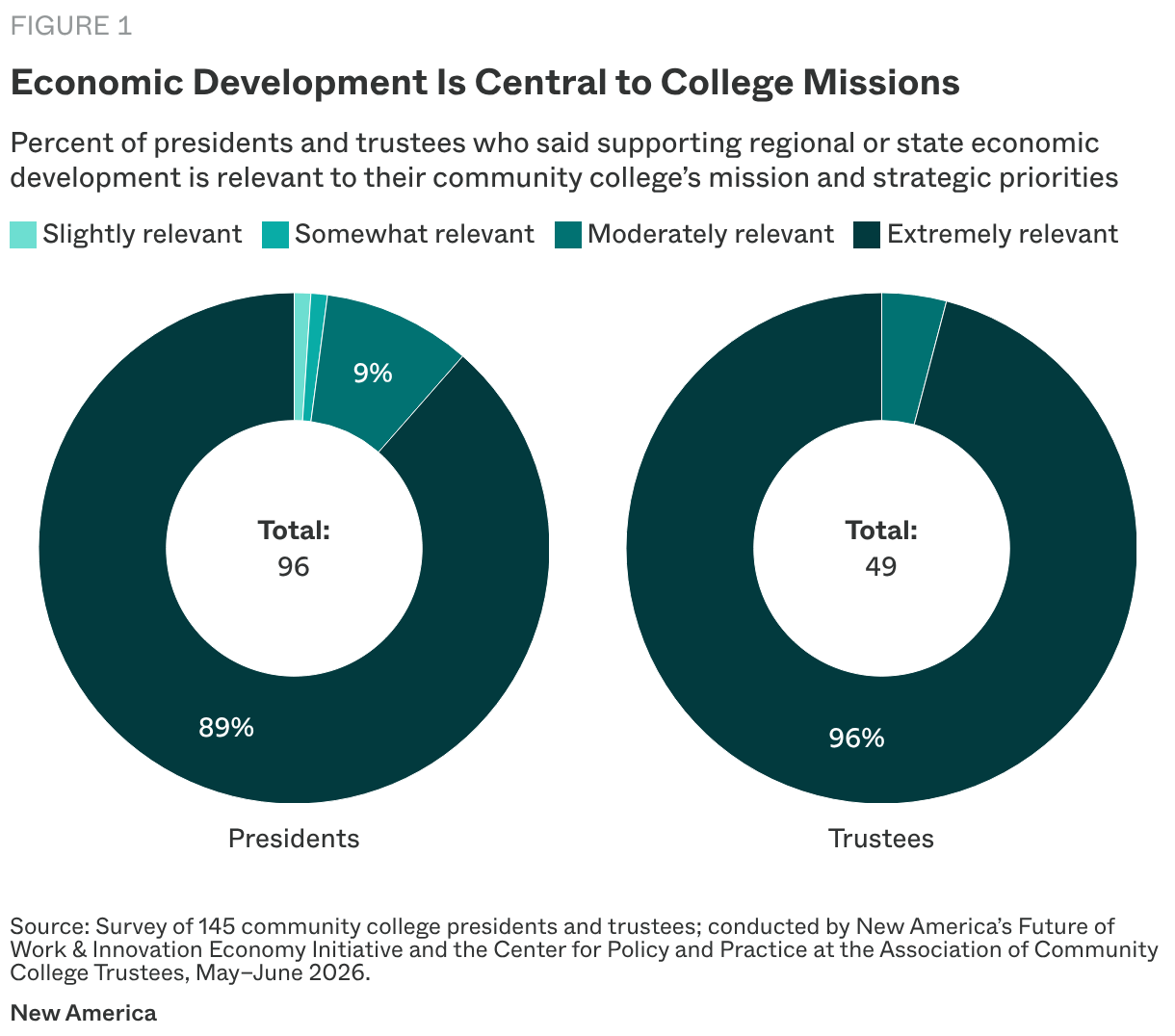
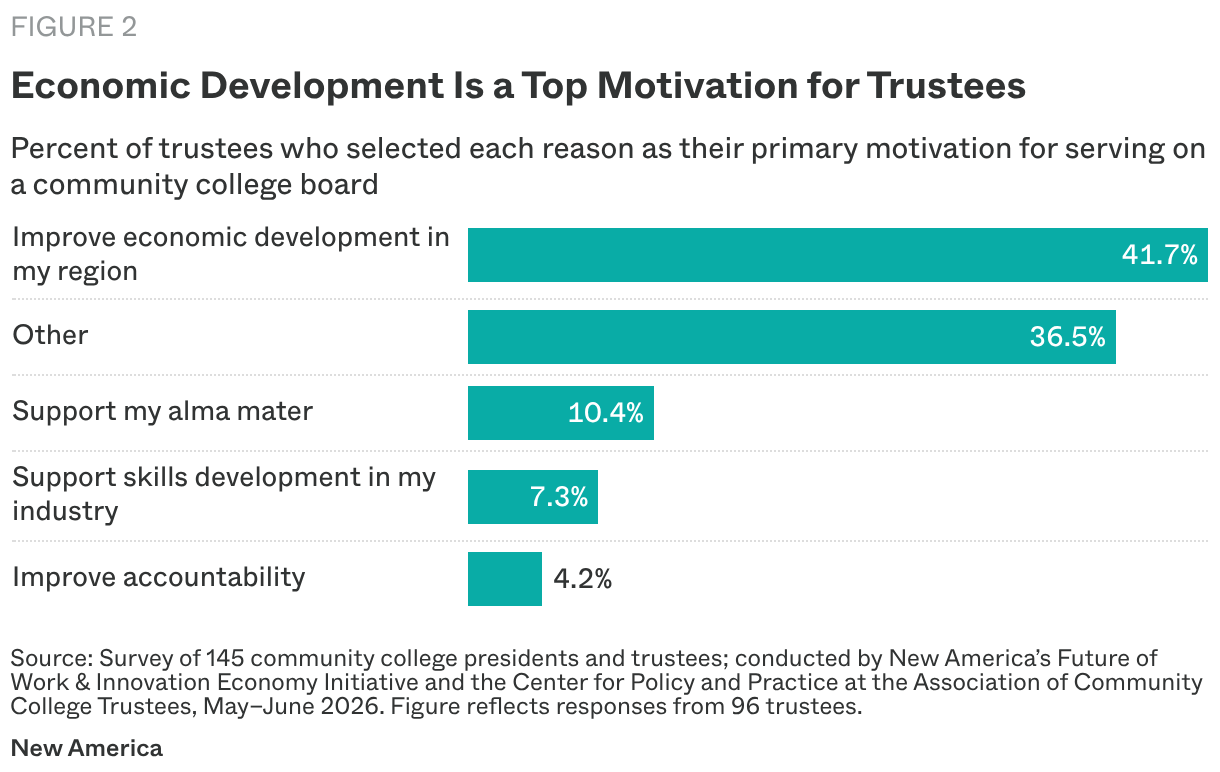
Figure 2 shows that over 40 percent of trustees said a primary motivation for serving on the community college board was improving economic development in their region. “Other” was the second-largest category, with trustees citing motivations such as improving student success, serving their communities, and expanding access to higher education.
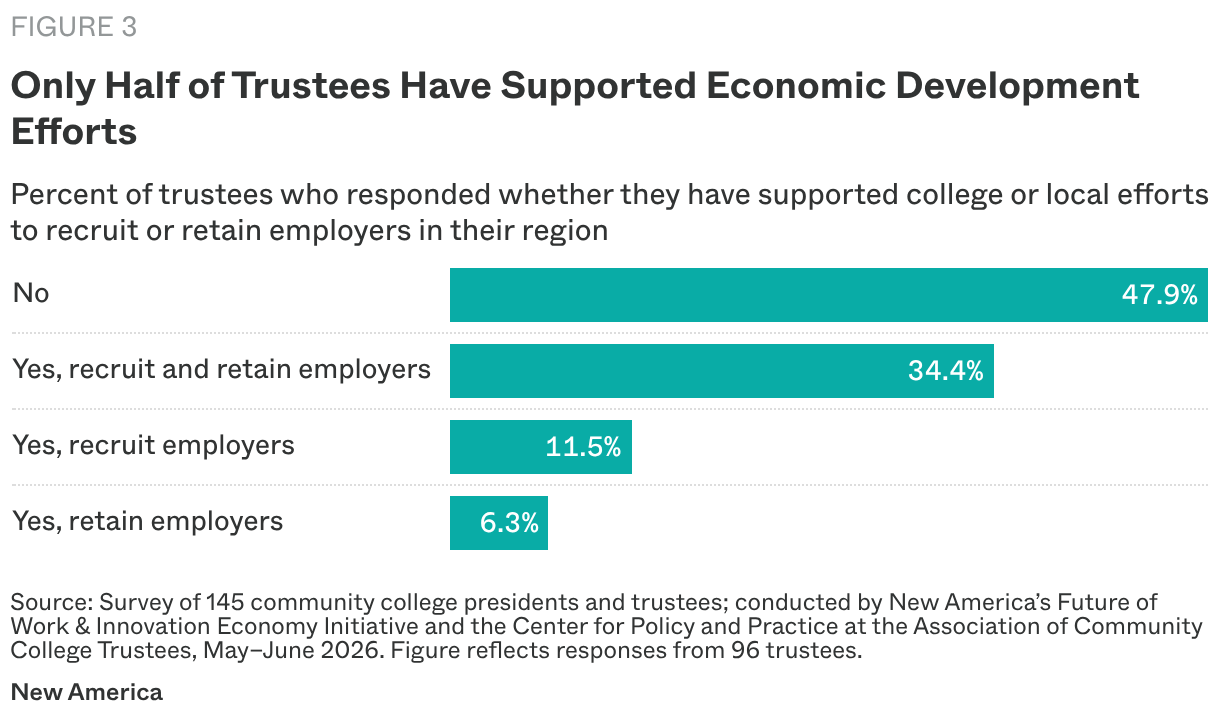
As shown in Figure 3, just under half of trustees reported that they had not supported college or local efforts to recruit or retain employers in their region. Only 34 percent reported supporting efforts to both recruit and retain employers.
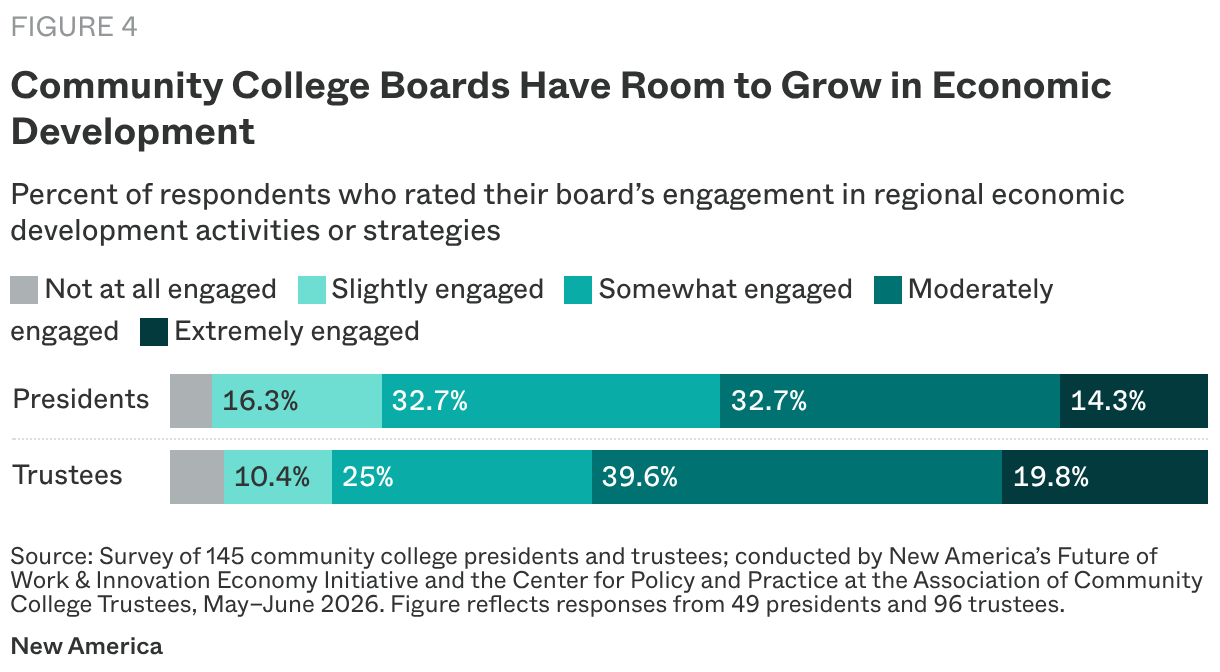
When asked how engaged their boards were in regional economic development, two in three presidents reported their boards were “somewhat” or “moderately engaged,” and nearly a fifth said “slightly” or “not at all.” Only 14 percent of presidents rated their boards as “extremely engaged,” compared with 20 percent of trustees, who perceived board engagement in economic development more positively (see Figure 4).
As shown in Figures 5 and 6, presidents and trustees named the same two top barriers to engaging in regional economic development: lack of funding (57 percent of presidents, 72 percent of trustees) and limited staff capacity (59 and 49 percent, respectively).
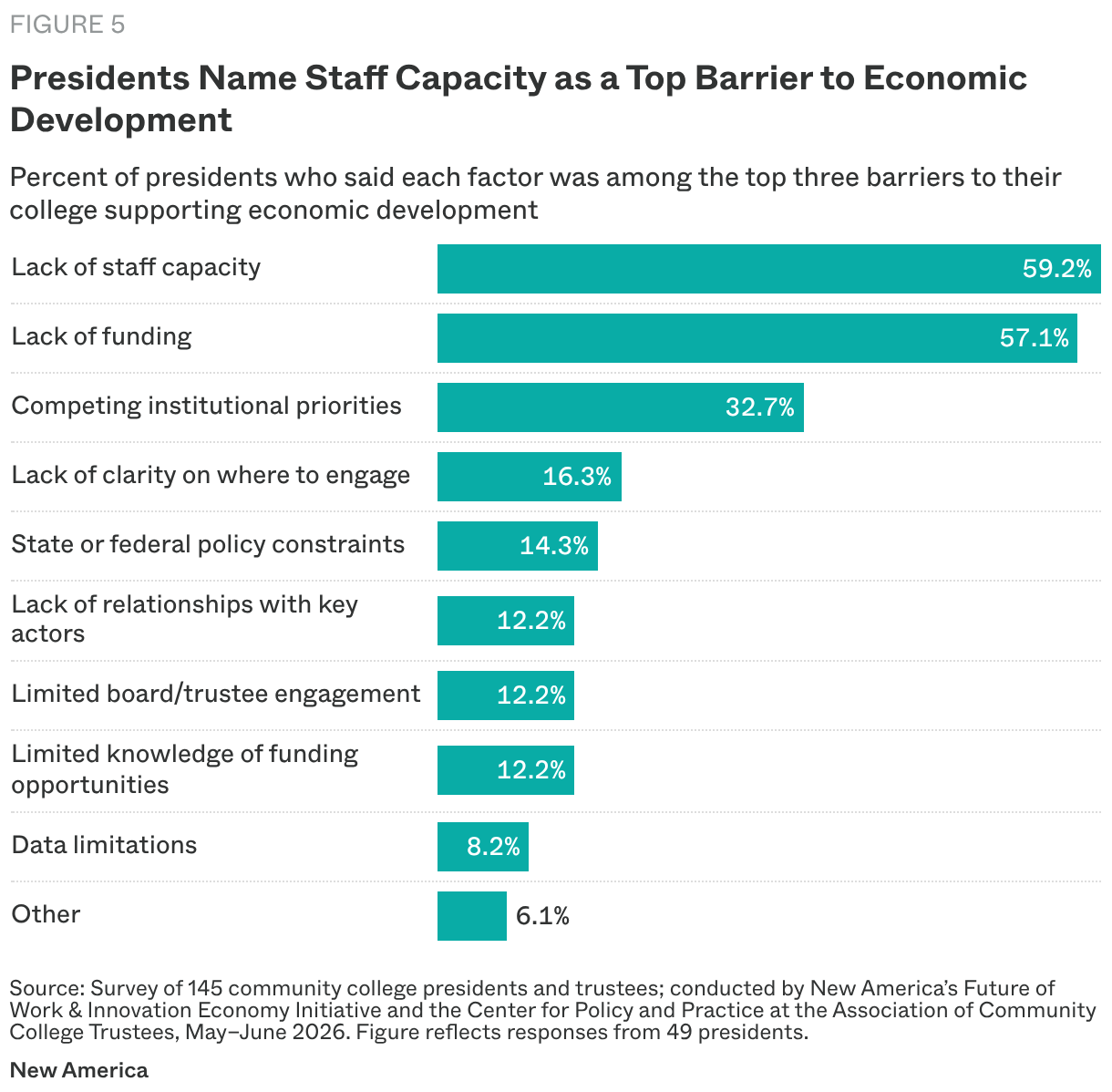
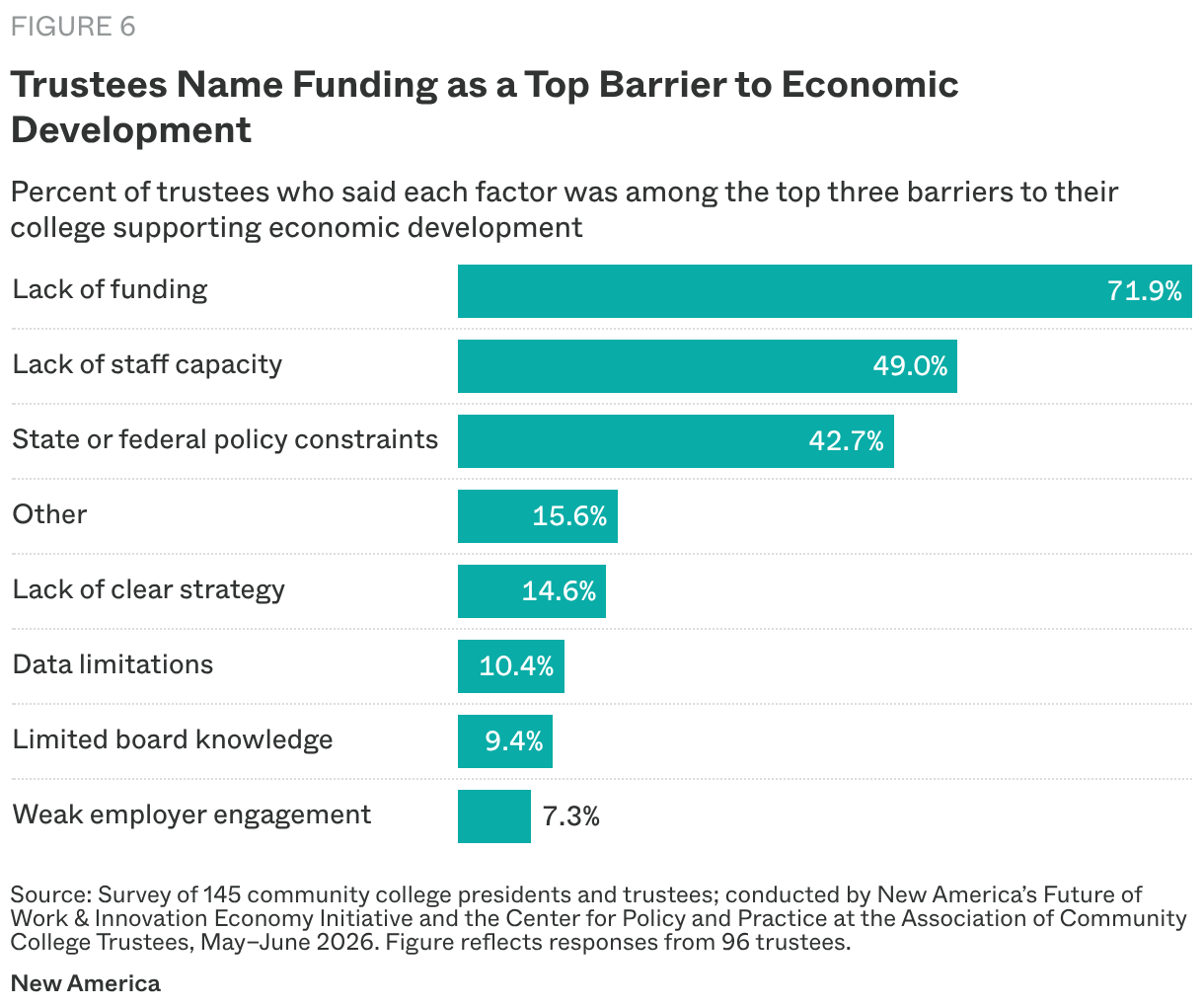
In their open-ended responses, trustees also cited limited engagement from regional industries and employers, rural isolation, and resistance to change. These findings highlight the need for capacity-building strategies tailored to colleges’ regional economic development needs.
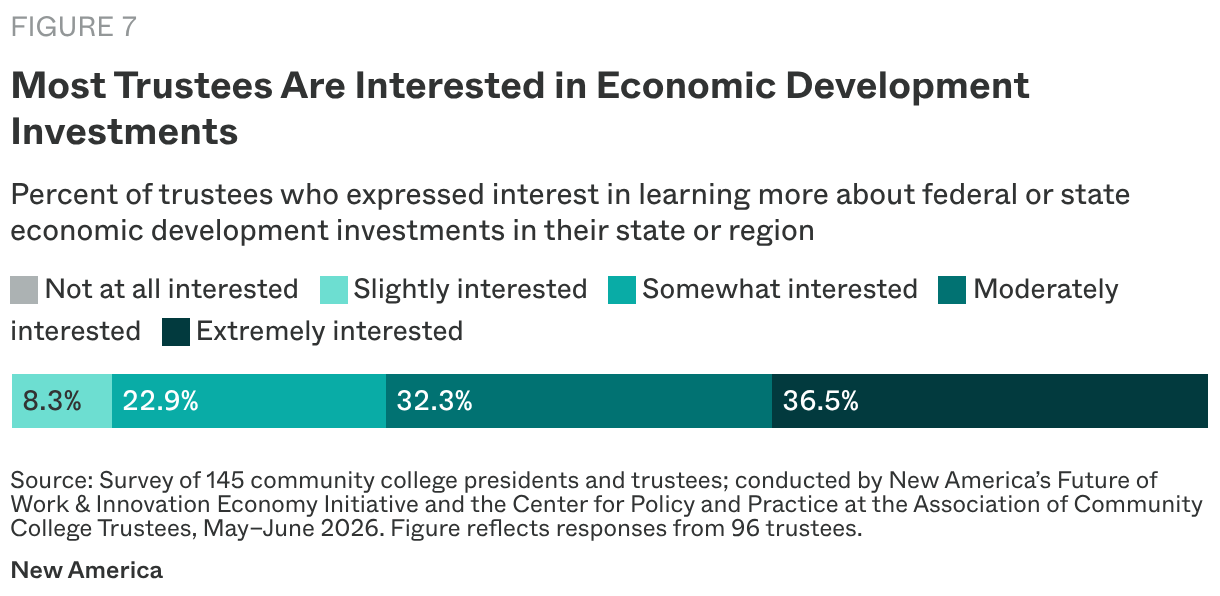
Over two-thirds of trustees we surveyed reported being moderately or extremely interested in learning more about federal and state economic development investments, such as the National Science Foundation’s Regional Innovation Engines and Economic Development Administration’s Tech Hubs (see Figure 7). No trustee chose “not at all interested.”
As shown in Figure 8, most community college presidents reported that federal agencies engaged in economic development, such as the Department of Commerce, Energy, Agriculture, and the NSF, communicate either “slightly well” (31 percent) or “not well at all” (29 percent). None said “extremely well,” and only one in six said “moderately well.”
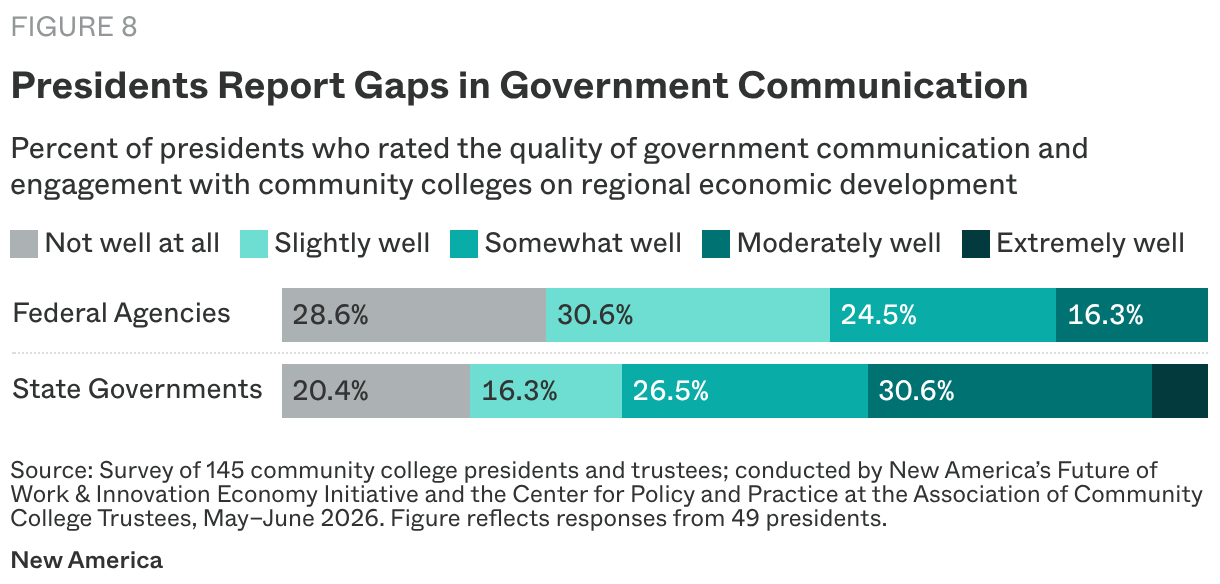
Presidents say that states communicate better than federal agencies, but gaps remain. About 37 percent of presidents we surveyed said their state communicates “moderately well” or “extremely well” on regional economic development, compared with 16 percent for federal agencies. Similarly, the share who rated communication as “not well at all” rose from 20 percent for state governments to 29 percent for federal agencies. These findings point to an opportunity to strengthen connections between community colleges and state and federal economic development agencies.
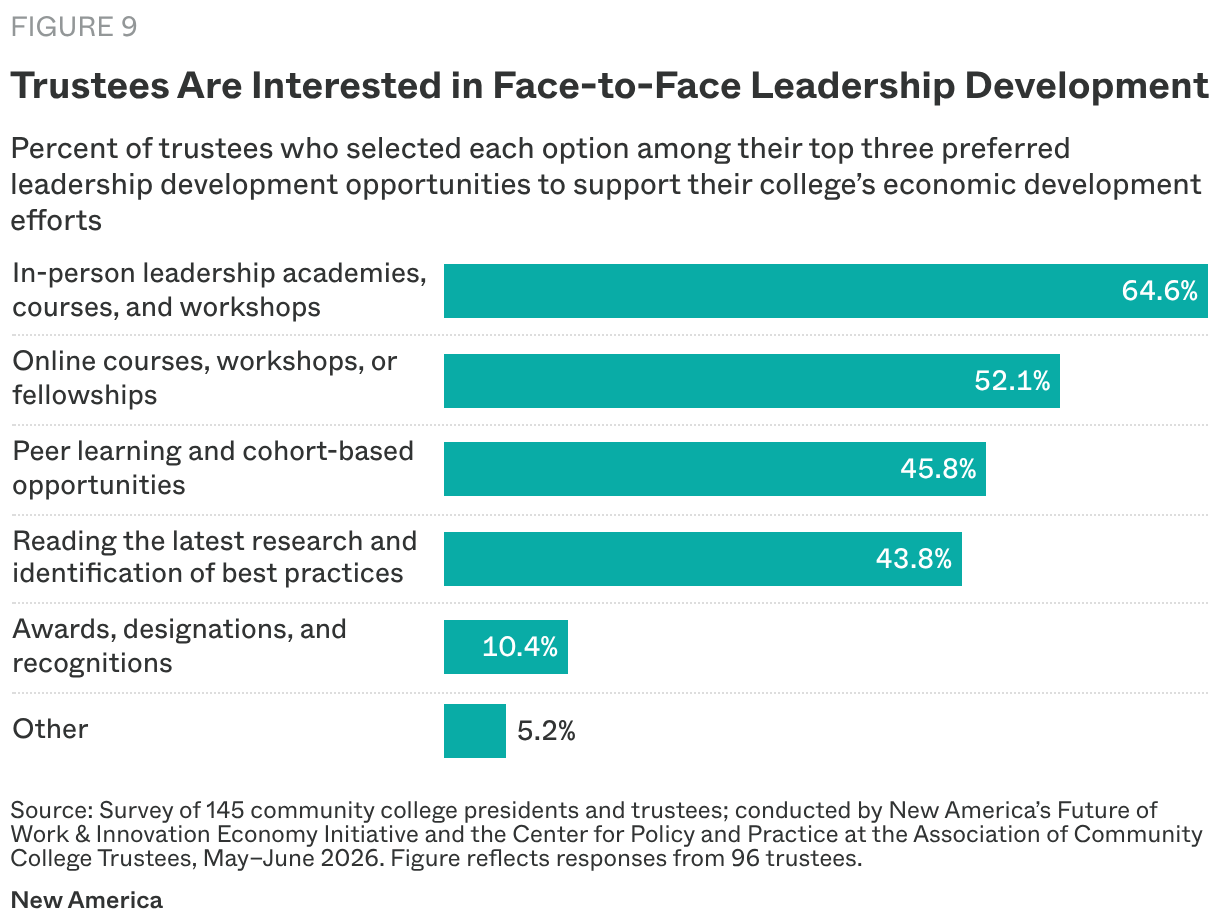
In Figure 9, nearly two-thirds of trustees expressed interest in in-person academies, courses, and workshops. Slightly less than half expressed interest in online learning opportunities (46 percent), connecting with peers through peer learning and cohort-based opportunities (45 percent), and reading research and best practices (44 percent).
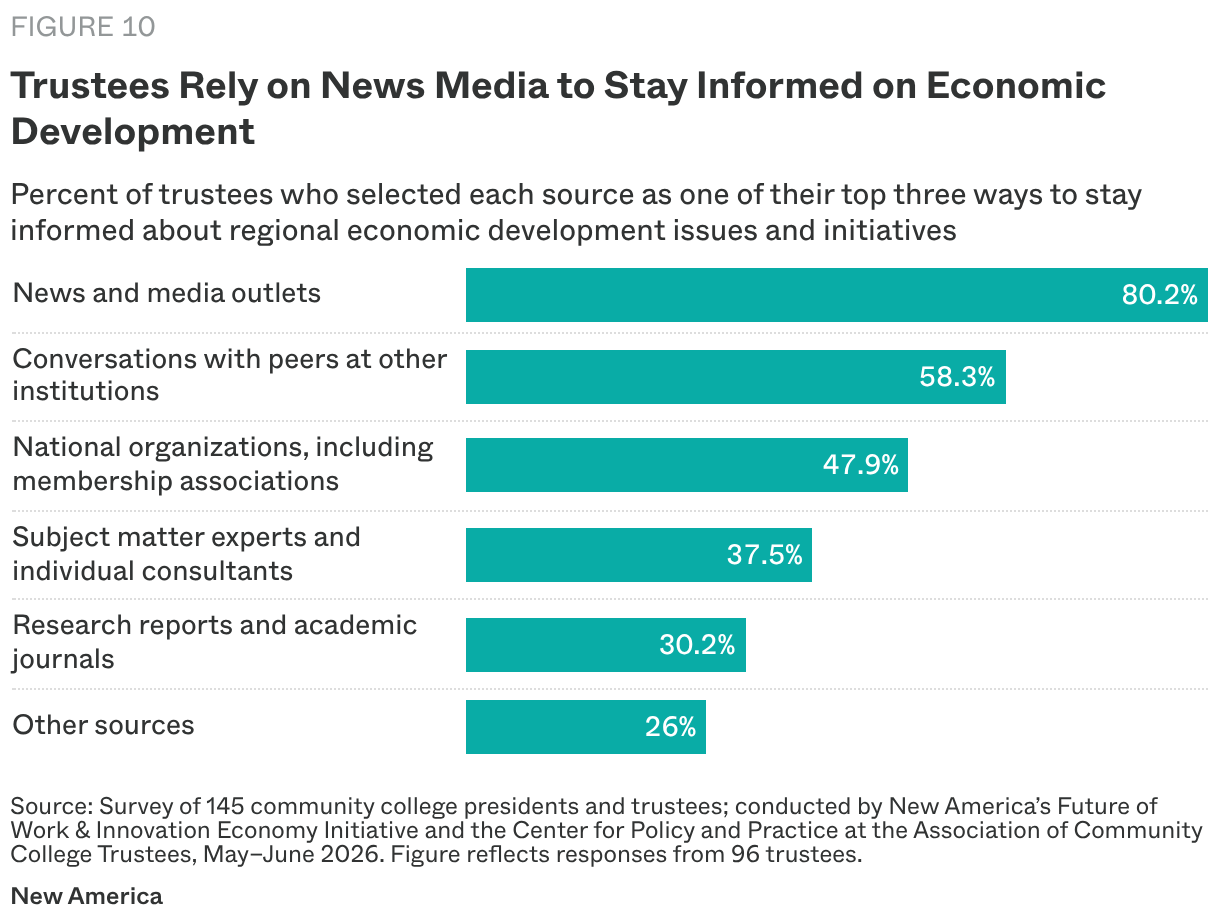
Most trustees reported staying informed about economic development issues and initiatives through news and media outlets (80 percent). In comparison, nearly three in five (58 percent) relied on conversations with peers at other institutions. Nearly half turned to national organizations, including membership associations, while a third relied on subject matter experts and individual consultants (38 percent) or research reports and academic journals (30 percent).
In an open-response question on suggestions for leadership development programming, trustees, particularly those in rural regions, said leadership development should be offered at both place-based and national convenings. They expressed an interest in short, flexible formats offered both online and in person. They sought programming on the basics of tech-based economic development, including strategies, trends, and its connection to board governance and ethics.
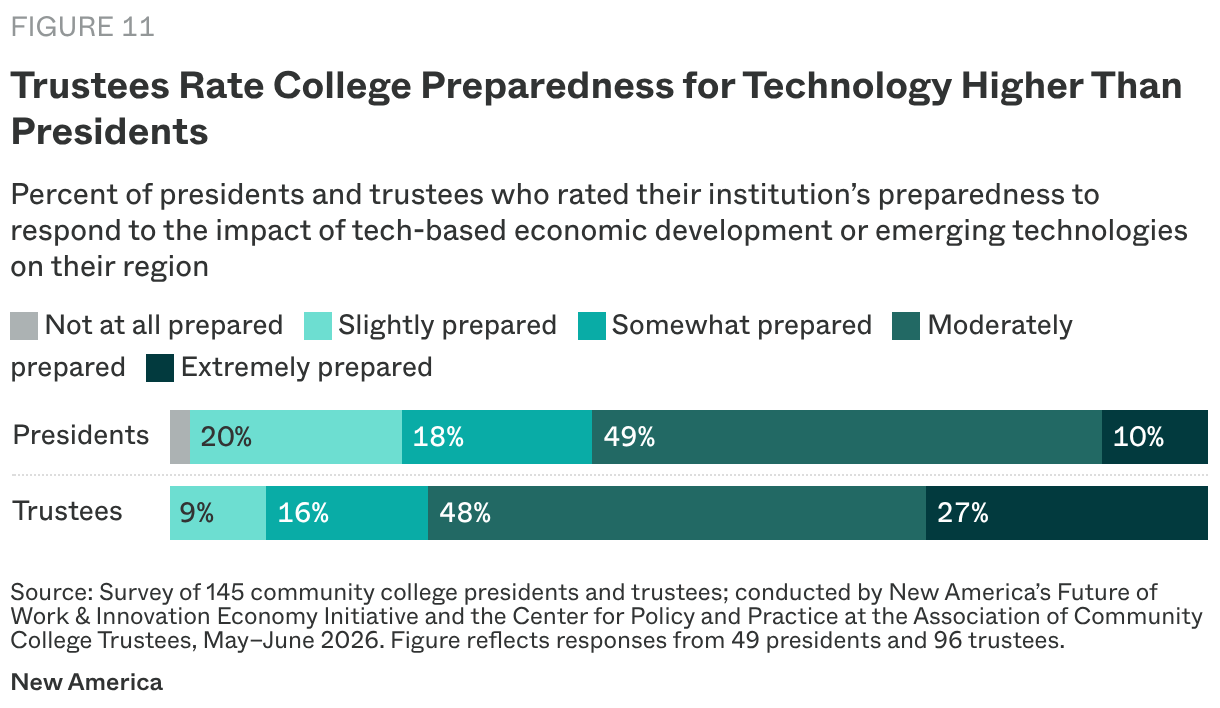
As AI and technological shifts shape the new economy in which college leaders operate, about 38 percent of presidents felt their institution was less than “moderately prepared” to address tech-based economic development or emerging technologies in their region, as shown in Figure 11. About a fifth (21 percent) reported being “slightly prepared” or “not at all prepared.”
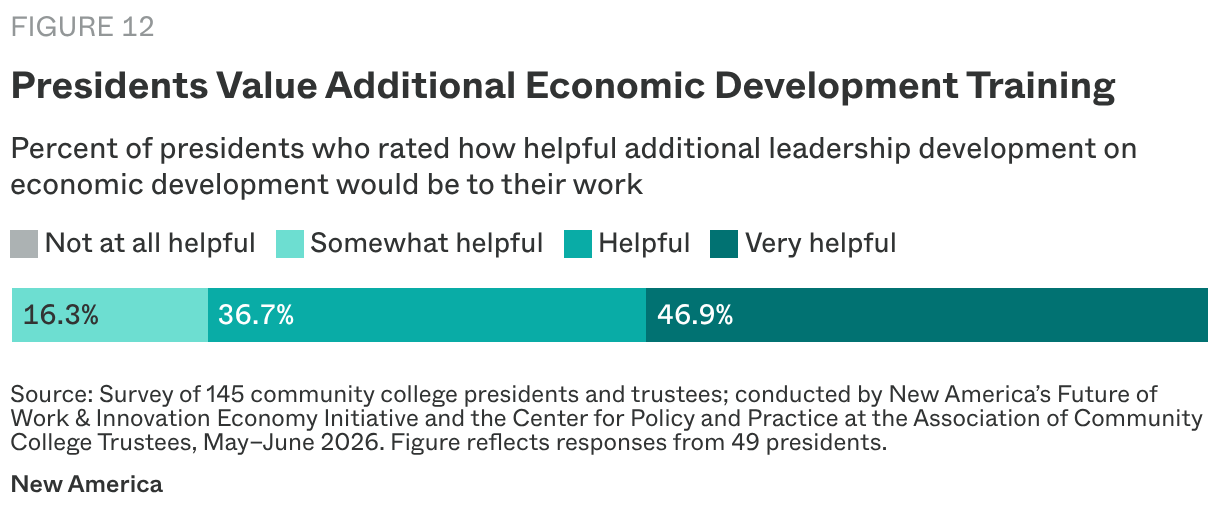
In Figure 12, most presidents reported that expanded leadership development around economic development would be “very helpful” or “helpful.” No president said such programming would be unhelpful.
The survey responses suggest that community college leaders see economic development as core to their mission, and they point to an opportunity for trustees and presidents to move toward more intentional, coordinated, and collective action on economic development. This action will require greater access to economic development resources and sustained investment in institutional capacity and cross-sector partnerships.
To further examine the role trustees can play in advancing this work, we conducted follow-up interviews with the presidents and trustees of five community colleges. We selected these colleges because they had developed promising economic development strategies and demonstrated strong performance in this area. The following case studies provide an opportunity to explore how trustees and presidents work together to build partnerships and leverage their roles and relationships to support their communities.
Building on our survey findings, the five case studies below, featuring members of our advisory committee, illuminate specific strategies trustees and presidents use to strengthen college policies, practices, and infrastructure to support economic development amid technological change, from rural Nebraska to downtown Austin, Texas.
In Illinois, Governor JB Pritzker has allocated more than half a billion dollars to make the greater Chicago area the “Quantum Prairie,” the nation’s hub for quantum science and technology. Quantum technologies, spanning communications, sensing, and computing, are widely considered the next paradigm-shifting technology, on the order of magnitude of AI. Quantum technologies apply the physics of subatomic particles to build powerful computers that leapfrog current capabilities even when enhanced by powerful AI.
When Avis Proctor began her presidency of Harper College, located in Chicago’s northwest suburbs, in July 2019, she and her board saw the need to build the college’s capacity to respond more quickly to today’s labor market needs and those that public and private investments were creating for tomorrow.
In the first few years of her tenure, Proctor worked closely with Bill Kelley, then Harper’s board chair, to strengthen the college’s industry and economic development engagement through two key approaches: (1) Develop an improved college-wide business engagement strategy and CRM infrastructure for employer engagement, and (2) build a one-stop shop for emerging technology education that could expedite curriculum development and marshal financial resources needed to build institutional capacity to deliver.
With strong board support, Harper convened a “business strategy team” of academic deans and leaders from workforce solutions, community relations, and the college’s foundation. The team designed and implemented an institutional, rather than departmental, business engagement playbook, a digital front door for industry, and a Salesforce CRM to track both student and employer engagement college-wide. Now, new and existing employers better understand the college’s value proposition, from its apprenticeship offerings and convening spaces to its small business development center and customized training programs. The college board, leaders, faculty, and staff also have a unified approach to industry engagement and a data backbone to evaluate progress.
Concurrently, Harper’s board approved the strategic leveraging of $900,000 of the college’s Higher Education Emergency Relief Fund allocation to establish the Innovation Accelerator, a one-stop shop to fundraise for and respond to emerging technology workforce needs that opened in fall 2022. “It’s incredibly important that trustees proactively support presidents in making strategic investments like the Innovation Accelerator and then let their leaders lead,” said Bill Kelley. “With actions like these, the board was sure to empower President Proctor as president without falling into the micromanagement trap.”
Harper’s Innovation Accelerator leverages the speed of noncredit and continuing education program creation to position itself as “first mover” and the provider of choice for employers, students, and local economic developers. “We want to create the relevancy in our community, especially when it comes to fast-moving industries,” said Michelé Smith, Harper’s Vice President for Workforce Solutions & Strategic Alliances, who oversees the Innovation Accelerator. The Accelerator also sought to secure financial resources to build the college’s capacity to respond to workforce needs associated with tech-based economic development focused on growing the quantum industry.
The Innovation Accelerator helped secure two cornerstone federal grants from the U.S. Department of Labor’s Strengthening Community Colleges Training Grant program and the NSF’s Enabling Partnerships to Increase Innovation Capacity program. The grants helped position the college to collaborate with businesses and economic developers in industries such as semiconductors, nanotechnology, artificial intelligence, cloud computing, and cybersecurity.
At the behest of the Chicago Quantum Exchange, a leading economic development organization, the federal funds helped Harper expand the Building Industry Leadership Team (BILT) model for quantum industries in partnership with City Colleges of Chicago, College of DuPage, and builds upon the strategies of the Northern Illinois Workforce Coalition, a community college intermediary. Born out of NSF’s Advanced Technological Education program, BILT is widely considered a gold standard for employer collaborations.
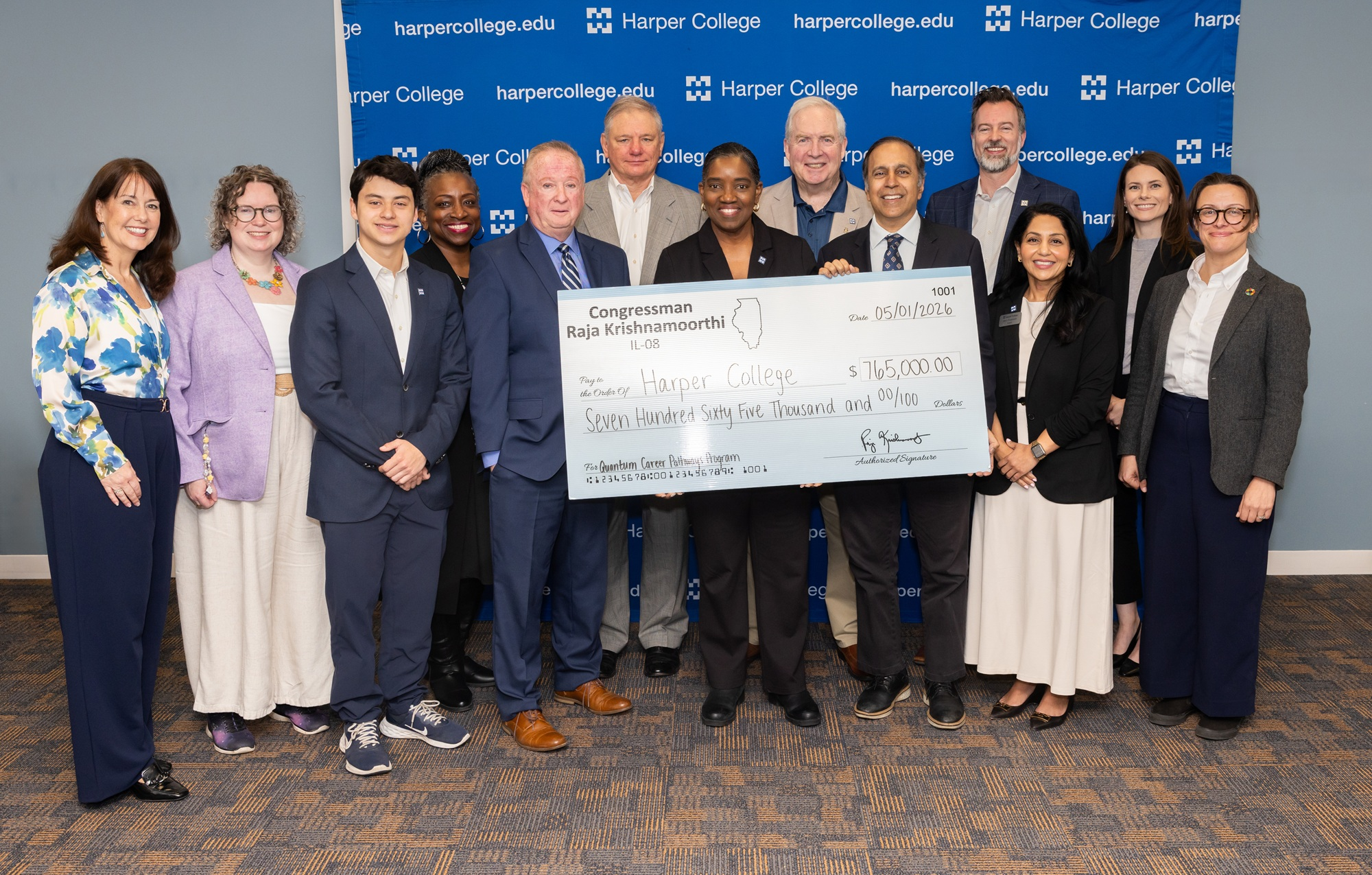
“Our board has been very supportive of our connection to local leaders and federal lawmakers who aren’t always familiar with the role community colleges play in advanced sectors,” said Proctor. Harper’s board regularly goes to Washington, DC, to meet with federal lawmakers and agency leaders, advocate for the college’s legislative priorities, and secure funding for the college’s programs, including those focused on emerging industries. In March 2026, Rep. Raja Krishnamoorthi secured $765,000 to help Harper expand quantum education in the region.
Through the Innovation Accelerator, customer relationship manager (CRM) infrastructure, and a unified business engagement strategy, Harper College continues to expand its work to bolster student success while supporting their region’s tech-based economic development efforts around emerging technology-rooted industry clusters in quantum and beyond.
Northeast Community College, serving more than 14,000 students across a 14,400-square-mile service area, has long aligned its programs with the needs of agricultural employers. Agriculture is Nebraska’s leading economic driver, but rapid technological advances are reshaping workforce needs. As Steve Anderson, a board member and fourth-generation farmer, asked his colleagues, “How are we going to implement all the technology that’s available to us for the next generation?” In response, Northeast built capacity in precision agriculture and AI while making long-term investments in facilities, technology, partnerships, and outreach to connect students with opportunities in an increasingly technology-driven industry.
As at many colleges, President Leah Barrett regularly engages with local employers, economic development organizations, chambers of commerce, and state agencies. However, Northeast also gives its elected board access to community needs by facilitating meetings, focus groups, and town halls with taxpayers, community members, and stakeholders across its 20-county service area. The board puts the “community” in community college through a formal “ownership linkage” standing committee.
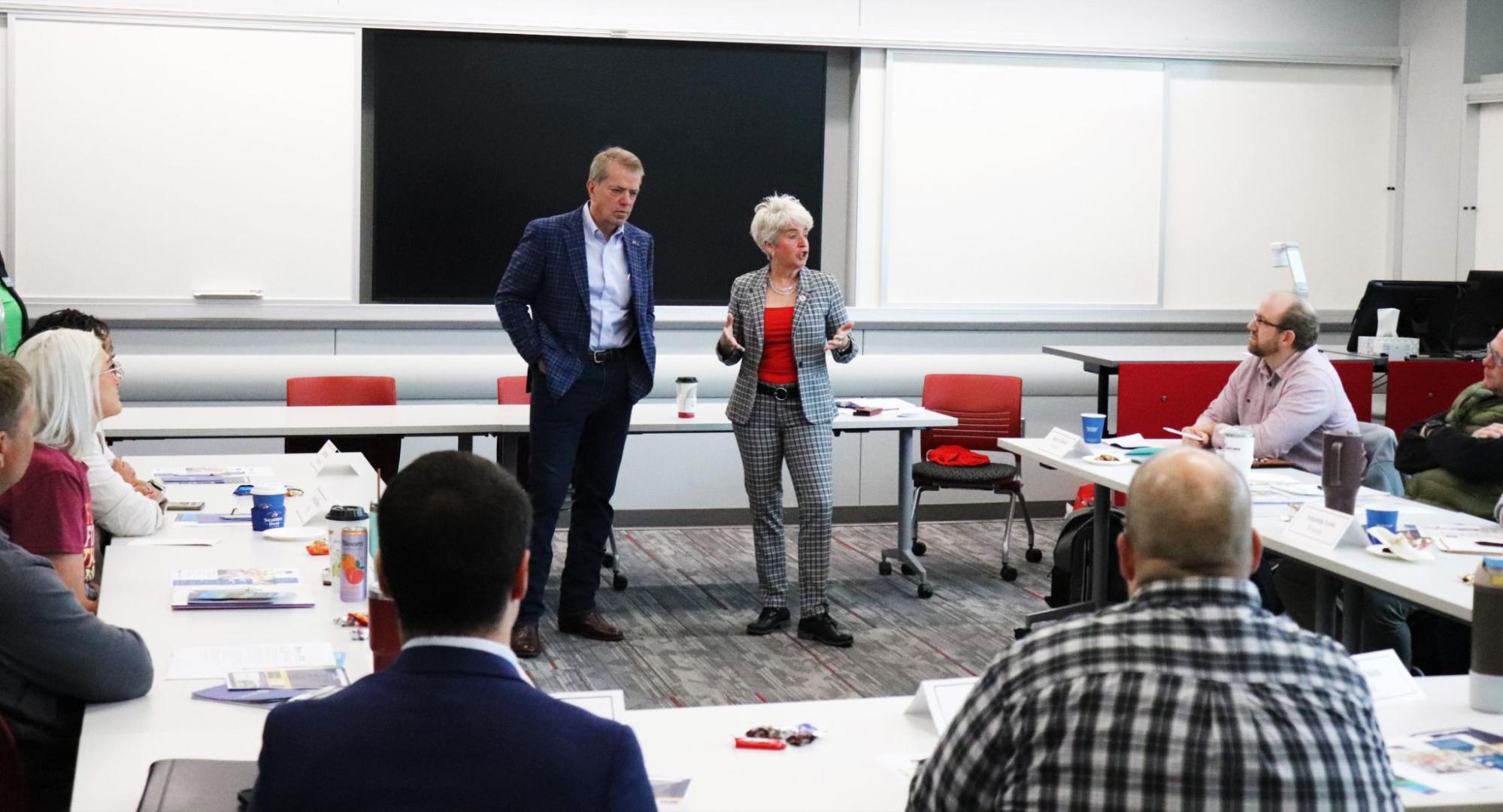
The ownership linkage committee helps augment the college’s reach and relationships across a sprawling rural community where financial and geographic hurdles can limit access to education and workforce training, and where a community college can serve as a critical entry point for both. For example, Northeast developed a Commercial Driver’s License (CDL) training facility in South Sioux City after board members learned through ownership linkage conversations and open forums with community members that transportation and access to CDL training were significant workforce challenges in the region. The engagement went beyond listening: Board members visited a privately operated training facility and engaged with trainers and employees, gaining firsthand insight into how CDL training could be delivered.
This governance structure, rooted in community needs, positioned Northeast to support a major economic development initiative as one of six partners in Nebraska’s Heartland Robotic Cluster, funded by the Economic Development Administration’s signature Build Back Better Regional Challenge.
The Heartland Robotic Cluster is a tech-based economic development initiative that advances agricultural innovation through robotics and advanced manufacturing. Northeast leads state workforce outreach programming and education, including investing $4.6 million in a newly opened fabrication lab in downtown Norfolk and developing a two-year robotics program.
With strong ties locally and nationally, Northeast’s trustees have also prioritized advocating for rural development on Capitol Hill. Anderson, the board’s longest-serving trustee with more than 30 years of service, has visited Washington, DC, annually for more than a decade. President Barrett emphasized the importance of having elected trustees speak directly with their elected peers. Anderson’s industry expertise, advocacy, and long-standing relationships with federal policymakers, including USDA officials, helped establish Northeast’s role in advancing agricultural workforce development beyond its own campus.
In 2015, one meeting with USDA officials proved transformative. After discussions with the USDA’s National Institute of Food and Agriculture and USDA Rural Development, Northeast secured an opportunity to meet with Robert Bonnie, then USDA Undersecretary for Natural Resources and Environment. Bonnie listened as trustees described the impact of technology-enabled agriculture in rural America and the hands-on research taking place on Northeast’s College Farm.
That conversation sparked a lasting partnership. Following the meeting, Northeast began working to establish an agreement with USDA-NRCS and ultimately formed the Community College Alliance for Agriculture Advancement (C2A3), with Northeast as the lead institution and fiscal agent for the $9 million community college intermediary. Today, C2A3 includes 40 institutions nationwide and helps colleges strengthen agricultural education, share resources and expertise, and expand opportunities for students pursuing careers in agriculture amid technological change.
Trustee-led and trustee-engaged advocacy efforts helped secure the first-ever recognition of community colleges as eligible for agricultural workforce capacity-building investments in the House-passed Farm Bill. This achievement shows how Northeast’s community-engaged governance structures, combined with consistent federal advocacy, can drive rural development leadership at home and nationally.
Austin Community College District sits in the heart of a booming hub for semiconductors and cybersecurity in Central Texas. When the CHIPS & Science Act of 2022 passed and investments began flowing into the region, Austin’s board vice chair Manny Gonzalez and fellow trustees knew they had to fortify data-driven decision-making. When Chancellor Russell Lowery-Hart arrived in 2023, he partnered with the board to strengthen data capacity and use it to respond to growing economic development needs.
Many community colleges use labor market information to align their training programs with the jobs and skills their region needs, but Austin’s board went further. It changed board meeting structures to ensure trustees engage at least semi-annually in a fully data-driven work session. Trustees also receive regular, detailed presentations from college leaders on labor market data focused on key regional workforce areas, and the board began using the data to inform resource allocation.
For example, the board approved reallocating bond funds to expand advanced manufacturing facilities and training at the Highland and Round Rock campuses in response to CHIPS implementation. The college also expanded its role as a regional convener, bringing together semiconductor leaders from the University of Texas at Austin, local government, Samsung, Nvidia, and Opportunity Austin, a regional economic development organization that fosters job creation.
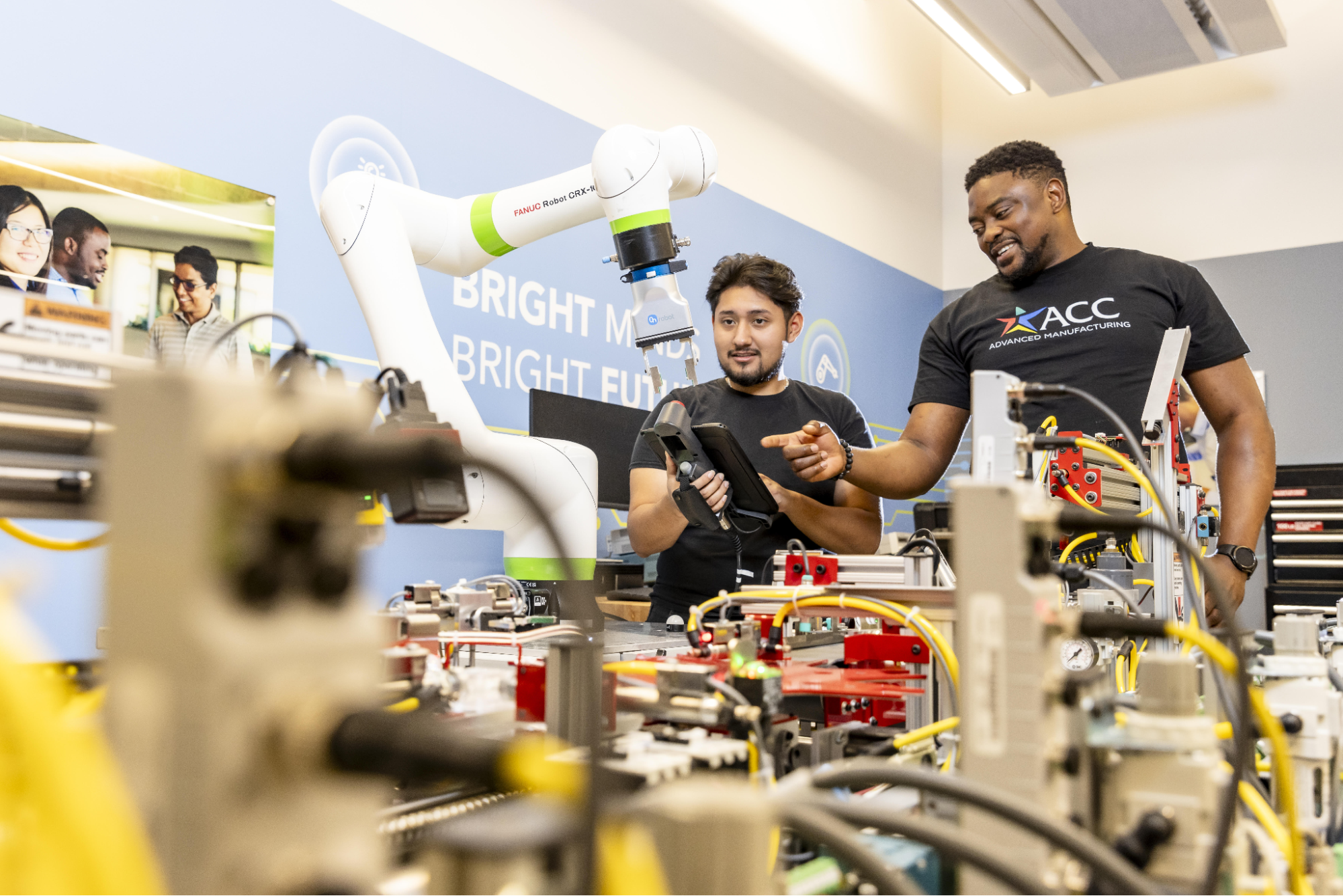
To augment access to direct, real-time employment data beyond what private vendors sell, the chancellor and his board contracted with the Texas Workforce Commission (TWC), the state’s workforce development agency. Austin was selected as one of only five colleges to gain access to detailed wage data from TWC, enabling the college to track student employment outcomes three, five, and ten years after graduation. These data provided a more granular, accurate, and up-to-date picture of labor market outcomes than private data alone.
The board also invested in staff capacity, approving the college’s first “futurist.” Situated at the cabinet level, Monique Reeves leads the college’s Office for the Future, which designs long-range institutional strategy aligned with the economic trajectory in close partnership with the City of Austin, Travis County, and the Central Texas region. The office regularly works with Austin’s city demographer to align program maps with the city’s projections of demographic and economic growth.
Coupled with quantitative data, the futurist is the board and chancellor’s link to the community’s innovation economy. The college has built “The Alliance of Future Makers,” a national network of faculty, professionals, and students that provides training and professional development in what the Institute for the Future has coined “futurist thinking” to bring the model nationwide.
By leveraging data to reform board governance and invest in staff capacity, ACC leveraged the CHIPS moment to meet economic development needs in manufacturing and beyond.
The Finger Lakes region in upstate New York is an emerging hub for advanced technology, with growing federal investment in industries ranging from photonics to semiconductor manufacturing.
In July 2026, the greater Rochester area, home to Monroe Community College, was awarded a 10-year NSF Regional Innovation Engines grant to establish the region as a national hub for laser research. The grant will award $15 million over the next two years. Monroe’s role as a key partner in the NSF STELLAR Engine reflects the long-term efforts of Monroe’s board to align the college’s strategy and investments with the region’s economic needs.
The strategic planning process helped establish the foundation for those investments. When DeAnna Burt-Nanna became president in 2021, Monroe’s board voted to extend its strategic plan by one year, giving her time to conduct a listening tour with 60+ internal and external stakeholders. The listening tour informed the 2022–2027 strategy the board approved, Vision2027, which emphasized building capacity to support workforce and economic development.
The plan called for “a proactive fiscal strategy that promotes revenue growth and aligns programs, staffing, and facilities with College priorities.” It positioned Monroe to “serve as a leader in economic and workforce development in the region, state, and nation.”
The board translated those priorities into capital investments in facilities, equipment, and workforce infrastructure. This included the newly opened $69.6 million Sydor Optics Advanced Technology Center, which expands training capacity in Monroe’s long-standing optics and photonics program. By the time the STELLAR Engine was announced, these investments had expanded Monroe’s capacity to contribute to the region’s technology-driven economic development efforts.
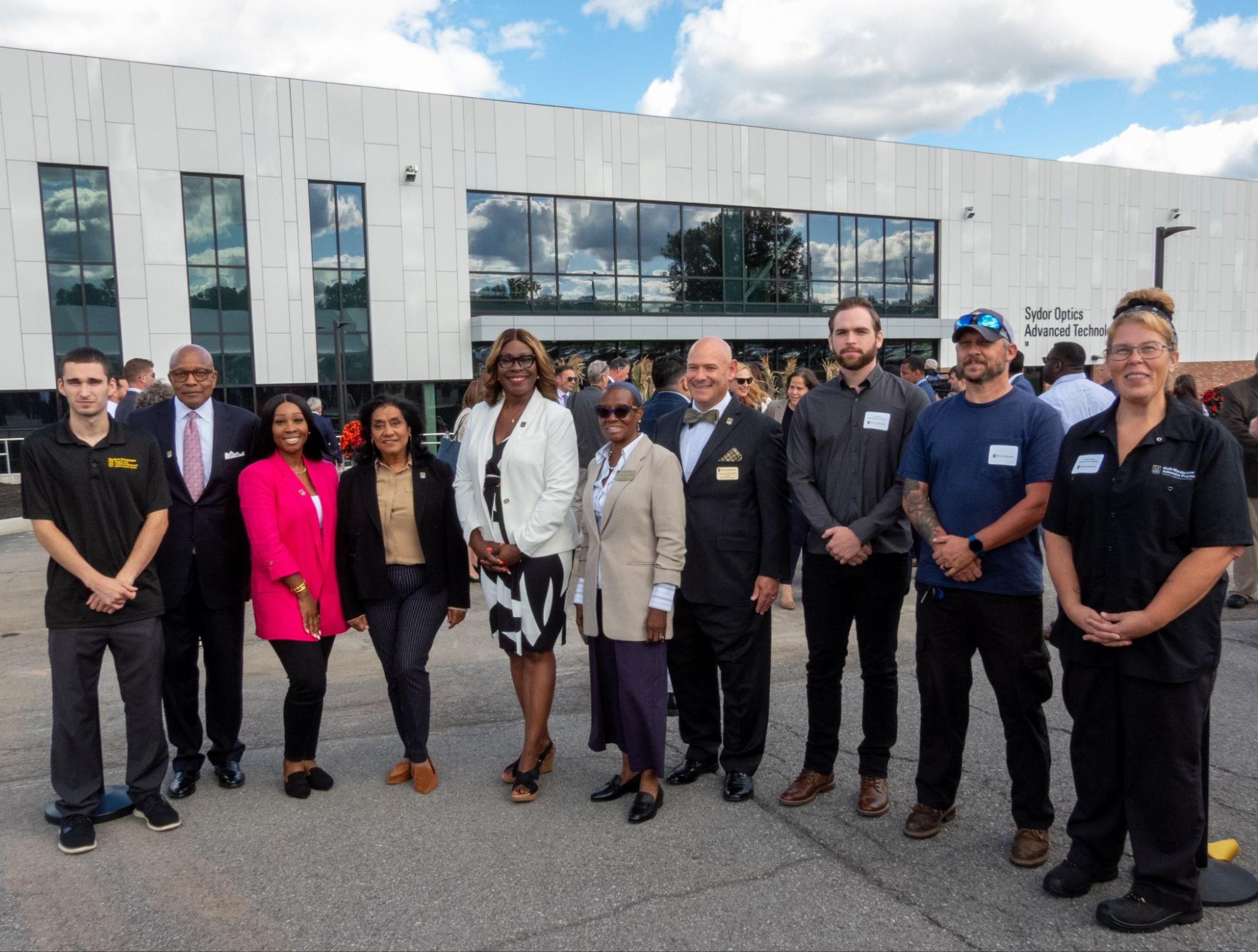
Trustees also strengthened the connection between strategic planning and executive accountability by incorporating Vision2027 objectives into the president’s contract and annual performance evaluations. This created clear expectations and shared accountability, including a goal for President Burt-Nanna to increase Monroe’s visibility as a catalyst for economic mobility, workforce innovation, and regional economic development. With these expectations formalized, Burt-Nanna had the board’s backing and a clear mandate to elevate Monroe in regional economic and workforce development efforts.
As co-chair of the Finger Lakes Regional Economic Development Council and its Workforce and Talent Committee, Burt-Nanna helped bring together employers, workforce agencies, chambers of commerce, and higher education institutions across nine counties to develop a regional workforce and economic development plan. Her position gave Monroe a direct link to state economic development efforts and a platform to advocate for locating a new workforce development center at the college.
Meanwhile, the board put Vision2027 into practice through strategic capital decisions. The board led a facilities master planning process, aligning capital investments with emerging workforce and community needs. After determining that the existing Applied Technology Center would be insufficient to meet the region’s long-term workforce needs, the board approved and secured $11.4 million in New York State and SUNY capital funding for the Finger Lakes Workforce Development Center (FWD), a 50,000-square-foot facility on Monroe’s downtown campus for accelerated training in high-demand manufacturing and technology jobs.
At the same campus, the board also authorized strategic facility-use agreements with external tenants whose presence on campus advances workforce training, economic development, and community engagement objectives. This included the $14.5 million RochesterWorks Downtown Career Center, a one-stop center that provides wraparound career services and co-locates RochesterWorks, Monroe’s workforce board partner, at the college.
These strategic choices ultimately positioned Monroe to win a seat as the Workforce Lead for the region’s successful bid for the U.S. Economic Development Administration’s Tech Hub Designation—the New York Semiconductor Manufacturing and Research Technology Innovation Corridor (NY SMART-I Corridor). In collaboration with RochesterWorks at the FWD Center, Monroe leads a regional manufacturing partnerships program to train workers for high-demand manufacturing and semiconductor careers. Monroe is one of the few community colleges to be a named partner in both an NSF Engine and an EDA Tech Hub investment.
As state, federal, and private investments expand Central Ohio’s economy around advanced manufacturing and semiconductor development, Columbus State Community College has built strategic relationships and institutional capacity that have helped attract major external investments for the college and community. The Board of Trustees has been central to that effort, using employer relationships, regional economic connections, and its governance role to expand the college’s reach and create opportunities for partnerships and funding.
Columbus State’s nine trustees are governor-appointed and drawn from the private sector, bringing industry expertise and relationships with employers and economic development organizations to college governance. Trustees Sandy Doyle-Ahern and Traci L. Martinez, for example, serve on the board of Columbus Partnership, which convenes CEOs of 70+ businesses to advance regional economic growth. The CEO of Columbus Partnership, Corrine Burger, also serves on Columbus State’s board, connecting the college to the heart of the region’s economic development.
This board structure allows the college to track and connect with emerging economic opportunities as they take shape. As President David Harrison explained, “Trustees are in rooms I’m not in, but still advocating for Columbus State.”
When Intel announced major Ohio investments in 2022, including more than $28 billion in planned semiconductor fabrication facilities, Columbus State was already responding to major investments from Amgen and Honda thanks to its tie to the region’s economic development ecosystem. The college subsequently received $2.8 million from Intel to establish the Ohio Semiconductor Collaboration Network with the Ohio Association of Community Colleges, developing two-year pathways into semiconductor technician careers across the state.
The college’s governance structure has also supported its role in health care. Multiple trustees have health care backgrounds and relationships with major employers, including OhioHealth, Cardinal Health, and Nationwide Children’s Hospital. Harrison and Doyle-Ahern serve on the OhioHealth board, while Jean M. Halpin, President of OhioHealth Grant Medical Center, serves on Columbus State’s board. With significant health care workforce needs in Ohio, this representation brings sector knowledge and employer relationships that help Columbus State respond to evolving workforce needs.
These relationships helped strengthen the college’s partnership with OhioHealth, securing a $120 million joint investment in Columbus State’s health care workforce capacity in 2023. Believed to be the largest philanthropic gift to support a community college at the time, this investment supported the construction of an $85 million academic facility, OhioHealth Hall; a $25 million OhioHealth endowment supporting the college’s health care programs; and training program collaborations.

Trustees have also used their fiscal oversight to shape the college’s long-term capacity to respond to regional economic shifts. In 2019, the board approved a 10-year IT and facilities plan that identified and prioritized the college’s capital needs, from classroom upgrades to new construction. The board then approved placing a $300 million bond issue before local voters to fund those improvements, including OhioHealth Hall and the Ohio Center for Advanced Technologies. These investments linked the college’s capital strategy to regional demand for both health care and advanced manufacturing talent.
Also in 2019, the board established Columbus State Community Partners, an affiliate entity that gave the college a vehicle to pursue partnerships that brought an on-campus YMCA, affordable housing, and an adjacent national grocer to the college. The board has leveraged an additional $150 million in investment from strategic partners to complement the $300 million in county bond proceeds.
Finally, the board supported the college’s redesigned grants operation and established a 10-person team focused on federal, state, local, and philanthropic funding, which contributed to an impressive record of federal investments, including 17 NSF Advanced Technological Education awards in 2024, more than any other college in the country at the time.
As public and private investments in AI and other emerging technologies reshape regional economies and labor markets, community college trustees and presidents will need to use governance to build capacity to support place-based economic development and economic development policy implementation.
This brief is the first product of the partnership between New America and ACCT, forged under the Accelerator for Community Colleges in the Innovation Economy launched with the NSF. Next, our teams will host conversations with college leaders on how to foster resilient regional economies, navigate technological shifts, and expand pathways to good jobs nationwide.
We invite college leaders interested in engaging with us to complete this form or email us at [email protected].
We thank the U.S. National Science Foundation for partnering with New America to launch the Accelerator for Community Colleges in the Innovation Economy, powered by Ascendium Education Group. We thank JPMorgan Chase for supporting this project as part of New America’s Accelerator partnership with the Association of Community College Trustees (ACCT). We thank our Advisory Committee on Economic and Workforce Development for their strategic support in developing this brief: Manny Gonzalez, Russell Lowery-Hart, Sandy Doyle-Ahern, David Harrison, Bill Kelley, Avis Proctor, Allen K. Williams, DeAnna R. Burt-Nanna, Steve Anderson, and Leah A. Barrett. We thank Katie Portnoy, Amanda Dean, Maggie Navracruz, Sabrina Detlef, and David Connor for their help with production and dissemination.
Policy Analyst, Center on Education & Labor
Technical Assistance Manager, Center on Education & Labor
Founder & Director, Future of Work & Innovation Economy; Visiting Scholar, Arizona State University
Senior Project Associate, Center for Policy and Practice, Association of Community College Trustees
Associate Vice President, Center for Policy and Practice, Association of Community College Trustees