Emily Tavenner
Communications Director, Technology & Democracy, New America
“Tech for the People, by the People” is a series featuring conversations with individuals who want tech to benefit the public—not solely the powerful. Instead of innovation for innovation’s sake, our guests prioritize socially-responsible innovation that’s shaped by us for us. From environmental scientists to fiction writers, there isn’t one kind of profession or set of work that contributes to tech for the public interest; that’s what this series sets out to show.
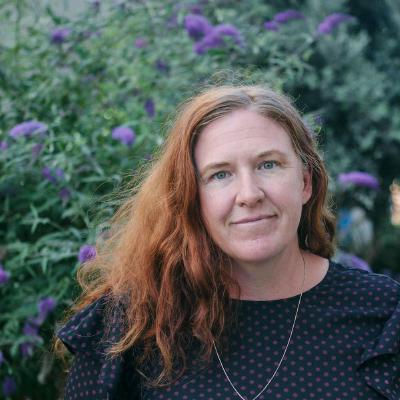
Kameron Kerger, a Digital Service for the Planet (DSP) Fellow, joins us to discuss how environmental progress is strengthened when people with tech and policy backgrounds work together for a positive impact on the planet. Kameron is a systems designer with a wealth of experience in both the private and public sectors. We spoke with her about why she wants to use her skills for environmental projects.
The following conversation has been edited for brevity and clarity.
Emily Tavenner: You’ve worked at the intersection of sustainability and tech in a lot of different contexts, from Amazon to the Biden-Harris administration! Before that, you were working in tech but outside of that intersection. What inspired you to pivot to honing in on environmental issues through the tech lens?
Kameron Kerger: I decided that I wanted to use my superpowers for good during the COVID pandemic. I was offered a role at the U.S. Digital Service (USDS) and on Amazon’s Sustainability team. I started with the Amazon contract because it seemed like a huge opportunity to use my design and research background to influence real behavioral change. In the role, there was an opportunity to ideate and test concepts to encourage people to make more sustainable decisions when shopping online as a part of Amazon’s climate pledge. It’s so cool now that when I go to buy dog food, I can see the seeds of ideas I had while using the service.
Upon joining USDS, I was a founding member of its first environmental justice team, where we worked on Justice 40, a first-of-its-kind government initiative to create a tool that would identify historically-marginalized and underserved communities. Then certain federal programs would redirect at least 40 percent of their investments toward projects that would benefit these communities. In this role, I applied my experience in design and technology to think about how we could have an equitable lens toward helping people live in healthier places.
Since switching to work at the intersection of sustainability and tech, the approach I have taken to environmental projects has focused on the people. While people think about the environment as solely nature, my work has focused more on trying to understand how to help people—to protect them from burdens in their environment or encourage them to make different decisions and think more collectively about the actions that we take and the impact of those actions, particularly on human health.
Tavenner: What work were you most proud of when you were in the U.S. Digital Service and also at the White House Office of Environmental Justice at the Council on Environmental Quality during the Biden-Harris administration?
Kerger: I am very proud of all the work I did at both places. With my collaborators at the White House, I launched six products in four years. Of those product launches, one of my greatest joys was EJ.gov, which we launched with very few resources. We persevered with the work because it was really important to have a place to point people who wanted to learn what environmental justice was toward. We wanted to create a place where people could see the steps that the Biden-Harris administration was taking to ensure that every person can breathe clean air, drink clean water, and live in healthy environments; this is a fundamental duty that the federal government must uphold on behalf of its people.
Tavenner: What were some differences that you found between working in the private sector and in the public sector?
Kerger: While it is different work, a lot of things are the same. Across both sectors, you are trying to work with people, making sure everyone is on the same page and understands the work being done and the why behind it.
However, a big difference for me working in the government in the public sector is the effort-to-output ratio compared to the private sector. In the private sector, we spent a lot of time conceptualizing and figuring out practical applications of certain technologies. There were more yeses toward possibility. In the public sector, I received many nos and a lot of my work was trying to navigate around different roadblocks but still managing to attain the needed outcome. At the White House, I was told I was unprecedented twice in one week, which I wore as a badge of honor.
Tavenner: Why did you apply to be a DSP fellow?
Kerger: While working in the government, we had been discussing the idea of a Digital Service for the Planet (DSP) for several years, trying to think through how it would work, and there were many of my colleagues already so interested in being a part of it. So when I was first informed about the concept, I was immediately all in.
This fellowship is a great opportunity to work alongside other people, figuring out how we can operationalize the model we had ideated while working on important projects like the National Drinking Water Tool, the Open Wetlands Map, and permitting work to demonstrate the kinds of positive impact that a DSP could have. Many people want to work on projects that help us understand and protect our environment. Having real, tangible results through our projects at DSP will help people complete that picture.
Tavenner: What is missing in how data is leveraged for a healthy planet?
Kerger: Data is one of the ways that we make sense of things, especially things as complicated as our environment and planet. While many people in fields like environmental science understand this, there is a gap in how we can translate that knowledge into plain language for the general public so that anyone can understand what we need to do to take action to protect human health and our planet.
Also, we need to be more creative about what we call data. We need to expand our models to not just be quantitative but also qualitative so that we are capturing the stories of not just impact but also of progress. That way, we can create that awareness, build momentum, and get more people involved.
This is where the DSP model comes in. For something like this, we need all hands on deck, and the DSP model feels like a great approach to make these things happen.
Tavenner: What do you want to accomplish through this fellowship?
Kerger: Through the fellowship, I am hoping to continue to grow our network of people and organizations who are inspired by this type of work and have a mix of technical skills, passion for the environment, as well as a policy/government lens and can understand how to navigate the bureaucracy and get things done.
This work is urgent, but it also needs to be approached with care. I am excited to connect with other fellows and the New America staff to use this pilot to set up the infrastructure and processes to sustain this work.
Tavenner: If you were to envision a future where environmental data and tech were being used seamlessly so that environmental work is ultimately successful and done more quickly, what would that look like?
Kerger: When I think about the future, I am hopeful that the Digital Service for the Planet could have the kind of impact across environmental sectors that USDS had across the federal government. To make this happen, there’s a way for all of us to come together and imagine a more just, sustainable, and hopeful path for our collective future; we just need to put our heads together and start to figure it out.
I would love to see a thriving Digital Service for the Planet, and I would be thrilled if, five to six years from now, hundreds of people have worked on this initiative.
Communications Director, Technology & Democracy, New America
Communications Assistant, Technology & Democracy, New America